TL;DR:
- Proper unboxing of a replica sword involves careful, stepwise removal of packaging to prevent damage or injury. Protect yourself with cut-resistant gloves and a flat workspace, and immediately oil carbon steel blades to prevent rust. Patience and attention during unboxing ensure long-term preservation and maintain the sword’s pristine condition.
Replica sword unboxing is the controlled, stepwise removal of a sword from its protective shipping packaging, and doing it wrong can damage a blade worth hundreds of dollars or cause a serious cut. The replica sword unboxing steps covered here apply to anime swords, Viking replicas, movie props, and historical reproductions alike. Protective packaging alone adds 1–5 pounds to the base weight of the sword. That weight surprise catches collectors off guard more often than any other part of the process.
What packaging should you expect when receiving a replica sword?
Replica sword packaging follows a layered system designed to meet carrier safety rules and protect the blade during transit. Understanding those layers before you cut a single piece of tape makes the whole process faster and safer.
The outermost layer is typically a rigid cardboard tube or a corrugated box. Cardboard tubes weigh 8–16 oz on their own, which adds noticeable bulk before you even reach the sword. Wooden crates, used for heavier or more valuable replicas, add 3–5 pounds to the total package weight. Collectors who do not account for that extra mass often fumble the package when lifting it off a porch or out of a delivery vehicle.
Inside the outer shell, you will find one or more of these protective layers:
- Foam guards or foam inserts: Molded or cut foam cradles the blade and prevents lateral movement during shipping.
- Bubble wrap: Adds cushioning around the scabbard or bare blade wrap. Bubble wrap adds 2–4 oz per layer but provides meaningful impact protection.
- Sheaths or scabbards: The blade itself is almost always sheathed before wrapping.
- Rigid inner tubes: Some sellers use a PVC or cardboard inner tube inside the outer box for a double-wall effect.
- Customs and carrier labels: International shipments carry customs declarations identifying the item as a replica weapon.
Carriers including UPS, USPS, and FedEx require blades to be securely sheathed or wrapped before acceptance. That rule exists to prevent blades from cutting through packaging and injuring handlers. Customs declarations on international orders identify the item as a replica, which affects clearance time and import duties depending on your country.
| Packaging layer | Typical weight added | Primary purpose |
|---|---|---|
| Cardboard tube | 8–16 oz | Rigid outer protection |
| Bubble wrap | 2–4 oz per layer | Impact cushioning |
| Foam inserts | 4–8 oz | Blade immobilization |
| Wooden crate | 3–5 lbs | Heavy-duty transit protection |
Pro Tip: Weigh the package before opening it. If it feels heavier than you expected, set it flat on a table before cutting anything. Trying to hold a 10-pound crated sword with one hand while cutting tape with the other is how accidents happen.
What are the replica sword unboxing steps done safely?
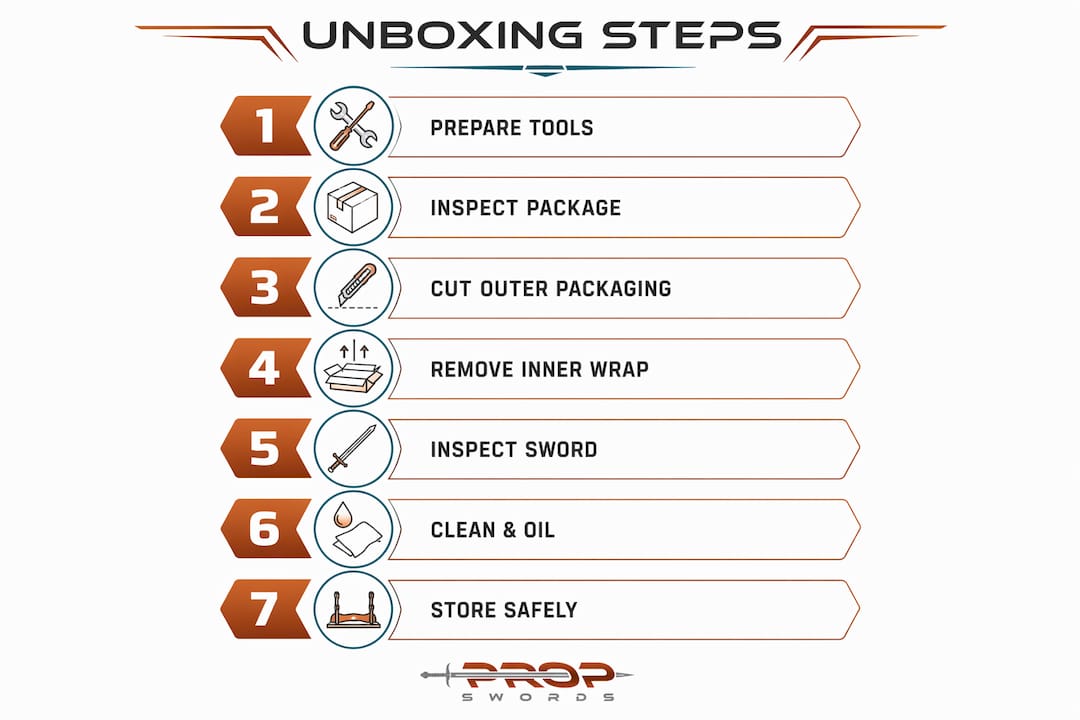
Safe unboxing of a collectible sword follows a specific sequence. Skipping steps, especially early ones, is the fastest route to a nicked finger or a scratched blade.
Tools to gather before you start
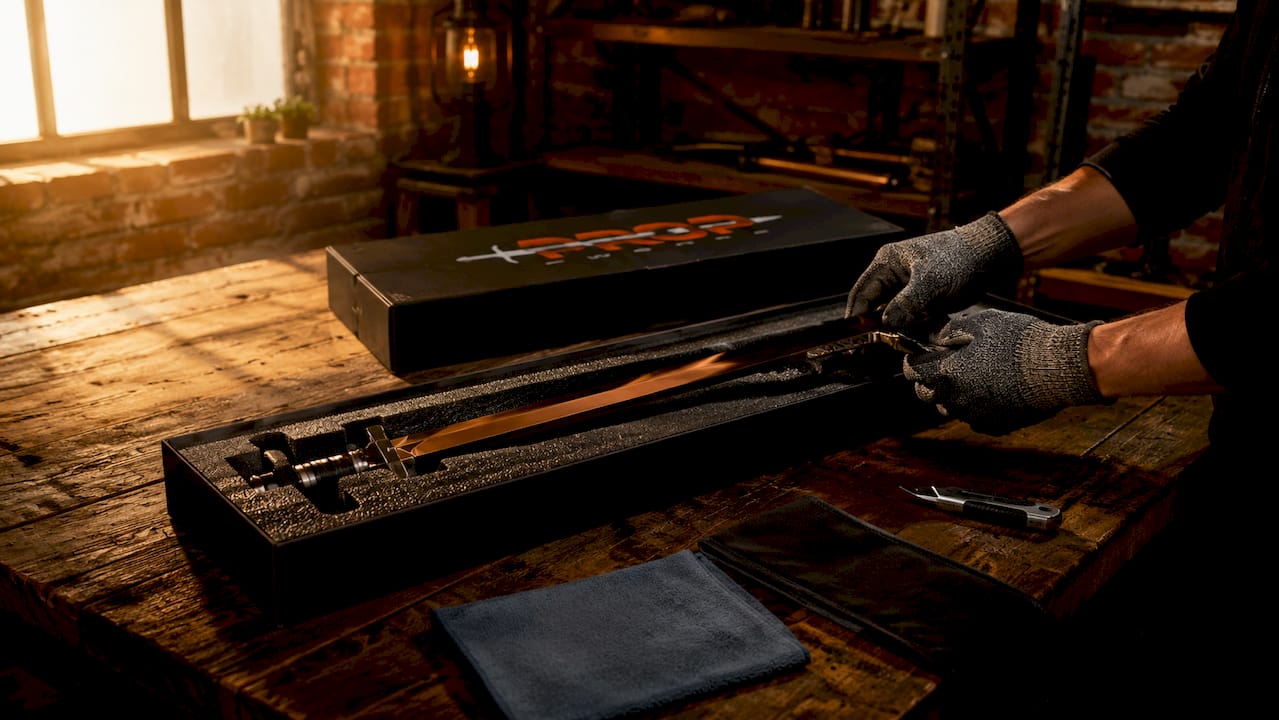
Collect these items before touching the package:
- A box cutter or scissors with a retractable blade
- Cut-resistant gloves (leather or Kevlar-lined work gloves)
- A clean, flat surface at least 4 feet long (a dining table works well)
- A soft cloth or microfiber towel to rest the sword on after removal
- A camera or phone for documenting the condition of the sword on arrival
Step-by-step opening process
- Place the package flat. Lay the box or tube horizontally on your work surface. Never stand a sword package upright and pull from the top.
- Cut outer tape carefully. Slice tape seams only, keeping the blade of your cutter angled away from your body. Do not plunge the cutter into the box.
- Remove the outer shell. Slide the inner packaging out slowly. If it resists, check for additional tape inside the seam before forcing it.
- Put on your gloves. Before touching any inner wrapping, put on cut-resistant gloves. Bubble wrap and foam can shift and expose a blade edge without warning.
- Unwrap foam and bubble wrap. Peel layers back from the hilt end first, not the blade tip. This keeps the sharp end pointed away from your hands throughout.
- Remove the sword from its sheath only when necessary. For initial inspection, leave the sword sheathed. Draw it only if you need to check the blade for damage.
- Inspect immediately. Check the blade, guard, grip, and pommel for shipping damage before discarding any packaging.
Handling techniques during unboxing must factor in sword weight, blade sharpness, and packaging rigidity to avoid injury and damage. Rushing any single step multiplies the risk of all three problems at once.
Pro Tip: Keep all original packaging until you have completed a full inspection. If the sword arrives damaged, you will need the original box and materials to file a shipping claim.
How should you care for a replica sword right after unboxing?
The first 30 minutes after unboxing determine how well a replica sword holds up over months and years of display or use. Most collectors skip this phase entirely, and their blades show it within a season.
Cleaning off packaging residue
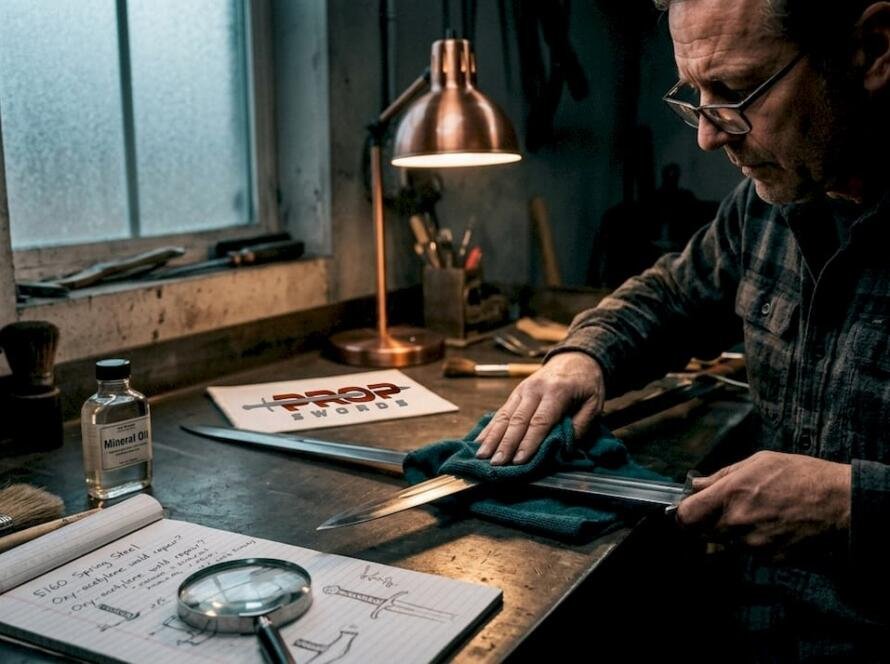
Foam and bubble wrap leave residue on blades, especially on bare carbon steel. Wipe the blade down with a clean, dry microfiber cloth before doing anything else. Work from the spine toward the edge in single strokes, never back and forth. This removes dust, foam particles, and any factory oil that has dried during transit.
Oiling carbon steel blades
Carbon steel blades, including 1075 alloy, require a thin coat of oil applied immediately after handling. Fingerprints alone transfer enough moisture and salt to start surface rust within days. Apply a few drops of camellia oil, mineral oil, or a purpose-made blade oil to a clean cloth, then wipe the entire blade surface in long, even strokes. Do not use cooking oils. They go rancid and accelerate corrosion rather than preventing it.
Pro Tip: Always oil the blade before putting it back in the scabbard. Leather scabbards trap moisture against the steel, which speeds up rust if the blade goes in dry.
Here is what to do and what to avoid after unboxing:
- Do wipe the blade with a dry cloth before oiling.
- Do use cut-resistant gloves when handling bare blades.
- Do store the sword horizontally or at a slight angle if displaying it.
- Avoid metal polishes and strong chemical cleaners on finished display surfaces. Harsh cleaners damage finish and strip protective coatings.
- Avoid touching the blade with bare hands after oiling.
- Avoid storing the sword in high-humidity areas without additional rust protection.
Display-only swords need less maintenance than functional replicas, but they still need attention. A soft cloth dusted over the blade monthly keeps surface oxidation from building up. For display preparation ideas that go beyond basic care, Propswords covers positioning, lighting, and mounting options in detail.
What common unboxing challenges should collectors prepare for?
Even experienced collectors run into problems during unboxing. Knowing what to expect removes most of the stress.
- The package is heavier than expected. Protective packaging adds 1–5 pounds to the sword’s base weight. Set the package on a flat surface before lifting it to a table. Never carry a crated sword under one arm.
- The inner packaging is rigid and will not slide out. Check for tape inside the outer shell. Sellers sometimes tape inner tubes to prevent shifting. A second pass with a box cutter along the interior seam usually frees it.
- The sword feels stuck in its foam cradle. Foam molds tightly during transit. Grip the hilt firmly with a gloved hand and lift straight up. Do not twist or pry the blade.
- The scabbard is taped shut. Some shippers tape the scabbard opening to prevent the blade from drawing during handling. Remove the tape carefully before attempting to draw the sword.
- Visible damage on arrival. Inspect blade and fittings carefully for any shipping-related defects. Photograph every angle before moving the sword from its packaging. Contact the seller within 24 hours with photos and a written description of the damage. Most reputable sellers, including Propswords, have clear damage claim processes.
- Customs delays on international orders. Customs declarations for replica weapons sometimes trigger additional review. Check your country’s import rules for replica blades before ordering. Delays of 5–15 business days are common for international replica sword shipments.
For a complete post-unboxing routine, the Propswords sword care guide walks through long-term maintenance for both display and functional replicas.
Key Takeaways
Safe replica sword unboxing requires the right tools, a flat work surface, cut-resistant gloves, and immediate blade care to protect both the collector and the sword’s long-term condition.
| Point | Details |
|---|---|
| Expect significant package weight | Protective materials add 1–5 lbs total; set the package flat before lifting. |
| Gloves before inner layers | Put on cut-resistant gloves before unwrapping foam or bubble wrap. |
| Hilt-first unwrapping | Always peel packaging from the hilt end to keep the blade edge away from your hands. |
| Oil carbon steel immediately | Apply camellia or mineral oil right after handling to prevent rust from fingerprints. |
| Document damage before discarding packaging | Photograph all defects and contact the seller within 24 hours of delivery. |
Why I think most collectors rush the one step that matters most
The unboxing itself gets all the attention. The care step that follows gets almost none. I have seen collectors spend months tracking down a limited-edition anime replica, then set it on a shelf bare-handed without a drop of oil on the blade. Six months later, they are asking why there are rust spots on a sword they barely touched.
The packaging weight issue also surprises people more than it should. Most enthusiasts underestimate the shipping weight impact of protective materials, and that leads to fumbled packages and unnecessary drops. A dropped sword in a wooden crate can still crack a blade tip or bend a guard on impact.
My honest advice: treat the unboxing like the sword is already on display. Every touch, every surface it contacts, every second it sits without oil is a variable you control. The collectors whose pieces look pristine after years of ownership are not lucky. They are methodical from the first cut of tape. For creative ideas on displaying your collection after unboxing, ToylandEU has practical inspiration worth bookmarking.
Patience during unboxing is not caution for its own sake. It is respect for an object that took real craft to produce and real money to acquire.
— Muhammad
Propswords has the replicas worth unboxing carefully
Collectors who follow a careful unboxing process deserve swords that reward that attention. Propswords carries a curated selection of top replica swords for 2026, covering anime, Viking, movie-inspired, and historical designs, each chosen for build quality and display value.
Beyond the swords themselves, Propswords publishes a complete display checklist for collectors who want a structured approach to mounting, lighting, and long-term preservation. Free shipping within the USA means the packaging arrives intact without extra handling charges. Browse the full catalog at Propswords and find a replica worth every step of the unboxing process.
FAQ
What tools do I need for safe sword unboxing?
You need a retractable box cutter, cut-resistant gloves, and a flat surface at least 4 feet long. A microfiber cloth and blade oil are also needed for immediate post-unboxing care.
Why is my replica sword package so heavy?
Protective packaging adds 1–5 pounds to the base sword weight through foam, bubble wrap, and rigid outer containers. Wooden crates alone add 3–5 pounds.
Do I need to oil my replica sword right after unboxing?
Yes, especially for carbon steel blades. Fingerprints cause surface rust within days on unprotected steel, so apply a thin coat of camellia or mineral oil immediately after handling.
What should I do if my sword arrives damaged?
Photograph the damage from every angle before removing the sword from its packaging, then contact the seller within 24 hours with photos and a written description of the defects.
Can I use metal polish on my display replica sword?
No. Metal polishes and strong chemical cleaners damage the finish on display replicas. Use a dry soft cloth for routine dusting instead.
Recommended