TL;DR:
- Sword collecting encompasses a diverse range of authentic and replica blades, driven by history, aesthetics, or fandom. Mastering identification, authentication, and valuation ensures collectors make informed decisions and preserve their pieces properly. Focused engagement, themed collections, and community participation elevate the hobby beyond mere ownership, fostering genuine expertise and appreciation.
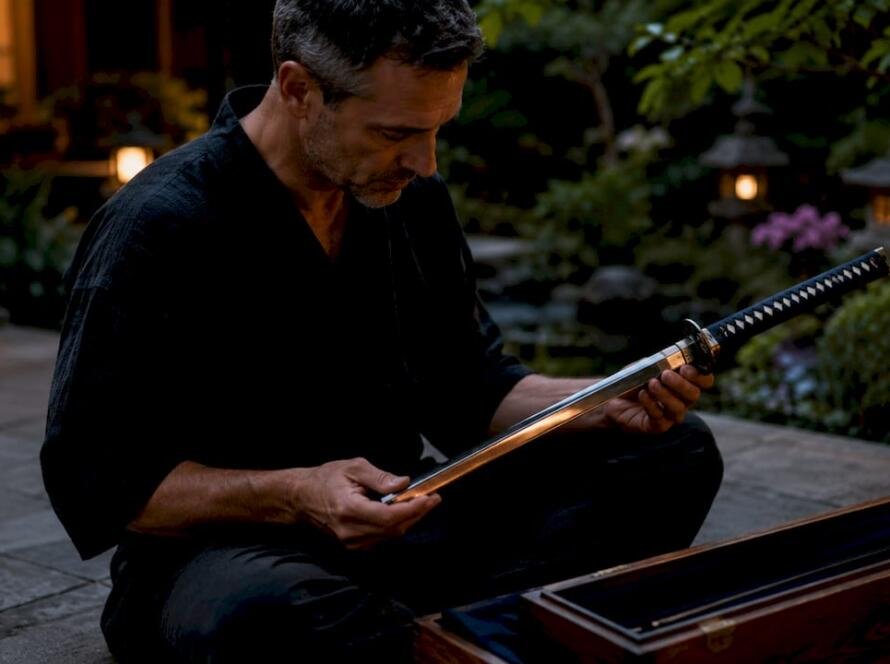
Sword collecting is not just about owning old weapons. That misconception keeps a lot of people from realizing they already belong in this hobby. What is sword collecting, really? It is a broad, deeply personal pursuit that spans authentic antique blades, hand-forged katana, military sabers, and beautifully crafted replicas inspired by anime, movies, and fantasy. Some collectors are motivated by history and preservation. Others are cosplayers hunting for the perfect prop. Some simply want a stunning display piece that captures a beloved character or era. Whatever your entry point, understanding how this world works will save you money, sharpen your eye, and make every acquisition more satisfying.
Table of Contents
- Understanding the foundations of sword collecting
- Specialized approaches: historical, military, and Japanese sword collecting
- The appeal and particulars of replica swords for cosplay, anime, and display
- Building and caring for a meaningful sword collection
- Why sword collecting is more than just owning blades: a collector’s insight
- Explore high-quality replica swords for every collector and cosplayer
- Frequently asked questions
Understanding the foundations of sword collecting
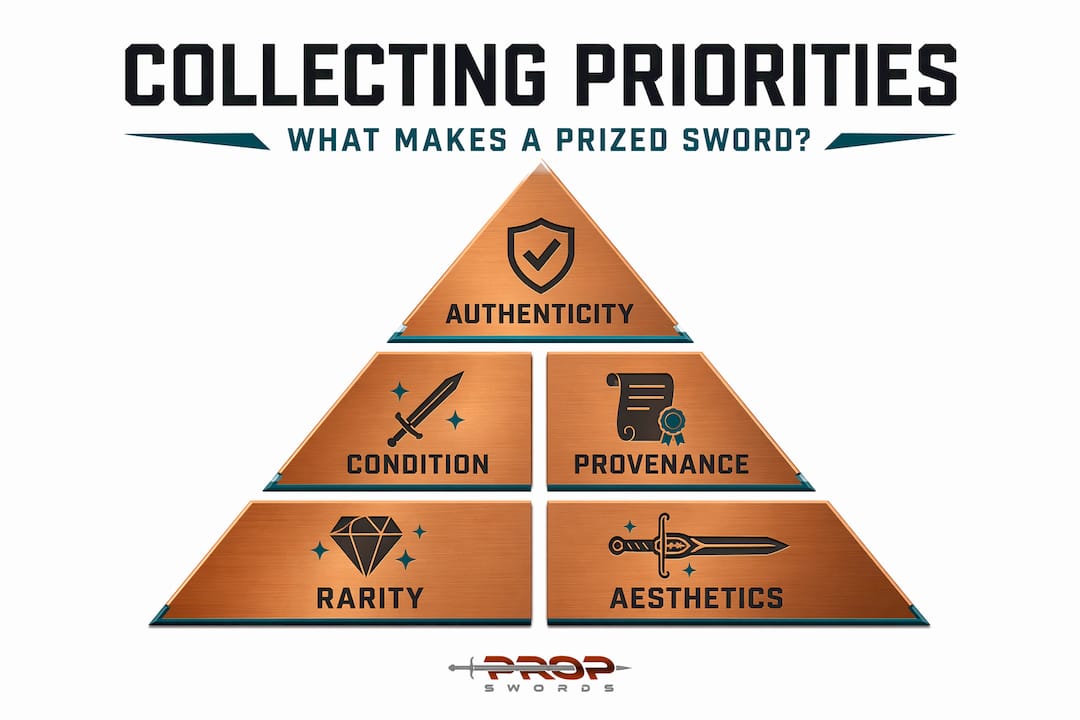
Before you spend a dollar, you need to know how collectors actually evaluate a sword. The core of what is sword collecting comes down to three overlapping skills: identification, authentication, and valuation. Skip any one of them and you will eventually make an expensive mistake.
Multi-factor authentication covers provenance research, documentation checks, maker or smith mark verification, and condition grading. These are not optional extras for serious collectors. They are the foundation of every smart acquisition.
Here is what that process looks like in practice:
- Provenance research: Tracing a sword’s ownership history through sale records, museum loans, or estate documentation
- Documentation checks: Verifying certificates of authenticity, period receipts, or scholarly publications referencing the piece
- Maker or smith marks: Cross-referencing stamps, signatures, or engravings against known historical records
- Condition grading: Rating a sword from mint (no wear, original finish) to poor (heavy pitting, replaced components) to determine both value and preservation needs
“A sword without a story is just metal. Authentication gives it meaning, provenance gives it value, and condition determines what it will be worth a decade from now.”
Condition grading is where many beginners undervalue a piece or overpay. A blade with original patina in good condition is almost always worth more than a heavily polished example, because polishing removes historical material. For replica collectors, the same logic applies differently. You’re grading craftsmanship consistency, finish quality, and design accuracy rather than historical age.
Learning to read these factors well is also central to authenticating replica swords, where construction quality and material honesty matter just as much as visual appearance.
Specialized approaches: historical, military, and Japanese sword collecting
With authentication basics covered, let’s explore how different collecting disciplines vary in focus and what each one demands from you.
Japanese katana collecting
Japanese collectors typically work within three distinct categories: authentic nihonto (swords made in Japan using traditional methods), high-quality reproductions for martial arts or display, and investment-oriented pieces chosen for rarity and documented history. Each category requires a completely different knowledge base. Nihonto collecting demands familiarity with Japanese sword schools, historical periods, and the specific grain patterns of traditionally folded steel. Reproduction collecting is more forgiving but still rewards those who can assess steel quality, heat treatment, and handle construction.
Military sword collecting
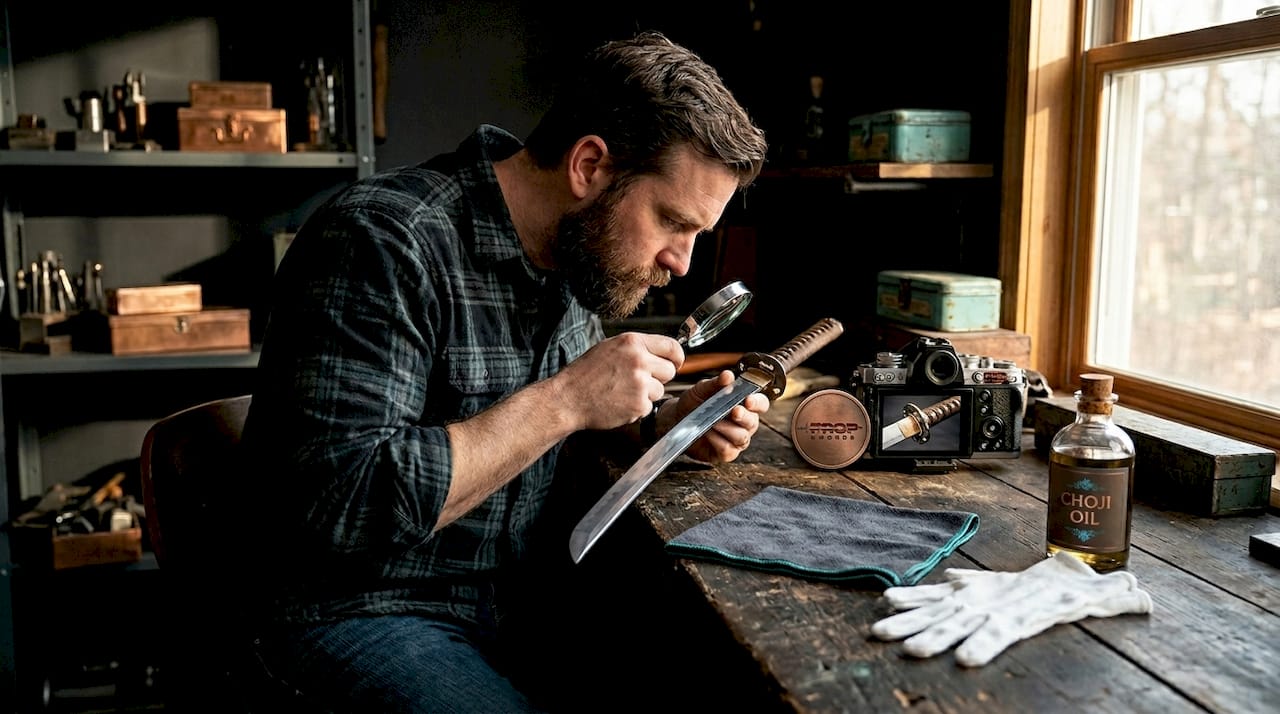
Military sword identification hinges on three physical details: maker names stamped on the blade or ricasso, guard designs that correspond to specific military branches and eras, and scabbard materials that match documented period patterns. A British 1796 Light Cavalry Saber with original iron scabbard, regimental markings, and inspector stamps tells a complete story. One with a replaced scabbard and filed markings tells a much shorter one.
| Collecting type | Primary expertise needed | Key documentation | Authentication difficulty |
|---|---|---|---|
| Japanese nihonto | Sword school periods, steel grain | Juyo Token certification | Very high |
| Military swords | Period markings, guard patterns | Inspector stamps, regimental records | High |
| Medieval replicas | Design accuracy, steel grade | Maker’s provenance, steel specs | Moderate |
| Anime/fantasy replicas | Character accuracy, craftsmanship | Seller documentation | Lower |
Common mistakes in specialized collecting:
- Buying a military sword without verifying the scabbard matches the blade period
- Confusing Chinese-made katana reproductions with genuine nihonto
- Overlooking handle replacement on historical pieces, which significantly reduces value
- Prioritizing visual appeal over construction quality in choosing replica swords
Pro Tip: Pick one niche and go deep before branching out. A collector who spends two years focused on WWII-era military swords will develop pattern recognition that protects them from costly errors far better than someone casually sampling every category.
The appeal and particulars of replica swords for cosplay, anime, and display
Having covered historical and military sword collecting, let’s focus on the world that most readers here know best: replica swords for anime fans, cosplayers, and display collectors.
Replica swords for anime and cosplay prioritize visual accuracy and safe handling over cutting functionality. This is a deliberate design choice, not a shortcut. At conventions and photoshoots, a sword that photographs perfectly and poses safely is more valuable than one that could actually cut. Materials range from lightweight EVA foam and ABS plastic for cosplay props to solid aluminum or carbon steel for higher-end display replicas.
Anime swords are prized as collectibles that carry real character symbolism. Ichigo’s Zangetsu from Bleach, Cloud’s Buster Sword from Final Fantasy VII, and Guts’ Dragon Slayer from Berserk are not just props. They are cultural artifacts that represent entire narratives and character arcs. For fans, owning a well-made version of that sword is a form of meaningful connection to the story.
Key factors to evaluate when selecting a replica sword for cosplay or display:
- Material: Carbon steel for display durability, aluminum for lightweight props, foam or plastic for safe cosplay use
- Size and scale: Measure against your body or display space before purchasing; anime swords are notoriously oversized
- Balance: A well-balanced replica feels intentional in hand and photographs without awkward tilting
- Safety features: Blunted edges, secured handles, and non-sharp tips are essential for convention use
- Design accuracy: Compare reference images from the source material against the replica’s details, including blade markings, guard shape, and handle wrapping
The anime sword buying checklist built around these factors will save you from the most common purchase regrets, especially when buying online without handling the sword first.
Pro Tip: Always check whether a replica’s handle is pinned or just press-fit. A pinned handle will not separate mid-pose or during transportation, which matters more than most buyers realize until the first time it falls apart.
When choosing anime replicas, the seller’s willingness to provide detailed photos, steel specifications, and construction notes is itself a quality signal. Vague listings are a red flag.
Building and caring for a meaningful sword collection
With awareness of sword types and purchase considerations, next comes the practical side: how to build and maintain a collection that holds its value and stays in excellent condition.
Where to source swords worth owning:
- Established auction houses with documented provenance records
- Specialist dealers offering lifetime authenticity guarantees
- Verified private collections with traceable ownership history
- Reputable online retailers with detailed product specifications and return policies
Disciplined sourcing from verified dealers and auction houses is not just about avoiding fakes. It is about building a collection with paper trails, which matters enormously if you ever sell, insure, or donate pieces.
| Sword type | Humidity control | Temperature | UV protection | Handling frequency |
|---|---|---|---|---|
| Authentic historical | 45-55% RH | 60-70°F | Critical, museum-grade | Minimal, gloved |
| Military swords | 40-55% RH | Stable, no extremes | Important | Low, documented |
| Carbon steel replicas | 40-60% RH | Room temp, stable | Moderate | Moderate, oiled |
| Cosplay/prop replicas | Standard indoor | Standard indoor | Low | Regular |
Preservation mistakes are shockingly common, even among experienced collectors. Steel corrodes faster than most people expect, especially in coastal climates with high humidity. Historical blades stored in felt-lined cases without humidity control can develop rust within months. Carbon steel replicas need light oiling every few months, more frequently if handled regularly.
Core preservation practices:
- Store swords horizontally or vertically in climate-controlled spaces
- Use acid-free padding inside display cases
- Never store in leather scabbards long-term, as leather traps moisture against the blade
- Handle with clean cotton gloves to avoid transferring skin oils and salts
Pro Tip: A $15 digital hygrometer inside your display cabinet tells you whether your storage environment is safe. It is one of the cheapest, most overlooked tools in any serious sword collection workflow.
For cosplay sword preparation and safe transportation to events, the cosplay sword preparation guide covers padding, cases, and compliance with venue weapon policies in detail.
Why sword collecting is more than just owning blades: a collector’s insight
Here is something most sword collecting guides will not tell you: the collectors who get the most out of this hobby are not the ones with the biggest collections. They are the ones with the most focused ones.
Matt Tait’s perspective on authentication captures this well. Thoughtful evaluation does not just protect your wallet. It transforms casual acquisition into genuine connoisseurship. When you know why a sword is significant, not just that it is old or impressive-looking, you engage with it completely differently. You notice the file work on the fuller. You recognize the guard profile as specific to a particular regiment. You understand that the handle wrap tells you something about the original owner’s preferences.
That depth of engagement is what separates collectors from accumulators. Accumulation is just buying things. Collecting is building knowledge alongside objects.
This matters especially for the replica and anime sword community, where the temptation is to chase every new release from a beloved franchise. The collectors who build the most satisfying collections in this space tend to be selective. They pick a theme, whether that is One Piece swords, historical Viking blades, or feudal Japanese aesthetics, and they pursue quality representations of that theme rather than quantity across every category.
The social dimension of collecting is also underrated. Sword collector communities, both online and at conventions, share knowledge generously. Your ability to articulate what makes a piece significant, to explain the period, the smith, the character, or the craftsmanship, is what earns you credibility in those spaces. That credibility opens doors to private sales, early access to limited releases, and mentorship from more experienced collectors.
Authenticating replica swords is a skill that compounds over time. Every sword you examine teaches you something the next one cannot.
Explore high-quality replica swords for every collector and cosplayer
If this guide has clarified what sword collecting means for you, whether you are drawn to historical accuracy, anime fandom, or cosplay functionality, the next step is finding pieces that match your specific direction.
Propswords carries a curated selection that covers the full range of collector and cosplayer needs. From fantasy sword collectibles that capture the best of anime and movie-inspired design to display-ready historical replicas built for serious collectors, there is something here for every focus. The best replica swords for 2026 selection highlights pieces chosen for craftsmanship quality, design accuracy, and value. For cosplayers, the cosplay sword preparation guide pairs perfectly with any purchase to ensure you are event-ready. Free shipping within the USA applies across the catalog, making it easier to invest in quality without worrying about added costs.
Frequently asked questions
What is the most important factor when starting sword collecting?
Proper identification and authentication, including examining provenance, maker marks, and condition, is the skill that protects you from costly mistakes and builds a trustworthy collection from day one.
How do replica swords for cosplay differ from authentic swords?
Cosplay replicas use lightweight materials like foam or ABS plastic that prioritize safety and portability, while authentic swords are built from high-carbon steel with functional construction and historical accuracy.
Can sword collecting be an investment?
Yes, particularly with authentic historical swords that carry documented provenance and excellent condition grades, both of which drive long-term appreciation in value among serious buyers.
Where should I buy quality replica swords?
Purchasing from specialist dealers who provide detailed product specifications, construction notes, and authenticity guarantees is the safest route to quality and long-term satisfaction.
Recommended