TL;DR:
- Movie-inspired weaponry blends film aesthetics with real firearm mechanics to create culturally meaningful objects. These designs rely on authentic sources, concept art, and advanced fabrication methods, inspiring both collectors and technological innovations. The field emphasizes cultural specificity, design fidelity, and practical applications beyond entertainment, shaping both pop culture and real-world technology.
Movie-inspired weaponry is defined as the design and creation of weapons whose aesthetics, mechanics, and cultural identity originate directly from films. These are not simple costumes or toys. They represent a discipline where concept artists, prop makers, and collectors blend real firearm mechanics, fantasy aesthetics, and cinematic storytelling into objects that carry genuine cultural weight. From the DL-44 blaster rooted in a 19th-century Mauser C96 to Blade Runner’s layered prop construction, film-inspired arms have shaped pop culture, collector markets, and even real-world technology. Propswords exists precisely because this passion is real, and the demand for faithful replicas keeps growing.
What is movie-inspired weaponry and how does it work?
Movie-inspired weaponry is the art of designing weapons whose form and function draw from cinematic source material. The industry term for this practice is “prop weapon design,” though fans and collectors use “movie-inspired weaponry” to describe both screen-used props and the replicas that follow them into the market.
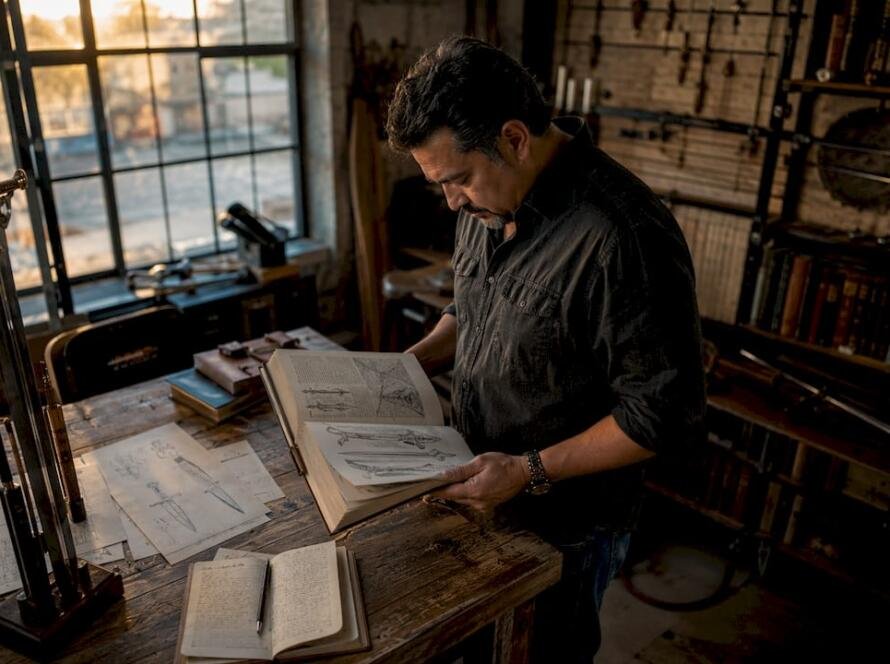
The discipline sits at the intersection of film production, industrial design, and fan culture. A prop weapon must look believable on screen, survive production handling, and often carry symbolic meaning tied to a character’s identity. That combination of demands is what makes these objects so compelling to study and collect.
Concept artists play a central role in this process. Chris Wildgoose, who worked on the Assassin’s Creed film, has explained that fan devotion to source material actually helps achieve authenticity. Artists who love the lore push harder for accuracy, and that passion shows up in the final design.
How are movie weapons designed and what real-world influences shape them?
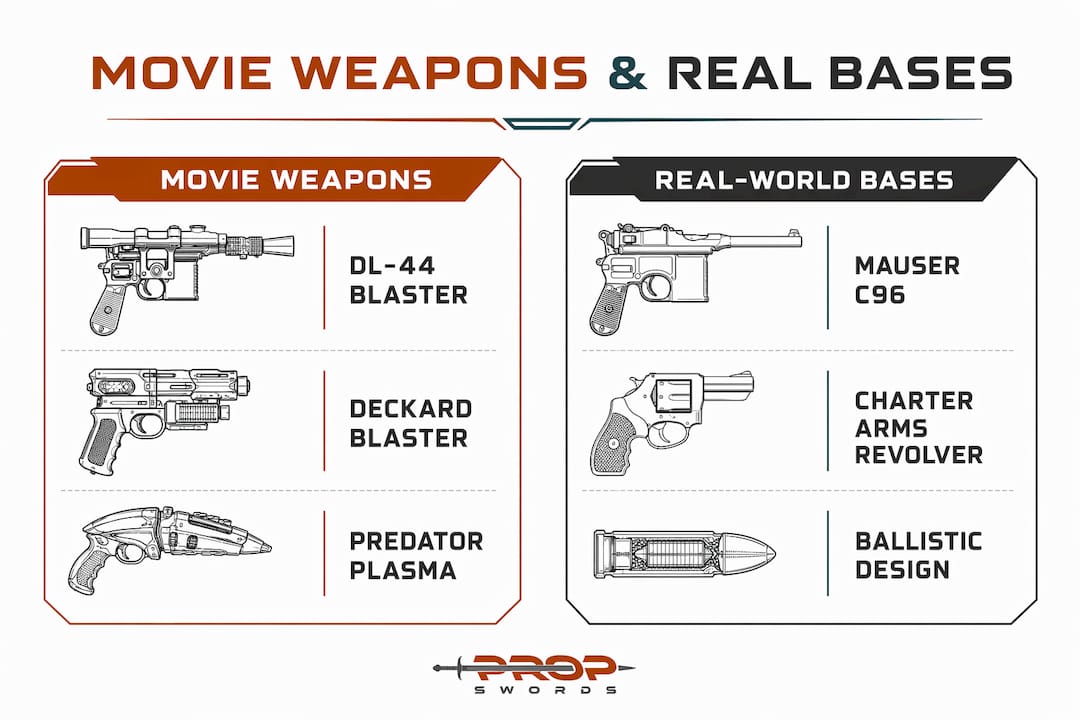
The design of iconic movie weapons almost always starts with something real. Many sci-fi weapons in major films are built directly on 20th-century firearm frames. The Star Wars DL-44 blaster uses a Mauser C96 as its base. The Morita rifle from Starship Troopers combines a Ruger Mini-14 with an AC-556 receiver. That grounding in real hardware gives fictional weapons an immediate visual credibility that pure fantasy designs rarely achieve.
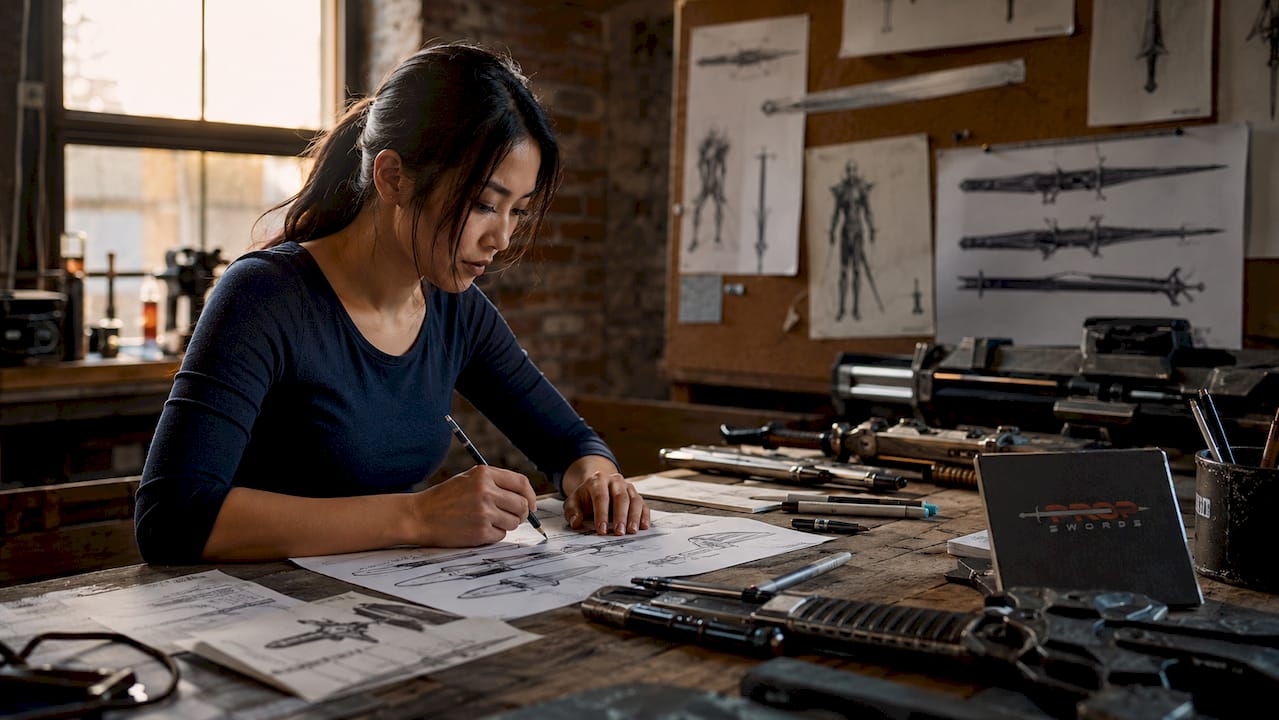
The role of concept art and visual believability
Director Chuck Russell, who worked on the railgun sequences in Eraser, has stated that visible battery packs and functional-looking parts are what help audiences accept powerful fictional weapons. The audience does not need to understand how the weapon works. They need to believe it could work. That distinction drives every design decision from concept sketch to finished prop.
Concept artists balance two competing pressures: fantasy spectacle and physical plausibility. A weapon that looks too alien loses the audience. A weapon that looks too ordinary loses the magic. The best designs, like the lightsaber or the Predator’s wrist blades, solve this problem by anchoring one familiar element inside an otherwise impossible form.
Materials and fabrication in modern prop creation
Modern prop weapons use a mix of traditional machining, cast resin, and digital fabrication. Wētā Workshop, the New Zealand effects company behind films like The Lord of the Rings and the upcoming Predator: Badlands, uses an iterative process that combines practical sculpting with digital modeling. The result is weapons that hold up to close-up camera work while remaining light enough for actors to handle across long shooting days.
Key fabrication methods used in professional prop weapon creation include:
- Cast resin and foam latex for lightweight stunt versions
- Machined aluminum or steel for hero props that appear in close-up shots
- 3D printing for rapid prototyping and complex geometry that would be expensive to machine
- Hand finishing and paint weathering to add the visual texture that makes a prop read as real on screen
Pro Tip: If you are evaluating a replica for display, check whether the manufacturer used the same layered finishing process. A single-color cast piece will never match the depth of a hand-weathered replica.
What are some iconic examples of movie-inspired weaponry?
The most studied examples of film-inspired arms share one quality: their design tells you something about the character who carries them before a single line of dialogue is spoken.
The DL-44 blaster and Blade Runner’s prop construction
The DL-44 is the clearest example of real-world grounding in fictional weapon design. Its Mauser C96 base gives it a boxy, mechanical silhouette that reads as both antique and futuristic. Han Solo’s weapon looks like something a smuggler would actually find and modify, which is exactly the character note George Lucas wanted.
Blade Runner’s Deckard blaster takes a different approach. The prop was built using a Charter Arms .44 revolver combined with a Steyr SL rifle receiver, and it was functional enough to fire blanks on set. That level of construction complexity is why authentic replicas of this weapon are among the most sought after in the collector market.
Here is a quick reference for some of the most significant fictional weapon designs and their real-world origins:
| Movie Weapon | Real-World Base | Design Significance |
|---|---|---|
| DL-44 Blaster (Star Wars) | Mauser C96 | Grounds Han Solo as a scrappy, practical fighter |
| Deckard’s Blaster (Blade Runner) | Charter Arms .44 + Steyr SL | Suggests a retrofitted, noir-inflected future |
| Morita Rifle (Starship Troopers) | Ruger Mini-14 / AC-556 | Signals military realism inside a sci-fi setting |
| Predator Wrist Blades | Original tribal design | Communicates hunter culture through weapon form |
Predator’s evolving weapon language
The Predator franchise offers one of the clearest case studies in how fictional weapon designs evolve across decades. The original 1987 design used tribal shapes and organic materials to suggest an alien hunter culture. The 2026 Predator: Badlands update, developed by Wētā Workshop, adds coppery filigree, bone inlays, and laser-based technology to the same framework. The weapons feel like they belong to the same civilization, just centuries more advanced. That continuity of design language is what separates thoughtful prop creation from generic sci-fi aesthetics.
The cultural impact of these weapons extends well beyond the screen. Fans build cosplay armor around them, collectors pay significant sums for screen-accurate replicas, and the designs influence everything from video game art to fantasy sword collectibles sold through specialty retailers.
How has movie-inspired weaponry crossed into real-world technology and collectibles?
The influence of fictional weapon design does not stop at the theater exit. Three distinct real-world areas now show clear evidence of film-inspired arms shaping actual products and technologies.
Prosthetics, 3D printing, and wearable props
Cyberpunk 2077’s Johnny Silverhand bionic arm directly inspired a real prosthetic development project. Limbitless Solutions worked on a motorized gripping prosthetic modeled on the game’s iconic arm design. The crossover between entertainment design and functional medical technology is no longer theoretical. It is happening in labs right now.
3D printing has made prop creation accessible to fans who previously had no path to screen-accurate replicas. The Terminator 2 T-800 arm, for example, exists as a detailed animatronic model that uses servo motors and specific hardware to achieve realistic movement. Building it requires mechanical knowledge alongside design skill. That combination of disciplines is exactly what professional prop houses have always demanded, now available to dedicated hobbyists.
The collector’s market for replica weapons
Collecting movie replica weapons is a serious market with real quality distinctions. The steps below reflect how experienced collectors approach a purchase:
- Verify the base materials. Quality replicas use the same material categories as screen props: machined metal for structural parts, resin for decorative elements, and hand-applied finishes for weathering.
- Check the manufacturer’s documentation. Wearable props like the Mecha Cyber Arm require exact measurements and an unboxing video for any damage claim. No documentation means no recourse.
- Understand return policies before ordering. Many high-end replica makers offer no returns after shipping because pieces are custom-built to order.
- Research the design lineage. A replica is only as valuable as its accuracy to the source material. Knowing the original prop’s construction history helps you evaluate whether a replica is faithful or approximate.
Pro Tip: Before buying any wearable replica armor, record your unboxing on video. Strict no-return policies are standard in this market, and video documentation is your only protection if a piece arrives damaged.
The craftsmanship behind replica swords follows the same logic. Material choices, finishing techniques, and design fidelity all determine whether a piece holds its value over time or depreciates quickly.
What trends are shaping movie weapon concepts in 2026?
The current direction of fictional weapon design reflects two converging forces: the growth of digital fabrication and a renewed interest in cultural specificity within sci-fi aesthetics.
The tribal-meets-futuristic hybrid that Wētā Workshop developed for Predator: Badlands represents a broader trend. Audiences in 2026 respond to weapons that feel like they belong to a specific culture, not just a generic future. Designers are pulling from historical weapon traditions, including Viking, feudal Japanese, and pre-Columbian forms, and layering them with sci-fi technology to create something that feels both ancient and advanced.
Key trends shaping the field right now include:
- Licensing collaborations between film studios and replica manufacturers, producing officially certified collectibles with documented screen accuracy
- Fan-driven custom orders through specialty retailers, where collectors specify materials, finishes, and scale
- Prosthetic technology crossovers, where entertainment design informs functional medical and assistive devices
- High-fidelity digital fabrication, allowing replica makers to match screen prop geometry with a precision that hand sculpting alone cannot achieve
- Narrative-driven design, where a weapon’s visual language directly reflects a character’s backstory, culture, and arc
Propswords tracks these trends closely. The 2026 replica sword trends shaping the collector market reflect exactly this shift toward culturally specific, narratively grounded designs. Fans are no longer satisfied with generic fantasy swords. They want pieces that carry the same design intelligence as the screen props that inspired them. For fans who want to understand why certain replicas are worth the investment, the guide to authentic replicas at Propswords explains the key distinctions.
Key Takeaways
Movie-inspired weaponry is most compelling when real-world design logic and cinematic fantasy reinforce each other, producing objects that carry both visual authority and cultural meaning.
| Point | Details |
|---|---|
| Real firearms as design bases | Iconic props like the DL-44 and Deckard’s blaster use actual firearm frames to achieve instant visual credibility. |
| Concept art drives authenticity | Artists with genuine fandom knowledge produce more accurate designs that hold up to fan scrutiny. |
| Technology crossovers are real | Film-inspired designs now influence functional prosthetics and animatronic prop technology. |
| Collector due diligence matters | Verify materials, document unboxing, and understand return policies before purchasing any high-end replica. |
| Design trends favor cultural specificity | The strongest 2026 weapon designs blend historical cultural aesthetics with sci-fi technology for narrative depth. |
Why movie weapons fascinate me more than any other pop culture artifact
I have spent years around replica weapons, sci-fi merchandise, and sci-fi fan gifts, and I keep coming back to the same observation: a well-designed movie weapon does something that almost no other prop can do. It tells you who a character is without a single word of dialogue.
The DL-44 says Han Solo is practical, resourceful, and slightly behind the times. Deckard’s blaster says his world is retrofitted and exhausted. The Predator’s wrist blades say this creature has a warrior culture with centuries of tradition behind it. That density of meaning packed into a physical object is genuinely rare in any art form.
What I find underappreciated is how much real craft goes into the best replicas. Collectors sometimes treat price as the primary quality signal, but the actual differentiator is design fidelity. A replica that gets the proportions wrong, or uses the wrong finish, breaks the spell immediately. The best pieces hold up to close inspection because the maker understood the original prop’s construction logic, not just its appearance.
The challenge for anyone entering this space is learning to see that difference. Once you do, generic replicas become invisible and the genuinely faithful pieces become the only ones worth owning.
— Muhammad
Propswords has the film-inspired replicas serious collectors want
Collectors who care about design fidelity need a source that applies the same standards the best prop houses use. Propswords carries replicas built with that level of attention, from material selection through final finishing.
The top replica swords for 2026 at Propswords reflect the trends shaping the collector market right now: culturally specific designs, hand-applied finishes, and documented craftsmanship. Whether you collect for display, cosplay, or the pure satisfaction of owning a faithful piece, the catalog covers the full range. Free shipping within the USA applies across the collection, and the movie sword replica guide at Propswords walks you through quality and safety considerations before you buy.
FAQ
What is movie-inspired weaponry, exactly?
Movie-inspired weaponry refers to weapons whose design, aesthetics, and cultural identity originate from films. The category includes both screen-used props and the collector replicas that follow them into the market.
Are iconic movie weapons based on real firearms?
Many are. The Star Wars DL-44 blaster uses a Mauser C96 frame, and Blade Runner’s Deckard blaster was built from a Charter Arms .44 revolver combined with a Steyr SL rifle receiver.
How do concept artists shape fictional weapon designs?
Concept artists use their knowledge of source material lore to push for design accuracy while meeting practical film production requirements. Fan devotion to canon authenticity is a documented driver of better prop design outcomes.
What should collectors check before buying a movie replica weapon?
Verify the base materials, understand the return policy, and document your unboxing on video. Many high-end replica makers offer no returns after shipping because pieces are custom-built to order.
How has movie weapon design influenced real-world technology?
Cyberpunk 2077’s Johnny Silverhand bionic arm inspired a real motorized prosthetic developed with the help of Limbitless Solutions. Entertainment design now directly informs functional medical and assistive device development.
Recommended