TL;DR:
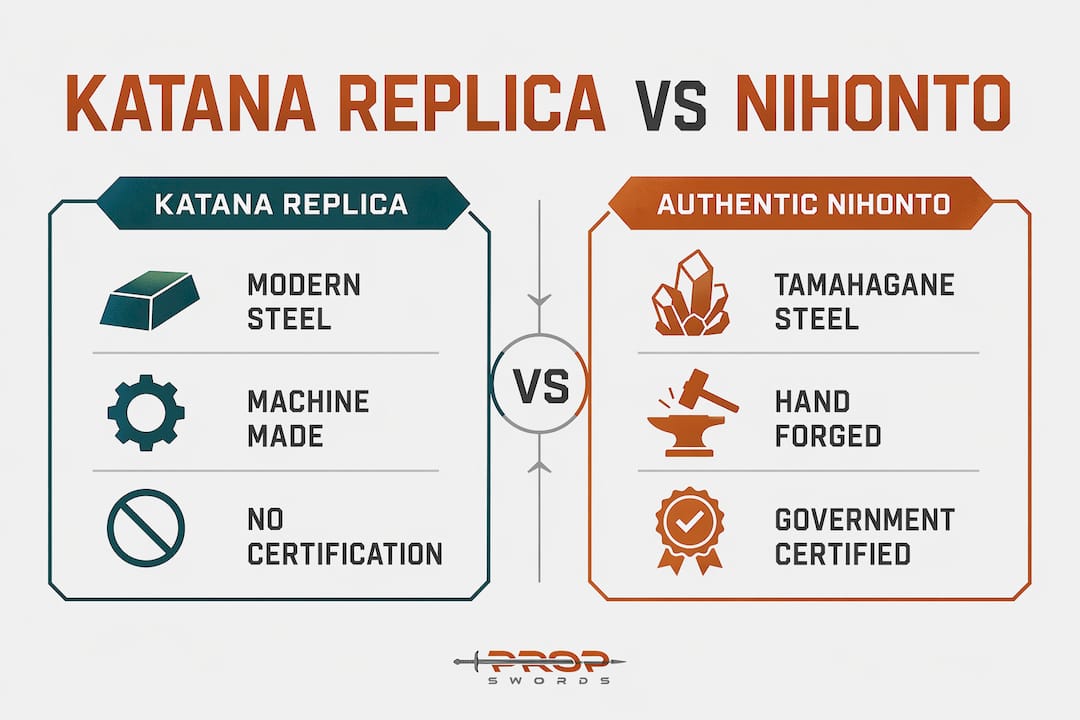
- A katana replica is a modern sword designed to resemble traditional Japanese Nihonto but manufactured with industrial methods and materials. Authentic Nihonto are forged by hand using tamahagane steel, and they carry official Japanese certification called Token Toroku-sho, which replicas lack. Properly constructed replicas for practice are made from high-carbon steels like 1060 or 1095, full tang, and priced between $100 and $1,000, depending on quality.
A katana replica is a modern sword modeled after traditional Japanese Nihonto but manufactured using industrial methods and materials, typically outside Japan and without the cultural certification that defines an authentic blade. Most replicas use steels like 1045, 1060, or 1095 carbon steel and are produced in factories rather than by hand-forging. They lack official registration such as the Japanese Token Toroku-sho, which is the legal document required for a sword to be recognized as authentic Nihonto. Understanding this distinction protects you from overpaying, buying unsafely, or being misled by vague marketing.
What is a katana replica, and how does it differ from authentic Nihonto?
A katana replica is defined by what it copies and what it lacks. It reproduces the shape, proportions, and visual style of a traditional Japanese sword, but the manufacturing process is fundamentally different from the one that creates authentic Nihonto.
Traditional forging vs. modern production
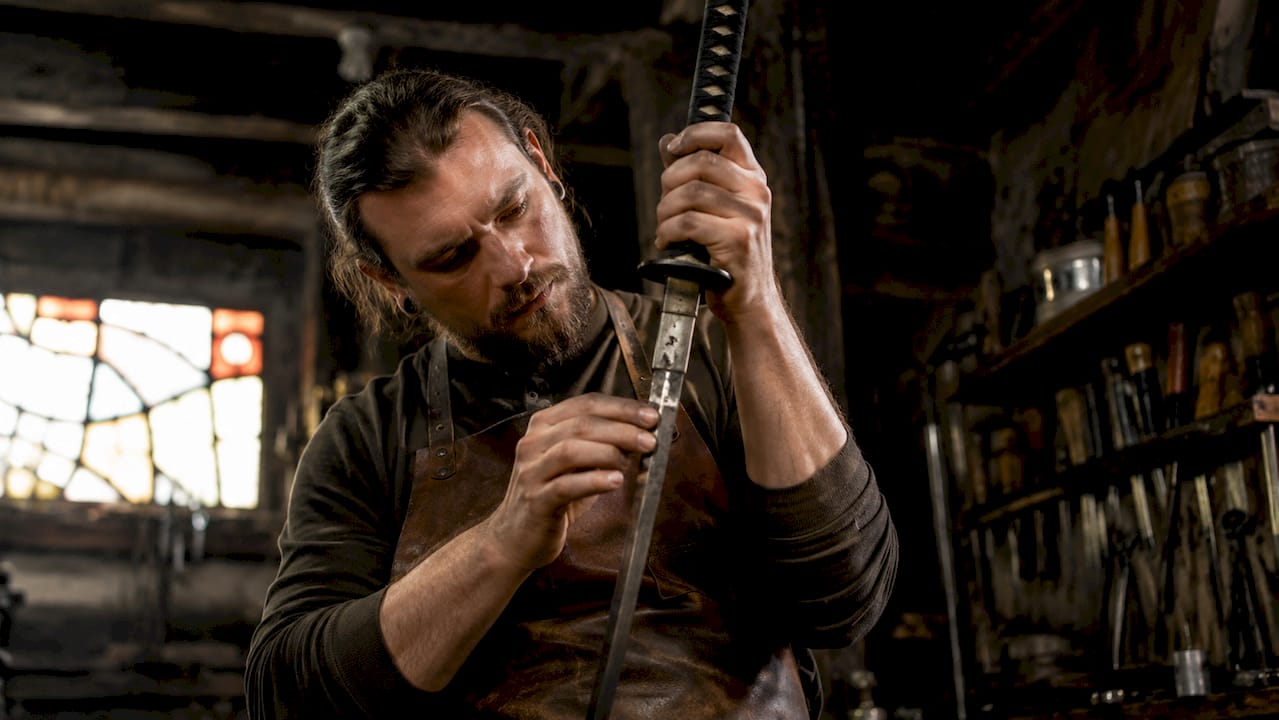
Authentic Nihonto are hand-forged with tamahagane steel, a material smelted from iron sand in a clay furnace called a tatara. The swordsmith folds and hammers the steel repeatedly, then applies a clay coating before the final quench. This clay tempering process creates the hamon, the visible temper line along the blade’s edge. That hamon is not decorative. It reflects the actual crystalline structure of the steel, where hard martensite meets softer pearlite. No two authentic hamon are identical.
Replica blades skip this process entirely. Most are stamped or laser-cut from flat steel stock, then machine-ground to shape. The hamon on a replica is almost always acid-etched onto the surface, not produced by differential heat treatment. Under magnification, an authentic hamon shows a complex transition zone called the nie and nioi. A replica’s hamon shows a flat, uniform line with no internal structure.
Legal and cultural recognition
The Token Toroku-sho is not just paperwork. It is the Japanese government’s certification that a sword was made by a licensed smith using traditional methods on Japanese soil. Replicas, regardless of quality, cannot obtain this document. Collector experts confirm that signatures alone, called mei, cannot verify authenticity because counterfeiters apply false signatures, known as gimei, to replicas to mislead buyers. The only reliable verification is the official registration document.
Pro Tip: If a seller offers a “certified authentic” katana without a Token Toroku-sho, treat that claim as marketing language, not legal fact.
Visual and structural differences
Beyond the hamon, the tang tells the story. An authentic katana’s tang, called the nakago, shows age-appropriate rust, file marks from the original smith, and a mei that matches historical records. Replica tangs are often machine-finished, uniformly smooth, and may carry signatures that do not correspond to any known swordsmith. Blade balance also differs. A hand-forged Nihonto distributes weight in a way that reflects the smith’s intent for cutting geometry. Machine-made replicas often feel either too light or poorly balanced because the geometry is approximated rather than calculated through the forging process.
What types of katana replicas exist?
Replica katana types fall into three broad categories, each built for a different purpose. Knowing which type you need before you buy saves money and prevents safety risks.
- Decorative wall-hangers. These use stainless steel blades and are built for display only. Stainless steel is brittle under stress and can shatter if used for cutting practice. They look sharp and polished on a wall mount, but they are not functional swords. Prices typically stay under $200.
- Functional training swords. These are made from high-carbon steels like 1060, 1095, or T10, with proper heat treatment. Martial artists use them for iaido, tameshigiri, and kata practice. They require a full tang construction, meaning the steel runs the full length of the handle, not just partway. These are the replicas worth spending more on.
- High-quality reproductions. These sit between a functional replica and a collector’s piece. Makers use traditional-style fittings, hand-wrapped handles called tsuka, and better steel. They mimic traditional crafting aesthetics without carrying Japanese certification. These often range from $500 to $1,000 and suit serious collectors who want visual authenticity without the cost of a true Nihonto.
Pro Tip: Always ask for the tang construction type before buying a functional replica. A rat-tail tang, where a thin rod is welded to the blade, will fail under cutting stress. Only a full tang is safe for practice.
The weight and balance of each type reflects its purpose. Decorative replicas are often lighter and feel hollow. Functional replicas carry the heft of a real cutting tool. High-quality reproductions aim for the balance of a traditional sword, which sits just forward of the guard.
How to identify quality katana replicas and avoid fakes
The replica market rewards informed buyers and punishes careless ones. A quality replica is honestly labeled. A fake is a replica misrepresented as something it is not.
Four steps to evaluate any replica before buying
-
Check the steel specification. Any reputable seller lists the exact steel grade. If a listing says “high-carbon steel” without a number, ask for clarification. The grade matters because 1045 steel is softer and better for beginners, while 1095 and T10 hold a sharper edge and suit experienced practitioners.
-
Examine the tang description. Full tang construction is non-negotiable for any sword used in practice. A product listing that does not mention tang construction is a warning sign. Learn to assess blade construction before committing to a purchase.
-
Reject “battle-ready stainless steel” claims. This phrase is a red flag. Stainless steel cannot be properly heat-treated for cutting use. Any sword marketed as battle-ready must use carbon steel or spring steel. Buyers should seek clear specs rather than vague marketing terms to avoid deception.
-
Use price as a quality signal. Decorative replicas cost under $200. Functional replicas built for cutting range from $100 to $500. High-quality reproductions run $500 to $1,000. A sword claiming to be battle-ready for $60 is almost certainly unsafe.
Pro Tip: Search the seller’s return policy before buying. A seller confident in their product’s quality offers clear returns. One that does not is betting you will not notice the problems until it is too late.
Counterfeit sellers sometimes apply false signatures to replicas to suggest they are antique Nihonto. Professional authentication examines grain patterns, temper lines, blade inscriptions, and mount quality. None of these features appear correctly on a machine-made replica, which is why the Token Toroku-sho remains the only reliable proof of authentic Japanese origin.
Where to buy katana replicas safely
Online specialty shops and martial arts suppliers are the most reliable sources for katana replicas. General marketplaces carry replicas too, but product descriptions are often vague and seller accountability is low.
When evaluating where to buy, focus on these factors:
- Transparent product descriptions. The listing should state the steel grade, tang type, blade length, and intended use. Vague descriptions like “samurai sword” with no specifications signal a decorative product being sold ambiguously.
- Customer reviews with photos. Text reviews alone are easy to fabricate. Photo reviews showing the actual product, including the tang, fittings, and blade finish, give you real information.
- Clear return and warranty policies. Functional swords are tools. A seller who stands behind their product offers a return window and responds to questions about construction.
- Stated intended use. A good seller tells you whether a sword is for display or practice. This protects you legally and physically.
For collectors interested in display pieces, understanding the emotional and practical value of wall-hanger replicas helps set realistic expectations before purchase. For practitioners choosing a training sword, consulting resources on martial arts school equipment can help you match the sword to your training program.
Key Takeaways
A katana replica is a modern reproduction of traditional Nihonto, and its value depends entirely on honest labeling, correct steel, and a construction matched to its intended use.
| Point | Details |
|---|---|
| Replica definition | A katana replica copies Nihonto design but lacks Japanese certification and traditional forging. |
| Steel type matters | Functional replicas require carbon steel like 1060 or 1095; stainless steel is for display only. |
| Tang construction | Only a full tang is safe for cutting practice; rat-tail tangs fail under stress. |
| Price signals quality | Functional replicas cost $100–$500; high-quality reproductions run $500–$1,000. |
| Honest labeling | A replica is acceptable when clearly described; it becomes a fake when misrepresented as authentic. |
Why replicas deserve more respect than they usually get
Most katana content online treats replicas as inferior products that serious collectors should avoid. I disagree with that framing, and I think it misleads beginners in a way that costs them real money.
A well-made functional replica in 1095 carbon steel with a full tang and proper heat treatment is a serious cutting tool. It will outperform a poorly made “authentic” sword from a lesser-known smith. The label matters less than the construction. I have seen collectors dismiss a $400 functional replica as a toy while spending thousands on a certified piece that sits in a case and never gets used. Both choices are valid, but neither is objectively superior.
What actually harms buyers is the middle ground: replicas marketed with inflated language, false signatures, or vague steel claims. That is where the real damage happens. A beginner who buys a stainless steel sword believing it is battle-ready and then uses it for cutting practice is at genuine physical risk. The blade can shatter. That is not a hypothetical.
My advice is simple. Decide your purpose first. Display collectors should focus on visual quality and fittings. Practitioners need carbon steel and full tang construction. Enthusiasts who want the look of a traditional sword without the $10,000+ price of authentic Nihonto should look at high-quality reproductions and appreciate them for what they are: well-crafted objects that honor a tradition without pretending to be part of it.
Replicas are not lesser swords. They are different swords, built for different purposes. Treat them that way, and you will make better decisions every time.
— Muhammad
Propswords has the replica sword for your collection
Propswords carries a curated selection of replica swords across every category, from display-ready wall pieces to functional carbon steel blades built for serious collectors and martial arts enthusiasts.
Every product listing on Propswords includes clear steel specifications, construction details, and intended use so you know exactly what you are buying before it ships. Free shipping within the USA applies across the catalog. Whether you want a display piece inspired by anime and film or a practice sword with real cutting capability, the best replica swords for 2026 are listed and ready to browse. Propswords also covers fantasy collectible swords for collectors drawn to pop culture and fandom-inspired designs.
FAQ
What is the katana replica definition in simple terms?
A katana replica is a modern sword that copies the shape and style of a traditional Japanese Nihonto but is manufactured using industrial methods and materials, without Japanese certification.
Are katana replicas worth buying for martial arts practice?
Yes, functional replicas made from 1060, 1095, or T10 carbon steel with full tang construction are safe and effective for iaido and tameshigiri training at a fraction of the cost of authentic Nihonto.
How do I identify a quality katana replica?
Look for a stated steel grade, full tang construction, and a seller who clearly labels the sword as a replica suited for either display or practice. Avoid any listing that claims battle-ready stainless steel.
What is the difference between a katana replica and a fake katana?
A replica is honestly labeled as a modern reproduction. A fake is a replica misrepresented as an authentic antique or certified Nihonto, often with false signatures or fabricated provenance.
Where is the best place to buy katana replicas?
Specialty online retailers with transparent product descriptions, photo-verified customer reviews, and clear return policies offer the safest buying experience for katana replicas.
Recommended