TL;DR:
- Sword types are classified mainly by blade shape, edge configuration, hilt design, and intended use. These features reveal a sword’s origin, fighting style, and cultural role more reliably than any single characteristic.
Sword types are defined by four physical features: blade shape, edge configuration, hilt design, and intended use. These four elements, taken together, reveal a sword’s origin, fighting style, and cultural role more reliably than any single characteristic alone. From the straight double-edged gladius of Roman legions to the curved single-edged katana of feudal Japan, every major sword family in history reflects a specific answer to a specific problem. This guide covers the full sword classification guide, from European longswords to Middle Eastern shamshirs, so collectors, martial artists, and fantasy enthusiasts can identify and appreciate what they’re looking at.
What are the main sword types explained by blade shape?
Blade shape is the fastest way to classify any sword. Curved, single-edged blades identify saber families like the katana, shamshir, kilij, and talwar, while straight, double-edged blades point to swords like the gladius, spatha, and arming sword. That single observation narrows your identification to a geographic region and a combat tradition before you examine anything else.
Blade length adds another layer of precision. Single-edged blades typically measure 48–60 cm, while larger double-edged swords range from 50–100 cm depending on era and purpose. A shorter blade signals close-quarters or cavalry use. A longer blade suggests open-field infantry combat or two-handed technique.
The blade profile, meaning the cross-section shape, matters too. A flat, wide blade with a shallow taper is built for slashing. A narrow, stiff blade with a pronounced taper is built for thrusting. The rapier is the clearest example of the latter. The falchion, a single-edged European sword with a widening tip, is the clearest example of the former.
| Blade type | Edge configuration | Typical use | Example swords |
|---|---|---|---|
| Straight, double-edged | Both edges sharp | Cut and thrust | Gladius, longsword, spatha |
| Curved, single-edged | One edge sharp | Slashing, cavalry | Katana, shamshir, kilij |
| Straight, single-edged | One edge sharp | Chopping, utility | Falchion, dao |
| Narrow, straight, double-edged | Both edges sharp | Thrusting, dueling | Rapier, estoc |
| Curved, double-edged | Both edges sharp | Cut and thrust | Khopesh, some sabers |
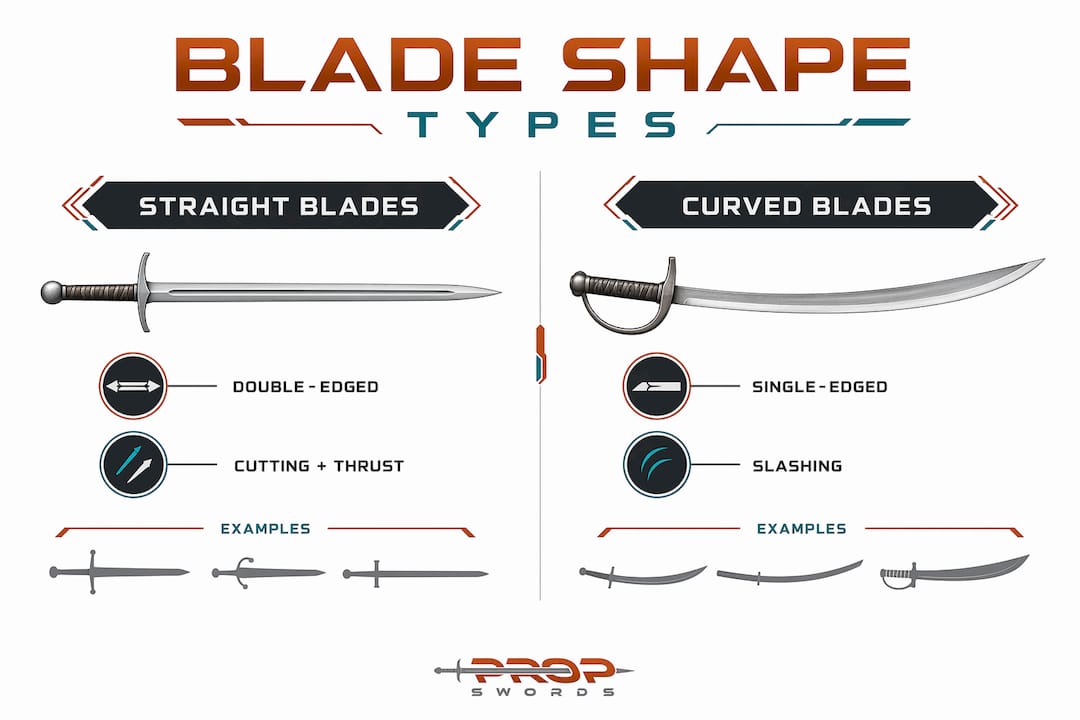
Pro Tip: Start every sword identification with the silhouette. Sword silhouettes are the most reliable quick-identification method because they reveal function and regional origin before you read a single label.
How does hilt design reveal a sword’s fighting style?
Hilt design is the feature most collectors underestimate. Hilt construction, including grip length and guard style, confirms historical and regional origins even when two swords share a nearly identical blade. A sword’s guard tells you how its fighter expected to be attacked. The grip length tells you how many hands were meant to hold it.
Guard types break into three broad categories:
- Crossguard: A simple horizontal bar protecting the hand. Found on Viking swords, arming swords, and longswords. Signals a tradition of blocking and parrying with the weapon itself.
- Basket hilt: A complex cage of metal bars enclosing the entire hand. Found on Scottish broadswords and certain cavalry sabers. Signals a fighting style where the hand needed continuous protection during extended engagements.
- Minimal guard: A small disc or no guard at all. Found on the katana and many Asian swords. Signals a tradition where footwork and evasion replaced physical blocking.
Grip length divides swords into three functional categories. One-handed grips, measuring roughly 10–15 cm, suit fast, single-hand techniques. Hand-and-a-half grips, also called bastard sword grips, allow either one or two hands depending on the situation. Two-handed grips, found on the Scottish claymore and Japanese nodachi, commit the fighter fully to two-hand power and reach.
The rapier illustrates how hilt complexity signals social context as much as combat function. Its swept hilt, with multiple rings and bars, protected the fingers during civilian dueling where precise thrusts replaced battlefield hacking. The Viking sword’s simple crossguard reflects a warrior culture that valued speed and directness over elaborate defense.
Pro Tip: Combine blade shape and hilt features when classifying any sword. A curved blade with a minimal guard points to Asian cavalry traditions. A straight blade with a basket hilt points to European infantry or dueling traditions. Neither feature alone gives you the full picture.
What sword families existed across different world cultures?
Different sword families worldwide all reflect adaptations to local fighting systems, metallurgy, and cultural aesthetics. No single tradition invented the “best” sword. Each region solved the problem of armed combat with the materials and tactics available to it.
European swords
The gladius, used by Roman legionaries, measured roughly 60–85 cm and excelled in tight infantry formations where thrusting was more effective than swinging. The spatha replaced it as Rome’s cavalry expanded, offering greater reach at 75–100 cm. Medieval Europe produced the arming sword, the longsword, and eventually the two-handed claymore. The Oakeshott typology classifies medieval European swords from the 11th through the 16th centuries into 13 types based on taper, fuller length, and blade length, directly linking each design to its intended fighting style and era. European Migration Period swords generally measured 70–85 cm with double-edged blades suited for both cavalry and infantry, and fullers were used to lighten blades without compromising strength.
Asian swords
The Japanese katana is the most recognized Asian sword globally. Its curved, single-edged blade and minimal guard reflect a philosophy of drawing speed and single-cut efficiency. The Chinese jian is a straight, double-edged sword associated with nobility and refined technique. The Chinese dao is a single-edged curved sword closer in function to a saber. The Indian talwar combines a curved blade with a disc-shaped pommel and a closed hilt, reflecting Mughal cavalry traditions. You can explore the katana vs. medieval sword comparison in detail to see how these design philosophies diverged.
Middle Eastern swords
The shamshir is a deeply curved Persian saber optimized for mounted slashing. The kilij, used by Ottoman cavalry, adds a widened tip called a yelman that increases cutting power on the draw. Both swords prioritize the momentum of a cavalry charge over the controlled thrusting of infantry combat.
| Region | Sword name | Blade length | Edge type | Primary use |
|---|---|---|---|---|
| Roman Europe | Gladius | 60–85 cm | Double-edged | Infantry thrusting |
| Medieval Europe | Longsword | 85–110 cm | Double-edged | Cut and thrust |
| Japan | Katana | 60–73 cm | Single-edged | Drawing cut, cavalry |
| China | Jian | 70–80 cm | Double-edged | Refined technique, nobility |
| Persia | Shamshir | 75–95 cm | Single-edged | Cavalry slashing |
| Ottoman Empire | Kilij | 70–90 cm | Single-edged | Cavalry, mounted combat |
| India | Talwar | 70–90 cm | Single-edged | Mughal cavalry |
What sword styles and uses go beyond the battlefield?
Sword function divides into three primary categories: cutting, thrusting, and slashing. Each design choice in a sword’s geometry serves one of these purposes, though many swords blend two of them.
The transition from heavy cutting swords to lighter thrusting swords like the rapier reflects broader changes in warfare and social status across medieval and Renaissance Europe. As plate armor declined and civilian dueling rose, a sword built for precise thrusting became more socially relevant than one built for battlefield hacking. That shift is visible in the rapier’s narrow blade, complex hilt, and overall reduction in weight compared to the longsword.
Sword uses by function and type:
- Cutting swords: Falchion, dao, messer. Wide blades with mass toward the tip. Designed to deliver powerful chopping blows.
- Thrusting swords: Rapier, estoc, smallsword. Narrow, stiff blades. Designed to penetrate gaps in armor or score precise hits in dueling.
- Slashing swords: Katana, shamshir, kilij. Curved blades that maximize draw-cut efficiency. Designed for cavalry or fast-moving combat.
- Cut-and-thrust swords: Viking sword, arming sword, longsword. Balanced blades that perform both functions adequately. The most versatile category.
- Ceremonial swords: Elaborate hilts and decorations signal social status over combat utility. Found in medieval European courts and Asian imperial traditions.
Swords historically doubled as status symbols with intricate hilts that emphasized rank, particularly in Early Middle Ages Europe. A sword worn at court was a statement of nobility, not a weapon kept ready for battle. That dual role, combat tool and social marker, explains why so many surviving historical swords show ornate craftsmanship that would have been impractical in actual fighting. The evolution of medieval swords traces this shift from pure function to cultural symbol across centuries.
Key takeaways
The most reliable way to classify any sword is to read its blade shape and hilt design together, since each feature confirms what the other suggests about origin and function.
| Point | Details |
|---|---|
| Blade shape is the first filter | Curved blades indicate saber families; straight blades indicate cut-and-thrust or thrusting swords. |
| Hilt design confirms regional origin | Guard type and grip length reveal the fighting tradition a sword was built for. |
| Oakeshott typology organizes European swords | It classifies medieval blades by taper and fuller to link design directly to combat function. |
| Function drives form across all cultures | Cutting, thrusting, and slashing needs shaped every major sword family worldwide. |
| Ceremonial swords serve a separate purpose | Elaborate hilts and decorations signal rank and status, not battlefield effectiveness. |
Why silhouette alone will mislead you
I’ve spent years handling and studying replica swords, and the single most common mistake I see from new collectors is trusting silhouette alone. The silhouette gets you to the right neighborhood. It does not get you to the right address.
Here’s what I mean. A curved, single-edged blade could be a Japanese katana, a Persian shamshir, or an Ottoman kilij. The silhouettes look similar in a photograph. The hilts are completely different. The katana has a long two-handed grip and a minimal round guard called a tsuba. The shamshir has a short one-handed grip and a simple crossguard. The kilij has a distinctive disc pommel and a slightly different curve profile. Miss the hilt, and you’ve misidentified the sword entirely.
The other misconception I see constantly is treating fantasy swords as historical types. Many anime and movie-inspired replicas blend features from multiple traditions in ways that never existed historically. That’s not a flaw in the replica. It’s a design choice for visual impact. But if you’re building a collection with historical intent, you need to know the difference. The fantasy vs. historical sword distinction matters more than most beginners realize.
My advice for collectors: examine the hilt construction and grip length alongside the blade silhouette every time. Read the historical swords checklist before you buy. A well-classified collection tells a story. A misclassified one just fills a wall.
— Muhammad
Explore the world of sword types with Propswords
Propswords carries replicas spanning the major sword families covered in this guide, from Japanese katanas and Viking swords to anime-inspired fantasy blades. Every piece is built for display, cosplay, or gifting, with the kind of detail that makes classification actually visible in the design.

If you want to see how different sword types translate into physical replicas, the best replica swords for 2026 collection at Propswords is the right starting point. Free shipping within the USA applies to the full catalog. Whether you’re a first-time buyer or an experienced collector adding to a curated display, Propswords has the range to match your interest in the history and craft behind every sword type.
FAQ
What are the main types of swords by blade shape?
The main categories are straight double-edged swords like the gladius and longsword, curved single-edged swords like the katana and shamshir, and narrow thrusting swords like the rapier. Blade shape is the fastest way to identify which combat tradition a sword belongs to.
What is the Oakeshott typology?
The Oakeshott typology classifies medieval European swords from the 11th through the 16th centuries into 13 types based on blade taper, fuller length, and overall blade length. Each type corresponds to a specific fighting style and historical period.
How do I tell a katana apart from other curved swords?
The katana has a long two-handed grip, a minimal circular guard called a tsuba, and a blade measuring roughly 60–73 cm. Other curved swords like the shamshir and kilij use shorter one-handed grips and different guard styles, making the hilt the clearest distinguishing feature.
What is a cut-and-thrust sword?
A cut-and-thrust sword is a balanced design capable of both slashing and stabbing effectively. The Viking sword and arming sword are the most common examples. These swords were the most versatile category in historical combat.
Why were ceremonial swords made differently from combat swords?
Ceremonial swords prioritized elaborate hilt decoration and visual status over combat performance. In medieval Europe and Asian imperial courts, a sword’s craftsmanship communicated the owner’s rank. Combat effectiveness was secondary to the social message the weapon carried.
Recommended