TL;DR:
- Proper display sword lighting uses warm-white, high-CRI LEDs to reveal blade details and preserve materials. Diffused fixtures and correct angling enhance visual impact while minimizing glare and damage over time. Maintaining stable humidity and UV protection ensures long-term preservation of your collection.
Display sword lighting is the art and science of illuminating your collection using warm-white (2700K–3000K), high-CRI light sources to reveal blade detail while protecting the materials underneath. The right setup transforms a wall of swords into a gallery-quality presentation. The wrong setup creates glare, washes out texture, and quietly damages your pieces over time. This display sword lighting guide covers color temperature, fixture types, environmental controls, and creative ideas so your fantasy collection looks its absolute best every day.
What color temperature and CRI best showcase swords?
Warm-white light with high CRI is the industry standard for sword displays. Specifically, the 2700K–3000K range with a CRI rating of 90 or above gives steel its natural warmth and lets wood fittings read as rich and dimensional rather than flat. CRI, or Color Rendering Index, measures how accurately a light source reproduces colors compared to natural daylight on a scale of 0–100.
Here is why these specs matter for your collection:
- Steel textures: High-CRI warm light catches the micro-grain of polished and brushed steel, making fuller grooves and edge bevels visible without overexposing the surface.
- Wood and leather fittings: Warm tones prevent the gray, washed-out look that cooler daylight bulbs (5000K+) produce on natural materials.
- Patina and oxidation patterns: Fantasy replicas often feature intentional aging or etching. CRI 90+ preserves those details; lower-CRI sources flatten them into a single muddy tone.
- Eye comfort: Warm light is easier to look at for extended periods, which matters when you are showing off your collection to guests.
Cooler, blue-shifted light (4000K and above) makes steel look clinical and industrial. Low-CRI bulbs, even at the right temperature, strip warmth from wood handles and make colored accents on anime-inspired swords look dull. Neither is acceptable for a serious display.
Pro Tip: When shopping for LED strips or bulbs, look for the CRI value printed on the packaging or product spec sheet. If a product does not list CRI, assume it is below 80 and skip it.
What lighting fixtures and setups work best for sword displays?
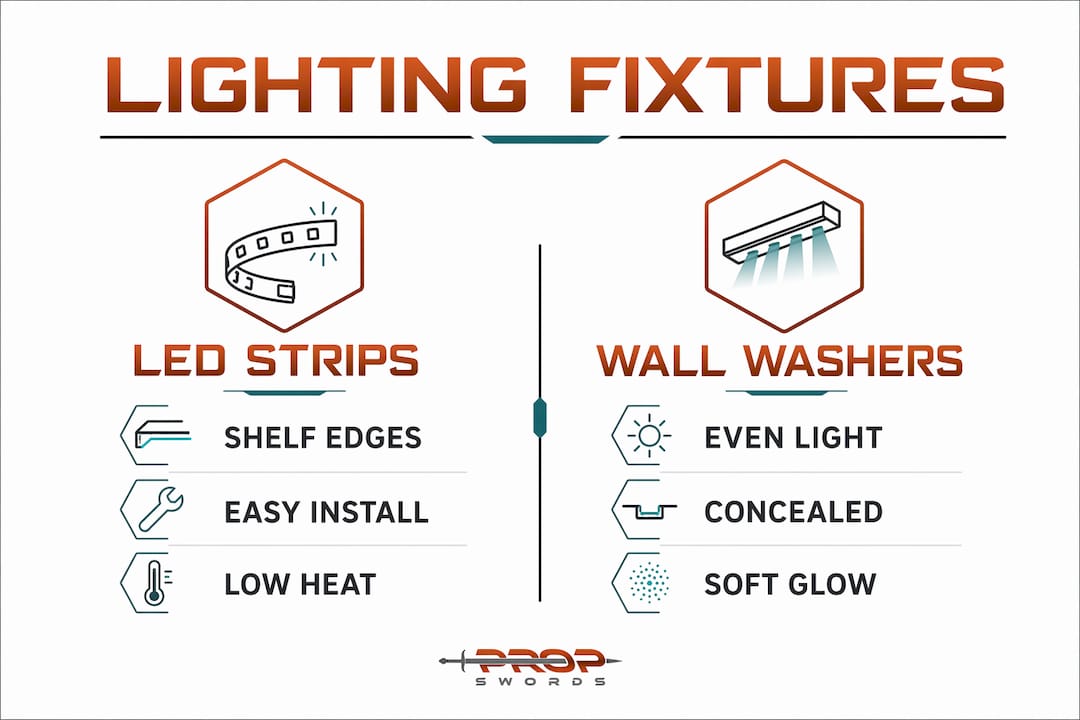
Diffused, indirect light sources like wall washers, concealed LED strips, and soft-box sconces produce uniform luminance across a sword’s entire length. Direct spotlights create a single bright point that bounces off polished steel and creates a hotspot, hiding the very detail you want to show.
Fixture comparison: which type fits your setup?
| Fixture type | Best for | Pros | Cons |
|---|---|---|---|
| LED strip lights | Shelf edges, case interiors | Low heat, flexible placement, dimmable | Requires diffuser channel for soft output |
| Wall washer fixtures | Dedicated sword walls | Even, wide-angle coverage | Higher upfront cost |
| Recessed downlights | Ceiling-mounted displays | Clean look, adjustable beam angle | Can create hotspots without diffuser |
| Concealed sconces | Framed or shadow-box displays | Hides hardware, elegant finish | Limited coverage area |
| Track lighting | Multi-sword gallery walls | Repositionable, scalable | Visible hardware; needs careful aiming |
Mounting angle matters as much as fixture type. Angling swords at 10–15 degrees from vertical adds visual drama and reduces specular glare at the same time. Apply the same logic to your light fixtures: aim them at a shallow angle across the blade surface rather than straight down onto it.
For LED strips specifically, always run them through an aluminum diffuser channel. The channel spreads the individual LED dots into a continuous soft line and doubles as a heat sink, extending the lifespan of the strip. Low-voltage LED strips are the preferred choice over incandescent or halogen sources because they produce minimal heat and carry no fire risk near wooden mounts or fabric backdrops.
Pro Tip: Run all LED strip power supplies and drivers outside the display case or behind the wall panel. Clean cable management is not just aesthetic. Exposed wiring near metal sword hardware is a genuine safety concern.
How to manage environment conditions while lighting your display
Lighting and environment control are inseparable for long-term preservation. Maintaining relative humidity between 45% and 55% prevents corrosion on steel blades and stops wood handles from cracking or warping. This applies equally to high-end Japanese replicas and anime-inspired fantasy pieces with resin or mixed-material fittings.
Here is a practical breakdown of your environmental control options:
- Small dehumidifiers: Units designed for closets or small rooms cost $30–$60 and work well for open wall displays in humid climates. They require weekly emptying but are the most affordable active solution.
- Climate-controlled display cases: Purpose-built cases with integrated humidity regulation cost $200–$1,000 or more. They offer the most consistent environment and are worth the investment for high-value pieces.
- Passive humidity packs: Products like Boveda packs are an entry-level option for enclosed cases. They require replacement every 2–3 months but cost under $10 per pack.
- Hygrometers: A digital hygrometer placed inside or near your display gives you a real-time humidity reading. Without one, you are guessing.
UV exposure is the other major threat. Direct sunlight degrades lacquer, silk, and blade oxidation patterns over time, even on replica swords with synthetic coatings. Position your display away from windows, or use UV-filtering acrylic panels on any cases that face natural light. LED lighting produces no UV radiation, which is another reason it outperforms older light sources for this application.
Monthly maintenance should include a quick visual inspection of each sword for surface rust, checking the hygrometer reading, and wiping down blade surfaces with a clean microfiber cloth. Pair this routine with the tips in this replica sword maintenance guide to keep your collection in display-ready condition year-round.
What are creative sword display lighting ideas for fantasy collections?
Fantasy swords deserve more than a bare wall and a strip of white LEDs. The backdrop, color accents, and fixture arrangement all contribute to the story your display tells. Neutral semi-matte backdrops in warm gray, clay, or toned white reduce glare and create contrast that makes blades pop. Glossy paint amplifies reflections and fights your lighting at every angle.
Creative ideas worth trying:
- Thematic color accents: Use RGBW LED strips set to deep indigo or forest green behind a fantasy sword to suggest a magical or ancient atmosphere. Keep the primary illumination warm white and use color only as a background wash.
- Layered lighting: Combine a warm-white wall washer for overall coverage with a narrow-beam LED spotlight aimed at a hero piece. The contrast draws the eye to your best sword first.
- Shadow-box framing: Mount a sword inside a recessed shadow box with LED strips hidden along the interior perimeter. The frame creates depth and the hidden light source gives the blade a floating appearance.
- Angled showcases: Tilting a display case or wall mount 10–15 degrees from vertical reduces specular highlights and adds a dynamic quality that flat, horizontal displays lack.
- Mix-and-match fixtures: Use a wall washer for the full collection and add individual LED puck lights inside glass cases for standout pieces. Different fixture types at different intensities create hierarchy in your display.
Organized, visually coherent displays reduce cognitive load for viewers and create a calmer, more impressive experience. WELL v2 building guidelines link visual coherence directly to improved viewer perception. That principle applies to home collections as much as commercial galleries. Group swords by theme, era, or color family, then light each group consistently.
For more ideas on how to arrange your pieces, the replica sword display guide at Propswords covers arrangement strategies for collections of all sizes.
Common mistakes and how to fix them
Most sword display problems come down to a handful of repeatable errors. Recognizing them early saves you from damaged pieces and disappointing presentations.
- Using direct, overly bright spotlights. Bright direct light creates glare and eye strain. Fix it by switching to diffused sources or adding a frosted diffuser panel in front of existing fixtures.
- Ignoring humidity. Steel corrodes and wood warps when humidity swings outside the 45%–55% range. Add a hygrometer and a dehumidifier or humidity pack to any enclosed display.
- Poor cable management. Exposed wiring near metal hardware is a safety risk and looks unprofessional. Route all cables behind wall panels or through cable raceways before finalizing your setup.
- Unstable mounts. A sword that shifts or falls damages itself and anything below it. Use wall-stud anchors or rated toggle bolts, and check mount tightness every few months.
- Skipping UV protection. Even indirect natural light through a window carries UV. Use UV-filtering acrylic or reposition the display entirely.
Pro Tip: Dim your lighting to about 60–70% of maximum output for everyday display. Full brightness accelerates LED degradation and is harder on the eyes. Reserve full intensity for photography or special viewings.
Key takeaways
Effective sword display lighting requires warm-white (2700K–3000K) light with CRI 90+, diffused fixtures, and stable humidity between 45% and 55% to protect and showcase your collection.
| Point | Details |
|---|---|
| Color temperature and CRI | Use 2700K–3000K warm-white LEDs with CRI 90+ to accurately render steel and wood fittings. |
| Fixture and placement | Choose diffused sources like LED strips or wall washers; angle mounts 10–15 degrees to reduce glare. |
| Environmental control | Keep humidity at 45%–55% using dehumidifiers, humidity packs, or climate-controlled cases. |
| UV protection | Position displays away from windows and use UV-filtering acrylic to prevent surface degradation. |
| Creative presentation | Layer warm-white primary light with thematic color accents and neutral semi-matte backdrops for drama. |
What I have learned from years of lighting fantasy sword collections
The biggest mistake I see collectors make is treating lighting as the last step. They spend months sourcing the perfect replica, build a beautiful wall mount, and then point a single bright spotlight at it and wonder why it looks flat. Lighting is not decoration. It is the medium through which every other decision you made becomes visible.
I have found that the collectors with the most impressive displays are almost always the ones who think about light and environment together. A sword displayed at 50% humidity under warm-white diffused LEDs will look better in five years than it does today. The same sword under a halogen spotlight next to a sunny window will show corrosion and fading within two seasons.
The shift to LED technology genuinely changed what is possible for home collectors. Low-voltage strips, RGBW controllers, and affordable dimmers mean you can build a gallery-quality setup for a few hundred dollars. That was not realistic ten years ago. My advice is to invest in a quality diffuser channel and a reliable hygrometer before you spend anything on decorative accents. Get the fundamentals right first. The drama follows naturally once the light is clean and the environment is stable.
If you are just starting out, the complete sword display checklist at Propswords is the fastest way to make sure you have not missed anything before you mount your first piece.
— Muhammad
Build your display around swords worth showing off

The best lighting setup in the world only works if the swords underneath it are worth the attention. Propswords carries a curated selection of fantasy, anime, and historically inspired replica swords built for display-quality presentation. Every piece is detailed enough to reward the kind of careful lighting this guide describes. Browse the best replica swords for 2026 to find pieces that fit your collection’s theme, or explore the full range of fantasy collectible swords for iconic pieces from film, anime, and legend. Free shipping within the USA is included on every order.
FAQ
What is the best color temperature for sword display lighting?
Warm-white light in the 2700K–3000K range with a CRI of 90 or above is the best choice. This range accurately renders steel textures, wood fittings, and colored accents without washing out detail.
How do I reduce glare on polished sword blades?
Use diffused light sources like LED strips in aluminum diffuser channels or wall washer fixtures instead of direct spotlights. Angling the sword mount 10–15 degrees from vertical also reduces specular reflection significantly.
What humidity level is safe for sword displays?
Relative humidity between 45% and 55% prevents steel corrosion and stops wood handles from cracking. Use a digital hygrometer to monitor levels and add a small dehumidifier or passive humidity packs to maintain the range.
Are LED strips safe to use inside display cases?
Yes. Low-voltage LED strips produce minimal heat and no UV radiation, making them the safest option for enclosed cases with wooden mounts or fabric backdrops. Always route power supplies outside the case and use proper cable management.
What backdrop color works best for fantasy sword displays?
Neutral semi-matte finishes in warm gray or clay tones create the best contrast for blades and minimize glare. Glossy or bright white surfaces amplify reflections and compete with your lighting rather than supporting it.
Recommended