Recent Post

6 Essential Types of Cosplay Swords for Accurate Costumes

Why Display Swords: Enhancing Collections and Space

Fantasy Swords vs Historical Swords: What Collectors Need to Know

Movie Sword Replicas Explained: Quality, Types, and Safety

Evolution of Medieval Swords: Craft, Combat, and Legacy

Types of Historical Swords: Why Forms Matter
Leave a comment
Fantasy Swords vs Historical Swords: What Collectors Need to Know
Finding that perfect sword for your next cosplay or collection can feel confusing with so many designs out there. Whether you lean toward historical accuracy rooted in real European or Japanese blades, or crave the bold style of your favorite fantasy anime, knowing the difference shapes every decision. This guide helps you understand the key differences between fantasy and historical swords, making it easier to choose pieces that fit your creative vision, display needs, and collection goals. For collectors and cosplayers alike, purpose and authenticity matter just as much as appearance.
Table of Contents
- Defining Fantasy And Historical Swords
- Major Types And Iconic Examples
- Design Features, Materials, And Uses
- Collector And Cosplay Value Differences
- Legal, Safety, And Buying Considerations
Key Takeaways
| Point | Details |
|---|---|
| Understanding Sword Types | Knowing the difference between historical and fantasy swords enhances purchase decisions, ensuring collections align with personal goals. |
| Collector Priorities | Historical sword collectors prioritize authenticity and educational value, while fantasy enthusiasts focus on visual impact and character representation. |
| Research Before Buying | Investigating sword legality and seller reliability is crucial for avoiding legal issues and ensuring quality purchases. |
| Purposeful Display and Use | Identifying whether a sword is for educational display or cosplay simplifies collection strategies and enhances enjoyment. |
Defining Fantasy and Historical Swords
Fantasy and historical swords sit on opposite ends of the collector’s spectrum, yet both demand respect and understanding. Knowing the difference shapes every purchase decision you make for display, cosplay, or collections.
Historical swords are weapons that genuinely existed and were used in real combat throughout human history. They served specific military, cultural, and social functions far beyond their role as tools. Swords in early medieval contexts embodied warrior identity and cultural meaning, making them expressions of personhood rather than simple weapons.
Historical swords follow strict physical and functional parameters:
- Balanced weight distributions that allowed actual swinging and combat use
- Material compositions limited to metals available during their era (bronze, iron, steel)
- Blade designs engineered for specific fighting techniques and armor types
- Handle proportions matched to human grip and forearm strength
- Wear patterns and construction marks reflecting authentic forging methods
Fantasy swords are creative inventions inspired by fiction, games, anime, and pop culture rather than historical reality. They prioritize visual impact and storytelling over practical function. These designs come from artist imagination, film production needs, and game balance mechanics.
Fantasy swords embrace creative freedom:
- Oversized proportions that would be impossible to wield in actual combat
- Exaggerated blade features (massive spikes, impossible curves, asymmetrical designs)
- Magical or fictional materials with no real-world equivalent
- Handle designs optimized for visual drama rather than ergonomics
- Color schemes and embellishments that defy historical conventions
The core distinction isn’t quality or craftsmanship—it’s purpose and authenticity to actual historical record versus imaginative design.
Why does this matter for your collection? Historical replicas require accurate research and attention to period details. Fantasy swords let you celebrate creative design without worrying about archaeological accuracy. Understanding different sword types helps you evaluate whether you’re hunting for authentic recreation or artistic interpretation.
Most collectors don’t choose one side exclusively. You might display a Viking sword replica alongside a character-inspired blade from your favorite anime. Both belong in passionate hands. The distinction simply helps you shop intentionally and understand what you’re actually acquiring.
Pro tip: Before purchasing, identify whether you want historical accuracy for educational display or fantasy-inspired pieces for cosplay and creative enjoyment—this single decision streamlines your entire collection strategy.
Here is a side-by-side comparison of historical and fantasy swords, highlighting their primary features and collecting considerations:
| Aspect | Historical Swords | Fantasy Swords |
|---|---|---|
| Origin | Based in real history | Derived from fiction and media |
| Material Constraints | Authentic metals from era | Imaginary or exaggerated materials |
| Typical Use | Educational displays, research | Cosplay, fandom, visual display |
| Design Motive | Function and combat | Aesthetics and storytelling |
| Collector’s Priority | Accuracy and provenance | Iconic appearance and comfort |
| Display Value | Cultural heritage | Pop culture significance |
Major Types and Iconic Examples
Historical swords span centuries and continents, each designed for specific combat needs and cultural contexts. Fantasy swords pull from these traditions while adding imaginative twists that make them instantly recognizable to fans.
Historical Sword Types
Historical swords evolved based on the armor and tactics of their era. Understanding these categories helps you recognize authentic replicas when shopping.
Medieval European longswords dominated from the 13th to 16th centuries. These versatile blades worked against both armored and unarmored opponents, featuring straight edges and varying lengths from 40 to 50 inches.
Viking swords emphasized slashing power over thrusting. Shorter and wider than longswords, they balanced weight near the hilt and featured distinctive cross-guards designed for Norse combat styles.
Katanas emerged from feudal Japan with a completely different geometry. The curved blade enabled devastating slashing attacks while maintaining enough rigidity for structural integrity.
Scimitars and curved blades from the Middle East and Asia prioritized mounted combat. Their curves concentrated cutting power along the blade’s edge, perfect for horseback warriors.
Fantasy Sword Archetypes
Fantasy swords draw inspiration from historical designs but embrace creative exaggeration. Anime and game studios create iconic silhouettes that instantly signal character strength or story importance.
Oversized broadswords dominate fantasy media. These massive blades defy physics yet capture the visual drama audiences crave for heroic characters.
Ornate curved blades blend katana inspiration with fantasy embellishments. Intricate guards, extended cross-pieces, and decorative elements make them instantly recognizable.
Elemental or magical designs feature impossible geometries. Glowing edges, asymmetrical shapes, and exotic materials signal their fictional nature without apology.
Dual-wielding variants split single-sword concepts into matching pairs. Fantasy lets creators explore balanced aesthetics that historical combat never required.
Historical swords embedded with mythical power blur the line between documented history and legendary storytelling, showing how real weapons inspired fantasy interpretations.
Why These Examples Matter
Recognizing these categories helps you evaluate authenticity. A replica claiming historical accuracy shouldn’t feature anime-style oversizing. Conversely, fantasy pieces shouldn’t apologize for their imaginative features.
Collectors often specialize. You might focus exclusively on European medieval replicas, Japanese katana variants, or fantasy character weapons. Knowing what you’re collecting prevents impulse purchases that don’t fit your vision.
Many sellers mix categories intentionally. A “fantasy katana” deliberately blends historical inspiration with creative design. Understanding this fusion helps you make informed choices aligned with your collection goals.
Pro tip: Research the original source material before purchasing fantasy pieces—character swords from anime, games, or films often have specific design details that authentic replicas capture better than generic fantasy swords.
Design Features, Materials, and Uses
Design choices reveal whether a sword prioritizes function or fantasy. Historical swords were engineered for combat within physical constraints, while fantasy swords embrace dramatic aesthetics over practicality.
Historical Sword Design
Historical swords balance weight, leverage, and control. Every feature served a combat purpose—nothing was decorative unless it also functioned.
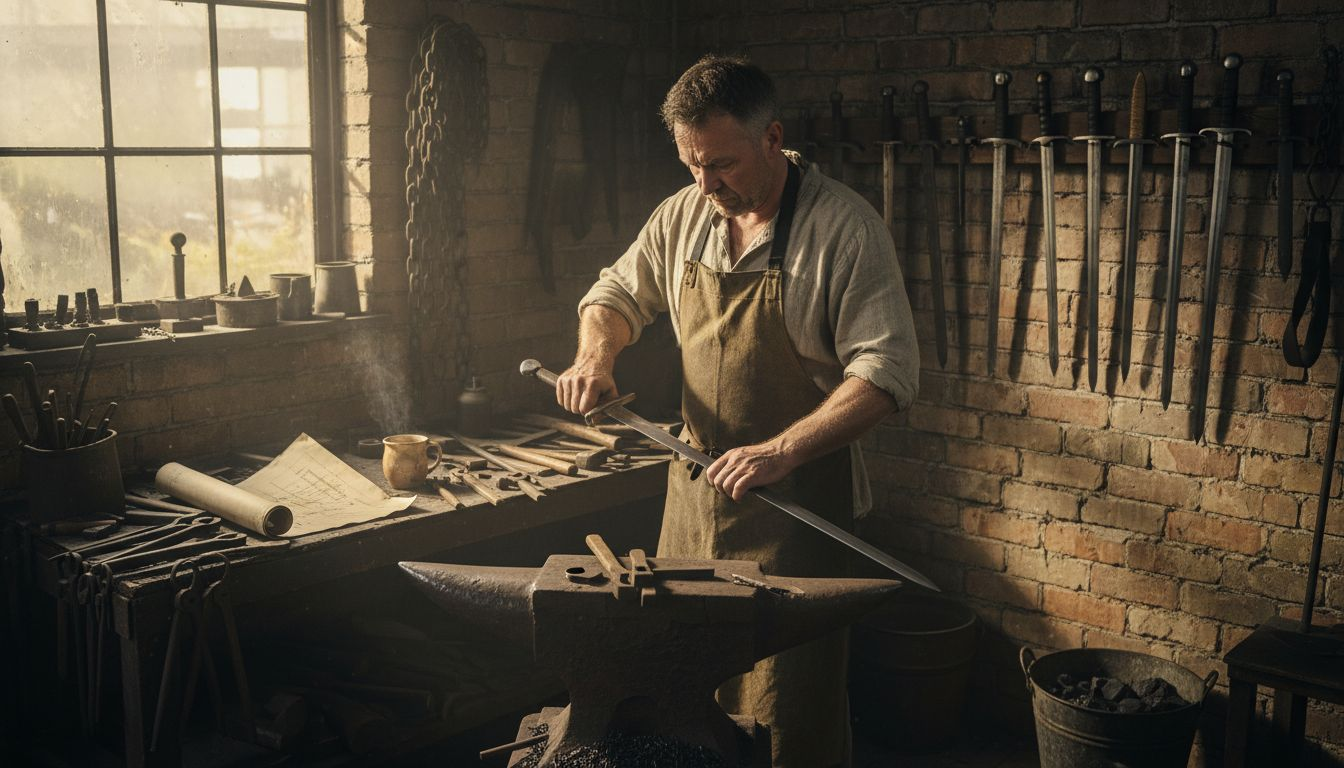
Blade geometry varied by era and region. Straight blades cut and thrust effectively, while curved designs concentrated slashing power. Bronze Age swords demonstrated practical combat functionality through evidence of actual use, including resharpening marks and battle damage patterns that proved their effectiveness in real warfare.
Historical swords typically weighed 2 to 4 pounds total. This enabled sustained swinging without exhausting warriors wearing heavy armor. Handle length matched forearm proportions, creating natural leverage for overhead and side strikes.
Material choices reflected available technology:
- Bronze: Early metallurgy, flexible and repairable
- Iron: Stronger than bronze, cheaper to produce
- High-carbon steel: Superior edge retention, stronger blades
- Mild steel: Easier to forge, more forgiving material
Guards and pommels served defensive purposes. Cross-guards protected hands from enemy blades sliding down the shaft. Weighted pommels balanced heavy blade edges, shifting the center of gravity toward the hand.
Fantasy Sword Design
Fantasy swords prioritize visual storytelling over combat logic. They’re built to look powerful, distinctive, and instantly recognizable to audiences.
Exaggerated proportions signal character importance. A protagonist’s sword towers over their shoulders, impossible to wield yet visually stunning. This screams “hero” without dialogue.
Material creativity defines fantasy designs:
- Glowing materials suggesting magical properties
- Impossibly colored metals or crystalline structures
- Lightweight sci-fi alloys without real-world equivalents
- Mixed-material designs combining wood, metal, and gemstones
Handles accommodate cosplay reality. Fantasy sword grips prioritize comfort for photo shoots and convention displays rather than historical combat accuracy. Wider grips, decorative wrapping, and ergonomic shapes reflect modern holding preferences.
Decorative elements celebrate imagination:
- Ornate guard designs that extend beyond practical functionality
- Engravings and etchings telling stories
- Asymmetrical blade shapes that defy physics
- Elaborate crossbars and extended tangs
Historical swords sacrificed aesthetics for function, while fantasy swords sacrifice function for unforgettable aesthetics—each choice serves its intended purpose.
Practical Application
Historical replicas work best for educational displays and museum-quality collections. Their designs reward research and attention to period accuracy.
Fantasy pieces thrive in cosplay, gaming collections, and wall displays celebrating character design. They’re built to photograph beautifully and spark conversations at conventions.
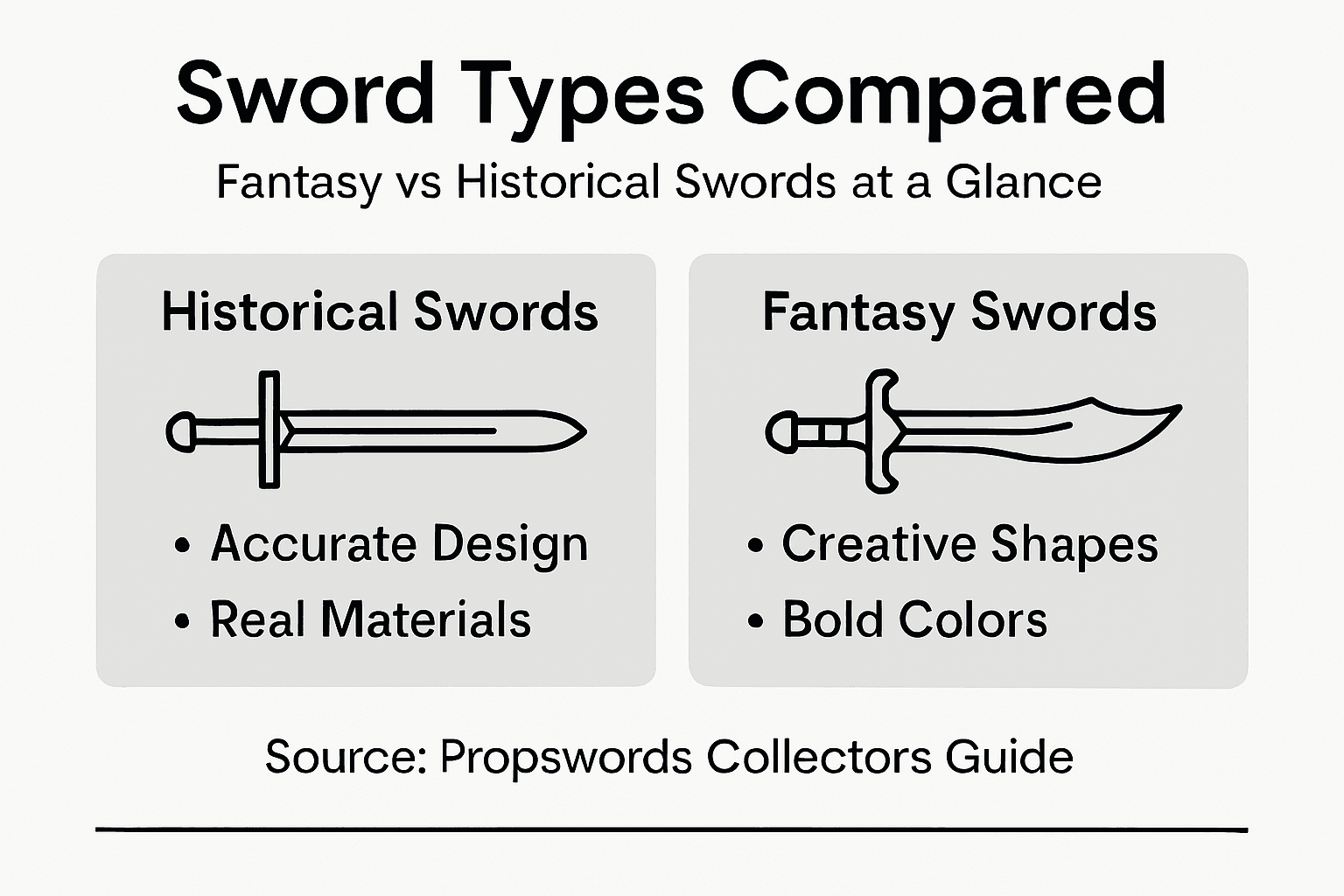
Understanding these design philosophies helps you choose replicas matching your actual use. A fantasy anime sword replica makes no sense for historical reenactment, just as an accurate Viking sword replica might feel underwhelming next to fantasy collection pieces.
Pro tip: Check whether your intended use involves handling the sword (cosplay, costume events) or just display—this single factor determines whether comfort features matter more than historical accuracy.
Here is a reference table to help you match sword types with their best-fit collector goals and usage:
| Sword Type | Best for | Typical Buyer Motivation |
|---|---|---|
| Medieval Longsword | Museum display, study | Historical authenticity |
| Katana Replica | Martial arts, tradition | Connection to legacy |
| Oversized Broadsword (Fantasy) | Cosplay, themed rooms | Character immersion |
| Elemental/Magical Sword | Photo shoots, conventions | Visual impact, fantasy fandom |
Collector and Cosplay Value Differences
Collectors and cosplayers value swords differently based on their goals. Understanding these distinctions helps you invest wisely in pieces matching your actual needs.
Historical Sword Collector Value
Historical sword collectors prioritize authenticity, provenance, and craftsmanship above visual drama. These collectors treat swords as artifacts worthy of serious investment and study.
Historical collectors seek:
- Verified historical accuracy matching a specific time period and region
- Original construction methods and material authenticity
- Clear provenance documenting the sword’s origin and ownership history
- Craftsmanship details reflecting genuine period techniques
- Educational value for understanding martial history
A medieval longsword replica gains value through meticulous research. Documentation proving it matches 14th-century Iberian forging techniques increases desirability. Collectors pay premium prices for pieces that help them understand how warriors actually fought.
These collectors display swords as artifacts and symbols of real martial heritage, treating them more like museum pieces than entertainment props. Condition, accuracy, and historical context drive purchasing decisions.
Fantasy Sword Cosplay Value
Cosplayers and fantasy enthusiasts value swords for visual impact and character connection. Swords convey powerful messages through design appeal that instantly communicates character personality and story significance to convention attendees.
Fantasy sword value comes from:
- Iconic visual recognition matching source material perfectly
- Design uniqueness that stands out in photos and crowds
- Lightweight construction for comfortable cosplay wear
- Eye-catching details like glowing effects or metallic finishes
- Narrative significance tied to beloved characters or storylines
A fantasy replica gains value through its ability to transform you into the character. Does the blade match that anime scene? Will it photograph beautifully? Can you comfortably hold it for six hours at a convention? These questions matter far more than historical accuracy.
Fantasy swords celebrate imaginative design and storytelling rather than combat heritage. Cosplayers happily embrace oversized proportions and impossible geometries because they serve the character fantasy.
The Practical Difference
Historical replica collectors invest in education and preservation. They research extensively before purchasing, valuing pieces that deepen martial history knowledge. A $300 longsword replica proving genuine 13th-century construction matters more than flashy embellishments.
Cosplay sword buyers invest in experience and self-expression. They want pieces that photograph well, feel comfortable during events, and make them feel like their favorite characters. A $150 fantasy katana with perfect visual accuracy beats an authentic historical replica they’ll never use.
Historical value lies in authenticity and cultural significance, while fantasy value lies in visual impact and character connection.
The good news? Both communities thrive on Propswords. Movie sword replicas explained here show how quality design serves multiple collecting styles. You don’t need to choose sides—many collectors build hybrid collections featuring both authentic historical research pieces and character-inspired fantasy designs.
Pro tip: Before purchasing, ask yourself whether you’re buying for display research (historical value) or cosplay performance (visual impact)—this single question prevents expensive mismatches between what you buy and how you’ll actually use it.
Legal, Safety, and Buying Considerations
Buying replica swords involves legal responsibilities and safety awareness that vary significantly by location. Ignorance of these factors can lead to confiscation, legal trouble, or dangerous situations.
Understanding Legal Restrictions
Replica sword laws differ dramatically across North America. What’s completely legal in one state or province may be prohibited in another. This inconsistency catches collectors off guard regularly.
United States regulations vary by state:
- Some states allow replica swords without restriction for adults
- Others prohibit carrying them in public regardless of age
- Cities may have stricter rules than state laws allow
- Convention and event venues set their own policies
Canadian law restricts certain sword types more heavily than American counterparts. Importing replicas requires understanding federal customs regulations alongside provincial rules. Some provinces effectively ban decorative swords outright.
Before purchasing, research your specific location’s laws. A fantasy anime sword legal in California might violate local ordinances in New York City or Toronto. Convention organizers set additional restrictions beyond legal requirements.
Safety During Ownership and Display
Responsible ownership prevents accidents and liability:
- Store swords securely away from children and unsupervised visitors
- Never leave replicas unattended at events or in vehicles
- Transport swords in protective sheaths or cases
- Keep blades away from high-traffic household areas
- Establish clear household rules about sword handling
Displayed swords create liability if visitors get injured. Wall mounts must support sword weight securely. Glass display cases protect both swords and people from accidental contact.
Cosplay events demand extra caution. Crowded convention halls mean dozens of other cosplayers carrying props. Secure your sword to your costume properly so it won’t slip and strike nearby attendees during photo sessions.
Smart Purchasing Decisions
Buy from reputable sellers who understand replica sword quality and legal compliance. Propswords specializes in this niche market with direct knowledge of what works for collectors and cosplayers.
Evaluate sellers carefully:
- Do they list material composition clearly?
- Can they explain the sword’s historical or fictional basis?
- Do they provide care and maintenance guidance?
- Will they address concerns about construction quality?
- Do they understand local legal restrictions?
Price matters less than reliability. A $50 sword from an unknown seller often disappoints through poor construction or safety issues. A $200 replica from specialists like Propswords delivers quality matching your investment.
Read customer reviews specifically mentioning durability and shipping condition. Swords arrived damaged waste money and create frustration. Established sellers protect their reputation through proper packaging and quality control.
Quality replica swords justify their cost through durability, accurate design, and responsible seller practices that consider your legal and safety needs.
Plan purchases around convention or display timelines. Rushing orders sometimes means accepting lower quality. Building your collection gradually with well-researched purchases beats impulse buys you’ll regret.
Pro tip: Before finalizing any purchase, contact your local law enforcement non-emergency line or check your city’s municipal code website to confirm replica sword legality in your jurisdiction—this five-minute step prevents expensive confiscation or legal headaches.
Discover the Perfect Sword for Your Collection or Cosplay
Choosing between fantasy and historical swords can feel overwhelming with so many factors like authenticity, design, and usage to consider. Whether you seek a carefully crafted medieval longsword replica for display or a striking oversized broadsword inspired by your favorite anime, understanding these differences ensures you make a choice you will cherish.
At Propswords, we specialize in offering a wide selection that answers this challenge. Explore our range of anime-inspired fantasy swords and historically accurate replicas designed to meet your exact needs. Benefit from free shipping within the USA and detailed craftsmanship that honors both authenticity and visual impact. Take control of your collection or cosplay experience by shopping now and find the sword that truly fits your passion and purpose. Visit Propswords today and turn your sword dreams into reality.
Frequently Asked Questions
What is the main difference between fantasy swords and historical swords?
Historical swords are designed based on real combat use and historical accuracy, while fantasy swords are creative interpretations intended for visual impact in fiction, games, and cosplay.
How do I determine whether a sword is a historical replica or a fantasy design?
Look for features like material authenticity, weight and balance, and design elements. Historical replicas will adhere to specific historical parameters, whereas fantasy swords often have exaggerated forms and imaginative materials.
What should I consider when adding swords to my collection?
Consider your intended use—whether you want pieces for display, education, cosplay, or combat training. This will help guide your decisions and ensure your collection aligns with your interests.
Are there legal considerations I need to know when purchasing swords?
Yes, the legality of owning and displaying swords can vary significantly by location. Always research local laws and regulations to avoid legal issues, especially when it comes to transport and public carry.