Recent Post

6 Essential Types of Cosplay Swords for Accurate Costumes

Why Display Swords: Enhancing Collections and Space

Fantasy Swords vs Historical Swords: What Collectors Need to Know

Movie Sword Replicas Explained: Quality, Types, and Safety

Evolution of Medieval Swords: Craft, Combat, and Legacy

Types of Historical Swords: Why Forms Matter
Leave a comment
Types of Historical Swords: Why Forms Matter
Every collector knows the thrill of finding a sword that perfectly captures both history and legend. For anime fans and cosplayers looking beyond costumes, historical swords symbolize power, honor, and creativity rooted in centuries of myth. With so many unique designs shaped by European, Asian, and Middle Eastern traditions, discovering a precise replica means connecting with ancient stories while adding standout style to any collection or cosplay display.
Table of Contents
- Defining Historical Swords And Common Myths
- Major Sword Types By Region And Era
- Key Characteristics: Materials And Blade Shapes
- How Swords Were Used In Combat And Culture
- Collecting And Displaying Replica Swords Safely
Key Takeaways
| Point | Details |
|---|---|
| Historical Swords as Cultural Symbols | Swords serve as powerful cultural artifacts, representing honor, power, and spiritual transformation throughout various civilizations. |
| Technological Diversity in Sword Design | Different sword types developed based on regional metallurgy and specific combat needs, illustrating the complexity of each design. |
| Combat Techniques vs. Myths | Effective swordsmanship involved sophisticated techniques rather than brute strength, challenging common misconceptions about historical sword use. |
| Safe Collection Practices | Proper display and environmental control are crucial for preserving replica swords, highlighting the importance of protective measures. |
Defining Historical Swords and Common Myths
Swords have transcended their practical origins as weapons, emerging as powerful cultural symbols deeply embedded in human mythology and historical narratives. Historical sword legends reveal complex cultural meanings that extend far beyond mere combat instruments, representing power, honor, and spiritual transformation across diverse civilizations.
Contrary to popular imagination, historical swords were not uniform artifacts but intricate technological achievements reflecting sophisticated metallurgical and design innovations. Different sword types emerged from specific cultural contexts, combat requirements, and available metalworking techniques. These variations demonstrate how swords were precision-engineered tools adapted to complex strategic needs.
Common myths about historical swords persist despite scholarly evidence. Many people mistakenly believe that:
- All medieval swords were heavy and unwieldy
- Sword combat was always about brute strength
- Swords were standardized across different cultures
- Ornate swords were purely ceremonial and impractical
In reality, sword design represented a nuanced balance between functionality, cultural symbolism, and technological constraints. Metallurgy, blade geometry, and fighting techniques determined a sword’s effectiveness far more than romantic legends suggest.
Pro tip: When exploring historical sword designs, always prioritize understanding the specific cultural and technological context rather than relying on popular media representations.
Major Sword Types by Region and Era
Swords represent far more than weapons - they are intricate cultural artifacts that reflect the technological capabilities, social structures, and warfare techniques of different civilizations. Global sword classifications reveal remarkable technological diversity across historical periods and geographic regions.
The development of sword types can be understood through several key geographical and cultural zones, each with distinctive characteristics:
- European Swords: Typically characterized by straight double-edged blades, evolving from Roman gladius to medieval longswords
- Middle Eastern Swords: Often featuring curved designs like scimitars, optimized for mounted combat
- Asian Swords: Ranging from Japanese katanas with exceptional metallurgical techniques to Chinese dao with unique blade geometries
- African Swords: Typically designed for both ceremonial and practical combat purposes, with regional variations
Each sword type emerged from specific environmental, technological, and cultural constraints. For instance, European knights required heavier, more rigid blades for plate armor penetration, while Middle Eastern warriors needed lighter, curved swords for swift mounted combat.
Metallurgical innovations played a crucial role in sword development. Different cultures developed unique forging techniques that allowed them to create blades with specific performance characteristics - from Japanese folded steel to Damascus steel’s distinctive patterns.
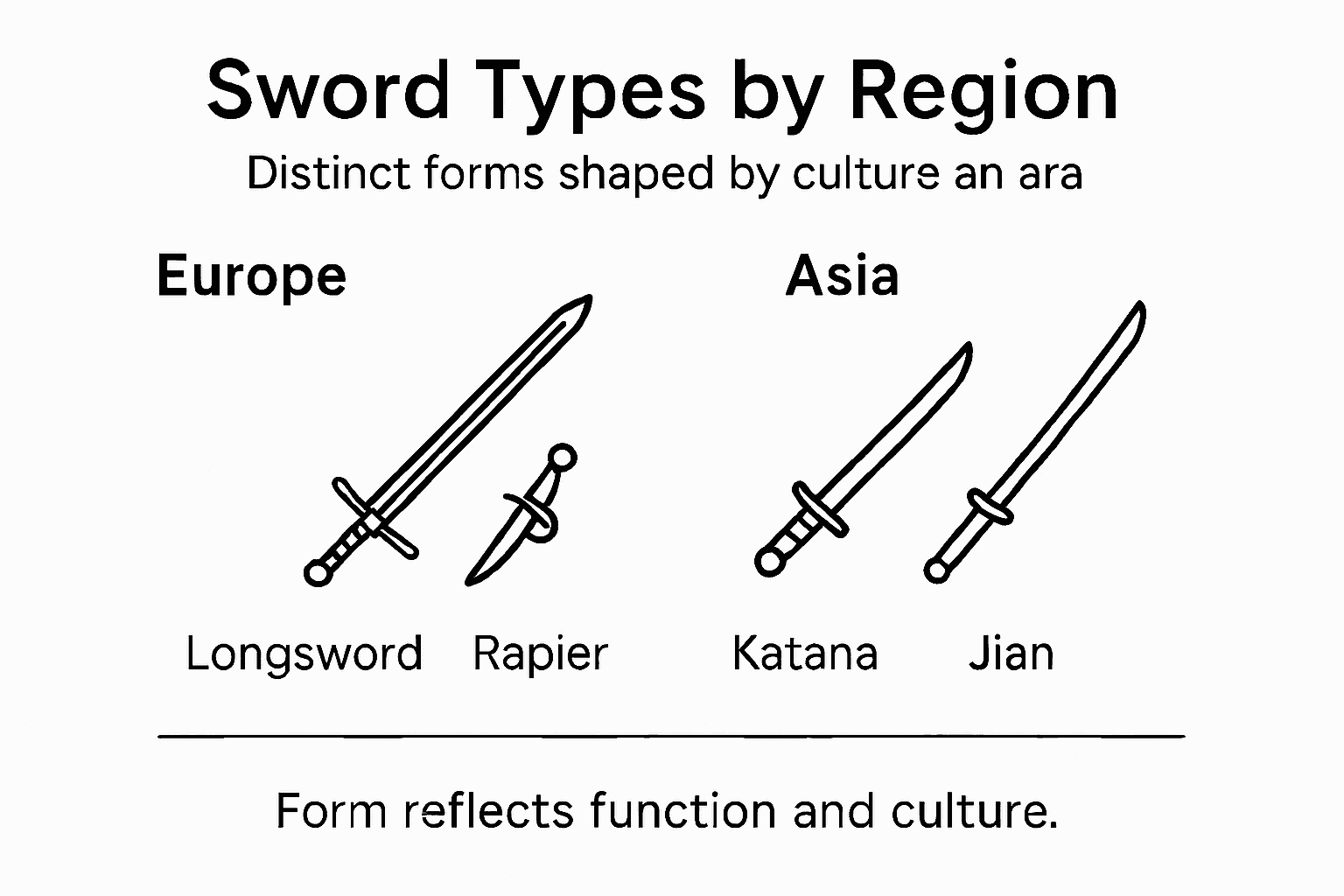
Here’s a summary highlighting how major sword types differ across regions and eras:
| Region | Typical Blade Form | Key Purpose | Notable Material Innovation |
|---|---|---|---|
| Europe | Straight, double-edged | Armor penetration | Pattern-welded and high-carbon steel |
| Middle East | Curved, single-edged | Swift mounted combat | Damascus steel |
| Asia | Varied, often curved | Precision and flexibility | Folded steel (e.g., katana) |
| Africa | Both straight/curved | Combat and ceremonial | Local iron alloys |
Swords were not just weapons, but complex technological achievements representing the pinnacle of metalworking skills in their respective eras.
Pro tip: When studying historical swords, examine the specific cultural and technological context that produced each unique design, rather than making broad generalizations.
Key Characteristics: Materials and Blade Shapes
Sword design represents an intricate balance between material science, metallurgical techniques, and combat functionality. Medieval metallurgical innovations transformed sword manufacturing, enabling craftsmen to create increasingly sophisticated weapons with remarkable performance characteristics.
The critical components of sword design encompass several key characteristics:
- Blade Material: Typically high-carbon steel or specialized alloy compositions
- Edge Geometry: Determines cutting efficiency and durability
- Cross-Sectional Profile: Influences weight distribution and structural integrity
- Blade Length: Varies based on intended combat style and cultural preferences
- Tang Construction: Critical for connecting blade to handle and ensuring overall weapon stability
Metallurgical composition played a crucial role in sword performance. Different cultures developed unique techniques for creating blades with specific properties - from Damascus steel’s legendary strength to Japanese katana’s exceptional sharpness and flexibility.
The quality of a sword was determined not just by its appearance, but by its metallurgical sophistication and precise manufacturing techniques.
Blade shapes evolved to meet specific combat requirements. European longswords featured broader, more rigid designs for plate armor penetration, while Middle Eastern scimitars emphasized curved shapes for swift mounted combat. Each design represented a sophisticated response to environmental and tactical challenges.
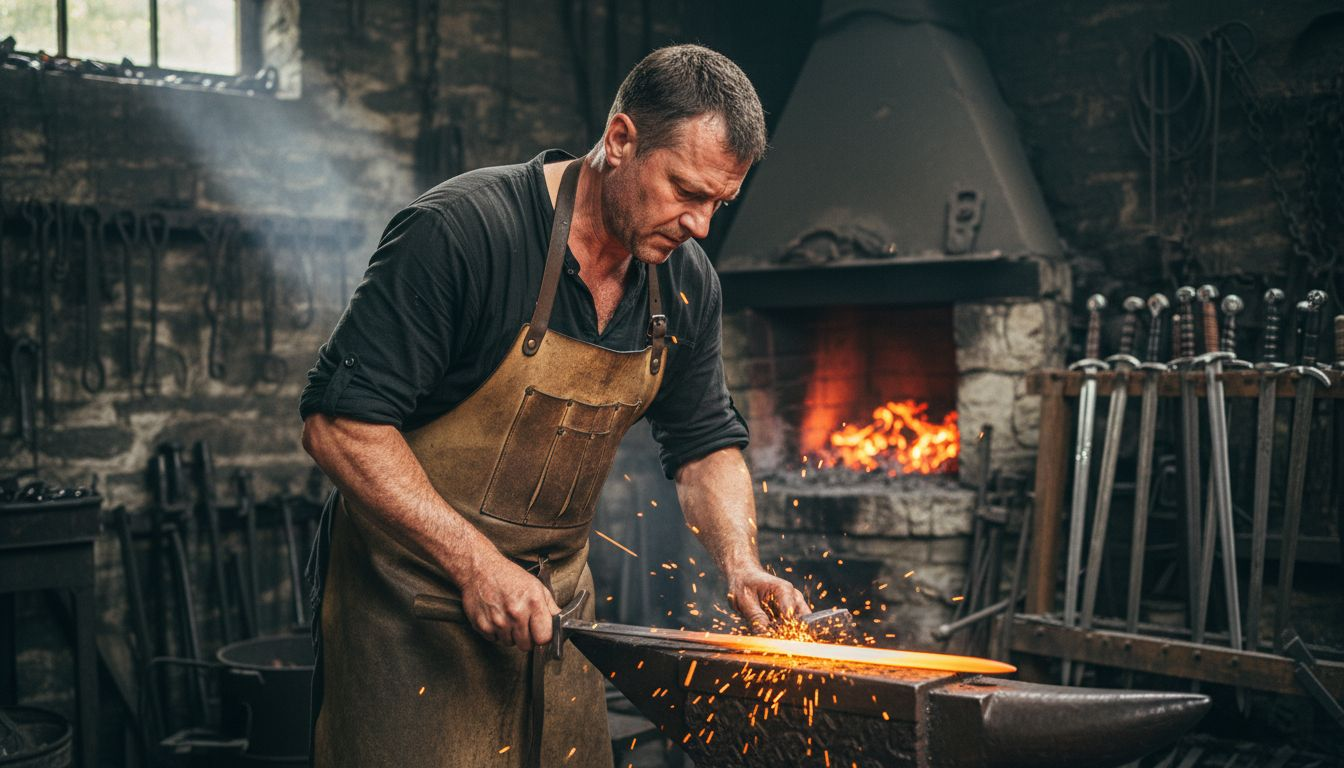
Below is a quick reference to major factors impacting a sword’s performance and significance:
| Design Factor | Impact on Sword Performance | Cultural Significance |
|---|---|---|
| Blade Material | Determines strength and sharpness | Indicates status and technology |
| Edge Geometry | Affects cutting or thrusting | Reflects combat techniques |
| Blade Length | Enables reach or agility | Tied to warrior role |
| Tang Construction | Influences durability and safety | Reflects craftsmanship |
Pro tip: When evaluating historical swords, examine the blade’s material, geometry, and manufacturing technique to understand its true technological sophistication.
How Swords Were Used in Combat and Culture
Bronze Age combat techniques transformed sword usage far beyond simple weapon applications, embedding swords deeply into social and symbolic structures of ancient societies. Swords were not merely tools of warfare, but powerful representations of social status, cultural identity, and personal prestige.
Sword usage in combat varied dramatically across different historical periods and cultural contexts:
- Warfare Roles: Primary offensive weapons in infantry and cavalry units
- Ceremonial Functions: Symbols of leadership and political authority
- Social Signifiers: Indicators of warrior class membership and personal honor
- Ritual Significance: Used in religious ceremonies and cultural transitions
Traditional combat techniques involved complex strategies beyond simple physical confrontation. Warriors developed sophisticated fighting styles that emphasized:
- Precise footwork and body positioning
- Understanding weapon weight and balance
- Reading opponent’s movement patterns
- Strategic targeting of vulnerable areas
Swordsmanship was an art form that required years of dedicated training, combining physical skill with deep psychological preparation.
Beyond combat, swords played crucial roles in cultural rituals. In many societies, a warrior’s sword represented more than a weapon - it was a biographical object documenting personal and familial history, often passed through generations as a symbol of lineage and inherited honor.
Pro tip: Always consider a historical sword’s cultural context, not just its physical characteristics, to truly understand its significance.
Collecting and Displaying Replica Swords Safely
Replica sword collectors require strategic display techniques to protect their investment and showcase their historical artifacts. Displaying swords isn’t simply about aesthetics, but involves careful consideration of preservation, safety, and presentation.
Key considerations for safe sword display include:
- Environmental Control: Avoid direct sunlight and humidity
- Mounting Hardware: Use specialized, padded sword mounts
- Wall Stability: Ensure secure, weight-appropriate mounting
- Handling Precautions: Minimize direct physical contact
- Protective Measures: Use protective cases for long-term storage
Mounting replica swords requires precision and attention to specific details. Collectors should consider:
- Select walls with solid structural support
- Use specialized mounting brackets designed for sword weight
- Install mounts at appropriate height and angle
- Ensure balanced weight distribution
Professional collectors understand that proper display is as much about preservation as visual presentation.
Different sword types demand unique display strategies. Delicate historical replicas might require climate-controlled environments, while more robust pieces can withstand standard display conditions. Material composition, age, and historical significance all influence appropriate display methods.
Pro tip: Always test mounting hardware’s weight capacity before displaying valuable replica swords to prevent potential damage or accidents.
Discover the Art and Power Behind Historical Sword Designs
Understanding the unique forms and materials of historical swords reveals the blend of culture, technology, and combat tactics that shaped these legendary weapons. If you are passionate about owning a beautifully crafted replica that reflects these rich traditions, Propswords offers a carefully curated collection inspired by the iconic styles discussed in this article. Whether you value the sharp precision of a katana or the swift elegance of a curved scimitar, our swords capture the authenticity and craftsmanship that true enthusiasts appreciate.

Explore our offerings today at Propswords and bring history to life with high-quality replicas perfect for display, cosplay, or gifts. Dive into our range now and take advantage of free shipping within the USA alongside special discounts designed to help you build the ultimate collection. Visit Propswords and make your passion for historical swords a tangible experience.
Frequently Asked Questions
What are the most common types of historical swords?
Historical swords can be categorized into several types, including European straight double-edged swords, Middle Eastern curved swords like scimitars, Asian katanas, and African swords designed for both combat and ceremonial use.
How did sword designs evolve across different cultures?
Sword designs evolved based on environmental needs, combat requirements, and available metallurgical techniques. For example, European swords became heavier for armor penetration, while Middle Eastern swords were lighter for mounted combat.
What role did metallurgy play in sword effectiveness?
Metallurgy significantly influenced sword performance. Different cultures utilized unique forging techniques, resulting in properties like the sharpness and flexibility of katanas or the strength of Damascus steel blades.
How were swords used beyond combat?
Swords served as symbols of social status, cultural identity, and personal prestige. They were often integrated into ceremonial functions, social signifiers, and even religious rituals, representing a warrior’s lineage and honor.
Recommended
- The Rich History Behind Medieval Swords – propswords
- 7 Authentic Examples of Viking Swords Explained – propswords
- Sword Craftsmanship: Why Quality Shapes Collecting – propswords
- Katana Swords vs. Medieval Swords: Differences and Combat Styles Expla – propswords
- Historical Walking Tour – Why It’s Unforgettable in Oxford