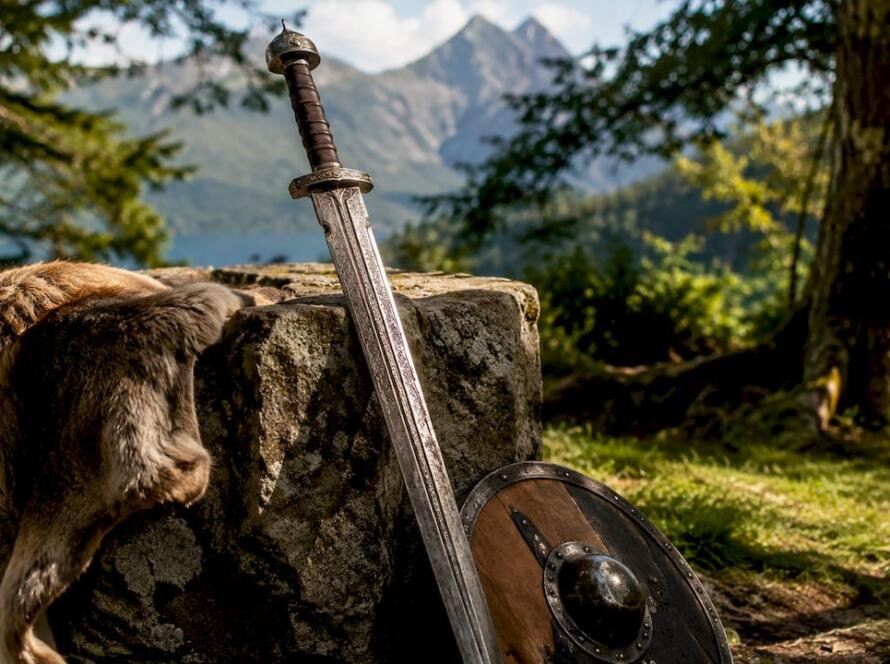
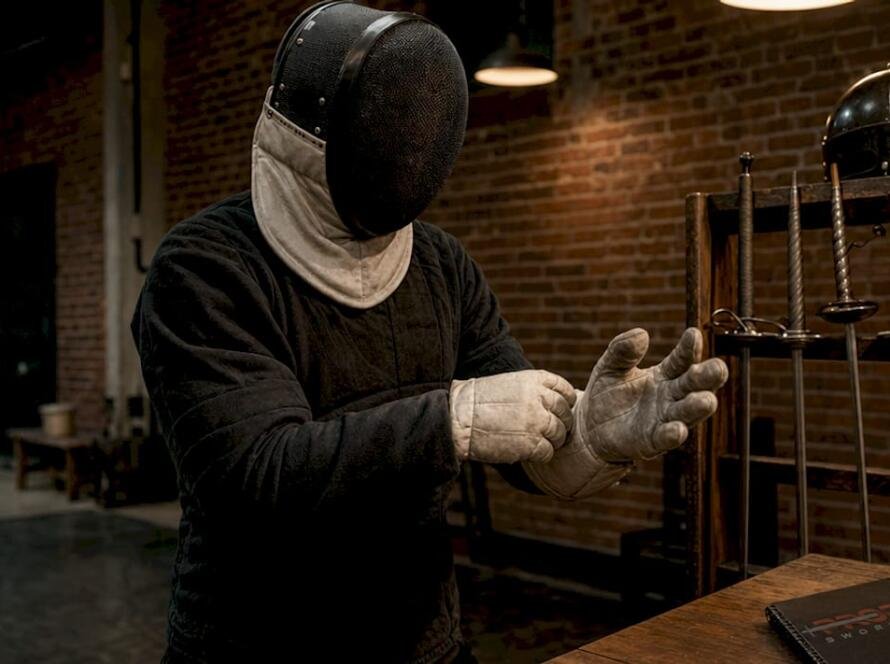
TL;DR:
- Swords evolved from ceremonial objects into highly functional weapons shaped by metallurgy and battlefield needs. They also served as powerful symbols of social rank, freedom, and political authority across cultures.
Swords are defined as double-edged bladed weapons designed for both cutting and thrusting in close combat, and their history stretches back more than 5,000 years. The sword history facts most researchers find surprising reveal that these weapons were never just tools of war. From the arsenical bronze blades of ancient Anatolia to the Damascus steel masterpieces of the medieval world, swords carried equal weight as symbols of power, citizenship, and honor. The history of swords is inseparable from the story of human civilization itself.
1. What are the earliest known swords?
The earliest swords date to c. 3300 BCE in Arslantepe, Turkey, made from arsenical bronze and measuring roughly 60 cm in length. Several examples featured silver inlay, which tells us these weapons carried ceremonial value from the very beginning. That is a remarkable fact: the oldest swords ever found were already status objects, not just battlefield tools.
Making these early blades was far harder than it looks. Swordmakers had to control the ratio of arsenic to copper precisely, because too little arsenic produced a soft blade and too much made it brittle. Shaping the metal required repeated heating, hammering, and cooling to achieve a blade that could hold an edge without snapping under impact.
The transition from dagger to true sword happened gradually as metallurgists learned to produce longer, thinner blades without sacrificing strength. A dagger of 20 cm is forgiving of minor flaws in the metal. A sword of 60 cm or more amplifies every weakness, so the jump in length demanded a genuine leap in craft knowledge.
Pro Tip: If you want to understand why ancient swords look the way they do, study the metal first. Shape always follows material capability.
2. How did sword designs evolve across cultures?
The evolution of sword designs tracks almost perfectly with advances in metallurgy and changes in battlefield tactics. Bronze Age swords started short and leaf-shaped, with a wide central rib for stiffness. As smiths gained confidence with longer castings, blades grew and the leaf shape gave way to straighter profiles better suited for thrusting.
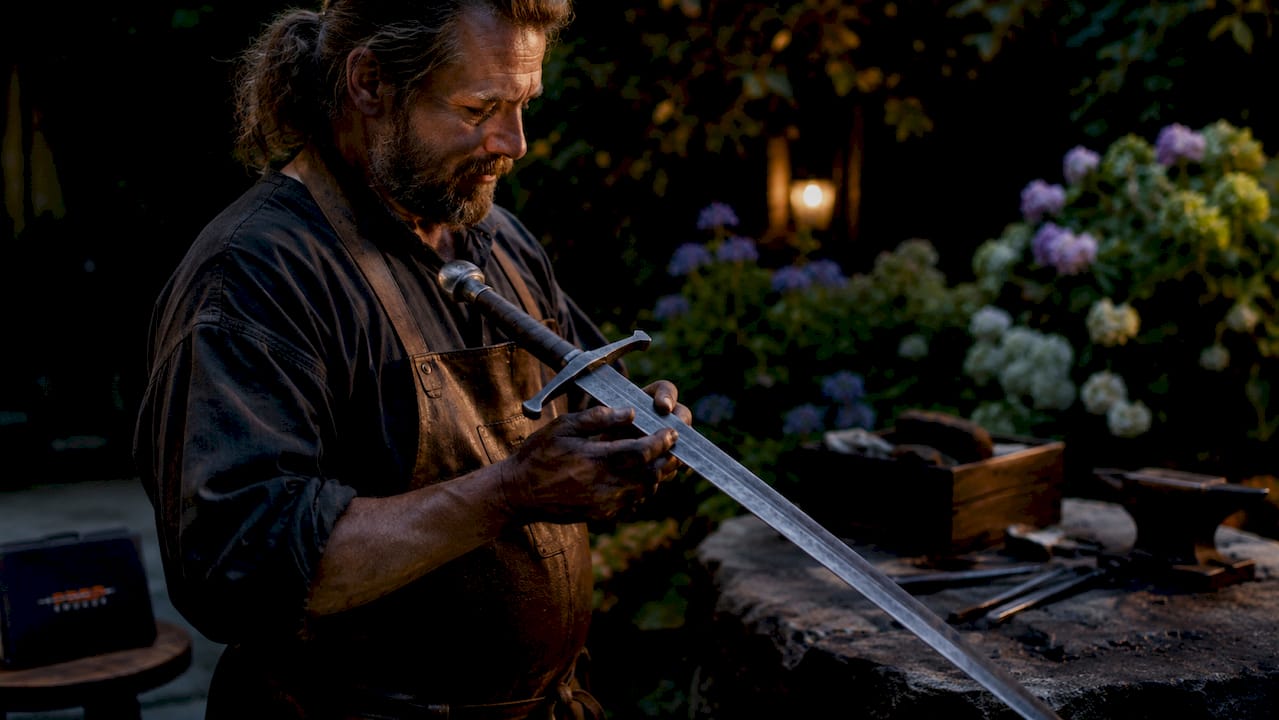
The Iron Age changed everything. Forging and quenching iron allowed smiths to balance hardness and flexibility in ways bronze never permitted. Celtic warriors carried long iron slashing swords. Greek hoplites favored the short, double-edged xiphos. Roman legionaries standardized the gladius, a short thrusting sword optimized for tight formation fighting.
Medieval Europe produced the most varied sword catalog in history. The spatha, inherited from late Roman cavalry, evolved into the arming sword of the early medieval period. As plate armor spread, swords grew longer and stiffer to find gaps in the protection. The longsword solidified its standard form between 1350 and 1550 CE, driven directly by the tactical demands of the Hundred Years’ War.
The Renaissance brought specialization. Rapiers emerged for civilian dueling, prioritizing reach and thrusting speed over cutting power. Sabres dominated cavalry, where a slashing draw cut from horseback was more practical than a precise thrust. Each sword type reflects the exact problem its users were trying to solve.
| Sword Type | Period | Primary Use |
|---|---|---|
| Arslantepe sword | c. 3300 BCE | Ceremonial and combat |
| Roman gladius | 3rd century BCE onward | Infantry thrusting |
| Viking sword | 8th–11th century CE | Slashing close combat |
| Medieval longsword | 1350–1550 CE | Armored warfare |
| Rapier | 16th–17th century CE | Civilian dueling |
| Katana | 14th century CE onward | Samurai combat |
3. What sword fighting techniques did historical warriors use?
Sword fighting techniques were never improvised. Every major sword culture developed a formal system built around the specific weapon its warriors carried. Understanding those systems changes how you read the swords themselves.
Viking swordsmanship relied on tight distance, diagonal cuts driven by gravity and hip rotation, and thrusts delivered after shield deflections. The shield was not passive protection. It was an active tool for creating openings. A Viking fighter would deflect an incoming blow with the shield, then immediately thrust into the exposed gap before the opponent could recover.
The Italian master Fiore dei Liberi took a different approach. His system organizes sword attacks into seven lines, reducing the infinite variety of possible strikes to a manageable set of angles. A fighter who masters those seven lines controls every attack and defense transition without memorizing hundreds of individual techniques. That economy of learning is what made the system survive for centuries.
“The guards are not positions to hold. They are moments of transition between one action and the next.” — Fiore dei Liberi, Flos Duellatorum, c. 1409
German longsword tradition, codified by Johannes Liechtenauer, went further still. Liechtenauer’s system includes Absetzen, a simultaneous parry and attack that deflects the incoming blade while your own point drives forward. There is no separate block phase. Defense and offense happen in one motion. That efficiency is what HEMA practitioners today work hardest to internalize.
Pro Tip: Study the guard positions of any sword system before the strikes. Guards reveal what the system values: reach, power, deception, or speed.
4. How did swords serve as cultural symbols?
Swords carried social meaning that went far beyond their function as weapons. Only free citizens bore swords, linking the weapon directly to legal status and civic identity. Slaves and serfs were forbidden from carrying them. That restriction made the sword a walking declaration of freedom and rank.
Knightly culture formalized this symbolism into ritual. The dubbing ceremony placed a sword flat against the shoulder of a new knight, marking his entry into a warrior class with specific obligations of honor and conduct. Swords appeared in burial goods across Norse, Celtic, and Anglo-Saxon cultures, carried into the afterlife because their owners considered them extensions of personal identity.
Famous ceremonial swords reinforced political power at the highest levels. The Sword of Stalingrad, presented by King George VI of Britain to the Soviet Union in 1943, was a diplomatic object as much as a weapon. Charlemagne’s sword, known as Joyeuse, was used in French coronation ceremonies for centuries. These objects were not kept sharp for battle. They were kept visible for authority.
Viking swords were as exclusive as luxury goods, owned only by wealthy warriors trained in sophisticated combat codes. That exclusivity reinforced their symbolic weight. A man who carried a sword announced his wealth, his training, and his social standing in a single object.
5. Which iconic swords and materials defined the craft?
The most celebrated swords in history share one quality: their materials and construction were ahead of their time. Damascus steel stands at the top of that list. Damascus steel swords achieved their quality through complex heat treatments that balanced edge retention with flexibility. The resulting blades held a sharper edge longer than most European counterparts and resisted shattering under impact. Smiths in the Damascus tradition guarded their methods closely, and the exact process was lost for centuries before modern metallurgists partially reconstructed it.
The Roman gladius succeeded for different reasons. Its short, wide blade was optimized for the Roman legionary’s fighting stance: shield forward, body sideways, thrusting into the opponent’s torso. The design was not elegant. It was brutally functional, and that function won Rome an empire.
The Japanese katana represents a different philosophy entirely. Japanese swordsmiths folded steel repeatedly to distribute carbon evenly and remove impurities, producing a blade with a hard cutting edge and a softer, shock-absorbing spine. The hand-forged Viking sword tradition used similar logic: a harder edge welded onto a softer iron core. Both cultures arrived at the same solution independently.
| Sword | Material | Defining Feature |
|---|---|---|
| Damascus steel sword | Wootz steel | Edge retention and flexibility |
| Roman gladius | Iron | Short, thrusting optimized |
| Japanese katana | Folded steel | Hard edge, flexible spine |
| Viking sword | Iron with welded core | Durability in close combat |
| Medieval longsword | High-carbon steel | Reach and armor penetration |
Key Takeaways
Swords evolved from ceremonial Bronze Age objects into sophisticated weapons shaped by metallurgy, combat systems, and cultural identity across every major civilization.
| Point | Details |
|---|---|
| Oldest swords predate writing | Arslantepe swords from c. 3300 BCE were already status symbols with silver inlay. |
| Material drove design | Every shift from bronze to iron to steel unlocked new blade lengths and fighting styles. |
| Fighting systems were formal | Viking, Italian, and German traditions each built structured combat systems around their swords. |
| Swords marked social rank | Only free citizens could legally carry swords across most ancient and medieval cultures. |
| Iconic blades solved specific problems | The gladius, katana, and rapier each reflect the exact tactical challenge their users faced. |
Why sword history still matters
I have spent years studying swords as objects, and the detail that never stops surprising me is how little separation exists between the weapon and the culture that made it. Most people think of sword evolution as a straight line from crude to refined. The actual story is messier and more interesting. Bronze Age smiths in Arslantepe were already decorating their blades with silver. Viking warriors treated their swords with the same reverence a modern collector gives a signed first edition. The craft and the symbolism developed together, not in sequence.
What I find genuinely underappreciated is the fighting systems. Fiore dei Liberi’s twelve guards are not a list of poses. They are a complete theory of movement, built around the idea that a fighter should never be static. That intellectual depth surprises people who assume medieval combat was just two men swinging at each other. The systems were sophisticated, teachable, and designed to work under real pressure.
The other thing worth saying plainly: swords are the only weapon class that consistently crossed from battlefield tool to cultural artifact to art object within a single generation of use. No other weapon did that as reliably. That is why the history of swords keeps pulling researchers back. You cannot fully understand any civilization that used them without understanding what the sword meant to the people who carried it.
— Muhammad
Own a piece of sword history with Propswords
The swords covered in this article shaped civilizations, defined social rank, and pushed the limits of metallurgy for thousands of years. Propswords brings that history into your hands through replica swords for collectors built with the same attention to historical detail that made the originals legendary.

From hand-forged Damascus steel replicas to Viking and Roman gladius designs, Propswords carries pieces that reflect the real evolution of sword design across cultures and centuries. Every replica ships free within the USA. Whether you collect for display, study, or cosplay, Propswords offers the craftsmanship and historical accuracy that serious enthusiasts expect.
FAQ
Did swords exist in ancient times?
Yes. The oldest confirmed swords date to c. 3300 BCE in Arslantepe, Turkey, made from arsenical bronze. Swords predate written history in several cultures.
What were the main sword fighting techniques in medieval Europe?
Medieval European systems like Fiore dei Liberi’s and Liechtenauer’s used seven lines of attack and simultaneous parry-attack motions called Absetzen. These systems prioritized fluid movement over static blocking.
What made Damascus steel swords so special?
Damascus steel swords used complex heat treatments to achieve both edge retention and flexibility. That combination made them superior to most contemporary blades and difficult to replicate.
How did sword designs change from the Bronze Age to the Renaissance?
Sword designs evolved from short, leaf-shaped bronze blades to long iron swords, then to specialized medieval longswords and Renaissance rapiers. Each shift followed advances in metallurgy and changes in combat tactics.
Why were swords considered status symbols?
Across most ancient and medieval cultures, only free citizens could legally carry swords. The weapon marked legal status, wealth, and social rank, making it as much a social declaration as a fighting tool.
Recommended