TL;DR:
- Serious sword collectors benefit from specialized inventory software that offers offline access and customizable fields to accurately document each piece. Regular audits and proper storage practices, including physical handling with gloves and local digital backups, are essential for maintaining accurate and valuable collections. Building a detailed record of provenance, specifications, and images elevates a collection’s credibility and long-term value.
You have twenty swords on your wall and zero idea where you bought three of them, what steel the blades are made from, or whether any came with certificates. That is exactly how serious collectors lose money and credibility. Knowing how to create sword collection inventory is the skill that separates a casual display from a true collection. This guide walks you through the right tools, a proven cataloging process, the mistakes that cost collectors the most, and how to keep your inventory accurate over time.
Table of Contents
- Key takeaways
- How to create sword collection inventory: tools you need first
- Step-by-step: how to catalog swords in your collection
- Common mistakes to avoid when managing your sword inventory
- Reviewing and verifying your inventory for accuracy
- My honest take on what actually makes this work
- Build your collection with Propswords
- FAQ
Key takeaways
| Point | Details |
|---|---|
| Start with the right software | Specialized blade inventory software with offline access beats spreadsheets for tracking detailed sword specs. |
| Document every detail at acquisition | Record maker, blade specs, steel type, and serial number the moment a sword enters your collection. |
| Use gloves during cataloging | Cotton gloves protect blade integrity and preserve value while you photograph and inspect each piece. |
| Audit your inventory regularly | Periodic reviews catch missing data, condition changes, and discrepancies before they become expensive problems. |
| Keep storage local, not cloud-only | Offline storage protects sensitive collection data, especially for high-value or restricted pieces. |
How to create sword collection inventory: tools you need first
Before you catalog a single sword, you need the right tools in place. Jumping straight into documentation without a system is how collectors end up with three different spreadsheets, handwritten notes they cannot find, and photos buried in a phone camera roll with no labels.
On the digital side, specialized blade inventory software is the standard for serious collectors. Unlimited collection tracking with customizable templates covering maker, pattern, blade length, and custom fields gives you a structured record that a general spreadsheet simply cannot match. The offline capability matters more than most people realize. If you are at an estate sale, a gun show, or a collector’s meetup with spotty Wi-Fi, you still need to log acquisitions on the spot.
Here is a quick comparison of your main options:
| Tool type | Pros | Cons |
|---|---|---|
| Specialized blade software | Custom fields, offline access, searchable records | Learning curve, some cost money |
| Spreadsheet (Excel, Google Sheets) | Free, flexible | No offline mobile sync, no sword-specific fields |
| Physical binder or notebook | No tech required, no data loss from crashes | Hard to search, easy to lose or damage |
| General collection apps | Easy to use | Not sword-specific, missing key fields |
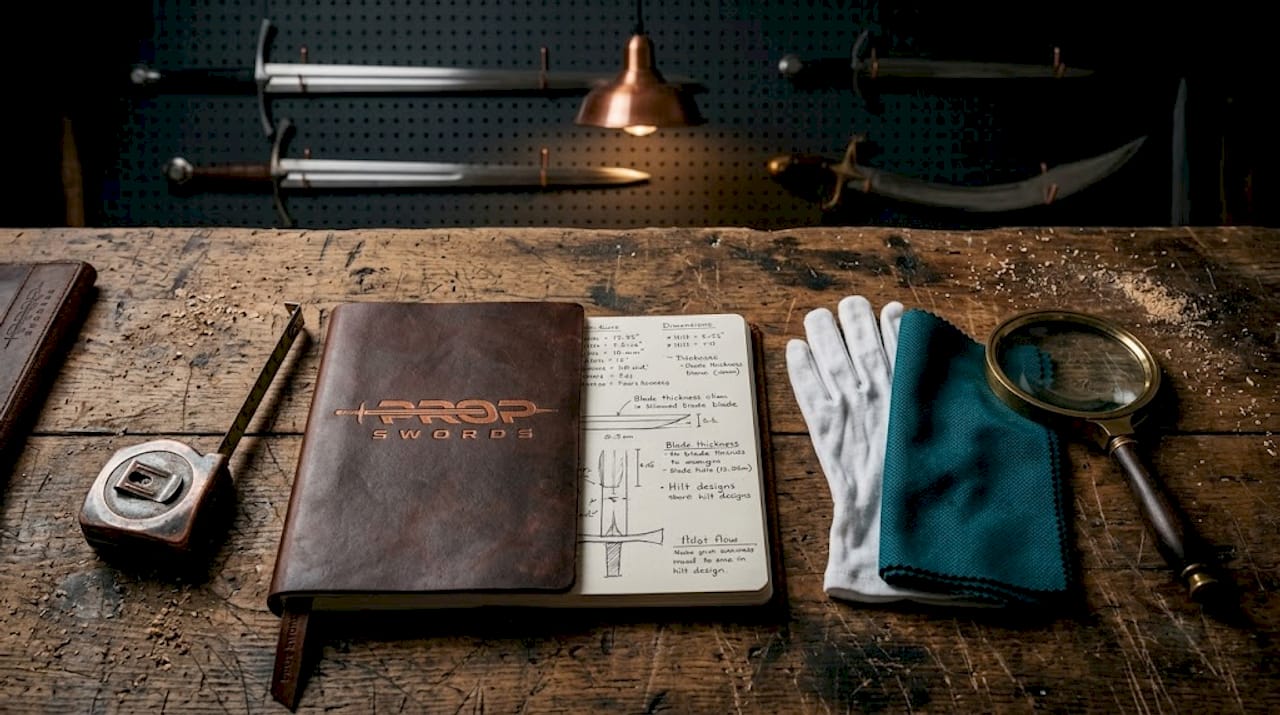
Beyond software, you need a few physical items: cotton gloves for handling, a good measuring tape for blade length, a macro-capable camera or phone, and a folder system for physical documents like certificates of authenticity and purchase receipts.
Pro Tip: Before you start entering data, spend an hour reading up on basic sword terminology. Knowing the difference between a fuller, a ricasso, and a tang construction will make your records far more useful when you go back to reference them later.
You also want a baseline understanding of the sword types in your collection. A sword collection guide covering historical periods and blade styles gives you the vocabulary to describe pieces accurately rather than guessing.
Step-by-step: how to catalog swords in your collection
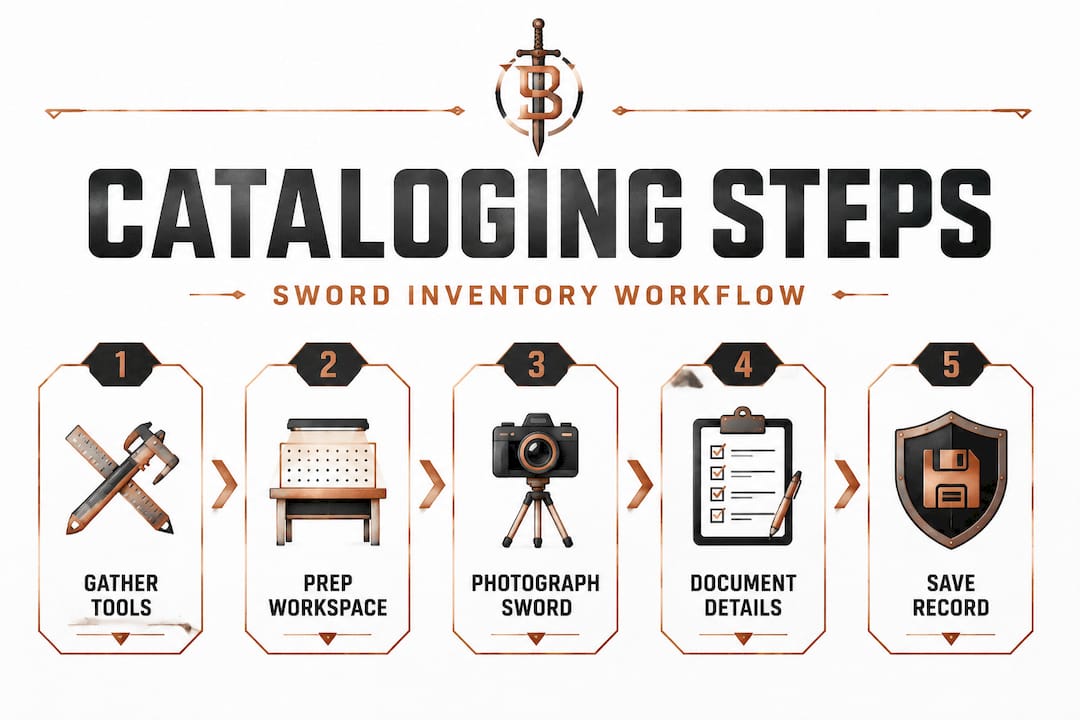
This is where inventory management for swords gets practical. Each sword should get its own complete record before it goes back on the wall or into storage. Follow this sequence for every piece.
-
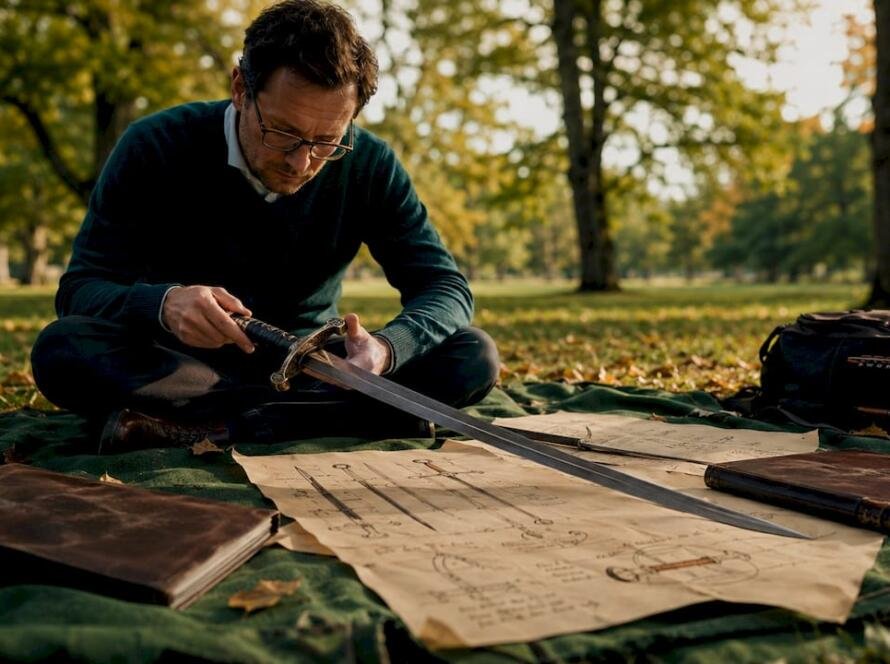
Lay the sword on a clean, padded surface with cotton gloves on. Skin oils cause acid corrosion on blades over time, so bare-hand contact should never happen during inspection or cataloging.
-
Record the manufacturer and model name. If the sword came from a well-known maker, include their full name, country of origin, and any production line information. For replicas, note the original source material (film, anime, historical period).
-
Measure and document blade specifications. This means total length, blade length, width at the guard, thickness at the spine, and blade geometry. Blade geometry and fuller patterns are the details experts use to distinguish authentic historical blades from reproductions, so be precise.
-
Document the handle and fittings. Material (wood, ray skin, cord wrap, synthetic), color, and condition all belong in the record. Note any maker’s marks on the guard or pommel.
-
Record steel type and construction details. High carbon, stainless, folded, pattern welded. If you know the hardness rating or heat treatment, include it. If you do not know, write “unconfirmed” rather than leaving the field blank.
-
Add unique identifiers. Serial numbers, maker’s numbering, and special edition details make your records searchable and defensible for insurance purposes. These are the fields most casual collectors skip, and they are the most important ones at resale time.
-
Photograph every angle. Full blade, guard, handle, pommel, any markings, any flaws. Name the files consistently: Maker_Model_Year_001.jpg, for example.
-
Scan or photograph all documentation. Purchase receipt, certificate of authenticity, appraisal paperwork. Store the digital copies in the same folder as the photos.
-
Write a condition note. Describe the current state of the blade, edge, handle, and fittings in plain language. Note any rust, broken parts, or pin-holes, which directly affect value.
-
Assign a category tag. Japanese katana, Viking sword, fantasy replica, movie prop replica. Consistent tagging makes the inventory searchable when your collection grows to fifty pieces or more.
Pro Tip: Create a naming convention before you enter your first record and never change it. “KATANA_Hanwei_PaulChen_2019” will always be more useful than “my favorite katana” three years from now.
Common mistakes to avoid when managing your sword inventory
Even experienced collectors fall into patterns that undermine the work they put into creating an inventory. Here are the ones that cause the most damage.
Inconsistent or incomplete entries. Skipping fields because you “will fill them in later” is how records become permanently incomplete. Half a catalog entry is almost useless at insurance claim time or when you are trying to remember what you paid.
Ignoring provenance and authentication. Proper identification requires research, and skipping this step because a piece looks right is a risk that costs collectors real money. When you cannot prove where a sword came from or confirm its authenticity, its value drops significantly.
Storing everything on cloud platforms only. Local offline storage protects sensitive details about high-value or legally restricted swords. A cloud breach or account lockout should not give someone a complete inventory of what you own and what it is worth.
Handling blades without protection. This one is simple and commonly ignored. Cotton gloves during inspection preserve blade condition and prevent acid etching from skin contact. One careless session can leave fingerprint corrosion that reduces the value of a blade permanently.
“Building a sword collection is a deliberate process requiring research, budgeting, and trustworthy sourcing.” — A Beginner’s Guide to Sword Collecting
Pro Tip: Back up your inventory at least once a month to a local external drive and a separate encrypted location. The backup habit takes five minutes and has saved collectors years of re-documentation work after a computer failure.
Reviewing and verifying your inventory for accuracy
Creating the inventory is only half the work. A record that does not get updated is not an inventory. It is a snapshot that becomes less accurate with every trade, sale, or new acquisition.
Set a schedule for periodic audits. Twice a year is a practical minimum for most collectors. During each audit, work through these checkpoints:
- Compare physical swords to digital records. Pull up each entry and physically verify the piece matches the documentation. Condition changes, missing accessories, and mislabeled photos all surface during this step.
- Update condition notes. A blade that was “excellent” two years ago may now have light surface patina or a loosened handle fitting. Maintenance and display condition records are what distinguish serious collector documentation from casual notes.
- Cross-check certificates and receipts. Make sure every physical document has a corresponding digital scan and that the scan is readable. Paper deteriorates. Digital copies stored in two locations do not.
- Log all changes since the last audit. New additions, pieces sold, items traded, and anything sent for restoration should all have dated entries. A clean transaction log makes your collection history easy to read.
- Verify authentication status. Check whether any pieces in your collection have been authenticated by recognized authorities. Certificates from recognized authorities increase confidence in value assessments and are worth pursuing for high-value pieces.
Pro Tip: If you are preparing your inventory for insurance or a formal appraisal, generate a printed report from your software and have it signed and dated by a qualified appraiser. Insurers treat documented inventories far more seriously than casual lists, and this step can directly affect the payout you receive.
For collectors who also want a structured approach to displaying their pieces, a sword display checklist is a natural complement to the inventory process, since display conditions affect long-term preservation.
My honest take on what actually makes this work
I have seen collectors with two-hundred-piece collections and I have seen collectors with twelve swords, and the inventory quality almost never correlates with collection size. What it correlates with is mindset.
The collectors who maintain genuinely useful inventories treat documentation as part of the collecting experience, not as paperwork that follows it. They catalog a sword the same day they acquire it, while the details are fresh and the documentation is in hand. The ones who wait a week lose the receipt, forget the dealer’s name, and end up with a vague entry that defeats the purpose.
Handling many swords physically develops a tactile expertise that no amount of reading can replace. But that physical knowledge is only as valuable as your ability to record and retrieve it. The best collectors I know combine hands-on experience with rigorous documentation habits, and they use software built for the job rather than generic tools that almost fit.
The detail most people underestimate is provenance tracking. Knowing where a sword came from, who owned it, and what it cost at each stage is what transforms a wall display into a collection with real market credibility. It also makes the whole experience more rewarding. When you can pull up a complete record for a piece, read through its history, and know its exact specifications, the collection feels alive in a way that a row of unlabeled swords never does.
My advice: start with your ten most significant pieces, get those records complete, and let that momentum carry you through the rest. A partial but accurate inventory beats an ambitious but abandoned one every time.
— Muhammad
Build your collection with Propswords
If your inventory work is revealing gaps in your collection or inspiring you to add pieces that meet a higher standard, Propswords is the right place to look. The best replica swords of 2026 selection covers anime, movie, Viking, and historical categories, with detailed product specs that make the cataloging process straightforward from the moment a sword arrives. Every piece comes with the kind of provenance information that serious collectors need for their records.
For collectors building toward a more thematic display, the fantasy sword collectibles range offers culturally significant pieces with documented origins. Pair that with Propswords’ blog resources on authenticating replica swords and you have both the pieces and the knowledge to keep your inventory accurate from day one. Free shipping within the USA on qualifying orders makes it easier to expand without eroding your per-piece documentation budget.
FAQ
What information should every sword inventory entry include?
Every entry should include maker, model, blade length and steel type, handle materials, unique identifiers like serial numbers, purchase source, acquisition date, current condition, and photos of all angles. Scanned certificates or receipts should be attached to each record.
What is the best software for a sword collection inventory?
Specialized blade inventory software with offline capability is the preferred choice for serious collectors. These programs offer customizable templates with sword-specific fields, including maker, pattern, blade length, and serial number tracking, which generic tools lack.
Why should I avoid storing my sword inventory only on the cloud?
Cloud storage creates privacy and legal risks for collectors of high-value or legally restricted swords. Local offline storage keeps sensitive details about your collection out of platforms vulnerable to breaches or account suspensions.
How often should I audit my sword inventory?
Audit at minimum twice per year. Each session should verify physical pieces against records, update condition notes, log acquisitions and disposals since the last review, and confirm that all certificates and purchase documents have readable digital copies.
Do I need authentication documents for replica swords?
Authentication matters most for historical and high-value pieces, but purchase documentation and maker provenance are worth recording for all swords. Solid documentation at any tier of collecting protects resale value and builds a credible collection history.
Recommended