TL;DR:
- Fantasy weapons serve both combat and storytelling roles in fiction, gaming, and cosplay cultures. Iconic weapons like Excalibur and the Buster Sword symbolize themes and character identities, blending visual impact with narrative meaning. World-building influences weapon design by reflecting society’s resources, geography, and values, enhancing believability and depth.
Fantasy weaponry is defined as the diverse range of fictional armaments created for fantasy settings, designed to serve both combat functions and deeper narrative, cultural, or thematic purposes. You find these weapons across fantasy fiction, tabletop RPGs, video games, and cosplay culture, where they carry as much symbolic weight as they do destructive power. Iconic examples like Excalibur, the Buster Sword, and Andúril have shaped entire franchises and fan communities. Understanding what makes these weapons work, both as storytelling tools and as design objects, gives fans, gamers, and collectors a richer appreciation for the worlds they love.
What is fantasy weaponry, and what types exist?
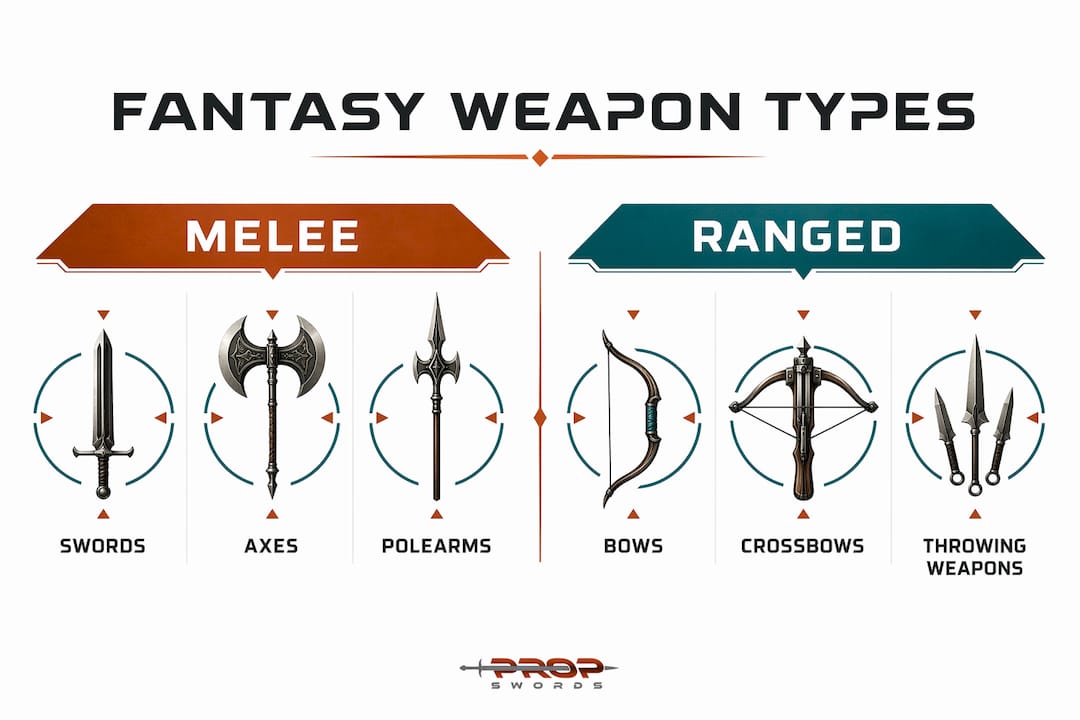
Fantasy weaponry covers a broad spectrum of armament types, and RPG guides identify five to six standardized weapon classes based on combat mechanics and narrative function. That classification system reflects how deeply fantasy weapons have been codified across gaming and fiction. Knowing these categories helps you recognize why a particular weapon exists in a story and what role it plays.
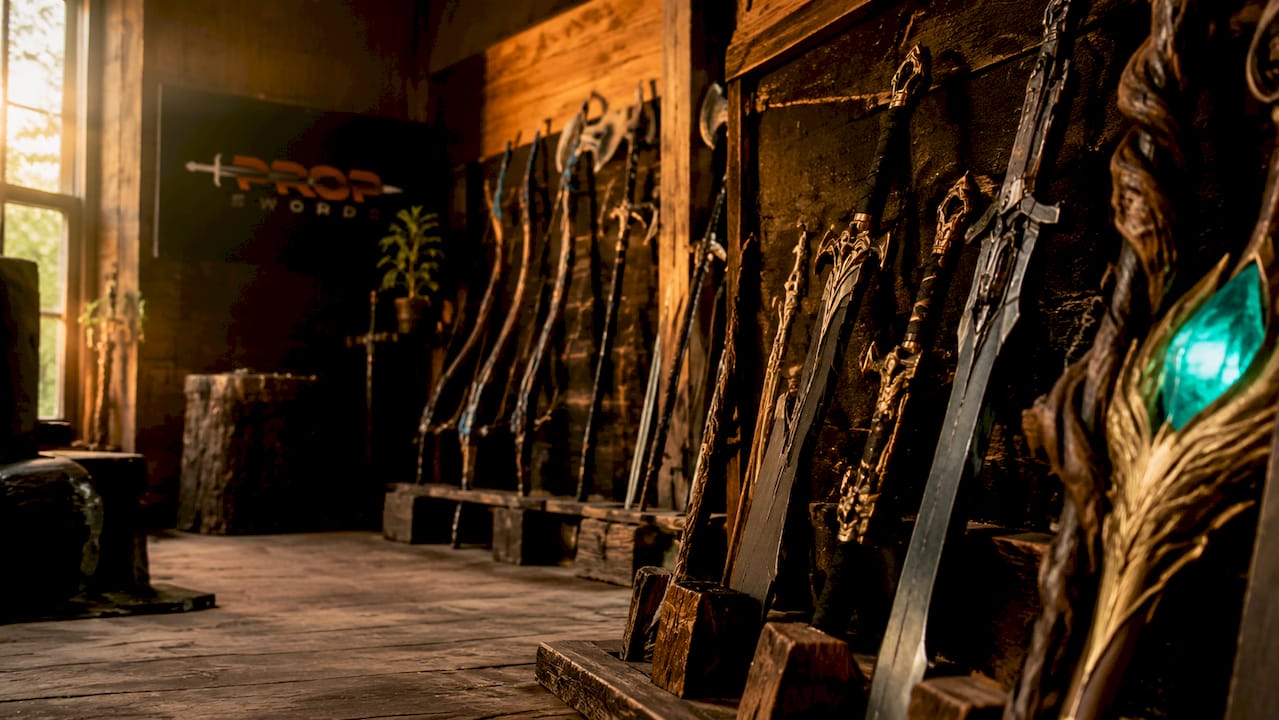
Melee weapons
Melee weapons are the backbone of most fantasy armories. Swords dominate this category, from the elegant longsword to the absurdly oversized greatsword. Axes, war hammers, polearms, and spears fill out the class, each carrying cultural associations. A war hammer signals brute force and dwarven craftsmanship; a polearm suggests disciplined infantry.
Ranged weapons
Bows, crossbows, and throwing weapons make up the ranged category. In fantasy settings, these weapons often gain magical properties, such as arrows that never miss or bolts that return to the shooter. Ranged weapons serve a narrative function too: they create distance between characters, which writers use to build tension.
Magic-based weapons
Staves, enchanted blades, tomes, and wands define the magic weapon class. These are the tools of wizards, clerics, and sorcerers. A staff is not just a walking stick; in most fantasy systems, it channels and amplifies magical energy. Enchanted blades occupy a middle ground, combining physical combat with magical effects like elemental damage or life drain.
Unconventional and hybrid weapons
Fantasy weapon diversity expands well beyond classical designs to include gunblades, musical instruments used as weapons, and even household objects imbued with power. These unconventional types signal creative world-building. A gunblade, for example, forces the wielder to master both swordsmanship and marksmanship, which immediately tells you something about the culture that produced it.
| Category | Examples | Primary Function |
|---|---|---|
| Melee | Swords, axes, war hammers, polearms | Close-range combat |
| Ranged | Bows, crossbows, throwing weapons | Distance combat |
| Magic-based | Staves, enchanted blades, tomes | Spellcasting and enchantment |
| Unconventional | Gunblades, musical instruments | Hybrid or thematic roles |
What makes fantasy weapons iconic and memorable?
The most memorable fantasy weapons share a specific combination of traits. Effective fantasy weapons carry narrative meaning and balanced limitations that preserve story tension. That balance is the key insight most fans overlook: a weapon without weakness becomes a plot shortcut, not a story tool.
Narrative meaning and thematic symbolism
Andúril, reforged from the shards of Narsil in The Lord of the Rings, is not just a sword. It represents the restoration of a broken lineage and the return of a rightful king. The One Ring functions as a weapon of control, and its destruction is the entire plot. Weapons that carry this kind of symbolic weight become inseparable from the stories they inhabit.
Visual audacity and mechanical identity
Iconic weapons endure through a balance of visual impact and unique mechanical or magical identity. The Buster Sword from Final Fantasy VII is immediately recognizable because of its impossible size. That visual choice communicates Cloud Strife’s physical strength and emotional burden before he speaks a single line. The Masamune, Sephiroth’s blade, achieves the opposite effect: its extreme length signals precision and cold detachment.
The rule of cool has limits
The “rule of cool” alone does not create iconic weapons. Narrative function and mechanical uniqueness are equally essential. A weapon that looks spectacular but serves no story purpose fades from memory quickly. The weapons fans remember for decades are the ones that feel earned within their fictional worlds.
Pro Tip: When analyzing a fantasy weapon’s design, ask two questions: What does this weapon say about its wielder? And what would the world lose if this weapon were destroyed? If you can answer both, the weapon has real narrative depth.
- Andúril: symbolizes restored kingship and hope
- The Buster Sword: represents physical and emotional weight
- The Masamune: signals precision and menace
- Excalibur: embodies divine right and legitimate authority
- The One Ring: functions as a weapon of absolute control
How does world-building influence fantasy weapon design?
Fantasy weapons serve as evidence of a living world. Their design reflects societal values and economic resources, which means a well-designed weapon tells you as much about a civilization as any map or history book. Writers and game designers who understand this principle build more believable settings.
-
Connect materials to geography. A coastal civilization with access to rare sea metals will produce different weapons than a landlocked mountain kingdom. The material choice signals trade routes, resource access, and technological development.
-
Let military doctrine shape weapon types. A society that fights in tight formations favors short swords and shields. A nomadic culture on horseback develops curved blades and bows. Weapons tied to geography and military doctrine enhance believability in ways that purely aesthetic choices cannot.
-
Factor in scarcity and maintenance. A magical sword that requires rare components to maintain will be rare in the world. Scarcity creates social hierarchies around weapon ownership. A farmer cannot maintain an enchanted blade; a noble house can. That gap drives conflict.
-
Integrate magic systems deliberately. If magic is common, enchanted weapons are tools. If magic is rare, an enchanted blade is a national treasure. The magic system’s rules determine how weapons function and who can use them.
Pro Tip: Before designing a fantasy weapon, write three sentences about the society that produced it. What do they value? What resources do they have? What enemies do they face? Those answers will shape a weapon that feels like it belongs in the world.
Weapons designed purely for aesthetics often feel disconnected from their settings. Functional, culturally coherent weapons strengthen storytelling because readers and players sense the internal logic, even if they cannot articulate it.
What are the most popular fantasy weapon designs and their cultural impact?
Certain fantasy weapons have crossed from fiction into genuine cultural artifacts. Their influence shapes collecting and cosplay culture in ways that extend far beyond the original source material. These weapons become symbols that fans carry into the real world through replica collecting, costume building, and community identity.
The Buster Sword
The Buster Sword from Final Fantasy VII is widely recognized as an iconic weapon in gaming history. Its design went through multiple iterations across the original game, the Advent Children film, and the Final Fantasy VII Remake, each version refining the blade to meet evolving player expectations and narrative needs. The sword’s impossible dimensions became a defining visual language for the entire franchise.
The Gunblade
The Gunblade from Final Fantasy VIII represents the hybrid weapon category at its most creative. It combines a revolver mechanism with a sword blade, and the trigger fires a round at the moment of impact to amplify the strike. That mechanical detail rewards players who understand the weapon’s function, which is exactly the kind of depth that turns a prop into a legend.
Excalibur
Excalibur draws from actual Arthurian legend, which gives it a fantasy weapon history that predates modern fiction by centuries. Its appearance across games, films, and literature makes it the most cross-cultural example of a mythical weapon type. The sword’s power is always tied to legitimacy: only the rightful king can wield it, which means the weapon itself is a political statement.
Cultural impact on collectors and cosplayers
Pop culture merchandise built around fantasy weapons drives a significant collector market. Fans invest in replica swords not just as decorative objects but as physical connections to the stories they love. Replica swords showcase craftsmanship and fantasy materials that appeal to collectors and cosplay enthusiasts, with references to materials like runic steel appearing across the collectibles market.
- Buster Sword replicas are among the most requested items in the cosplay community
- Excalibur replicas appear in both historical and fantasy collector catalogs
- Gunblade designs inspire custom prop makers worldwide
- Replica quality directly affects a collector’s emotional connection to the source material
The difference between fantasy and historical swords matters to serious collectors, who often seek replicas that honor both the fictional design and real-world craftsmanship standards.
Fantasy weapons as mirrors of character and culture
Fantasy weapons matter more than most people realize. They are not just props or power-ups. The best ones function as compressed storytelling: a single glance at a weapon tells you who the wielder is, where they come from, and what they are willing to sacrifice.
What I find most underappreciated is how weapon design reveals a creator’s commitment to their world. When a writer or game designer takes the time to connect a weapon’s material to the society’s economy, or ties its limitations to the story’s stakes, the audience feels it. They may not be able to explain why a weapon feels “right,” but they know when it does not.
Cosplayers and collectors understand this instinctively. Choosing to carry a replica Buster Sword to a convention is not just a costume choice. It is a statement about which story moved you and which character you identify with. That emotional weight is why fantasy swords as cultural icons continue to grow in significance year after year.
The weapons that endure are the ones built with intention. Visual spectacle gets you noticed. Narrative depth keeps you remembered.
— Muhammad
Propswords’ curated collection for fans and collectors
Collectors and cosplayers who want to own a piece of the fantasy worlds they love to need replicas built to match that emotional investment.
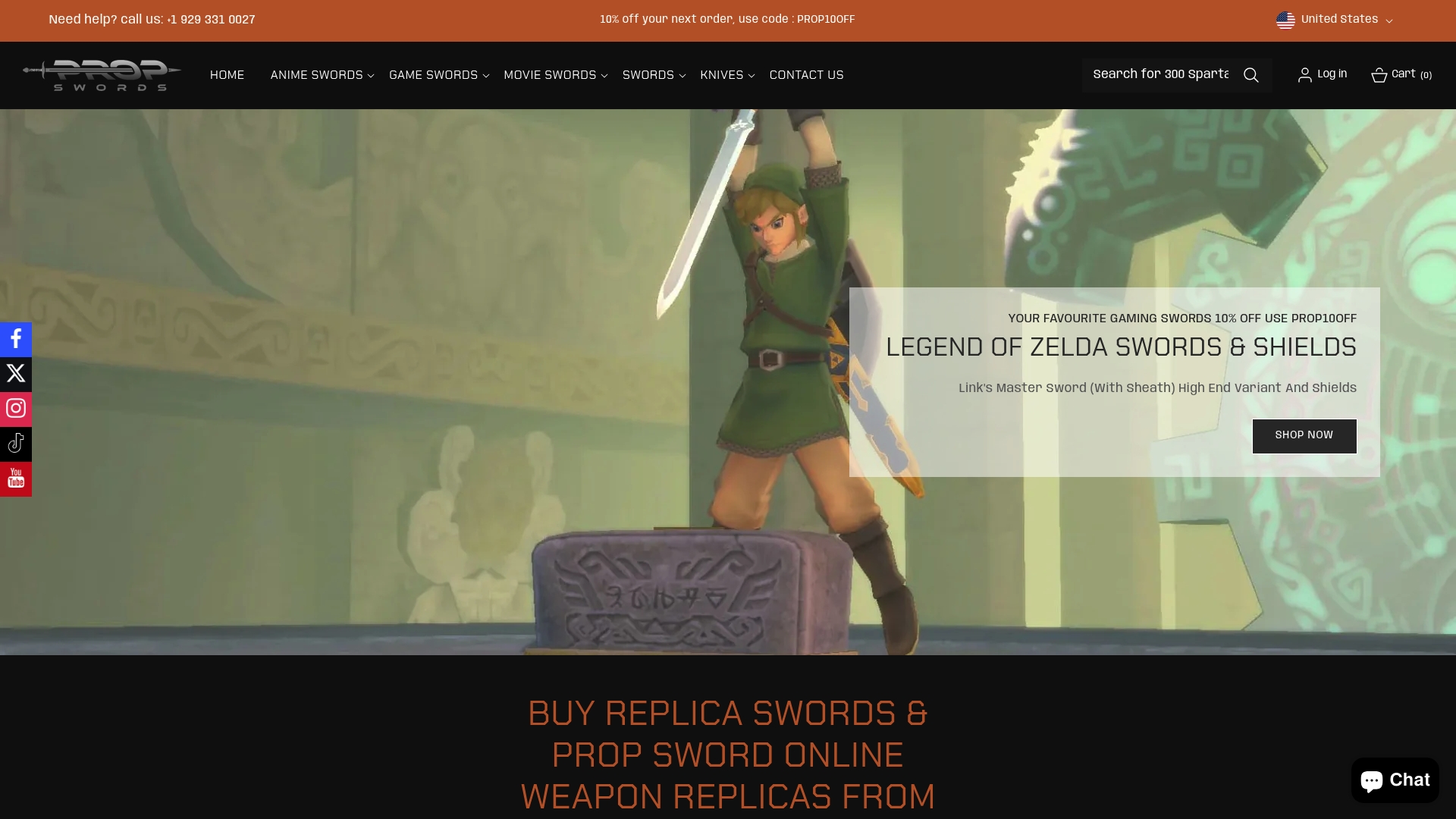
Propswords offers a curated selection of top replica swords for 2026, covering anime-inspired blades, Viking designs, and movie-accurate replicas. Each piece is built for display, cosplay, or gifting, with free shipping across the USA. Whether you are drawn to the oversized drama of a Buster Sword replica or the clean authority of an Excalibur design, Propswords stocks options that honor both the fictional source and real craftsmanship standards. Browse the full collection at Propswords and find the weapon that belongs in your world.
Key takeaways
Fantasy weaponry is most effective when visual design, narrative function, and cultural coherence work together rather than independently.
| Point | Details |
|---|---|
| Fantasy weaponry defined | Fictional armaments built for combat, symbolism, and storytelling across games, fiction, and cosplay. |
| Five core weapon categories | Melee, ranged, magic-based, firearms, and unconventional types each serve distinct narrative and combat roles. |
| Iconic weapons need limits | Balanced weaknesses preserve story tension and make weapons feel earned rather than convenient. |
| World-building drives design | Materials, military doctrine, and scarcity connect weapons to the societies that produce them. |
| Replicas carry real meaning | Collectors and cosplayers use replica swords as physical expressions of emotional connection to source material. |
FAQ
What is fantasy weaponry in simple terms?
Fantasy weaponry refers to fictional weapons created for fantasy settings, designed to serve both combat and storytelling purposes. These weapons appear in games, books, films, and cosplay culture.
What are the main types of fantasy weapons?
RPG guides classify fantasy weapons into five to six primary categories: melee, ranged, magic-based, firearms, and unconventional or hybrid types. Each category serves a distinct role in combat and narrative.
What makes a fantasy weapon iconic?
Iconic fantasy weapons combine visual impact with narrative meaning and mechanical uniqueness. Weapons like the Buster Sword and Excalibur endure because they reflect character identity and carry thematic weight beyond their combat function.
How does world-building affect fantasy weapon design?
Weapon design reflects a society’s geography, economy, and military doctrine. Weapons connected to these factors feel believable and immersive, while purely aesthetic designs often feel disconnected from their settings.
Why do collectors and cosplayers value fantasy weapon replicas?
Replica fantasy swords give fans a physical connection to the stories and characters they care about. Craftsmanship quality and design accuracy directly affect the emotional value collectors place on these objects.
Recommended