TL;DR:
- Proper anime sword care involves regular oiling and controlled storage to prevent rust and preserve the blade. Collectors should use gentle tools, maintain humidity between 40-60%, and handle swords with gloves to avoid damage. Consistent routines and environment control extend the lifespan of replica swords significantly.
Anime sword care basics are defined as the regular maintenance practices that prevent rust, preserve blade finish, and protect the structural integrity of replica swords. Collectors who skip these routines risk permanent discoloration, corrosion, and damaged fittings on pieces that can be difficult or impossible to restore. The core practices include periodic oiling with food-grade mineral oil or choji oil, controlled storage humidity between 40–60%, and careful handling with cotton gloves. Whether you own a replica of Ichigo’s Zangetsu or Kirito’s Elucidator, the same fundamental care principles apply.
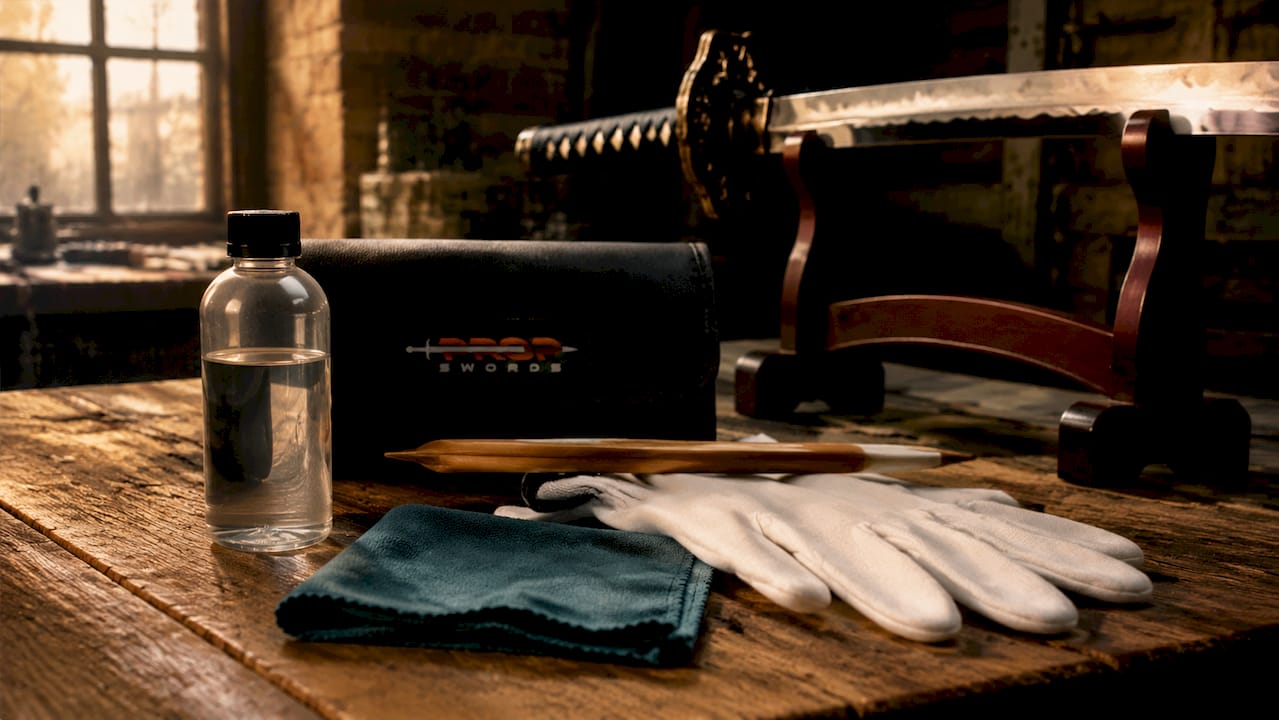
1. Anime sword care basics: how often to oil and clean
Oiling after every handling session is the single most important habit a collector can build. Skin acids transfer to the blade every time bare hands touch the metal. Those acids begin oxidizing the surface within hours, not days.
For swords in active display or regular handling, oil after each session. For swords in storage, a light oiling every 3–6 months keeps the metal protected without buildup. The goal is a thin, even film, not a wet coat.
- Oil after every bare-hand contact with the blade
- Apply a maintenance coat every 3–6 months for stored swords
- Clean under the habaki every 6–12 months to catch hidden rust
- Wipe the blade dry before re-oiling to remove old, contaminated oil
Pro Tip: Apply one drop of mineral oil per 6 inches of blade, then wipe back until only a faint sheen remains. Pooling oil attracts dust and grit that scratch the surface over time.
2. What cleaning tools and products work best
The right tools make the difference between a clean blade and a scratched one. Microfiber cloths, cotton gloves, and natural-bristle brushes are the foundation of any solid maintenance kit. Lint-free, soft materials protect the finish while removing fingerprints and dust.
Avoid abrasive cloths, paper towels, or any rough fabric. These leave micro-scratches that dull the blade’s finish and create tiny grooves where rust can start.
- Microfiber or soft cotton cloths: Use for wiping the blade before and after oiling
- Cotton swabs: Reach tight areas around the habaki and fittings
- Natural-bristle brushes: Dust off the tsuba and handle without scratching
- 10x loupe or magnifying glass: Spot early rust and surface damage before it spreads
- Nuguigami paper: A traditional Japanese tissue used for wiping blades clean before oiling
On oil selection, food-grade mineral oil is the most accessible and reliable choice for most collectors. Choji oil, a traditional Japanese sword oil, is also excellent and widely available. Both protect against oxidation without degrading the blade’s finish.
Skip uchiko powder for home care entirely. Uchiko is a fine polishing powder used by professional sword polishers. In untrained hands, it removes the surface patina and risks scratching the blade. A simple wipe with nuguigami or microfiber cloth plus mineral oil handles 99% of routine needs.
Pro Tip: Keep your maintenance kit in a small dedicated case near your display. When everything is within reach, you are far more likely to oil the blade after handling it.
3. Best practices for storing anime swords
Storage is where most collectors make their costliest mistakes. Long-term storage in leather scabbards traps moisture against the blade surface. Leather’s material properties create a humid microenvironment that accelerates rust in areas you cannot see until the damage is done.
The better approach is to store blades outside their scabbards, or at minimum remove them regularly to let the metal breathe. Dedicated sword cabinets or paulownia wood boxes are the preferred storage solutions. Paulownia wood naturally regulates humidity and resists insects, making it a traditional and practical choice.
- Remove blades from leather scabbards for long-term storage
- Use a paulownia wood box or a dedicated sword cabinet
- Maintain 40–60% relative humidity in the storage area
- Keep temperature stable around 60–68°F to prevent condensation
- Place silica gel packets in the storage space and replace them every 3–6 months
- Avoid storing swords near exterior walls, windows, or areas prone to temperature swings
| Storage condition | Target range | Why it matters |
|---|---|---|
| Relative humidity | 40–60% | Prevents rust and avoids dryness that cracks wooden fittings |
| Temperature | 60–68°F | Reduces condensation risk on the blade |
| Silica gel replacement | Every 3–6 months | Keeps packets effective at absorbing moisture |
| Scabbard storage | Avoid long-term | Leather traps moisture and causes hidden corrosion |
Stable humidity is the most overlooked factor in sword preservation. Collectors who control their display room’s climate protect their entire collection with one consistent habit.
Pro Tip: A basic digital hygrometer costs under $15 and tells you the exact humidity in your display room. Place one near your sword rack and check it monthly.
4. How to safely handle and inspect your swords
Safe handling starts before you touch the blade. Put on clean cotton gloves every time you pick up a sword for maintenance or display adjustment. Bare skin deposits oils and salts that begin corroding the metal immediately.
- Always wear clean cotton gloves when handling the blade
- Hold the sword with the edge facing away from you during inspection
- Use a 10x loupe to examine the blade surface for early rust spots, pitting, or discoloration
- Check the habaki, tsuba, and handle fittings for looseness or corrosion
- Insert the blade slowly into the saya to avoid nicking the edge or scratching the finish
Visual inspection is a skill that improves with practice. Run the loupe along the entire blade length under good lighting, looking for any orange or brown discoloration. Catching rust at the pinpoint stage means a simple wipe with oiled cloth fixes it. Waiting until it spreads means professional restoration or permanent damage.
Inspect your swords at every oiling session. For stored pieces, a quarterly check takes less than five minutes and prevents surprises.
5. Common mistakes anime sword collectors make
Most sword damage is self-inflicted through well-meaning but incorrect care. Knowing the pitfalls saves you from learning them the hard way.
- Over-oiling: Excess oil attracts dust and grit that scratch the blade during the next wipe. Always wipe back to a faint sheen.
- Using vegetable oils or WD-40: Vegetable oils go rancid and leave a sticky residue. WD-40 is a water displacer, not a blade protectant, and it degrades the finish over time. Use mineral oil or choji oil instead.
- Misusing uchiko powder: Uchiko is reserved for professional polishers. Amateurs who apply it risk scratching the blade and stripping the surface finish permanently.
- Storing swords in leather scabbards long-term: Leather traps moisture. Even a well-oiled blade will develop hidden rust if left in a leather saya for months without airing.
- Ignoring humidity swings: Dry conditions crack wooden handles and lacquered fittings. High humidity causes rust. Both extremes damage the sword in different ways.
“The most common collector mistake is not neglect but misplaced effort. Using the wrong product with good intentions, like vegetable oil or uchiko powder, causes more damage than skipping a maintenance session entirely. Simple and correct beats elaborate and wrong every time.”
Collectors who follow an anime sword maintenance checklist avoid these errors by building consistent, correct habits from the start.
6. Adapting your care routine by climate and usage
A collector in Phoenix, Arizona needs a different routine than one in coastal Florida. Dry climates demand more frequent humidity monitoring and occasional light oiling of wooden fittings to prevent cracking. Humid coastal climates require more aggressive moisture control, including more frequent silica gel replacement and regular blade inspection for early rust.
Usage frequency also changes the schedule. A sword handled weekly for cosplay events needs oiling after every session and a thorough inspection monthly. A display piece touched only during cleaning needs a full maintenance pass every 3–6 months.
Collectors who wear their swords as part of an anime-inspired lifestyle at events and conventions should treat their replicas as working display pieces, not static collectibles. That means tighter maintenance intervals and a travel kit with a small cloth and a travel-size oil bottle.
The key is building a written schedule. Note the date of every oiling, inspection, and storage check. Patterns in your notes will tell you if your environment is more aggressive than average and whether you need to adjust your intervals.
Key takeaways
Proper anime sword care requires consistent oiling, controlled storage humidity, and correct tools to prevent rust and preserve display quality for years.
| Point | Details |
|---|---|
| Oil after every handling | Apply one drop of mineral oil per 6 inches of blade and wipe back to a faint sheen. |
| Control storage humidity | Keep relative humidity at 40–60% and temperature at 60–68°F to prevent rust and cracking. |
| Avoid leather scabbards long-term | Leather traps moisture and causes hidden corrosion; store blades outside scabbards. |
| Skip uchiko powder at home | Use nuguigami or microfiber cloth with mineral oil for routine cleaning instead. |
| Inspect under magnification | Use a 10x loupe quarterly to catch rust at the pinpoint stage before it spreads. |
What I’ve learned from years of caring for replica swords
The collectors who damage their swords most often are not the careless ones. They are the enthusiastic ones who over-maintain with the wrong products. I have seen beautiful replicas ruined by vegetable oil gone rancid and blades scratched by uchiko powder applied by someone who read a single forum post.
My honest advice: keep it simple. Mineral oil, a microfiber cloth, cotton gloves, and a hygrometer cover 95% of what you need. The elaborate kits and exotic products are mostly unnecessary for replica swords.
Climate matters more than most collectors realize. I adjusted my oiling schedule when I moved from a dry inland city to a more humid coastal area. The blades that were fine with quarterly oiling suddenly needed attention every six weeks. Pay attention to your environment, not just a generic schedule.
Display and preservation do not have to conflict. A sword mounted on a wall in a climate-controlled room with 50% humidity looks great and stays protected. The mistake is mounting it near a window or exterior wall where temperature swings create condensation. One small repositioning can extend a sword’s life by decades.
— Muhammad
Quality replica swords and care essentials at Propswords
Propswords carries a wide selection of anime-inspired replica swords built for display, cosplay, and serious collecting. Every piece is designed with the detail and finish quality that makes proper care worth the effort.

Whether you are building your first collection or adding a statement piece, the top replica swords for 2026 at Propswords are a strong starting point. Collectors preparing for events can also check the cosplay sword preparation guide for safe handling and realistic display tips. Propswords offers free shipping within the USA, so getting your next piece and the right accessories is straightforward. Browse the full catalog and find the sword that earns a permanent spot in your collection.
FAQ
How often should I oil my anime replica sword?
Oil the blade after every bare-hand handling session to neutralize skin acids. For swords in storage, a light oiling every 3–6 months is sufficient.
What oil is best for cleaning anime swords?
Food-grade mineral oil and choji oil are the top choices for replica sword maintenance. Avoid vegetable oils and WD-40, which degrade the finish or go rancid over time.
Can I use uchiko powder on my replica sword at home?
Uchiko powder is reserved for professional sword polishers and risks scratching the blade in untrained hands. A microfiber cloth with mineral oil handles routine cleaning safely.
What humidity level is best for sword storage?
Maintain relative humidity between 40–60% and a stable temperature around 60–68°F. Use silica gel packets and a digital hygrometer to monitor and control your storage environment.
Why should I avoid storing my sword in its leather scabbard long-term?
Leather traps moisture against the blade surface, creating conditions that cause hidden rust. Store blades outside leather scabbards or remove them regularly to let the metal breathe.
Recommended