TL;DR:
- The main difference between prop and real swords lies in purpose and construction. Real swords use high-carbon steel with full tangs, designed for functionality, while props use lighter materials like foam and plastic for display or cosplay. Verification of tang construction and steel quality helps distinguish authentic swords from decorative replicas.
The difference between a prop sword and a real sword comes down to one thing: purpose. Real swords are fully functional weapons built to cut, thrust, and withstand combat stress. Prop swords, also called replica swords or decorative swords, are designed for display, cosplay, or gifting. They look the part but are not built to perform as weapons. Understanding this distinction protects you from overpaying, getting hurt, or buying the wrong piece for your collection.
What is the difference between prop and real swords in materials and construction?
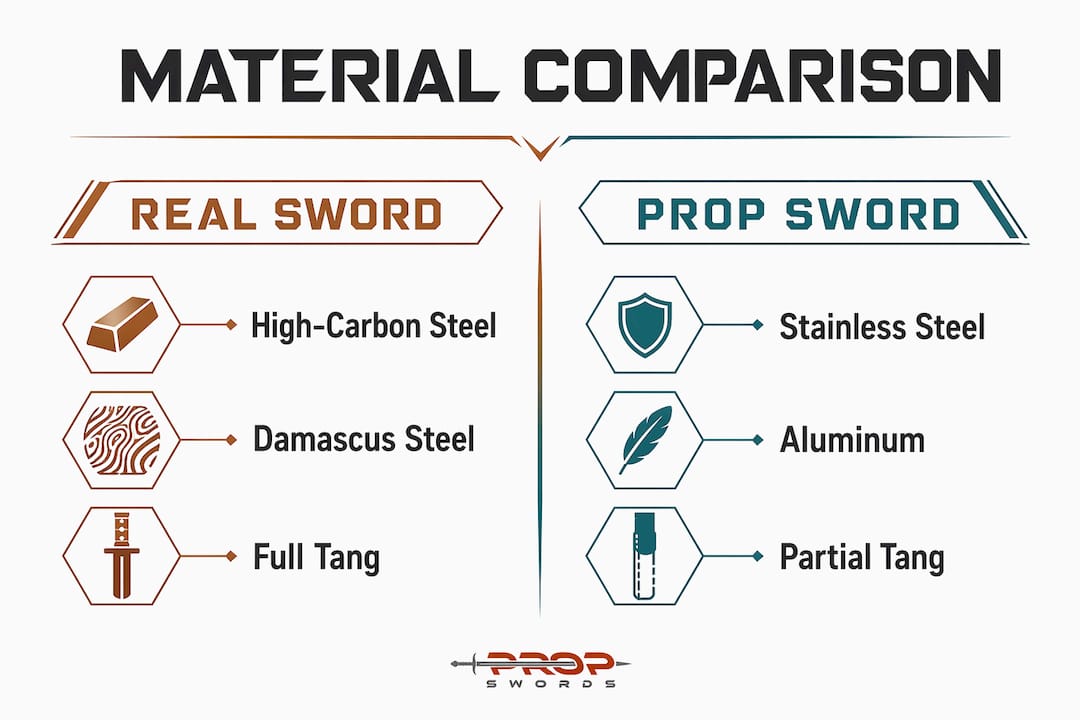
The gap between prop and real swords starts with the steel. Real swords use high-carbon or Damascus steel, properly heat-treated to achieve the right balance of hardness and flexibility. That heat treatment process is what allows a blade to flex under stress without snapping. Skip it, and you have a blade that looks sharp but fails under pressure.
Prop swords typically use stainless steel, aluminum, plastic, or foam. Stainless steel sounds credible, but it is too brittle for actual use. It holds a shine well, which makes it ideal for display. Foam and plastic props serve cosplay and stage performance, where weight and safety matter more than edge retention.
The tang is where the real difference becomes structural. A full tang runs the entire length of the handle, creating one continuous piece of metal from blade tip to pommel. Real swords are full tang and properly tempered, while most decorative props use a rat-tail tang, a thin metal rod glued into the handle. Under any real stress, a rat-tail tang can snap or pull free from the grip entirely.
Weight and balance separate real swords from props in ways you feel immediately when you hold one. A real sword’s weight is distributed intentionally, with the balance point calculated for control during use. A prop sword may feel lighter or oddly top-heavy because the weight distribution was never engineered for function.
Pro Tip: Before buying any sword labeled “functional,” check the tang specification in the product description. If it says “rat-tail tang” or does not mention the tang at all, treat it as decorative only.
| Feature | Real sword | Prop sword |
|---|---|---|
| Steel type | High-carbon or Damascus steel | Stainless steel, aluminum, plastic, or foam |
| Heat treatment | Yes, properly tempered | Rarely or never |
| Tang construction | Full tang | Rat-tail or partial tang |
| Weight distribution | Engineered for combat balance | Imitated for aesthetics |
| Edge | Sharp or sharpenable | Dull or blunted |
How can you identify real swords versus props by appearance and feel?
Visual inspection tells you a lot, but feel tells you more. A real sword has a blade that runs continuously from tip to guard with no visible seams or wobble at the hilt. The edge is either sharp or shows the grinding marks of a blade that was sharpened. The handle feels solid because the tang anchors it from within.
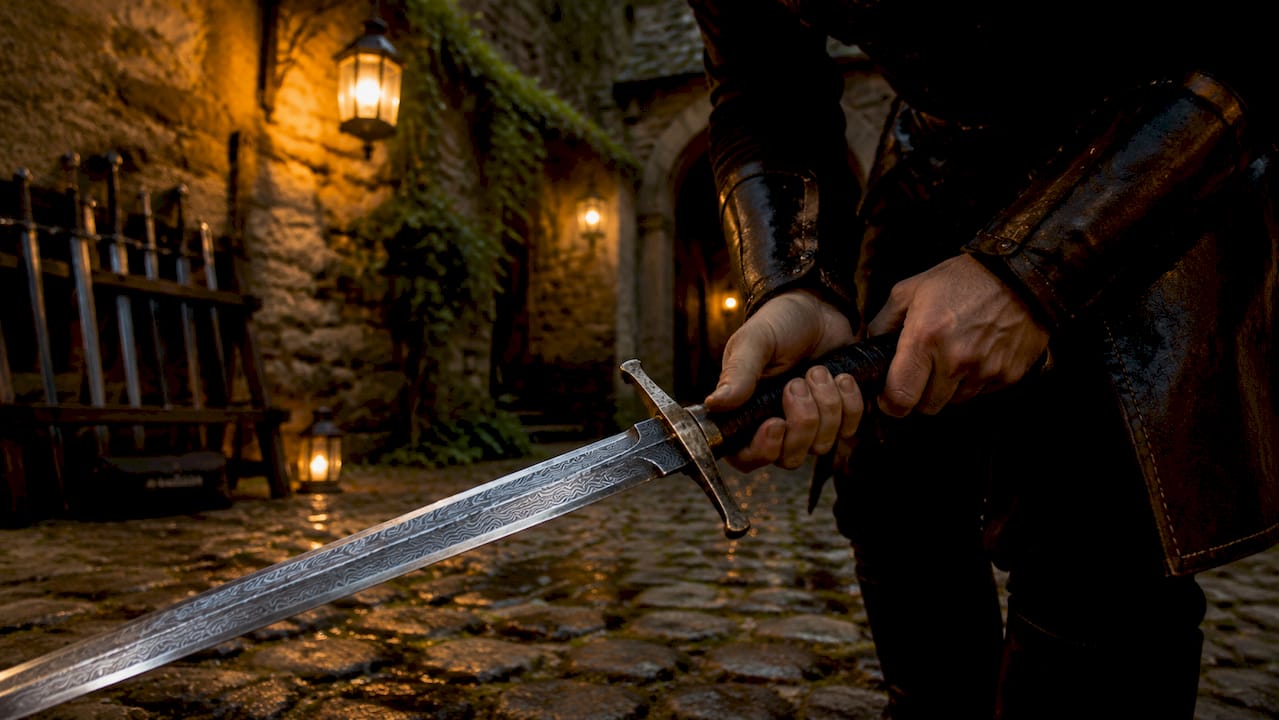
Tapping the hilt gently and watching for blade wobble is one of the safest physical tests you can perform without damaging the sword. A real sword shows no movement between blade and handle. Any wobble signals a weak tang connection, which is a clear sign of a decorative piece.
Maker marks are frequently forged or copied and should never be your first line of authentication. A mark stamped on the blade confirms nothing on its own. Experts advise treating maker marks as supporting evidence only, after physical inspection confirms the blade’s form, proportions, and construction quality.
Red flags that indicate a prop sword:
- Blade wobbles when the hilt is tapped
- Handle feels hollow or rattles
- Blade is extremely light for its size
- No tang specification listed by the seller
- Stainless steel labeled as “battle-ready”
- Blade edge is uniformly dull with no grinding marks
- Handle is attached with visible adhesive or screws through the grip
Pro Tip: Ask the seller for the blade’s Rockwell hardness rating. Real functional swords typically fall in the 50–60 HRC range. A seller who cannot provide this number is likely selling a decorative piece.
Collectors should base authenticity judgments on physical evidence like blade form, proportions, and construction rather than provenance alone. A sword with a famous name attached to it still needs to pass a physical inspection before you accept it as genuine.
What are the price ranges and value differences for prop swords vs real swords?
Price is one of the clearest signals of what you are buying. Decorative prop swords typically cost between $30 and $300. Functional real swords start around $200 and can exceed $5,000 depending on the maker, materials, and craftsmanship. That overlap in the $200–$300 range is where collectors get confused and sometimes misled.
A real sword at $300 is an entry-level functional piece, likely machine-made with decent steel but minimal hand finishing. A prop sword at $300 is a premium decorative item with excellent visual detail. Neither is better in an absolute sense. The right choice depends entirely on what you plan to do with it.
Real swords last decades with proper care and can appreciate in value over time. Prop swords deteriorate faster. Foam loses its shape, plastic yellows, and even stainless steel props tarnish without regular attention. For long-term collection value, real swords hold their worth better. For display, gifting, or cosplay, a well-made replica delivers far more value per dollar.
| Category | Price range | Durability | Best use | Maintenance |
|---|---|---|---|---|
| Prop sword | $30–$300 | Low to moderate | Display, cosplay, gifting | Light cleaning, careful storage |
| Real sword | $200–$5,000+ | High | Training, collecting, cutting | Regular oiling, edge maintenance |
For collectors focused on historical replica buying, the value equation shifts toward craftsmanship and accuracy rather than raw function. A historically accurate replica with fine detail work can hold strong display value even without being a functional weapon.
What legal and safety rules apply to owning real swords versus props?
Legal ownership of swords varies significantly by location. Prop and replica swords are generally unrestricted, while real swords may face ownership or transport restrictions depending on local laws and the blade’s intended use. Some states and cities regulate concealed carry of bladed weapons above a certain length. Always check your local ordinances before purchasing a functional sword.
Safety rules differ just as sharply between the two types. Real swords demand respect because they are built to cut. Handling one without training or proper protective gear creates genuine injury risk. Prop swords carry a different danger: collectors who treat them as functional weapons. A rat-tail tang prop used for striking can fail catastrophically, sending the blade loose.
Safe practices for both types include:
- Store real swords in a scabbard or padded case when not in display
- Never draw a real sword in a crowded space or at public events without explicit permission
- Transport real swords in a locked case and check local laws on blade length for vehicles
- Do not use prop swords for any striking or combat practice, even light sparring
- Mount display swords on secure wall brackets rated for the weight, especially for real steel pieces
- Keep all swords out of reach of children regardless of type
For cosplay use, choosing replica swords made from foam or lightweight materials is the safest option at most conventions. Many venues ban metal swords entirely, even decorative ones. Knowing the rules of your event before you pack your costume saves real headaches.
Key Takeaways
The core difference between prop and real swords is construction: real swords use full-tang high-carbon steel built for function, while props use lighter materials built for appearance.
| Point | Details |
|---|---|
| Material defines function | Real swords use high-carbon or Damascus steel; props use stainless steel, aluminum, or foam. |
| Tang construction is the key test | Full tang means functional; rat-tail or partial tang means decorative only. |
| Price overlap creates confusion | Both types overlap at $200–$300, so always verify construction specs before buying. |
| Legal rules differ by type | Props face fewer restrictions; real swords may require compliance with local blade laws. |
| Maker marks are not proof | Physical inspection of blade form and tang construction confirms authenticity, not stamps alone. |
Why this distinction changed how I think about collecting
I used to assume that a sword labeled “hand-forged” was automatically the real thing. Then I held a genuine high-carbon blade next to a well-made stainless steel display piece, and the difference was immediate. The real sword had a weight that settled into your hand differently. The balance point sat closer to the guard, and the blade had a slight flex when pressure was applied. The display piece looked nearly identical but felt like holding a prop from a theater set.
That experience reshaped how I evaluate every sword I consider. I stopped leading with price or visual appeal and started asking about tang construction and steel specification first. A beautiful sword that cannot answer those questions is a display piece, and there is nothing wrong with that. But calling it something it is not is where collectors get burned.
The misconception I see most often is that stainless steel equals quality. Stainless steel is excellent for kitchen knives and decorative pieces because it resists tarnish. For a sword meant to flex and absorb impact, it is the wrong material entirely. High-carbon steel requires more maintenance but delivers actual performance. Knowing that one fact saves collectors from expensive mistakes.
My honest advice: decide your purpose before you set a budget. If you want a piece that looks stunning on a wall and sparks conversation, a premium replica from a quality source like Propswords delivers exactly that at a fraction of the cost of a functional sword. If you want to train, cut, or own a piece of genuine martial history, invest in the real thing and learn how to care for it properly. Both paths are valid. Mixing them up is where the trouble starts.
— Muhammad
Propswords has the replica swords collectors actually want
Knowing the difference between prop and real swords makes you a sharper buyer. If your goal is display, cosplay, or gifting, a high-quality replica delivers the visual impact without the legal complexity or maintenance demands of a functional blade.
Propswords carries a curated range of replica swords for collectors spanning anime, Viking, fantasy, and historical themes. Each piece is selected for visual accuracy and build quality, so you get a sword that looks the part and holds up on display. Free shipping within the USA makes it easy to add the right piece to your collection without the guesswork of sourcing from unknown sellers. Browse the full selection and find a replica that fits your style and purpose.
FAQ
What is the main difference between a prop and a real sword?
A real sword is a functional weapon made from high-carbon steel with a full tang, built to cut and withstand stress. A prop sword is a decorative or performance piece made from stainless steel, aluminum, foam, or plastic, designed for appearance rather than function.
Are prop swords safe to use for sparring or training?
Prop swords are not safe for sparring or training. Their rat-tail or partial tang construction can fail under impact, creating a serious injury risk. Use only purpose-built training swords or real functional blades for any martial arts practice.
How do I identify a real sword without damaging it?
Tap the hilt gently and watch for blade wobble. A real sword shows no movement between blade and handle. Also check the tang specification and steel type listed by the seller, and inspect the blade edge for grinding marks that indicate actual sharpening.
Can I legally own a real sword in the United States?
Replica swords are generally unrestricted in most U.S. states. Real swords may face restrictions on concealed carry or transport depending on blade length and local ordinances. Always verify your state and city laws before purchasing a functional blade.
Do maker marks confirm a sword is authentic?
Maker marks are frequently forged or copied and cannot confirm authenticity on their own. Use physical inspection of blade form, tang construction, and steel type as your primary authentication method, with maker marks as supporting evidence only.
Recommended