TL;DR:
- High-carbon steel with proper heat treatment is essential for durable, functional swords. Choosing the correct steel grade, heat treatment, and construction ensures performance in cutting, flexibility, and safety. Reputable brands and thorough verification of steel and tang quality help collectors avoid low-grade or poorly treated swords.
Steel swords built for real use share one defining trait: high-carbon steel with proper heat treatment. The steel grade matters, but how that steel is forged and tempered determines whether a blade holds an edge, flexes under stress, or snaps on first contact. For collectors and buyers in the US market, knowing the difference between a well-tempered 1060 blade and a flashy but poorly treated 1095 sword is the single most valuable piece of knowledge you can carry into any purchase.
Here is what to look for before you buy:
- Steel type: 1045, 1060, and 1095 are the most common high-carbon steels for functional blades; 1045 is the minimum acceptable standard
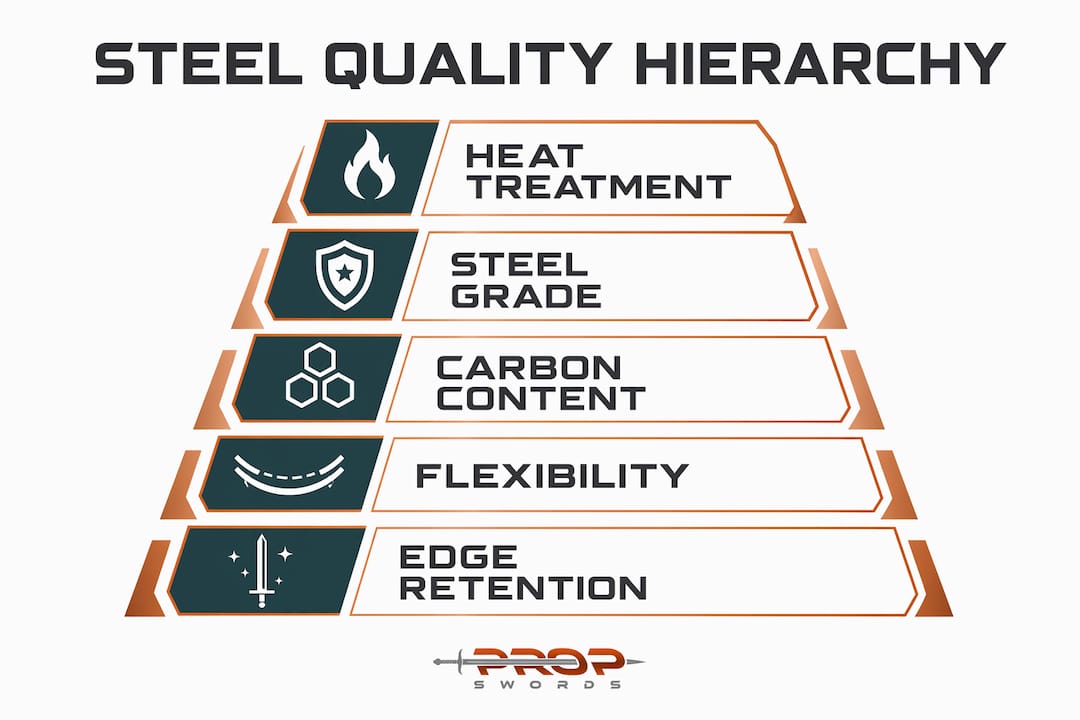
- Heat treatment: More critical than the steel grade itself; poor tempering ruins even premium steel
- Blade construction: Full tang is non-negotiable for any sword meant for actual use
- Intended use: Display, sparring, or battle-ready cutting each demands a different spec
- Price range: Under $100 typically means 1045 steel; $150–$500 covers quality 1060 blades; premium tool steels like L6 Bainite start above $1,000
- Sword style: Katana, longsword, saber, Viking sword, and gladius each suit different collectors and uses
Table of Contents
- What are the best steel sword brands in the US market?
- What steel grades are actually used in quality swords?
- How to choose and buy a steel sword in the United States
- What makes each sword style different?
- Why heat treatment matters more than steel grade
- How do you keep a steel sword in good condition?
- Propswords brings collector-grade swords to your door
- Key Takeaways
- FAQ
What are the best steel sword brands in the US market?
The US sword market has a handful of names that consistently deliver on steel quality, craftsmanship, and value. Each brand occupies a different niche, from entry-level replicas to premium battle-ready blades.
Prop Swords focuses on high-detail replica swords inspired by movies, anime, Vikings, and historical weaponry. The catalog includes Damascus steel Viking swords, fantasy blades, and licensed collectibles with quality finishes that appeal to display collectors and cosplayers alike. Free shipping within the US makes the entry point accessible.
Cold Steel is one of the most recognized names in functional swords. Their blades are built for performance, using carbon steels and spring steels across katana, longsword, and saber styles. Cold Steel swords are routinely tested for cutting ability and impact resistance, which sets them apart from purely decorative lines.
Battling Blades carries a broad catalog spanning Viking swords, gladius, katanas, and longswords. Their range covers both decorative and battle-ready options, making them a practical stop for collectors who want variety without hunting across multiple vendors.
SZCO Supplies, Inc. offers medieval swords at accessible price points, primarily through major online retail channels. Their swords skew toward the decorative end, though some models use carbon steel construction suitable for light display use.
| Steel type | Blade length | Blade shape/style | Price range | Intended use |
|---|---|---|---|---|
| 1045 carbon steel | Medium blade length | Straight, double-edged | Under $100 | Decorative |
| 1060 carbon steel | Medium blade length | Curved or straight | $150–$500 | Battle-ready, collectible |
| 1095 carbon steel | Medium blade length | Curved (katana) | $150–$500 | Battle-ready, collectible |
| 5160 spring steel | Medium blade length | Straight or curved | $150–$500 | Battle-ready, sparring |
| Damascus/folded steel | 26–32 in | Varied | $150–$500 | Collectible, display |
| L6 Bainite tool steel | Medium blade length | Varied | $1,000+ | Premium, battle-ready |
Popular sword styles available across these brands include:
- Katana: Curved, single-edged Japanese blade; favored for cutting performance and collector appeal
- Longsword: Straight, double-edged European blade; versatile for sparring and display
- Saber: Curved, single-edged cavalry sword; lighter and fast-handling
- Viking sword: Broad, double-edged blade with a distinctive fuller; historically inspired
- Gladius: Short, double-edged Roman infantry sword; compact and easy to display
Pro Tip: When a seller lists a sword simply as “high carbon steel” without specifying the grade, assume 1045. At prices under $100, that is almost certainly what you are getting, and it is worth knowing before you expect cutting performance.
What steel grades are actually used in quality swords?
Steel selection is where sword quality begins, but it is not where it ends. The grade sets the ceiling; heat treatment determines how close to that ceiling the finished blade actually gets.
High-carbon steels: 1045, 1060, and 1095
1045 carbon steel contains approximately 0.45% carbon, making it the minimum practical standard for a functional blade. It is soft enough to machine-mill cheaply, which is why most swords priced under $100 use it. Properly tempered, a 1045 blade can be surprisingly tough, but the margin for error is thin and the edge retention is limited compared to higher grades.
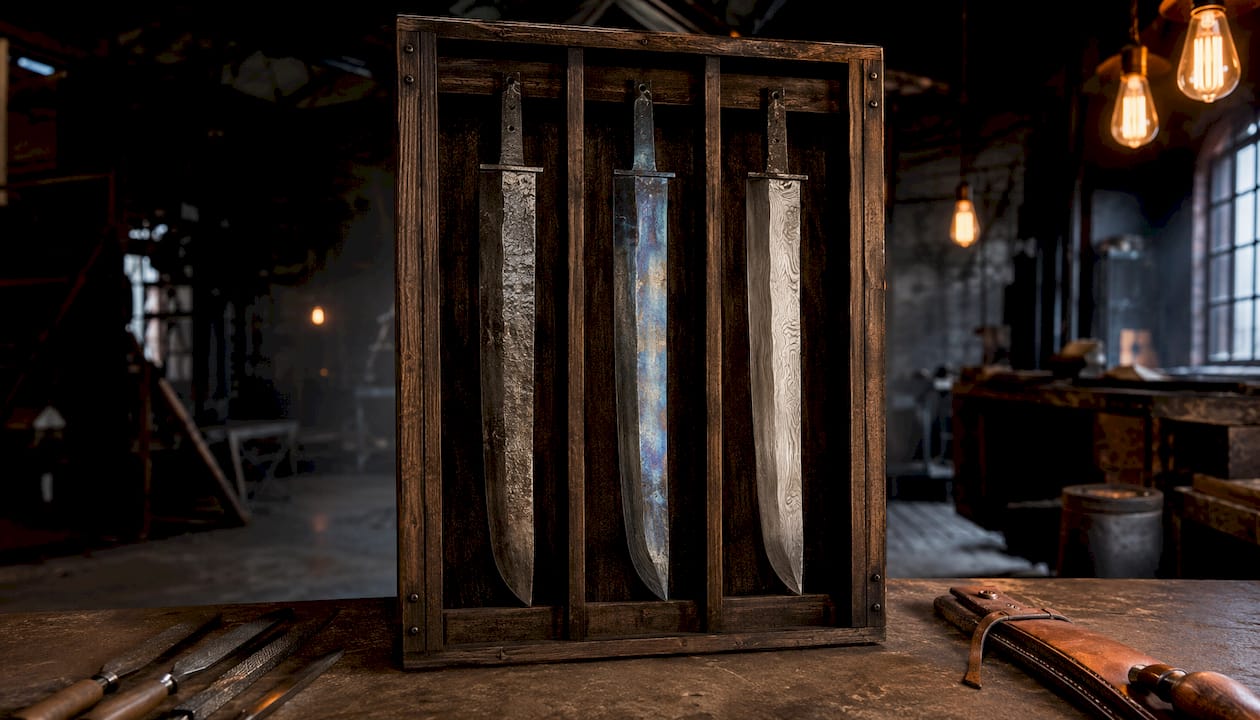
1060 carbon steel hits the sweet spot between hardness and flexibility. It is harder to forge than 1045, which drives the price up to roughly $150–$500 depending on fittings and finish, but the payoff is noticeably better edge retention and impact resistance. Many of the most respected functional sword brands build their core lines around 1060 for exactly this reason.
1095 carbon steel pushes carbon content to around 0.95%, giving it exceptional edge-holding ability when properly tempered. The reputation for brittleness that follows 1095 around is largely undeserved when the heat treatment is done right. A well-tempered 1095 blade can take a keener edge than either 1045 or 1060, making it popular for katana and other cutting-focused designs.
Spring steels and tool steels
5160 spring steel adds chromium and silicon to a 0.60% carbon base, producing a blade that can flex significantly and return to shape without taking a permanent set. That toughness makes it a favorite for medieval-style swords and monotempered katana. It holds a hard edge when properly tempered and handles impact better than plain carbon steel at the same carbon level.
Tool steels occupy the premium tier. T10 tool steel carries around 0.9–1.0% carbon plus tungsten, making it harder than most alternatives (above HRC60 when properly tempered) and more scratch-resistant. L6 Bainite, a band saw steel by origin, has a reputation as the toughest sword steel commercially available. No properly made L6 sword costs under $1,000. If you see one priced below that threshold, the steel is almost certainly something else.
| Steel grade | Carbon content | Key property | Typical price range | Best use |
|---|---|---|---|---|
| 1045 | ~0.45% | Affordable, softer | Under $100 | Entry-level, decorative |
| 1060 | ~0.60% | Hardness/flexibility balance | $150–$500 | Functional, battle-ready |
| 1095 | ~0.95% | Sharp edge retention | $150–$500 | Cutting swords, katana |
| 5160 spring steel | ~0.60% + Cr/Si | Extreme toughness | $150–$500 | Medieval swords, sparring |
| T10 tool steel | 0.9–1.0% + W | Hardness, scratch resistance | $150–$500 | Premium katana |
| L6 Bainite | Low alloy | Toughest available | $1,000+ | Custom, premium |
Pro Tip: “Damascus steel” or “folded steel” labels on budget swords are almost always marketing. Modern Damascus is any of the steel types above that has been folded and acid-etched for pattern. The underlying steel grade and heat treatment still determine performance, not the pattern.
How to choose and buy a steel sword in the United States
Buying a steel sword in the US is straightforward once you know what questions to ask. The wrong purchase is usually the result of skipping one of three checks: intended use, steel verification, and seller credibility.
Start with intended use. A sword bought for wall display has completely different requirements than one meant for cutting practice or sparring. Display swords can use stainless steel or lower-grade carbon steel without any real penalty. Battle-ready swords need a full tang, proper heat treatment, and a steel grade of at least 1060. Sparring swords require flexible steel, typically spring steel, and blunted edges.
Verify the steel claim. Sellers on large online marketplaces sometimes list 1045 steel swords as higher-grade carbon steel because most buyers cannot tell the difference by looking. If the price is under $100 and the listing says “high carbon steel” without specifying the grade, treat it as 1045. Reputable sellers name the exact grade and often provide hardness ratings (Rockwell HRC scale).
Check the tang construction. A full tang runs the full length of the handle and is the only construction suitable for any sword that will see real use. Rat-tail tangs, where a thin rod is welded to the blade and threaded through the handle, are a common cost-cutting measure in budget swords under $250 and a genuine safety hazard under stress.
Practical buying tips:
- Buy from sellers who specify steel grade, HRC hardness, and tang construction in the product description
- Ask for photos of the tang before purchasing any sword above $150
- Check return policies; a seller confident in their product will accept returns
- For online purchases, read reviews specifically mentioning edge retention and flex, not just appearance
- Know your state’s laws on blade length and carry restrictions before ordering
Pro Tip: Knowing how to assess sword quality before you buy saves you from expensive mistakes. Look for sellers who publish HRC ratings and tang photos alongside product descriptions.
Legally, swords are generally legal to own in most US states, but carry laws vary significantly. California, for example, restricts carrying certain blade types in public. New York and Massachusetts have specific restrictions on concealed blades. Always check your state and local regulations before purchasing a sword you plan to transport or display outside your home.
What makes each sword style different?
Sword style shapes everything from how a blade handles to what steel suits it best. Each major style has a distinct history and a distinct set of physical characteristics that collectors and practitioners value for different reasons.
Katana
The katana is a curved, single-edged Japanese sword typically measuring 26–30 inches at the blade. Its defining feature is differential hardening, a process where the edge is hardened to a higher degree than the spine, creating a blade that is simultaneously hard enough to hold a razor edge and flexible enough to resist breaking. Katanas typically use 1060 carbon steel or spring steels like 5160, with the differential hardening process producing the visible hamon (temper line) along the blade. For collectors, the hamon is both a functional indicator and an aesthetic feature.
Longsword
The European longsword runs 32–40 inches overall, with a straight double-edged blade designed for both cutting and thrusting. It is the most versatile sword style for sparring and historical martial arts practice. Spring steels like 5160 work well here because the longer blade benefits from the flex-and-return property under impact. Longswords are also among the most popular styles for display, given their classic silhouette.
Saber
The saber is a curved, single-edged cavalry sword, lighter and faster-handling than a longsword. Most sabers run 30–36 inches overall and use 1060 or 1065 carbon steel. The curve concentrates cutting force along the forward third of the blade, making it effective for slashing movements. Collectors often favor sabers for their elegant profile and historical association with 18th and 19th century military use.
Viking sword
Viking swords are broad, double-edged blades with a distinctive fuller (a groove running along the flat of the blade) that reduces weight without sacrificing strength. Blade lengths typically run 28–32 inches. The style suits 1060 or 5160 steel, and Damascus-patterned versions are popular among collectors for their visual appeal. The crossguard and pommel designs vary widely, giving collectors significant variety within a single style.
Gladius
The gladius is a short, double-edged Roman infantry sword, typically 18–24 inches at the blade. Its compact size makes it easy to display and handle, and it suits 1045 or 1060 steel given the shorter blade length. Collectors drawn to Roman history favor the gladius for its historical significance, and it is one of the more affordable entry points into quality steel sword collecting.
Pro Tip: If you are buying your first functional sword, a 1060 carbon steel katana or longsword in the $150–$300 range gives you the best combination of edge performance, durability, and value. Save the premium tool steels for when you know exactly what you want from a blade.
Why heat treatment matters more than steel grade
The single most common mistake collectors make is fixating on steel grade while ignoring heat treatment. A poorly tempered 1095 blade will underperform a well-tempered 1060 blade in every meaningful test. The steel sets the potential; the heat treatment determines whether that potential is realized.
Swords made from the same steel grade can vary dramatically in quality depending on how they were forged and heat-treated. Tempering involves heating the hardened blade to a lower temperature to reduce brittleness while retaining hardness. Get it wrong in either direction and you end up with a blade that either chips on impact or bends and stays bent.
Budget sword sellers exploit this gap in buyer knowledge. Many sellers falsely advertise 1045 steel swords as higher-grade carbon steel, knowing that most buyers cannot distinguish the grades by appearance or feel. This practice is especially common on large online marketplaces. The tell is usually price: a sword claiming to be 1095 or T10 steel for under $100 is almost certainly 1045, and probably not well-tempered at that.
What to watch for: A reputable seller will publish the Rockwell hardness (HRC) rating for their blades. For a functional sword, you want to see HRC 50–60 depending on the steel grade. No HRC rating in the listing is a yellow flag; an implausibly high rating (HRC 65+ for a carbon steel blade) is a red one.
Pro Tip: Prioritize heat treatment quality over the nominal steel grade when selecting any sword. A well-treated 1060 blade will outlast and outperform a poorly treated 1095 blade in every practical scenario.
How do you keep a steel sword in good condition?
Steel swords require consistent maintenance to stay sharp, rust-free, and structurally sound. Carbon steel blades are particularly vulnerable to oxidation, and neglect shows up fast.
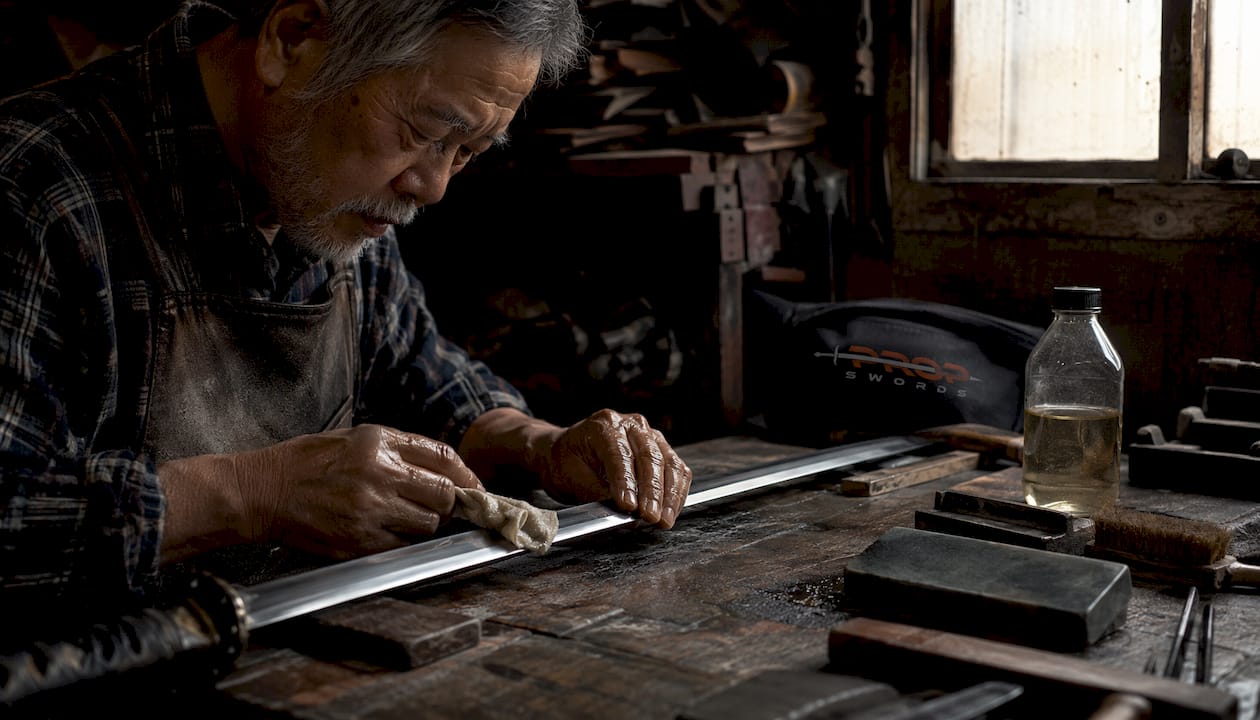
Oil the blade regularly. A thin coat of mineral oil or camellia oil applied after every handling session prevents rust. Carbon steel reacts to moisture and even the oils from your skin, so wiping the blade down and re-oiling after any contact is standard practice. For display swords, monthly oiling is usually sufficient.
Store correctly. Never store a carbon steel sword in its scabbard long-term if the scabbard is wood-lined. Wood retains moisture and accelerates rust. Store the blade outside the scabbard in a dry environment, or use a sword bag with a moisture-absorbing lining. Horizontal storage on a wall mount keeps the blade straight and prevents warping.
Sharpen carefully. A whetstone is the right tool for maintaining a sword edge. Start with a coarser grit to remove nicks, then move to finer grits for the final edge. Maintain a consistent angle, typically 20–25 degrees for most carbon steel swords. Power grinders generate heat that can ruin the temper of the blade, so avoid them unless you know exactly what you are doing.
For a detailed approach to keeping replicas and functional swords pristine, the process is the same: oil, dry storage, and careful handling. The difference between a sword that lasts decades and one that rusts in a year is almost entirely maintenance discipline.
Propswords brings collector-grade swords to your door
Collectors who want authentic detail without spending weeks hunting specialty retailers have a direct option: Propswords ships free within the US and carries a catalog built specifically for enthusiasts who care about what a sword looks like and what it is made of.
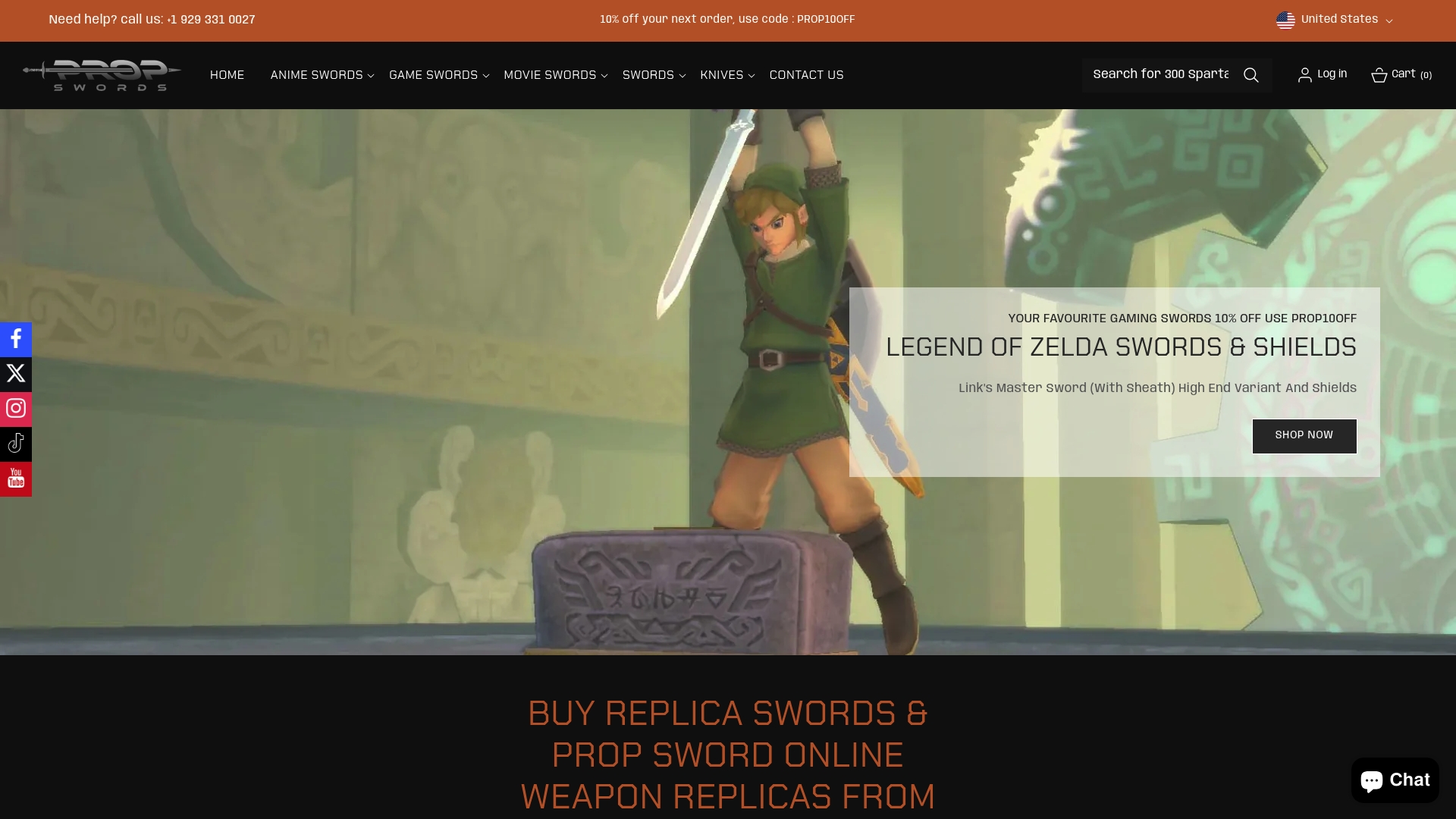
Propswords specializes in replica swords drawn from anime, movies, Viking history, and historical weaponry, with Damascus steel Viking swords and fantasy blades among the most popular lines. The focus is on craftsmanship and finish quality, which means the replicas hold up as display pieces and conversation starters rather than just shelf fillers. For collectors building a themed display or looking for a specific licensed replica, the catalog covers ground that generic retailers simply do not.
The best replica swords for 2026 are listed directly on the site, curated for collectors who want quality without the guesswork of sorting through hundreds of generic listings. Browse the full catalog at Propswords and find the blade that fits your collection.
Key Takeaways
Heat treatment is the single most important factor in steel sword quality, outweighing steel grade alone for durability, edge retention, and long-term performance.
| Point | Details |
|---|---|
| Heat treatment over steel grade | A well-tempered 1060 blade outperforms a poorly treated 1095 blade in every practical test. |
| Steel grade and price | 1045 steel suits swords under $100; quality 1060 blades run $150–$500; L6 Bainite starts above $1,000. |
| Full tang is non-negotiable | Any sword meant for real use must have a full tang; rat-tail tangs are a safety risk under stress. |
| Know your sword style | Katana, longsword, saber, Viking sword, and gladius each suit different steels, uses, and collector preferences. |
| Propswords for collectors | Propswords offers free US shipping on Damascus steel Viking swords, anime replicas, and licensed collectibles with quality finishes. |
FAQ
What is the best steel for a functional sword?
1060 carbon steel is the most practical choice for most buyers, balancing hardness and flexibility at a price range of $150–$500. For premium cutting performance, properly tempered 1095 or 5160 spring steel are strong alternatives.
How can you tell if a sword has good heat treatment?
Look for a published Rockwell hardness (HRC) rating in the product listing, ideally between HRC 50–60 for carbon steel blades. Sellers who do not publish HRC ratings are often working with inconsistently treated steel.
Are cheap swords under $250 worth buying?
Swords under $250 are often a gamble for functional use, with common issues including rat-tail tangs, poor tempering, and unsharpened thick edges. For display purposes, the value can be reasonable; for cutting or sparring, invest more.
What sword style is best for a first-time collector?
A katana or longsword in 1060 carbon steel at the $150–$300 price point gives first-time collectors the best combination of performance, visual appeal, and durability without overcommitting on budget.
Is it legal to own a steel sword in the United States?
Sword ownership is legal in most US states, but carry laws vary by state and locality. California, New York, and Massachusetts have specific restrictions on blade length and carry in public spaces, so always check local regulations before purchasing.
Recommended