TL;DR:
- Sword quality relies on a precise balance of hardness, toughness, flexibility, and corrosion resistance achieved through steel choice and proper heat treatment. High-carbon steels like 1095 and 5160 are common for functional swords, but thorough heat treatment ultimately determines performance, not just steel grade. Evaluating sword quality involves checking HRC ratings, understanding the heat treatment process, and reviewing steel specifications; a well-made blade will outperform a higher-rated but poorly treated one.
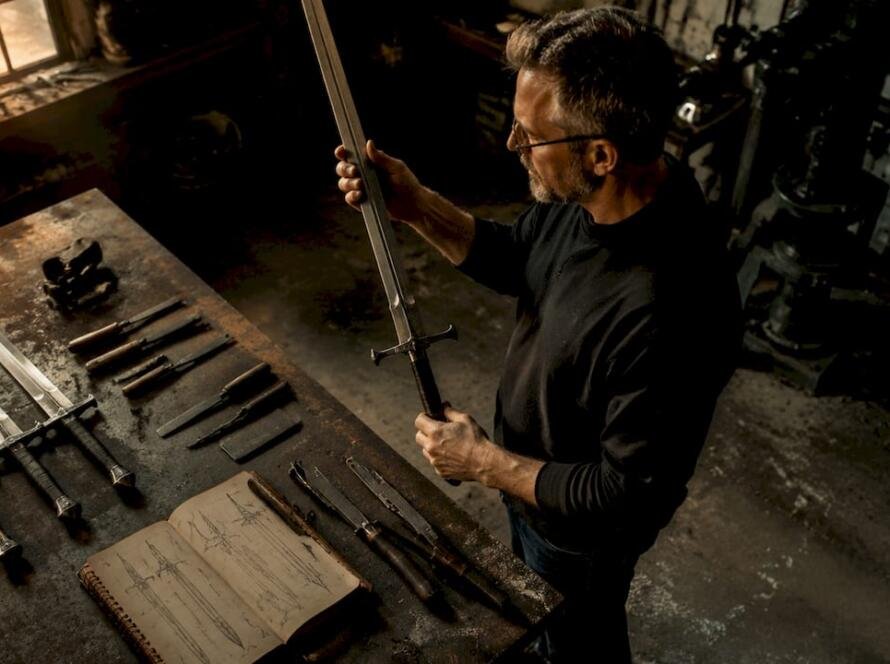
Sword material quality is defined by a blade’s ability to balance hardness, toughness, flexibility, and corrosion resistance to deliver reliable performance and lasting durability. These four properties, shaped by both steel selection and heat treatment, determine whether a sword holds a sharp edge, survives hard impacts, and resists rust over decades. Whether you collect historical replicas, practice martial arts, or hunt for display pieces, understanding these fundamentals protects you from costly mistakes and guides you toward pieces worth owning.
What are the key material properties that define sword quality?
Good swords hold an edge over the full blade length, absorb shocks without breaking, and maintain balance throughout the piece. These are not marketing claims. They are measurable outcomes of four specific material properties working together.
Hardness controls how well a blade retains its edge under use. Measured on the Rockwell C scale (HRC), hardness tells you how resistant the steel surface is to deformation. A blade at 62 HRC is razor sharp but risks cracking under lateral stress. A blade at 48 HRC endures hard use but loses its edge faster. Neither extreme is ideal.
Toughness is the property most buyers overlook. A tough blade resists chipping and fracturing when it absorbs impact. Hardness and toughness pull against each other in steel. Increasing one typically reduces the other, which is why quality swords require precise metallurgical balance rather than simply maximizing sharpness.
Flexibility allows the blade to absorb shock and spring back to its original shape. A sword that bends slightly under impact and recovers is far more functional than one that holds rigidly until it snaps. This property matters most for martial arts practitioners who subject blades to repeated stress.
Corrosion resistance determines long-term preservation. Carbon steels, which dominate quality sword production, rust without regular maintenance. Stainless steels resist oxidation but often sacrifice toughness. For collectors who display swords in humid environments, this tradeoff deserves serious attention.
- Hardness: measured by HRC scale, affects edge retention and sharpness
- Toughness: resistance to chipping and fracture under impact loads
- Flexibility: ability to absorb and recover from bending stress
- Corrosion resistance: protection against rust and oxidation over time
Pro Tip: Never evaluate a sword on hardness alone. A blade rated 60 HRC with poor toughness will chip on first contact with a hard surface. Ask sellers for the full heat treatment process, not just the HRC number.
Which steel types are used in swords and how do they compare?
Steel selection is the foundation of sword construction quality, but the category of steel matters more than any single grade. Three broad families dominate sword production: high-carbon steels, stainless steels, and specialty or tool steels.
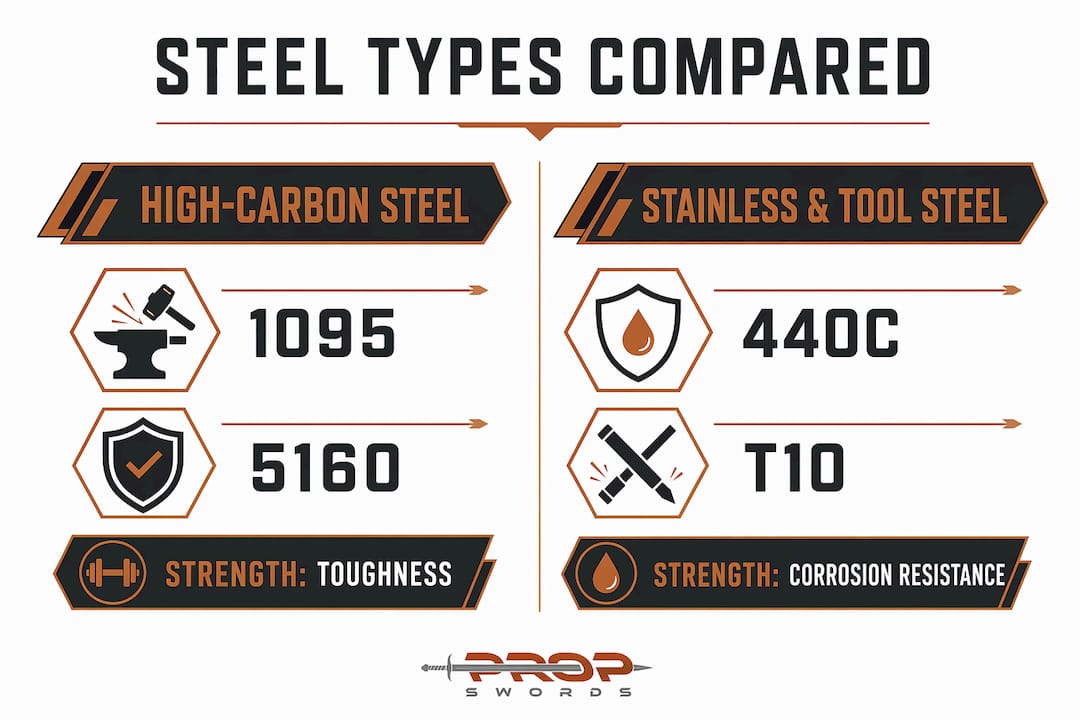
High-carbon steels like 1095 are the most widely used materials in functional swords. With carbon content between 0.5% and 1.0%, they develop excellent hardness and edge retention through heat treatment. The tradeoff is susceptibility to rust. A 1095 blade left without oil in a humid room will show surface oxidation within days. Spring steel grades like 5160 add chromium and silicon to improve flexibility and toughness, making them popular for swords intended for cutting practice or sparring.
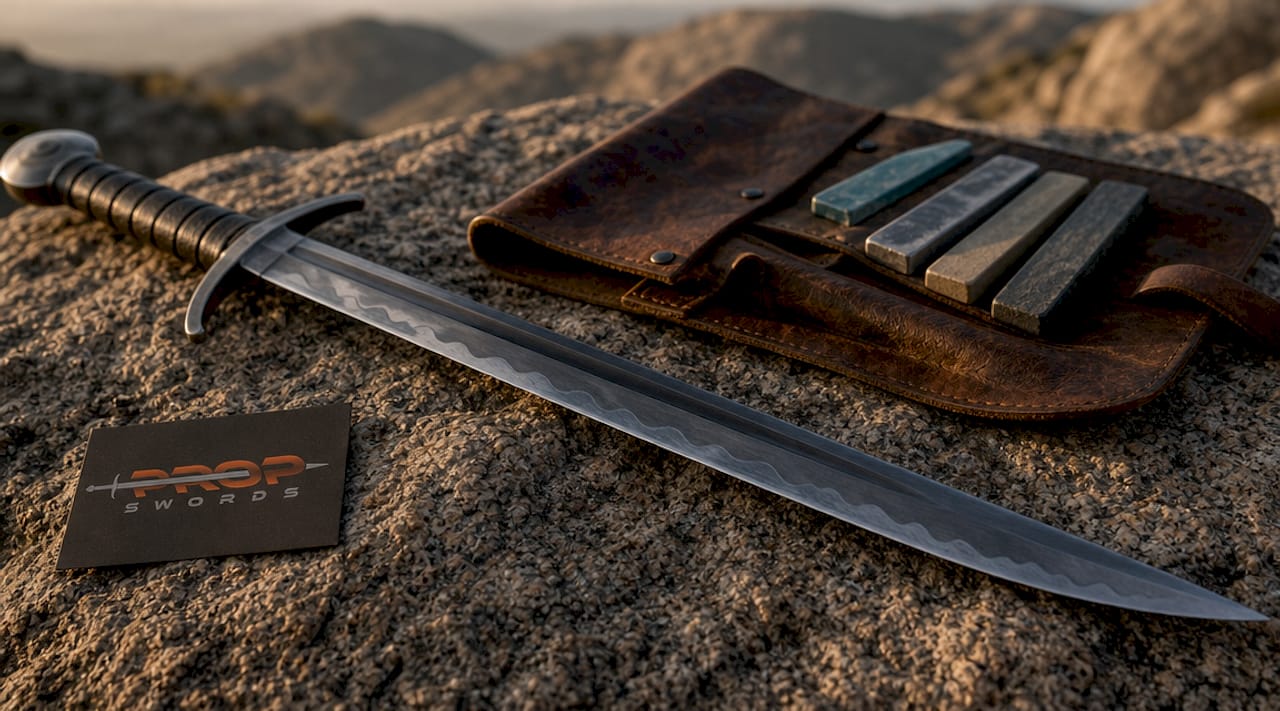
Stainless steels, particularly grades like 440C, offer better corrosion resistance but generally deliver lower toughness than high-carbon alternatives. They suit display pieces and collectors in coastal or humid climates where rust prevention is a priority. For martial arts or any cutting application, stainless steel’s reduced flexibility is a real limitation.
Tool steels and specialty alloys occupy a niche tier. Steels like T10 (a tungsten-alloyed tool steel) appear in premium Japanese-style blades, offering fine grain structure and excellent edge retention. These materials require skilled heat treatment to perform correctly and typically appear in higher-priced pieces.
| Steel type | Carbon content | HRC range | Strengths | Weaknesses |
|---|---|---|---|---|
| 1095 high-carbon | ~0.95% | 55–60 | Edge retention, hardness | Rusts without maintenance |
| 5160 spring steel | ~0.60% | 50–58 | Flexibility, toughness | Slightly softer edge |
| 440C stainless | ~1.0% + chromium | 56–60 | Corrosion resistance | Lower toughness |
| T10 tool steel | ~1.0% + tungsten | 58–62 | Fine grain, sharp edge | Requires expert heat treatment |
Pro Tip: For a first functional sword, 5160 spring steel offers the most forgiving balance of toughness and edge retention. It is harder to ruin through normal use than 1095, and it tolerates beginner-level maintenance habits better.
How does heat treatment impact sword material quality?
Heat treatment is where a sword’s potential is either realized or wasted. Heat treatment quality outweighs the steel grade alone in determining final blade performance. A mediocre steel treated expertly will outperform a premium steel treated carelessly.
The process works in two stages. Quenching involves heating the blade to a critical temperature and then cooling it rapidly, typically in water or oil. This rapid cooling locks the steel into a hard but brittle microstructure called martensite. At this stage, the blade is extremely hard but fragile enough to crack under light stress.
Tempering follows quenching. The blade is reheated to a lower temperature and held there before cooling slowly. Quenching hardens but makes brittle, while tempering restores ductility and reduces the risk of cracking. The temperature and duration of tempering directly control the final balance between hardness and toughness. A blade tempered at a higher temperature will be tougher but slightly softer. A blade tempered at a lower temperature retains more hardness but less flexibility.
Microstructure development during these stages determines everything. The size and distribution of carbide particles, the grain structure of the steel, and the depth of hardening all affect how the blade performs under real conditions. This is why two swords made from identical 1095 steel can perform completely differently depending on who treated them and how.
A 2026 MDPI study found that a lower-carbon blade showed better corrosion resistance than a higher-carbon blade under clay-coated quenching conditions. This means higher carbon content does not automatically produce a superior sword. The interaction between carbon content and heat treatment method produces outcomes that defy simple assumptions.
- Quenching: rapid cooling creates hardness but introduces brittleness
- Tempering: controlled reheating reduces brittleness and restores toughness
- Grain structure: finer grains from controlled heating improve strength and edge quality
- Depth of hardening: affects how the blade performs under lateral stress versus edge loads
How to evaluate sword material quality when buying or collecting
Practical evaluation of sword material quality requires more than reading a product description. Sellers who understand their product will provide specific, verifiable information. Sellers who do not will offer vague claims about “high-quality steel” without supporting detail.
- Check the HRC rating. Functional sword hardness ranges from 45 to 62 HRC. An optimal range of 50 to 58 HRC balances sharpness and durability for most uses. Any seller claiming 65 HRC or above for a functional sword is either misinformed or misleading you.
- Ask about the heat treatment process. A reputable maker or seller can describe the quenching medium (oil, water, or clay-coated), tempering temperature, and whether differential hardening was used. Vague answers are a red flag.
- Identify the steel grade. Named grades like 1095, 5160, or T10 signal that the maker knows what they used. “High-carbon steel” without a grade number is not a specification. It is a marketing phrase.
- Assess corrosion resistance for your storage conditions. Collectors in humid climates or coastal areas should prioritize stainless or well-treated carbon steel with a protective finish. Display pieces stored in climate-controlled cases have more flexibility here.
- Examine the fit and finish as a quality proxy. Poor grinding, uneven bevels, or a loose handle fitting suggest shortcuts in construction. Craftsmanship visible on the surface often reflects the care taken in processes you cannot see, including heat treatment.
Pro Tip: When evaluating replica sword quality, request the full material specification sheet if one exists. Serious manufacturers document their steel grades and heat treatment parameters. This documentation is your best protection against buying a decorative piece marketed as functional.
Key takeaways
Sword material quality depends on achieving the right balance of hardness, toughness, flexibility, and corrosion resistance through deliberate steel selection and expert heat treatment.
| Point | Details |
|---|---|
| Four core properties | Hardness, toughness, flexibility, and corrosion resistance must all be balanced for quality. |
| Steel grade matters | Named grades like 1095 and 5160 signal real specifications; vague labels do not. |
| Heat treatment decides performance | Expert quenching and tempering outweigh steel grade alone in final blade quality. |
| Optimal HRC range | A hardness of 50 to 58 HRC suits most functional and collectible swords. |
| Carbon content is not everything | Higher carbon does not guarantee better corrosion resistance due to microstructural effects. |
What I’ve learned about chasing the “best” sword steel
I have spent years looking at swords across every price point and intended use, from display replicas to full-contact martial arts blades. The single most common mistake I see buyers make is fixating on one number, usually HRC, as if it tells the whole story. It does not.
The most impressive blade I ever handled was a 5160 spring steel piece with a modest 54 HRC rating. It flexed, recovered, and held an edge through hundreds of cuts without a single chip. Meanwhile, I have seen 1095 blades rated at 60 HRC that chipped on the second test cut because the tempering was rushed. The steel grade was premium. The execution was not.
What actually separates a good sword from a great one is the maker’s understanding of how steel, heat, and time interact. This is not mystical. It is applied metallurgy. But it requires skill and patience that shortcuts cannot replace. When you see a sword priced significantly below market rate for its claimed specifications, the heat treatment is almost always where the savings were made.
My honest advice for collectors and martial artists: learn the science behind sword metallurgy before you spend serious money. Understanding why a 5160 blade at 55 HRC outperforms a 1095 blade at 62 HRC in most real-world conditions will save you from expensive regrets. The best sword for you is the one built for your specific use, not the one with the most impressive-sounding number on the spec sheet.
— Muhammad
Propswords has swords built to these standards

Propswords curates replica swords that meet real material and craftsmanship standards, not just visual appeal. The best replica swords for 2026 on the platform are selected with steel grade, heat treatment quality, and intended use in mind, whether you are a collector building a display collection, a cosplayer who needs a durable prop, or a martial arts enthusiast who wants a piece that performs. Every sword in the catalog comes with free shipping within the USA. Browse the full selection at Propswords and find pieces that match the quality criteria this article covers, backed by a team that knows the difference between a real specification and a marketing phrase.
FAQ
What is sword material quality defined by?
Sword material quality is defined by the balance of hardness, toughness, flexibility, and corrosion resistance in the blade’s steel, shaped by both the steel grade and the heat treatment process applied during manufacturing.
What is the best steel for a functional sword?
High-carbon steels like 1095 and 5160 are the most widely used for functional swords. Steel 5160 spring steel is often preferred for its superior toughness and flexibility, making it more forgiving under hard use.
What HRC rating should a quality sword have?
A quality functional sword typically falls between 50 and 58 HRC. Blades above 62 HRC risk cracking under impact, while blades below 48 HRC lose their edge too quickly for practical use.
Does higher carbon content always mean better sword quality?
No. A 2026 MDPI study found that a lower-carbon blade showed better corrosion resistance than a higher-carbon blade under certain quenching conditions. Heat treatment method and microstructure development matter as much as carbon content.
How can I spot poor sword material quality when buying?
Red flags include vague steel descriptions like “high-carbon steel” without a named grade, no information on heat treatment process, HRC claims above 62 for functional swords, and visible inconsistencies in grinding or blade geometry.
Recommended