TL;DR:
- Choosing authentic-looking replicas requires understanding materials, construction, and provenance to avoid costly mistakes. Reputable sellers provide detailed specifications, craftsmanship documentation, and provenance, especially for higher-priced items. Prioritizing authenticity over aesthetics ensures collector value, durability, and historical accuracy in your collection.
Purchasing historical replicas sounds straightforward until you’re staring at two nearly identical swords with a $400 price difference and no idea which one is worth your money. A solid historical replica buying guide has to go further than “check the materials.” Buyers routinely pay anywhere from $50 to $50,000 for items misrepresented as authentic, which means the stakes are real even for casual collectors. Whether you want a Viking axe for your wall, a medieval longsword for reenactment, or an anime-inspired blade for cosplay, the principles that separate a great purchase from a regrettable one stay the same.
Table of Contents
- Key takeaways
- 1. Key authenticity criteria for historical replicas
- 2. Popular categories and what makes each unique
- 3. Comparing quality, price, and seller trustworthiness
- 4. Practical tips for purchasing and caring for your replicas
- 5. Where to find trustworthy historical replica sellers
- My honest take on authenticity vs. aesthetics in collecting
- Find your next replica at Propswords
- FAQ
Key takeaways
| Point | Details |
|---|---|
| Authenticity over aesthetics | Replicas that reflect historical accuracy hold more value and collector satisfaction than purely decorative pieces. |
| Specialist sellers win | Specialist retailers provide craftsmanship details and provenance that general marketplaces routinely omit. |
| Material matters most | Blade alloy, construction method, and weight distribution determine whether a replica performs and displays as intended. |
| Ask before you buy | Request high-resolution photos, material specs, and historical sourcing before any purchase above $100. |
| Know your use case | Display, cosplay, reenactment, and education each demand different quality standards and legal considerations. |
1. Key authenticity criteria for historical replicas
Most buyers get tripped up by surface-level quality checks. A shiny blade and a convincing scabbard do not make a historically accurate replica. These are the criteria that actually matter.
Materials and alloy composition. Authentic-looking replicas use high-carbon steel (typically 1045 to 1095 grade) for functional swords, while decorative pieces often use stainless steel. Stainless looks polished but becomes brittle under stress, making it unsuitable for anything beyond wall display. The sword materials guide at Propswords breaks this down clearly if you want a deeper comparison.
Construction method. Factory-stamped blades and hand-forged blades look similar in photos but feel completely different in hand. Hand-forged replicas go through differential hardening, where the edge and spine are treated separately, creating a blade that mirrors period-accurate performance. Traditional forging methods like multiple-heat hammering distinguish true replicas from factory imitations.
Proportions and weight distribution. A medieval arming sword should feel front-balanced. A rapier should feel neutral to slightly grip-heavy. If a seller cannot tell you the point of balance, that is a red flag.
- Clean welds with no visible gaps or pitting on the blade
- Polished surfaces free of machine marks or uneven grinding
- Period-appropriate crossguard thickness and grip wrap material
- Pommel weight consistent with the blade’s historical counterpart
- Balanced proportions and finishing that match published museum references
Pro Tip: Search the blade type and period on museum databases like the Wallace Collection or the Metropolitan Museum of Art. Compare published dimensions against the seller’s specs. A two-inch discrepancy in blade length is a significant deviation from historical accuracy.
Vague marketing terms like “authentic replica” without specific construction details or maker information are a serious warning sign. Any seller worth your money will tell you exactly how the blade was shaped, what steel was used, and where the design originates.
2. Popular categories and what makes each unique
Not every replica demands the same checklist. Here is what separates a quality purchase in each major category.
Medieval and Renaissance swords are the most popular category in historical replica collecting, and also the most counterfeited. The key distinction is whether the blade geometry matches the historical type. Peter Johnsson’s typology, based on Ewart Oakeshott’s original classification, gives you 13 distinct blade shapes. A Type XIV should taper sharply toward the point. A Type XVIII should have a stiff, hexagonal cross-section. Sellers who cannot reference a blade type are selling aesthetics, not history.
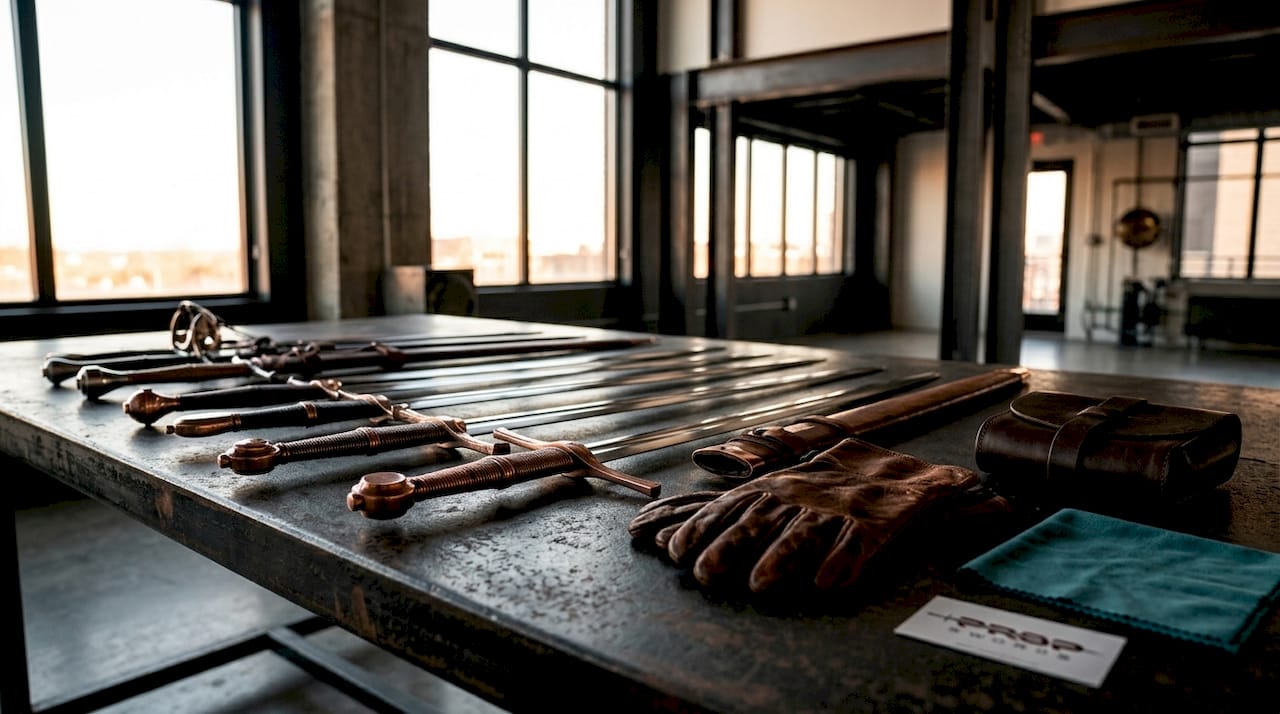
Historical axes and polearms are where serious craftsmanship becomes obvious fast. Hand-forged axes go through up to 100 heats and thousands of hammer blows, with each piece stamped with a serial number and production year. That level of documentation is rare and worth paying for. If an axe is described as “hand-forged” but ships in three days with no maker information, it was not forged by hand.
Civil War flags and banners require a different set of criteria entirely:
- Correct star count and arrangement for the specific battle flag period
- Wool or cotton fabric consistent with 1860s production, not synthetic blends
- Period-appropriate stitching styles and seam placement
- Accurate color fading patterns if marketed as a weathered reproduction
Anime and fantasy-inspired replicas with historical roots occupy a fascinating middle ground. A Berserk Guts Dragon Slayer is not a historical weapon, but its construction quality can absolutely be evaluated on historical standards. High-grade carbon steel replicas offer durability and realistic weight, while foam or plastic cosplay versions prioritize safety and portability. Neither is wrong. The mistake is paying carbon-steel prices for a stainless-steel prop dressed up with vague descriptions.
Use case determines the standard. A display piece needs visual accuracy. A reenactment sword needs functional balance and appropriate edge geometry. A cosplay prop needs to be lightweight and safe for crowd environments. Understanding your primary use case before browsing saves you from buying the wrong tier of replica entirely.
3. Comparing quality, price, and seller trustworthiness
Here is the honest reality about price ranges in this market.
| Price range | What you typically get | Seller type |
|---|---|---|
| Under $100 | Stainless steel, decorative only, limited historical accuracy | General marketplace or mass retailer |
| $100 to $300 | 1045 carbon steel, basic fittings, moderate accuracy | Mid-tier specialist or direct importer |
| $300 to $800 | 1065 to 1095 carbon steel, hand-finished, documented design | Dedicated replica specialist |
| $800 to $2,500 | Hand-forged, historically researched, limited production | Master craftsmen or museum-quality shops |
| Above $2,500 | Custom commissions, certified provenance, collector-grade | Artisan smiths with verifiable track records |
Specialist sellers consistently outperform general marketplaces because they document thread count, blade geometry, and maker tradition, details that mass retailers never bother with. The extra information is not marketing padding. It is proof the seller understands what they are selling.
Pro Tip: For any replica priced above $500, seek a certified appraisal or expert consultation. Professional assessment helps confirm you are getting a genuine reproduction and not a misrepresented factory piece.
The most dangerous purchase zone is the $150 to $350 range. That is where vague descriptions peak. You will see phrases like “battle-ready” and “hand-crafted” applied to blades that are neither. Cross-reference claims against the medieval swords quality guide if you are evaluating a piece in this range and want an independent framework.
4. Practical tips for purchasing and caring for your replicas
Getting the purchase right is only half the job. Here is a concrete process that protects your investment from first contact to long-term storage.
- Request full specifications in writing. Steel grade, overall length, blade length, weight, point of balance, and handle material. Legitimate sellers answer this within 24 hours.
- Ask for multiple high-resolution photos. Detailed image requests covering the tang, guard, pommel, and any maker’s marks are standard practice for verifying authenticity online. If a seller hesitates, walk away.
- Verify legal compliance for your location. Sword laws vary significantly by state and country. Some jurisdictions restrict blade length, concealed carry of blades, or the sale of certain replica types. Check your local statutes before ordering anything functional.
- Confirm the return and warranty policy before paying. Reputable sellers offer at least a 30-day return window for items that do not match their description.
For ongoing care, the basics are straightforward but frequently ignored:
- Wipe carbon-steel blades with a light coat of mineral oil after handling to prevent oxidation
- Store replicas horizontally or in a wall mount that supports the full blade length
- Keep leather scabbards treated with leather conditioner to prevent cracking
- Display cases with UV-filtering glass protect finishes from long-term sun damage
The authentication process for higher-value pieces involves comparing maker’s marks against known smith records, submitting steel samples for spectrographic analysis, and consulting period-specific reference books. For most collectors buying in the $200 to $800 range, thorough documentation from the seller is sufficient.
5. Where to find trustworthy historical replica sellers
Knowing where to look is as important as knowing what to look for. These are the most reliable sources for historical replica purchasing advice in practice.
- Dedicated replica specialists who list detailed construction methods, historical references, and maker biographies on every product page
- Museum gift shops and licensed reproductions from institutions like the Royal Armouries or the Smithsonian, which are held to strict accuracy standards
- Artisan smiths who show their forge, document production steps, and limit each piece to small runs for quality control
- Collector forums and communities like Sword Buyers Guide or the Association for Renaissance Martial Arts, where members review sellers based on direct experience
- Sellers with transparent return policies, warranties, and verifiable customer reviews that mention specific product details rather than generic praise
Seller transparency in communication, meaning clear historical sourcing, construction documentation, and maker information, is the single strongest trust signal you can find. Collectors who prioritize that standard consistently report higher satisfaction with their purchases.
Avoid any platform where the product description is shorter than the shipping information. That imbalance tells you exactly where the seller’s priorities lie.
My honest take on authenticity vs. aesthetics in collecting
I have reviewed hundreds of replica purchases over the years, and the pattern is consistent. New collectors almost always prioritize how a piece looks in photos. Experienced collectors prioritize how it feels in hand and what evidence supports its historical accuracy.
Here is what I have found to be true: a replica that scores high on authenticity criteria almost always looks better in person than a purely decorative piece, even if it photographs less dramatically. The proportions are correct. The weight distribution feels intentional. The finish reflects actual craft rather than a polishing wheel.
The compromise most often made for cosplay or display is accepting stainless steel to save $150. That is a reasonable tradeoff if the piece is purely decorative. Where it goes wrong is when buyers convince themselves that a stainless prop is “basically the same” as a carbon-steel reproduction. It is not. The handling is different, the longevity is different, and the collector value is nonexistent.
My advice to anyone starting a historical replica collection is to buy one piece at a tier higher than you think you need. The regret of a mediocre purchase outlasts the savings every single time.
— Muhammad
Find your next replica at Propswords
If you want to skip the guesswork and shop from a seller who takes craftsmanship documentation seriously, Propswords is worth your time. The catalog covers everything from Viking-inspired axes to anime blades with detailed product specs, material breakdowns, and display-ready finishing. Every piece is selected with the collector in mind, not just the casual browser.
For collectors and cosplayers ready to make a confident purchase in 2026, the best replica swords page at Propswords is a strong starting point. Free shipping within the USA and genuine product detail make it easier to buy with confidence rather than hope.
FAQ
What is a historical replica buying guide?
A historical replica buying guide is a reference framework that helps collectors evaluate authenticity, materials, craftsmanship, and seller credibility before purchasing replica swords, weapons, or artifacts.
How do I know if a replica sword is high quality?
Look for high-carbon steel construction (1045 grade or above), documented blade geometry, hand-finishing details, and a seller who provides full specifications including weight and point of balance.
Where can I find trustworthy historical replica sellers?
Specialist retailers, licensed museum reproductions, and vetted artisan smiths with transparent production documentation are the most reliable sources. Avoid general marketplaces with vague product descriptions.
How much should I spend on a replica sword?
Quality replicas suitable for display or reenactment typically start around $300. Pieces below that threshold are usually decorative-only stainless steel. Budget $800 or more for hand-forged, historically researched work.
Do I need to authenticate a replica before buying?
For pieces priced above $500, a professional appraisal is worth the cost. Below that threshold, thorough seller documentation, including steel specs, construction method, and historical sourcing, is generally sufficient.
Recommended