


TL;DR:
- Authentic historical swords with rarity and certification can appreciate dramatically over time, while replicas mainly offer enjoyment and community connection. The value of a sword depends on factors like rarity, provenance, craftsmanship, and personal significance, not solely financial return. Proper care and documentation are essential to preserving a sword’s value, whether for investment or personal satisfaction.
Most people assume that if something is collectible, it must be going up in value. Swords are no exception to this assumption, but the truth is far more layered. A genuine Japanese Juyo Token can appreciate dramatically over decades, while a mass-produced replica might sit at the same price point forever. Yet thousands of passionate collectors pour money and time into replica swords every year, not because they expect a financial windfall, but because the rewards run much deeper than resale value. This guide separates fact from wishful thinking and helps you make smarter decisions as a collector.
Table of Contents
- Understanding collector swords: History, passion, and the investment dilemma
- Financial returns: Can collector swords really appreciate in value?
- Quality, materials, and care: What preserves value in collector swords
- Beyond money: Emotional, social, and aesthetic rewards of collecting swords
- What most collectors miss about sword investments
- Start your collector sword journey with trusted experts
- Frequently asked questions
Key Takeaways
| Point | Details |
|---|---|
| Historical swords can appreciate | Rare, certified swords often increase in value—sometimes 3-5 times over decades. |
| Replicas offer enjoyment first | Most replica swords are best for display or fandom rather than financial returns. |
| Quality and care matter | Selection of materials and regular maintenance help preserve value and beauty. |
| Emotional rewards abound | Collector swords provide artistic, cultural, and community enjoyment beyond money. |
Understanding collector swords: History, passion, and the investment dilemma
The world of collector swords splits into two very different camps, and understanding which camp you are playing in changes everything about your strategy.
Historical originals are genuine weapons or ceremonial pieces with documented provenance, age, and often legal certification. Japanese nihonto, European medieval longswords, Viking Age blades, and Ottoman kilij swords fall into this category. They are rare by definition because time and conflict have destroyed most of them.
Replicas cover a broad spectrum. Some are museum-quality reproductions made by certified craftspeople using traditional methods. Others are finely detailed display pieces inspired by anime, fantasy franchises, and film. A few are mass-produced novelties. Knowing which tier you are buying matters enormously.
What makes any sword collectible comes down to a handful of core factors:
- Rarity: How many exist? A one-of-a-kind hand-forged piece commands attention in a way that a production run of 10,000 never will.
- Story: Swords tied to historical events, famous owners, or beloved fictional characters carry narrative weight that drives demand.
- Craftsmanship: The skill of the maker, the quality of the steel, the finish of the fittings. Collectors recognize and pay for excellence.
- Fandom connection: A screen-accurate replica of a sword from a beloved anime or film franchise taps into emotional loyalty that can be just as powerful as historical significance. You can explore more about sword collectibility factors to understand how these forces interact.
The investment dilemma is real. Authentic nihonto with Juyo Token certification have seen values climb from $40,000-60,000 to $150,000-200,000 over more than two decades. That kind of appreciation demands rarity and official certification. Replicas, no matter how beautiful, simply cannot replicate this path because they lack scarcity by design.
“The value of a historical sword is inseparable from its story, its certification, and the irreplaceable fact that it cannot be made again. A replica’s value lives in a different place entirely: the joy it brings, the community it connects, and the artistry it displays.”
This is not a reason to dismiss replicas. It is a reason to understand them correctly before you buy. Check out the buying collectible swords guide for a practical breakdown of what to look for at each price tier.
Financial returns: Can collector swords really appreciate in value?
Let’s be direct. The financial return on collector swords depends almost entirely on which category of sword you own.
Rare, authenticated historical swords have delivered returns of 25 to 120 percent over ten years in some documented cases. Juyo nihonto have seen 3 to 5 times appreciation since the early 2000s for serious investors who knew what they were buying. These are not liquid assets, though. Selling a historical sword requires finding the right buyer, often through specialist auction houses, and the process can take months or years.
For replicas, the honest picture looks different. Most do not appreciate in meaningful financial terms. However, there are exceptions:
- Limited-edition licensed replicas from major franchises sometimes hold value or increase slightly when production ends and demand remains high.
- High-quality, hand-crafted reproductions from respected makers with documented provenance can retain value better than mass-market options.
- Signed or numbered pieces from recognized craftspeople occasionally attract collector premiums over time.
Here is a direct comparison to help you calibrate expectations:
| Sword type | Financial appreciation | Liquidity | Main risks |
|---|---|---|---|
| Certified historical originals | High (25-120% over 10 years) | Low | Counterfeits, legal issues |
| Limited-edition fandom replicas | Modest (may hold value) | Medium | License changes, quality variance |
| Mass-market display replicas | Minimal to none | High | No resale market, aging materials |
| Museum-quality reproductions | Low to modest | Low to medium | Certification and provenance gaps |
Key risks to watch across all categories include counterfeit pieces sold as limited editions, replicas without any certification or documentation, and improper storage that accelerates material degradation. Always research authenticating replica swords before you spend serious money, and know the difference between a genuine limited run and a marketing claim. Learning how to identify authentic replicas before buying protects you from costly mistakes.
The bottom line: if financial return is your primary goal, historical originals are the only category with a real track record, and they require significant expertise and capital. If your goal is a rewarding collection you can actually enjoy, replicas offer enormous value that money alone cannot measure.
Quality, materials, and care: What preserves value in collector swords
Even if you are not chasing financial returns, a sword that degrades quickly disappoints on every level. Understanding what materials last and how to care for them is essential for every serious collector.
Material quality is the foundation. Not all metals are equal:
- High-carbon steel (1045, 1060, 1095 grades) ages well, holds an edge, and develops a natural patina that many collectors prize. It requires oiling to prevent rust but rewards that effort with longevity.
- Stainless steel resists corrosion easily and suits display swords that will not be handled frequently. It is more forgiving for collectors in humid environments.
- Zinc alloy and pot metal are common in very low-price replicas. These materials corrode, crack, and warp over time. A sword with zinc alloy fittings or a pot metal blade may look impressive on day one but will deteriorate significantly if exposed to humidity, destroying any appeal it might have had.
This matters for sword materials because the difference between a $80 replica and a $280 replica is often right there in the metal grade, and the gap in longevity is enormous.
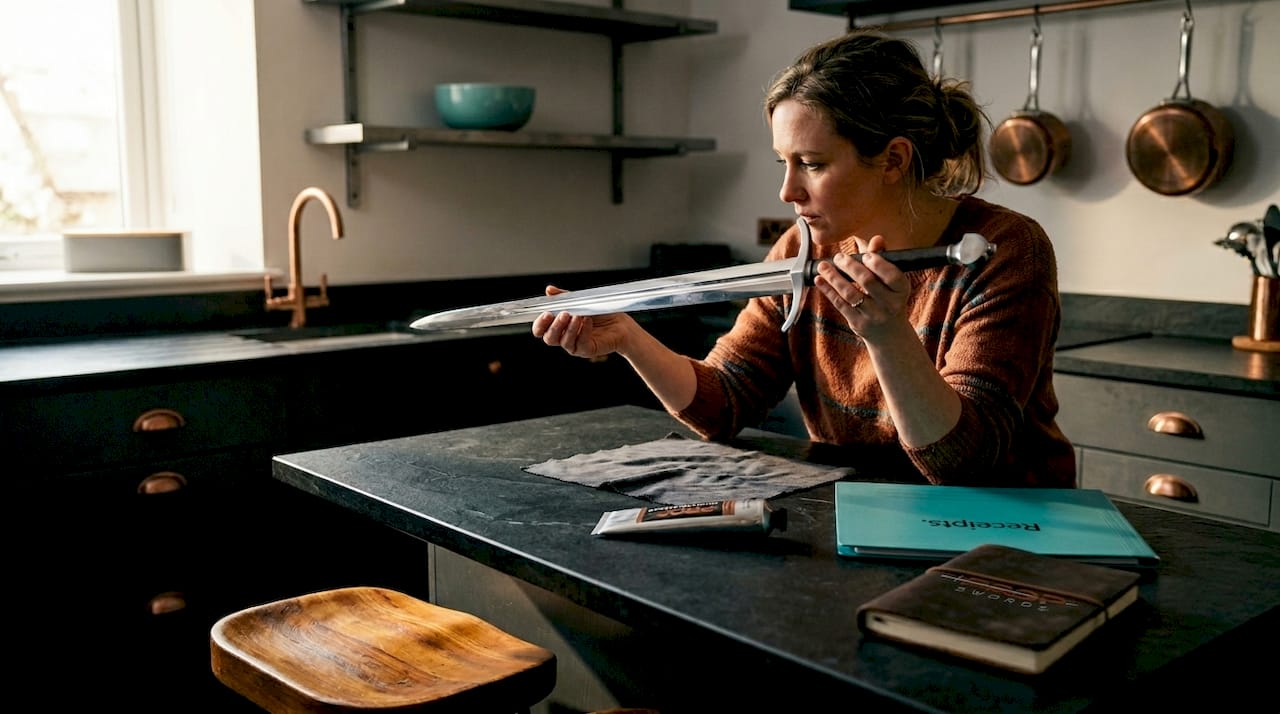
Here is what a solid sword care routine looks like for display pieces:
| Care task | Frequency | Why it matters |
|---|---|---|
| Wipe blade with clean cloth | After every handling | Removes fingerprint oils that cause rust |
| Apply light sword oil or choji oil | Every 3-6 months | Creates a protective barrier against moisture |
| Inspect fittings and handle wrapping | Every 6 months | Catches early signs of degradation |
| Check display environment for humidity | Monthly | High humidity destroys steel rapidly |
| Photograph and document collection | When acquired | Supports insurance and resale records |
Pro Tip: Use silica gel packets inside any enclosed display case. They absorb ambient moisture and can extend the life of your blades significantly, especially in climates with high seasonal humidity.
Certified reproductions from established makers typically use better materials and come with documentation that helps support the sword’s story. Mass-market pieces rarely offer either. For guidance on displaying your collection safely, the resource on displaying swords safely walks through wall mounting, floor stands, and case options that protect both the blade and anyone in the room.
Document everything. Keep purchase receipts, photos from multiple angles, and any certificates of authenticity or limited-edition numbering. If you ever decide to sell, this documentation is the difference between getting fair market value and leaving money on the table.
Beyond money: Emotional, social, and aesthetic rewards of collecting swords
Here is what the financial analysis misses entirely: most people who collect replica swords are not doing it to beat the stock market. They are doing it because it makes their lives richer in ways that a spreadsheet cannot capture.
Display power is real and immediate. A beautifully crafted anime replica or a fantasy sword mounted on a wall transforms a room. Collectors consistently describe the experience of walking past a well-displayed sword as something that brings daily pleasure. It is art with a story, and it sparks conversation with every guest who sees it.
Fandom and community create lasting value. Cosplay events, anime conventions, Renaissance fairs, and historical reenactment groups all center on the kind of enthusiasm that replica swords tap into. Owning a screen-accurate sword from a beloved series or a historically inspired piece connects you to thousands of people who share that passion. As noted by researchers in the collectibles space, replicas prioritize accessibility and the social rewards of fandom over financial gains, and that is by design, not by accident.
The rewards of replica sword collecting include:
- Creative expression through cosplay builds and themed photography
- Historical learning sparked by curiosity about the blade’s real-world or fictional origins
- Gift giving that genuinely surprises and delights recipients who love fantasy or martial arts
- Generational connection as parents and children discover shared enthusiasm for history or anime
- The thrill of hunting limited releases, convention exclusives, and retiring catalog pieces
Pro Tip: Follow the official social media accounts of your favorite sword makers and franchise licensees. Limited-edition drops are often announced with short windows, and early access can mean the difference between getting the piece you want and paying premium prices on the secondary market later.
The emotional value of display swords is not a consolation prize for people who cannot afford originals. It is a distinct and legitimate form of value that experienced collectors understand deeply. For a broader look at why replicas matter in their own right, replica sword insights offers perspectives from longtime enthusiasts.
What most collectors miss about sword investments
Here is a perspective that may push back against what you have read elsewhere. The collector community sometimes divides into two camps: those chasing pure financial returns and those buying purely for passion. Both extremes miss something important.
Collectors who chase quick returns from replicas almost always get burned. They buy based on hype, neglect proper care, and discover too late that there is no established resale market for the piece they own. Treating a display replica like a stock pick is a recipe for disappointment.
On the other side, purely passion-driven collectors sometimes buy carelessly, skip documentation, and end up with collections that cannot be insured or inherited cleanly. When they want to pass pieces on to family or sell a few to fund new acquisitions, the lack of records hurts them.
The collectors we have watched build the most satisfying, durable collections do several things consistently. They start with pieces that genuinely excite them, not pieces they think will be profitable. They research the maker and the materials before they spend. They document from day one. They care for their blades with the same attention a craftsperson would bring to creating them. And they connect with community, because knowledge shared between enthusiasts is worth more than any price guide.
Value in sword collecting is a combination of story, experience, craftsmanship, and yes, sometimes dollars. But the dollars follow the other three, never the other way around. Explore top replica swords for collectors to see what a curated, quality-first approach to building your collection looks like in practice.
Start your collector sword journey with trusted experts
Building a collection you are genuinely proud of starts with finding the right pieces from sources that take quality seriously.
At Propswords, we curate replica swords across anime, fantasy, Viking, and historical categories with a focus on display quality, material integrity, and franchise authenticity. Whether you are looking for your first wall piece or a limited-edition addition to a serious collection, we make it easy to find something that delivers real impact. Browse the best replica swords of 2026 for a curated starting point, or explore our fantasy swords collectibles selection to find pieces that capture the spirit of your favorite worlds. Free shipping within the USA means there is nothing standing between you and your next great addition.
Frequently asked questions
Do replica swords ever increase in value?
Some high-quality, limited-edition replica swords may hold or slightly increase in value, but most do not appreciate like true antiques. Authentic historical swords appreciate due to rarity and certification, factors that replicas simply cannot replicate.
What type of sword makes the best investment?
Genuine historical swords with rarity and certification offer the highest financial potential, while replicas are better for enjoyment and accessibility. Juyo nihonto appreciated 3 to 5 times since the early 2000s, a benchmark replicas rarely approach.
How should I care for collector swords to preserve their value?
Keep swords dry, store them away from humidity, and regularly clean metal surfaces to avoid corrosion and preserve appearance. Poor maintenance destroys value in even quality replicas, so a consistent care routine is non-negotiable.
Why invest in replica swords if they don’t gain value?
Investing in replica swords offers aesthetic, emotional, and social rewards, especially for fans of anime, fantasy, or historical culture. As noted, replicas prioritize accessibility and safety over financial gains, and that is precisely what makes them approachable and deeply satisfying for most collectors.
Recommended


1 Comment
free fire free diamonds
To be honest, It actually answered something I was confused about, compared to a lot of other content out there. I’ll keep this in mind.