TL;DR:
- Cosplay weaponry consists of non-functional prop replicas designed for character authenticity and safety compliance at conventions. Foam, resin, and thermoplastic materials are most common, with foam being suitable for beginners and resin or Worbla for advanced builders. Safety rules require props to be non-sharp, non-functional, and within size limits, with peace-binding and inspection mandatory at most events. Props can also serve as decorative or photographic displays beyond conventions.
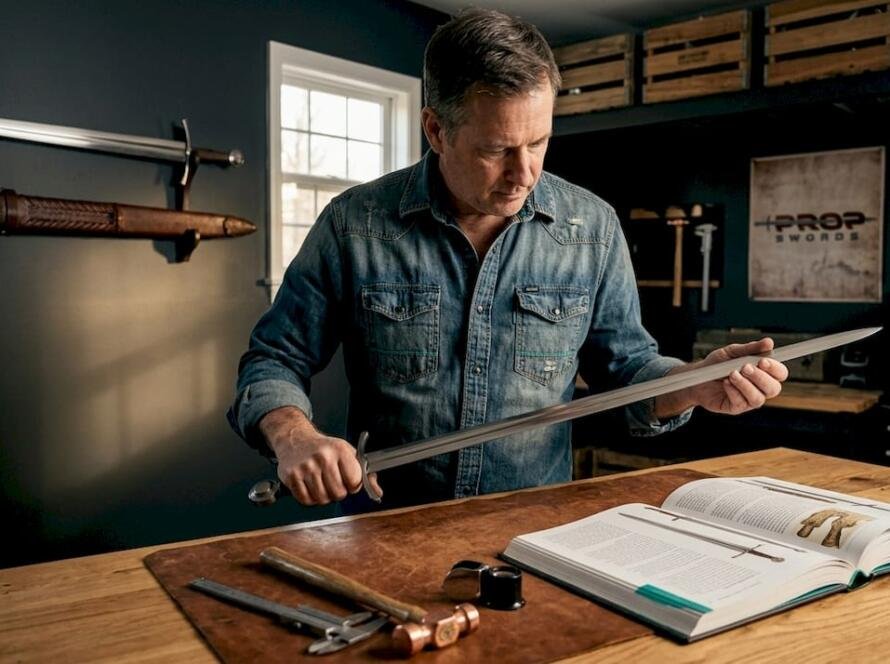
Cosplay weaponry is defined as non-functional prop replicas of character weapons, built to enhance costume authenticity while meeting event safety regulations. These props cover everything from foam swords and resin staffs to prop guns and bows, spanning fantasy, sci-fi, and historical genres. The term “prop weapon” is the standard industry phrase you will hear at convention check-in tables, though cosplay weaponry and cosplay weapons are used interchangeably in fandom culture. Getting this right matters because prop weapons must pass safety inspections banning sharp edges or working firing mechanisms before entering most conventions. A well-built prop keeps you in character and keeps everyone around you safe.
What is cosplay weaponry, and what types are most common?
Cosplay weaponry spans a wide range of prop types, each suited to different characters, genres, and build skill levels. Foam swords dominate fantasy and anime cosplay because foam is lightweight, cheap, and easy to shape. Prop guns appear most often in sci-fi and military cosplay, while staffs, bows, axes, and shields round out the catalog for historical and RPG-inspired looks.
The material you choose defines the weight, durability, and convention-friendliness of your prop. Here is a direct comparison of the most common options:
| Weapon type | Material | Weight | Durability | Convention-friendly |
|---|---|---|---|---|
| Foam sword | EVA foam | Very light | Moderate | Yes |
| Resin sword | Casting resin | Medium | High | Yes (if edges are rounded) |
| Wooden staff | Hardwood or dowel | Heavy | Very high | Conditional (length limits apply) |
| Prop gun | PLA plastic or resin | Light to medium | High | Yes (with orange tip and disabled trigger) |
| Thermoplastic shield | Worbla or Wonderflex | Medium | High | Yes |
Foam is the go-to for first-time builders. Resin and thermoplastics like Worbla suit experienced makers who want sharper detail and longer prop life. Wooden props are durable but face the strictest scrutiny at check-in because of their weight and rigidity.
Genre shapes the design as much as the character does. Dark Souls cosplayers favor oversized, heavy-looking resin blades. Star Wars builds lean on PVC pipe cores wrapped in foam for lightsaber hilts. Viking and medieval cosplayers often use wood-core foam to mimic the heft of historical weapons without the actual danger.
How are cosplay weapons made?
The cosplay weapon construction process follows four phases: design, core building, surface finishing, and painting. Skipping any phase produces a prop that either looks unfinished or falls apart by noon on day one of a convention.
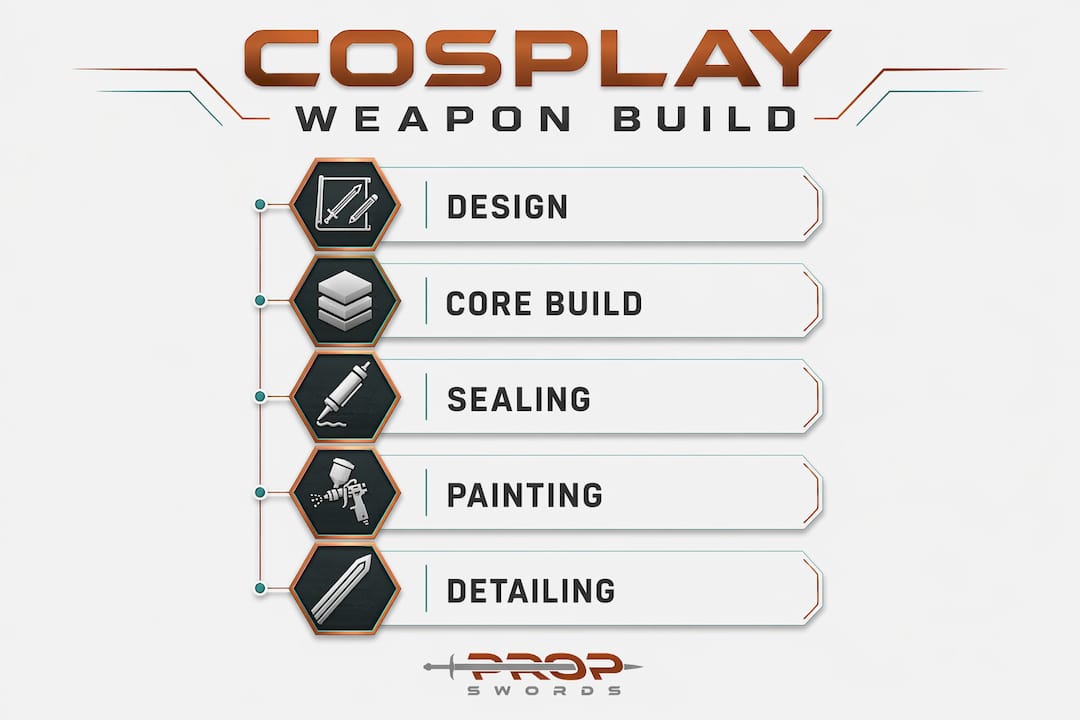
Phase 1: Design and templates
Start with reference images of the character’s weapon from multiple angles. Print or draw a scaled template on paper, then transfer it to your foam or base material. Accurate templates prevent the most common beginner mistake: building a prop that looks right from one angle and wrong from every other.
Phase 2: Building the core structure
Foam swords need an internal spine to resist bending and keep their shape through a full day of handling and photos. A carbon fiber rod, wooden dowel, or PVC pipe runs through the center of the blade. Without it, a foam sword droops within hours, which ruins photos and signals poor craftsmanship at a glance.
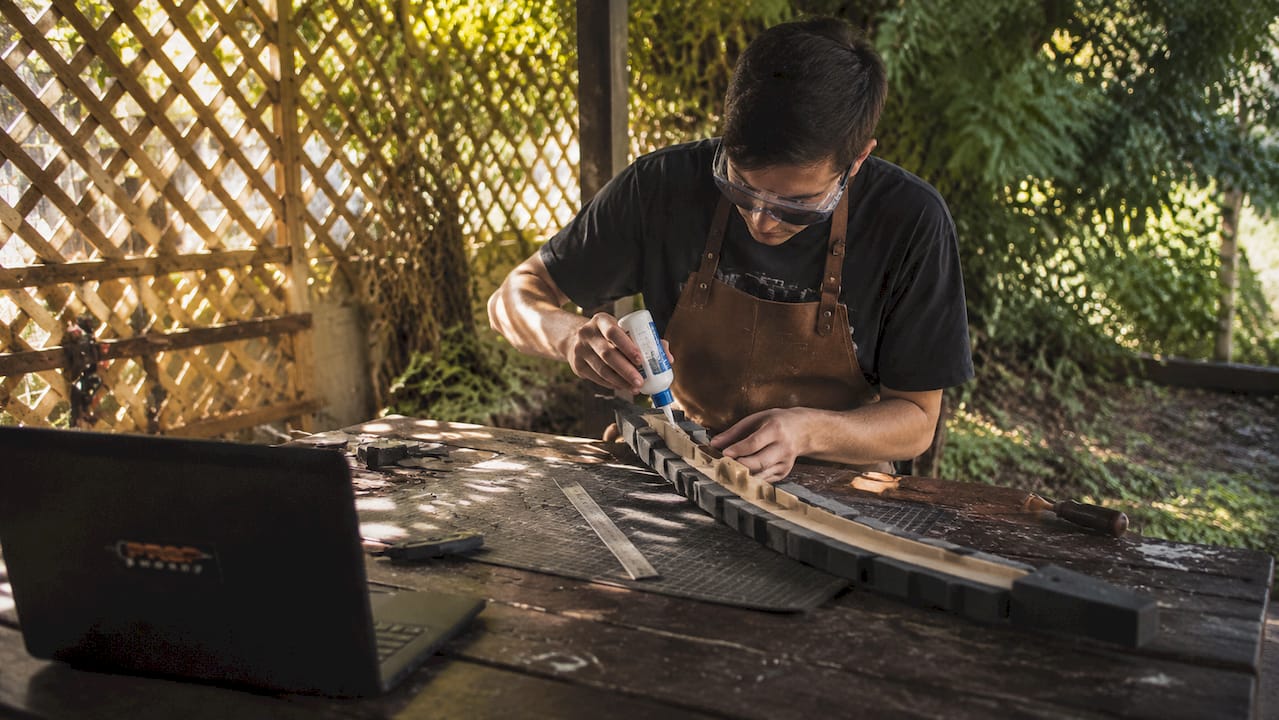
Phase 3: Surface sealing and priming
Raw EVA foam absorbs paint unevenly and tears easily. Heat-sealing the surface with a heat gun closes the foam’s pores and creates a harder outer layer. After heat-sealing, apply a flexible primer like Plasti-Dip or a foam-compatible acrylic gesso. This step is what separates props that photograph like real metal from props that look like painted sponge.
Pro Tip: Apply two thin coats of Plasti-Dip before painting rather than one thick coat. Thin coats dry faster, flex without cracking, and give you a smoother base for detail work.
Phase 4: Painting and detail work
Acrylic paints work best on sealed foam. Use a base coat, then layer darker washes into recesses and dry-brush lighter tones on raised edges to simulate worn metal or aged wood. Metallic acrylic paints from brands like Vallejo or Citadel produce the most convincing blade finishes. Seal everything with a matte or satin varnish to protect the paint during transport and handling.
Treating convention rules as design constraints from the start produces better props. If you know a convention caps prop length at 6 feet, you design within that limit rather than cutting down a finished build at the last minute.
What are the safety rules for cosplay weapons at conventions?
Convention prop policies are not suggestions. Youmacon 2026 requires inspection, limits props to under 6 feet 6 inches in length, and forbids sharp edges or anything capable of causing injury. Most major conventions follow a similar framework, and violating these rules means your prop stays outside.
The core restrictions you will encounter at nearly every event:
- No sharp edges or points on any prop, regardless of material
- No working triggers, firing mechanisms, or projectiles on prop guns
- No props that exceed the venue’s length limit (typically 6 feet to 6 feet 6 inches)
- No realistic-looking firearms without a clearly visible orange safety tip
- No props made from actual metal blades, even if peace-bound
Prop guns must have non-functional triggers and safety orange tips to distinguish them from real firearms. Animethon disallows working triggers entirely and requires firing mechanisms to be disabled before entry. This rule exists because convention security treats any weapon-like prop as a potential safety concern, regardless of cosplay intent.
What is peace-binding and why does it matter?
Peace-binding means physically securing weapon-like props so they cannot be drawn or used during an event. Staff use visible locks, zip ties, or colored tags to show a prop has passed inspection. JordanCon and Animethon both require props to display this visible security at all times on the convention floor.
Removing a peace-bond tag may require you to resubmit your prop for a full reinspection. Treat the tag as part of your costume, not an inconvenience. Convention security staff are not judging your craftsmanship. They are managing crowd safety for thousands of attendees.
Before you build anything, download the prop policy PDF from the specific convention’s website. Policies differ between events, and building a prop that violates one rule can disqualify the entire piece.
Pro Tip: Photograph your prop’s construction process, including materials used. Some conventions ask builders to confirm a prop is foam or resin rather than metal, and photos are the fastest way to prove it at check-in.
How can you use cosplay weapons beyond the convention floor?
Cosplay props have a longer life than most builders plan for. A well-finished sword or staff works as wall decor, a photography prop, or the centerpiece of a themed display case. The same craftsmanship that earns compliments on a convention floor reads just as well in a photo shoot or a shelf display.
Practical ideas for extending your prop’s life:
- Mount swords and staffs on wall brackets for room display, using the same hardware sold for decorative replica swords
- Use props in styled photo shoots with controlled lighting to create portfolio-quality cosplay photography
- Add LED strip lighting inside hollow prop handles or staffs for glowing effects in display and photography
- Apply vinyl decals or hand-painted runes to customize a generic prop into a character-specific piece
- Store props in padded cases or wrapped in moving blankets to prevent paint chips and structural damage between events
Covering props during transport is standard practice recommended by conventions. Carrying an uncovered sword replica through a parking lot or on public transit creates unnecessary alarm. A simple fabric sleeve or a guitar case solves the problem completely.
Realistic replica swords as collectibles occupy a different category from DIY foam builds. High-quality metal or resin replicas inspired by anime, film, and historical sources serve as display pieces that require no construction skill. They photograph well, hold detail better than most foam builds, and appreciate in value within collector communities over time.
Key takeaways
Cosplay weaponry succeeds when safety compliance, construction quality, and creative intent are treated as equal priorities from the first design sketch.
| Point | Details |
|---|---|
| Definition of cosplay weaponry | Non-functional prop replicas built for character authenticity and convention safety compliance. |
| Material choice drives outcomes | EVA foam suits beginners; resin and Worbla suit experienced builders needing higher detail and durability. |
| Internal spine is non-negotiable | Foam blades without a core rod or dowel lose their shape within hours of convention wear. |
| Peace-binding is mandatory | Visible tags or locks are required at events like Animethon and JordanCon; removing them triggers reinspection. |
| Props work beyond conventions | Wall display, photo shoots, and collector display cases extend a prop’s value well past a single event. |
What I have learned from years of watching cosplay prop culture evolve
The biggest shift I have seen in cosplay weaponry culture is not in the materials or the techniques. It is in how seriously builders now treat convention rules before they pick up a craft knife. A decade ago, the attitude was build first and argue at the door. Now the best builders I know download the prop policy before they finalize their design.
That shift produces better props. When you know a convention bans anything over 6 feet, you design a weapon that fits within that constraint and looks intentional at that scale. Constraints force creativity in ways that open-ended builds rarely do.
The other thing worth saying plainly: peace-binding is not an insult to your craftsmanship. Convention staff are not questioning whether your foam sword is dangerous. They are managing the perception of safety for thousands of people who did not sign up to be near weapon-shaped objects. Respecting that process is part of being a good member of the community.
My practical advice for anyone building their first prop weapon: visit the cosplay sword prep guide before you buy materials. Understanding what conventions require changes which materials you choose, how you finish edges, and how you plan transport. Building with the end rules in mind saves you from cutting down a finished prop the night before an event.
— Muhammad
Quality replica weapons for cosplay and display
Propswords carries a catalog of replica swords built for cosplay, display, and fandom collecting. Every piece is designed with the detail and finish that makes a prop photograph well and display cleanly on a wall or shelf.
The top replica swords for 2026 include anime-inspired blades, Viking designs, and film-accurate pieces that skip the construction process entirely while delivering the visual impact of a finished prop. Propswords ships free within the USA, and the full catalog covers everything from entry-level display pieces to detailed collector-grade replicas. If you want a weapon prop that holds up in photos and passes a convention’s visual inspection, a quality replica is often the faster and more consistent path than a DIY build.
FAQ
What is the difference between a prop weapon and a real weapon?
A prop weapon is a non-functional replica with no sharp edges, no working mechanisms, and no capacity to cause injury. Real weapons are functional and banned from convention floors entirely.
What materials are best for making cosplay weapons?
EVA foam is the most common material for beginners because it is lightweight, affordable, and easy to cut and shape. Resin and thermoplastics like Worbla suit builders who need higher detail and longer-lasting finishes.
Do all conventions require prop weapon inspections?
Most major conventions require a prop check before entry. Events like Animethon, Youmacon, and JordanCon all run formal inspection processes with peace-binding requirements for any weapon-shaped prop.
What is peace-binding in cosplay?
Peace-binding physically secures a prop so it cannot be drawn or used, using visible zip ties, locks, or colored tags. Removing the tag at events like Animethon requires a full reinspection.
Can cosplay weapons be used for display outside of conventions?
Yes. Well-finished props work as wall decor, photography props, and display pieces. Replica swords from specialty retailers like Propswords are built specifically for display and require no construction work.
Recommended