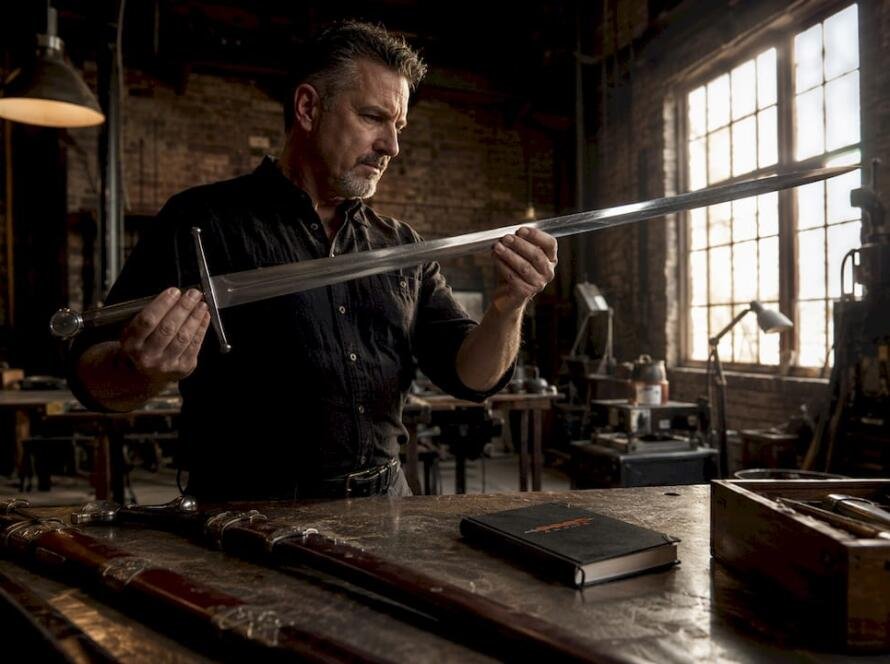
Yes, most replica and display katanas benefit from a light protective coat, but what you apply depends on the blade. Stainless decorative blades need only occasional wiping and an infrequent thin coat of oil or wax. Mild steel decorative blades need more regular attention because they rust faster. Use light mineral oil for routine protection and a microcrystalline wax like Renaissance Wax when you want a harder, longer-lasting barrier for a piece that stays on display. A maintenance checklist is available if you want a repeatable routine.
TL;DR:
- Stainless steel blades rarely need oiling but still benefit from occasional wiping and light protection, especially in humid or coastal environments.
- Mild steel blades require monthly oiling with mineral oil and more frequent maintenance to prevent rust and surface corrosion.
- Use fine steel wool with oil or wax to safely remove light rust spots from mild steel blades, but avoid deep pitting or flaking finishes.
- Store blades in dry, non-leather containers and avoid long-term storage in leather scabbards to prevent moisture buildup and oxidation.
- Applying a microcrystalline wax after oiling creates a durable, dust-resistant barrier ideal for display pieces, with oil treatment every one to three months.
Table of Contents
- When Should You Oil a Katana Versus Just Wipe It Down?
- How to Oil a Katana Step by Step
- How Do You Remove Light Corrosion From a Replica Blade?
- Storage and a Realistic Maintenance Schedule
- Safety and What to Avoid When Caring for a Replica
- A Collector’s Checklist and the Mistakes That Actually Ruin Blades
- Get Your Katana Care Kit Right the First Time
- Sources
- FAQ
When Should You Oil a Katana Versus Just Wipe It Down?
Not every replica needs the same treatment, and figuring out which category yours falls into saves you from either neglecting it or over-servicing it. The two main types you’ll run into are stainless decorative blades and mild steel decorative blades, and they behave very differently over time.
Stainless steel contains chromium, which forms a passive oxide layer on the surface. That layer is why stainless replica swords resist corrosion far better than mild steel, and why they generally need less frequent oiling. Mild steel decorative blades, by contrast, have no such built-in defense, so they pick up surface rust from humidity alone.
A few signs tell you it’s time to act:
- Visible fingerprints left after handling (skin oils are mildly acidic and speed up tarnishing)
- Dull or slightly gray patches forming on an otherwise shiny blade
- Storage in a garage, basement, or coastal area with salt in the air
- The blade hasn’t been wiped down in over a month of active display
One exception matters: painted, lacquered, or plated finishes (common on stylized or fantasy-themed replicas) don’t need oil at all. Oil can actually soften certain paints or cause uneven sheen on plated surfaces, so a dry microfiber wipe is the safer call there.
How to Oil a Katana Step by Step
Once you’ve confirmed your blade needs a protective coat, the process itself is quick. Most collectors spend less than ten minutes on a single sword once they’ve done it a couple of times.
Supplies you’ll need:
- Light mineral oil or a general-purpose light machine oil (avoid anything with added detergents)
- Renaissance Wax or another microcrystalline wax for longer-term protection
- Two or three lint-free cloths (microfiber or flannel work well)
- Nitrile gloves
- Cotton swabs for tight spots near the guard (tsuba) and collar (habaki)
Step-by-step procedure:
- Put on nitrile gloves before touching the blade at all. This keeps new fingerprints off the metal while you work.
- Wipe the entire blade with a dry, clean cloth to remove dust and any existing surface residue.
- If any handle wrapping, cord, or scabbard lacquer sits near the blade, cover or mask it so oil doesn’t drip onto those materials.
- Confirm the blade is completely dry. Any leftover moisture gets sealed under the oil, which defeats the purpose.
- Place a few drops of mineral oil onto a clean cloth, not directly onto the blade. A dime-sized amount is plenty for a full-length blade.
- Spread the oil in long strokes from the base (near the guard) toward the tip, following the length of the blade rather than scrubbing in circles.
- Use a dry section of the cloth (or a fresh one) to buff off the excess until no visible film or drip lines remain. The goal is a barely perceptible layer, not a wet sheen.
- For long-term display pieces, apply a microcrystalline wax with a separate cloth after the oil has been buffed. Museum-grade microcrystalline wax forms a durable film that collectors often prefer over oil alone, since it doesn’t attract dust the way an oily surface can.
Pro Tip: Buff in one direction only, base to tip. Circular motions can leave faint swirl marks that show up under bright display lighting, especially on polished stainless finishes.
Once you’re done, check the blade under a strong light after a day or two to confirm no drip lines have dried into visible streaks. For stainless decorative blades kept indoors, repeat this roughly every two to three months. Mild steel blades, or any blade in a humid or coastal environment, should get the same treatment monthly.
How Do You Remove Light Corrosion From a Replica Blade?
Small rust spots on a mild steel replica are usually fixable at home, but deep pitting or any area where the decorative finish has already flaked is a job for a professional restorer, not a weekend project.
For light surface corrosion on mild steel with no plating, the method museums themselves recommend uses very fine 0000 steel wool lubricated with a small amount of oil or microcrystalline wax. The Royal Armouries’ replica care guide outlines the same approach for handling minor rust on display pieces.
- Wrap a small piece of the steel wool around a wooden stick or dowel for pinpoint spots near the fittings.
- Dampen the steel wool lightly with oil or wax, never use it dry.
- Test on an inconspicuous section of the blade first, near the base, before touching the visible spot.
- Rub gently in one direction, checking frequently rather than pressing hard and hoping for the best.
- Wipe away all residue, then reapply your protective oil or wax coat immediately.
Pro Tip: Stop the moment you see the finish dulling faster than the rust is lifting. That’s your sign to switch from steel wool to a soft cloth and call it good enough, rather than risk stripping a factory finish.
Storage and a Realistic Maintenance Schedule
Consistency matters more than intensity here. A quick wipe-down every time you handle the blade, paired with a full oiling every one to three months depending on the metal, keeps most collections in good shape without turning into a chore.
Increase the frequency if you live somewhere humid or near the coast. Salt air accelerates tarnishing even on stainless blades that otherwise resist corrosion reasonably well indoors.
- Avoid long-term storage in a leather scabbard. Leather traps moisture against the blade and can accelerate oxidation even when the sword looks fine on the outside.
- Use a dry wood-core scabbard, a wall mount, or an open display stand instead for anything stored longer than a few weeks.
- If you can, keep a small silica packet or dehumidifier running in a display cabinet, especially in basements.
- Wear thin gloves when you know you’ll be handling the blade a lot, such as before a convention or photo shoot, and wipe it down again right after.
Safety and What to Avoid When Caring for a Replica
Stainless decorative blades look and feel solid, but they’re built for display, not contact. Striking another blade or a hard surface can chip or snap a decorative edge that was never tempered for that kind of stress.
Skip WD-40 and similar aerosol lubricants as a long-term coating. They evaporate quickly and aren’t recommended as a lasting protective layer; stick with stable mineral oil or a museum-grade wax instead. Keep oil away from cord wraps, lacquered saya, and any painted fittings, and work in a ventilated space with gloves on so you’re not adding more fingerprints than you’re removing.
A Collector’s Checklist and the Mistakes That Actually Ruin Blades
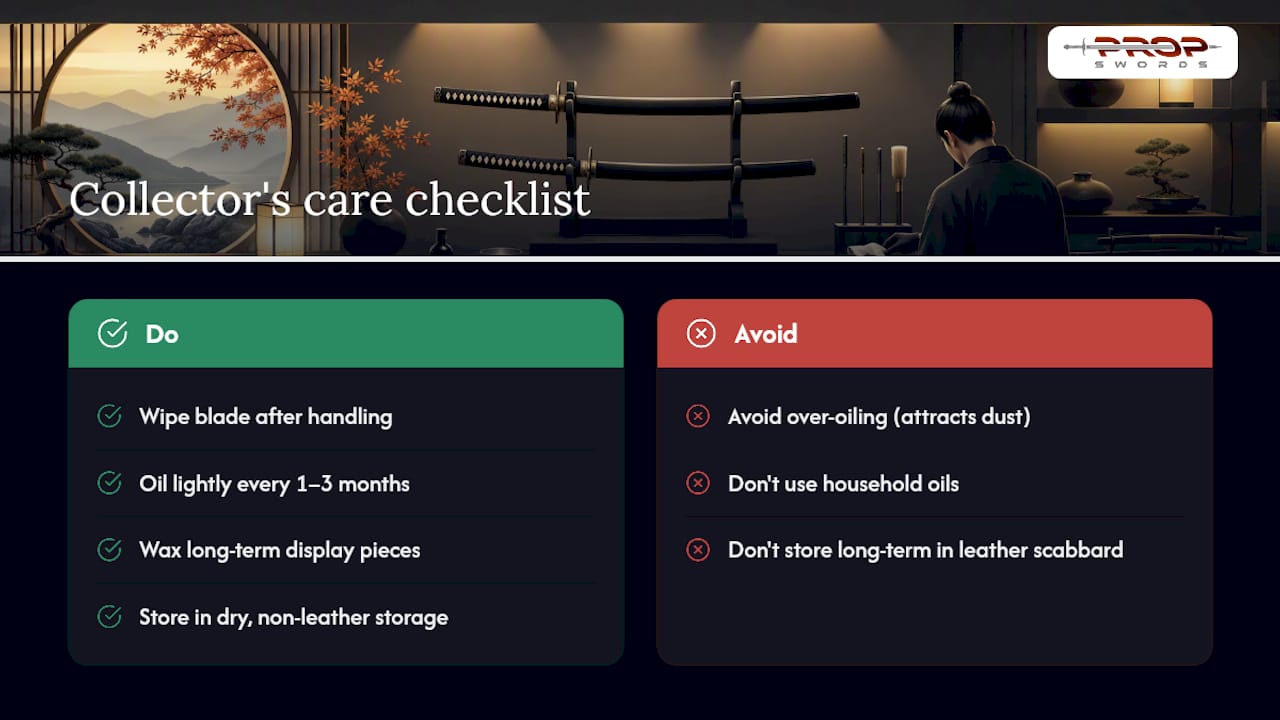
Most of the damage I see reported by collectors isn’t from neglect. It’s from doing too much, or doing the right thing with the wrong product. Three mistakes come up constantly: over-oiling until the blade attracts dust and grime, reaching for whatever household oil is nearby instead of a stable mineral oil or wax, and storing a display piece in its original leather scabbard for months at a time.
A simple four-step routine avoids all three: wipe after handling, oil lightly every one to three months, wax for long-term display pieces, and store in a dry, non-leather setup. A fuller maintenance checklist is available if you want a printable version to keep near your display case.
— Muhammad
Get Your Katana Care Kit Right the First Time
Buying the right blade is half the equation. Keeping it looking the way it did on day one is the other half, and resources have been built specifically for that gap. The replica sword maintenance guide walks through product picks by blade type, and the breakdown on why an $8 bottle of mineral oil often beats a $30 blend explains exactly what you’re paying for (and what you’re not).

A starter kit doesn’t need to be complicated: a bottle of light mineral oil, a couple of lint-free cloths, and a tin of microcrystalline wax cover nearly every display katana on the market. If you’re still deciding which blade to add to your collection, the top replica swords for 2026 page is a solid place to start browsing before you build out your care routine around it.
Sources
FAQ
Should You Oil a Katana Replica Every Week?
No. Weekly oiling is overkill for most display pieces and can leave a dust-attracting film; every one to three months is enough for most stainless or mild steel replicas kept indoors.
What’s the Best Oil for a Katana on Display?
Light mineral oil works well for routine protection, while a microcrystalline wax such as Renaissance Wax offers a harder, longer-lasting barrier for pieces that stay on display for months at a time.
Can You Use WD-40 to Oil a Sword?
It’s not recommended as a long-term protectant because it evaporates quickly; stable mineral oil or museum-grade wax holds up far better over time.
Do Stainless Katanas Need Oiling at All?
Stainless decorative blades need oiling less often than mild steel because their chromium content forms a natural passive layer, but occasional wiping and light protection are still worthwhile in humid or coastal conditions.
How Do You Fix Small Rust Spots on a Replica Blade?
Very fine 0000 steel wool lubricated with a little oil or wax can lift light surface corrosion on mild steel; test in an inconspicuous spot first and stop if the finish starts to dull.
Recommended