TL;DR:
- The katana symbolizes honor, discipline, and spiritual identity rooted in samurai culture. It functions as a social marker, sacred object, and family heirloom, embodying moral values. Today, its symbolism persists in martial arts, media, and collector communities worldwide.
The katana is defined as the soul of the samurai, a curved Japanese longsword 60–73 cm in blade length that carried far more weight than any battlefield role could explain. What is katana symbolism? At its core, it is the convergence of honor, discipline, loyalty, and spiritual identity into a single object. The Bushido code treated the katana as a moral compass made of steel. The Edo period (1603–1868) elevated it into a legal marker of social rank. Understanding the meaning behind katana requires looking at its history, its sacred status in Shinto tradition, and the way it continues to shape global culture today.
What is katana symbolism in Japanese history?
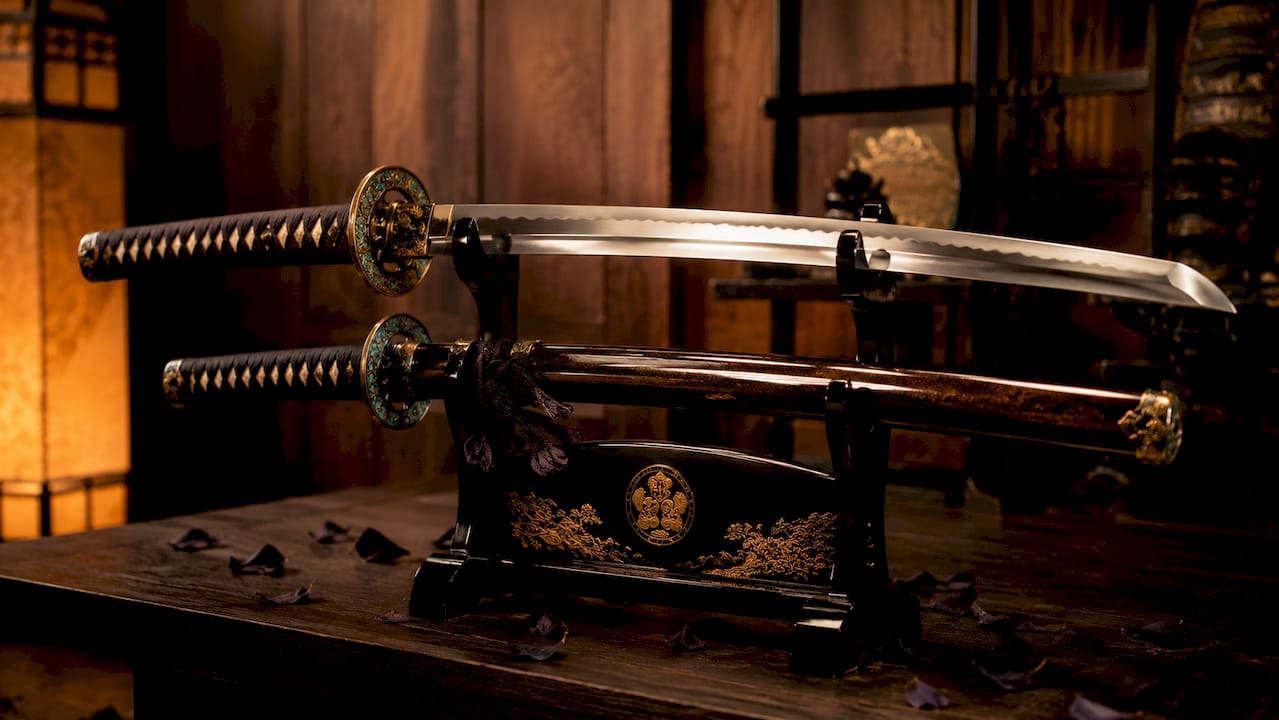
The katana’s symbolism is inseparable from the samurai class that carried it. During the Edo period, Japanese law restricted katana carry exclusively to samurai. That restriction made the sword a walking declaration of rank, clan, and duty. No other object in Japanese society communicated social standing so immediately or so completely.
The samurai carried the katana as part of the daisho pairing, a matched set with the shorter wakizashi. The daisho pairing was not just practical. The katana was the outdoor weapon of war and status, while the wakizashi served as the indoor weapon. Samurai left their katana at the entrance when entering a home, separating their martial identity from domestic life. That single act encoded a whole philosophy about when force was appropriate and when restraint was required.
The katana’s role also shifted as Japan changed. The peaceful Edo era limited actual combat, which pushed the sword’s meaning away from battlefield utility and toward discipline, refinement, and social artistry. A samurai who never fought a battle still wore his katana every day. The sword became proof of who he was, not what he had done.
Three historical functions defined the katana beyond combat:
- Social badge. The katana identified a samurai’s rank and clan at a glance. Its quality, fittings, and condition all communicated the wearer’s standing.
- Family heirloom. The Katana no Keishō ceremony transferred a sword from one generation to the next. The ritual passed family honor, duty, and legacy alongside the physical blade. Inheriting a katana meant inheriting an obligation.
- Ritual object. The katana was central to seppuku, the ritual suicide a samurai performed to restore honor after defeat or disgrace. The sword’s presence in that act confirmed its role as the final arbiter of a warrior’s moral account.
Pro Tip: If you want to understand a samurai’s social world, study his sword’s fittings before his biography. The tsuba design, the scabbard lacquer, and the blade quality told contemporaries everything about his clan, his wealth, and his values.
How is the katana imbued with spiritual meaning?
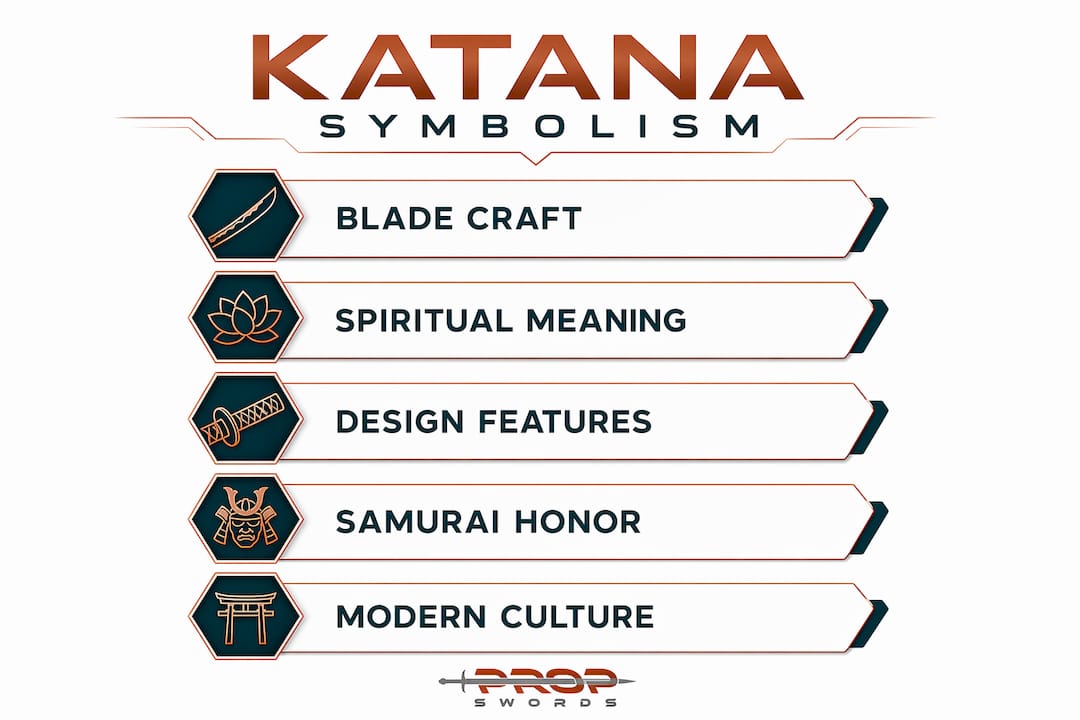
The katana’s spiritual significance goes deeper than the Bushido code. In Shinto tradition, exceptionally crafted katanas were treated as sacred objects. Swords were offered to kami shrines to ward off evil and protect communities. The sword was not just a tool a warrior carried. It was a spiritual entity that required respect, ritual, and relationship.
The phrase most associated with katana symbolism in art and philosophy is “the soul of the samurai.” That phrase is not metaphor. Samurai genuinely believed the katana housed a spiritual presence. Treating the sword poorly was not carelessness. It was a moral failure.
The Bushido virtues the katana represented include:
- Honor (meiyo). The sword was proof of a warrior’s commitment to living and dying with integrity.
- Loyalty (chugi). A samurai’s blade was pledged to his lord. The sword made that pledge visible.
- Courage (yu). Carrying the katana meant accepting the possibility of death without flinching.
- Discipline (jisei). The daily care of the blade reflected the internal state of the warrior.
Daily katana maintenance was a meditative practice, not a chore. Cleaning, oiling, and inspecting the blade required patience, focus, and silence. The ritual translated physical care into spiritual alignment with the Bushido moral code. A samurai who maintained his sword with care demonstrated that he maintained himself with equal discipline.
“The katana is not merely a weapon. It is a mirror of the warrior’s soul, reflecting his discipline, his honor, and his readiness to face death with clarity. Every scratch on the blade tells a story. Every polished surface reveals a commitment.”
That understanding of the katana as a spiritual object explains why seppuku used the blade as its instrument. Restoring honor through the sword meant using the very object that embodied honor to make the final moral statement.
What design elements carry symbolic meaning?
Every part of a katana’s construction carries meaning. The hamon temper line is the wavy pattern visible along the blade’s edge, created during the differential hardening process. It is both a technical signature and an aesthetic statement. No two hamon patterns are identical. The pattern identified the swordsmith’s school and technique, making each blade a traceable work of art.
The ornate fittings surrounding the blade carried equal symbolic weight. The tsuba (hand guard), tsuka (handle), and saya (scabbard) were often decorated with motifs drawn from nature, mythology, and clan heraldry. A tsuba carved with a dragon signaled power and protection. One featuring cherry blossoms referenced the samurai ideal of a life beautiful and brief.
| Component | Name | Symbolic meaning |
|---|---|---|
| Temper line | Hamon | Swordsmith’s identity and technical mastery |
| Hand guard | Tsuba | Owner’s status, clan, and philosophical values |
| Handle | Tsuka | Connection between warrior and blade |
| Scabbard | Saya | Protection, restraint, and readiness |
| Blade curvature | Sori | Balance between speed and cutting power |
The craftsmanship itself reflected a philosophical ideal: that utility and beauty are not opposites. A perfectly made katana cut cleanly and looked extraordinary doing it. That combination was not accidental. It was the point. The sword modeled what the samurai was supposed to be: functional, refined, and purposeful in every detail.
Pro Tip: When examining a katana replica, check the hamon line first. A well-executed hamon on a quality replica signals that the maker understood the sword’s cultural weight, not just its shape.
How does katana symbolism shape modern culture?
The katana’s meaning did not stop at Japan’s borders or at the end of the samurai era. Katana symbolism today appears in martial arts, global media, and collector communities, each carrying a version of the original values forward.
Martial arts schools worldwide teach katana philosophy through disciplines like kendo, iaido, and kenjutsu. These practices are not primarily about combat. They teach practitioners to control their body, calm their mind, and act with intention. The sword is the vehicle, not the destination.
In anime, film, and video games, the katana functions as a shorthand for a specific character type: disciplined, honorable, and dangerous when provoked. Series like Demon Slayer and films like Kill Bill use the katana to signal moral complexity and personal code. That pop culture presence has introduced millions of people outside Japan to the idea that a sword can represent an entire value system. You can read more about swords in pop culture and why they carry such lasting weight across different traditions.
The collector community plays a specific role in preserving katana symbolism. Replica owners and enthusiasts study the sword’s history, learn its components, and display their pieces with the same care a museum curator would apply. That attention keeps the cultural conversation alive. The contrast between traditional reverence and pop culture interpretation is real, but it is not necessarily a conflict. Both communities recognize that the katana means something. They just approach that meaning from different angles.
Key Takeaways
The katana is the most symbolically loaded object in Japanese culture, encoding honor, discipline, and spiritual identity into every element of its design and use.
| Point | Details |
|---|---|
| Legal marker of rank | The Edo period restricted katana carry to samurai, making it a visible badge of social status. |
| Spiritual entity | Shinto tradition treated the katana as sacred, with swords offered to shrines as protection against evil. |
| Inheritance ritual | The Katana no Keishō ceremony passed family honor and duty alongside the physical blade. |
| Design as philosophy | Every component, from the hamon to the tsuba, carried symbolic meaning tied to the owner’s values and rank. |
| Living tradition | Martial arts, anime, and collector communities continue to carry katana symbolism into contemporary culture worldwide. |
Why the katana still speaks louder than most symbols
I have spent years around replica swords, historical weapons, and the communities that care about them. The katana stands apart from every other blade I have encountered, and not because of its cutting geometry or its steel composition. It stands apart because it was never allowed to be just a weapon.
Most cultures produced swords and then told stories about them afterward. Japan built the story into the sword from the start. The Bushido code, the Shinto rituals, the inheritance ceremonies, the meditative maintenance routines: all of that existed before the blade ever left the swordsmith’s workshop. The katana arrived in the world already loaded with meaning.
What strikes me most is how that meaning held across centuries of radical change. Japan modernized, industrialized, and abandoned the samurai class entirely. The katana survived all of it as a cultural symbol. That kind of staying power does not come from nostalgia. It comes from the fact that the values the katana represents, discipline, honor, and the willingness to be accountable for your choices, are not period-specific. They are permanently useful. If you want to understand katana replicas and how modern makers try to honor that tradition, the craftsmanship details are worth studying closely.
— Muhammad
Katana replicas worth owning
The symbolism of the katana does not require a museum visit to appreciate. Propswords carries a curated selection of replica swords built with the kind of detail that honors the original’s cultural weight, from accurate blade curvature to ornate tsuba designs drawn from historical references.
Whether you collect for display, use replicas for cosplay, or simply want a piece that reflects genuine Japanese craftsmanship tradition, Propswords offers options across styles and price points. Free shipping within the USA applies to the full catalog. Each piece is built to represent the values the katana has always carried: precision, purpose, and respect for the craft.
FAQ
What does the katana symbolize in Japanese culture?
The katana symbolizes honor, discipline, loyalty, and the spiritual identity of the samurai. It functioned as a social status marker, a sacred object in Shinto tradition, and a physical embodiment of the Bushido code.
Why was the katana called the soul of the samurai?
Samurai believed the katana housed a spiritual presence that reflected the warrior’s moral state. Treating the sword with care was a direct expression of the samurai’s internal discipline and ethical commitment.
What was the daisho pairing?
The daisho was the matched set of katana and wakizashi carried by samurai. The katana served outdoors as the primary status weapon, while the shorter wakizashi was the indoor blade, used when the katana was left at the entrance.
How did the Katana no Keishō ceremony work?
The Katana no Keishō was a sword inheritance ritual in which a katana passed from one generation to the next. The ceremony transferred not just the physical blade but the family’s honor, duty, and legacy along with it.
Does katana symbolism still matter today?
Katana symbolism remains active in martial arts disciplines like kendo and iaido, in anime and film, and in collector communities worldwide. The values it represents including honor, discipline, and spiritual focus continue to resonate across cultures.
Recommended