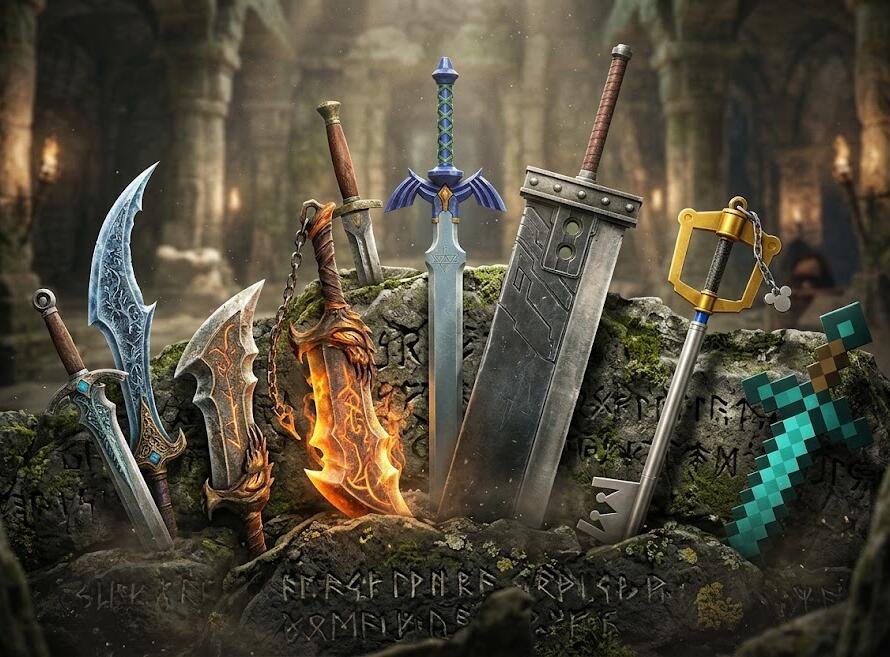
If you want a finished Buster Sword replica for your shelf, buy a full-size metal or high-detail resin version; if you plan to carry it at a convention, buy a lightweight PU foam or reinforced resin build instead. The reason comes down to two things: appearance and physics. Metal delivers the screen-accurate heft and cold-to-the-touch authenticity collectors want, while foam and resin cut the weight down to something you can actually hold above your head for a four-hour photo shoot without your shoulder giving out.
Here’s how that plays out for the two buyer types:
- Collectors: prioritize scale accuracy and finish quality. A 1:1 metal or multi-piece resin display piece with factory-applied weathering holds more long-term value than a lightweight version.
- Cosplayers: prioritize weight and edge safety. Convention floors and photo ops favor foam-core or resin builds with blunted tips over anything close to the reported ~6.8 kg (roughly 15 pounds) some full metal versions reach.
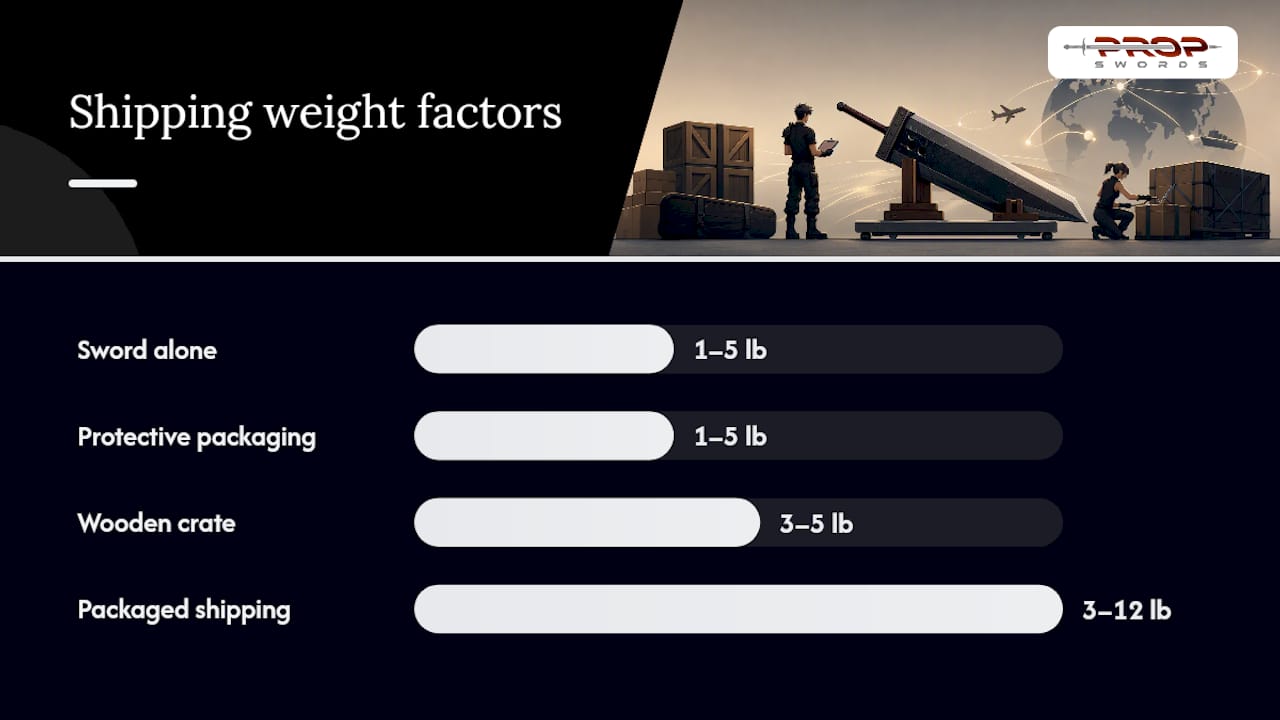
Packaged shipping weight for a sword-length item typically runs 3 to 12 pounds depending on blade material and crating, and airline travelers need to know upfront that the TSA does not allow swords in carry-on luggage under any circumstance. Propswords lists both display-grade metal Buster Swords and lighter cosplay builds, which makes it a reasonable first stop for comparing the two categories side by side.
Pro Tip: If you’re torn between authenticity and comfort, ask the seller about a scaled-down version (90 to 95 percent size) or request a hollow-core build. Most retailers that offer custom work can shave a pound or more off the final weight without changing the visual proportions much.
Key Takeaways
Buy metal or high-detail resin for display value, and foam or reinforced resin for cosplay safety and comfort, then verify the seller’s photos, specs, and return policy before you pay.
| Point | Details |
|---|---|
| Match material to use | Choose metal or resin for display, foam or lightweight resin for cosplay comfort and safety. |
| Check real dimensions and weight | Confirm exact length, blade width, and packaged weight before ordering, not rounded estimates. |
| Vet the seller first | Request a spec sheet and a short handheld video before trusting studio photos alone. |
| Plan shipping and travel | Remember checked baggage only for swords, per TSA rules, and budget for dimensional shipping weight. |
| Consider Propswords for finished builds | Propswords offers both full-size metal display pieces and lighter cosplay-friendly variants with published specs and return terms. |
Table of Contents
- What to Look for When Choosing a Finished Buster Sword Replica
- Materials and Build Types: Cosplay vs Display
- Sizing, Weight, and Fit for Cosplay
- Verifying Quality and Trusting the Retailer
- Shipping Logistics and Traveling With a Replica
- Caring for a Finished Replica After Delivery
- Before You Click Buy: A Quick Pre-Purchase Checklist
- Cosplay Versus Collecting: What Actually Matters
- Featured Propswords Buster Sword Options for Every Buyer
- Sources
- FAQ
What to Look for When Choosing a Finished Buster Sword Replica
Every finished replica purchase comes down to the same eight variables, and most buyer’s remorse traces back to skipping one of them.
- Intended use: cosplay pieces need to survive travel and handling; display pieces just need to look right under a light.
- Material and construction: determines weight, durability, and how the paint or metal finish ages over time.
- Scale and dimensions: exact length and blade width, not just “1:1,” since replicas vary by manufacturer interpretation.
- Weight and balance: a sword that’s heavy at the tip is harder to pose or wear than one balanced near the grip.
- Finish and detail level: hand-painted weathering versus flat factory color makes a real difference in how it photographs.
- Safety features: rounded or blunted edges and tips, required at most conventions with prop weapon policies.
- Price drivers: licensed artwork, limited runs, and full-tang steel construction all push cost up.
- Shipping and return terms: lead time, insurance options, and whether a damaged item can be returned without a fight.
A collector chasing display value can accept the tradeoffs of a heavier metal build since it never leaves a shelf or a display case. A cosplayer wearing the piece across a convention floor for six hours should choose foam or resin even if it means sacrificing some of that cold-steel realism.
Pro Tip: Before you buy, ask the seller two direct questions: “Can you send me the material spec sheet?” and “Do you have in-hand or video footage of this exact item, not just the studio render?” A seller who answers both quickly and specifically is usually one worth trusting.
Materials and Build Types: Cosplay vs Display
Five materials dominate the finished replica market, and each one solves a different problem.
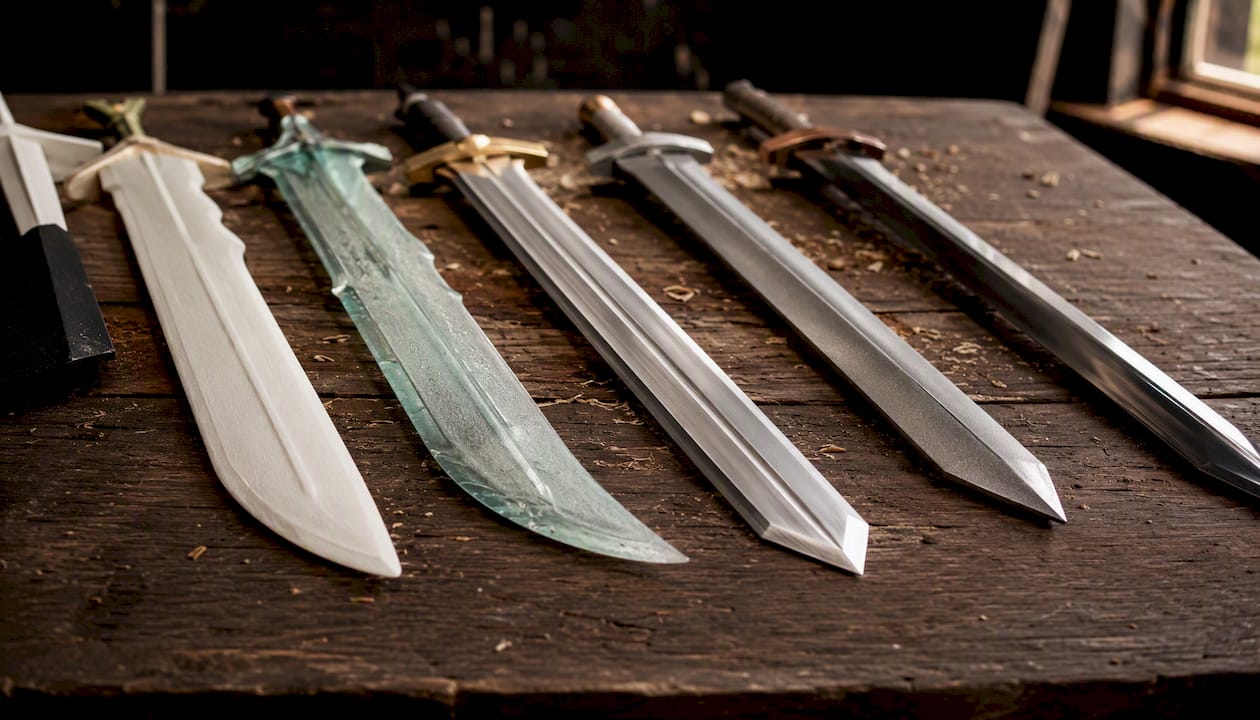
PU foam uses a dense polyurethane core with a hard protective coat, making it the standard choice for cosplay because it’s light, forgiving on impact, and easy to modify. PVC and cast resin pieces are injection-molded or hand-poured, giving sharper sculpted detail than foam but adding weight. Fiberglass-reinforced resin splits the difference, offering more rigidity than plain resin while staying lighter than metal. Aluminum builds show up in mid-tier display pieces that want some metal heft without full steel weight. Stainless steel delivers the closest thing to screen-accurate mass and cold-touch realism, which is why serious collectors gravitate toward it for shelf pieces.
PU foam versions of the Buster Sword typically run around 102 centimeters (about 40 inches) in cosplay-scaled builds, keeping them maneuverable for stage work and photo lines. Finish quality is where cheap and premium replicas separate fastest. Look for high-resolution macro shots of the paintwork, not just a hero image from ten feet away, since weathering and edge highlighting only show up close.
| Material | Best for | Typical weight | Safety for events | Price tier |
|---|---|---|---|---|
| PU foam | Cosplay, conventions | Light | High (soft edges) | Budget to mid |
| Cast resin/PVC | Display, light cosplay | Medium | Moderate | Mid |
| Fiberglass resin | Display with some handling | Medium | Moderate | Mid to high |
| Aluminum | Display, occasional posing | Medium to heavy | Low without modification | Mid to high |
| Stainless steel | Pure display, collectors | Heavy | Low (edges need blunting) | High to premium |
Pro Tip: When a listing includes a spec sheet, check the “core material” line specifically. A resin shell over a foam core weighs and handles very differently than solid cast resin, even though both might just say “resin” in the title.
Sizing, Weight, and Fit for Cosplay
Full 1:1 scale looks best in photos, but it’s not always the right call for wearing across an eight-hour convention day. If mobility, crowd navigation, or venue prop-weapon length limits are a concern, a scaled-down version, often 85 to 95 percent of screen size, keeps the silhouette recognizable while cutting real weight off the blade tip.
Battlewares’ comparison of Buster Sword builds notes that metal replicas can reach roughly 6.8 kilograms (about 15 pounds), a weight that gets exhausting fast when held one-handed for a photo op. Foam versions solve that problem directly, which is why cosplay guides consistently steer buyers toward foam or reinforced resin builds over full metal.
Before ordering, check the listing for these specifics:
- Exact overall length and blade width, not a rounded “about” figure.
- Handle length, since a short grip changes how you carry it over the shoulder.
- Listed packaged weight, which tells you what you’ll actually be lifting and wearing.
- Whether a stand or harness is included or sold separately.
Pro Tip: Cut a cardboard template at the exact listed length and hold it the way you’d carry the finished sword. If your arm or shoulder tires within a minute, size down or switch materials before you buy the real thing.
Verifying Quality and Trusting the Retailer
The gap between a great replica and a disappointing one usually shows up before the order ever ships, in how the seller communicates. A trustworthy seller offers close-up photos from multiple angles, a short handheld video, a materials spec sheet, and a clearly written shipping and returns policy without you having to ask twice.
Ask directly: What’s the exact material and manufacturing process? Is this a licensed product? Can you send an in-hand photo or video of this specific unit? What’s the lead time and shipping method? What happens if it arrives damaged? A seller who answers with specifics, exact material names, real turnaround days, a named carrier, is worth your money. One who replies with vague reassurance (“it’s high quality, don’t worry”) is a warning sign.
Customer photos matter more than seller-provided ones because they show the product outside a controlled studio setup. Look for repeated evidence across multiple buyers: consistent paint quality, no widespread reports of chipping, and finish that matches the listing photos in daylight. Angled in-hand shots and short video clips reveal balance and paint texture far better than a single polished studio image, so don’t settle for one hero photo if you’re spending real money.
Pro Tip: Ask the seller for a 15 second handheld video shot in the warehouse, not the studio. It’s the fastest way to judge real weight, balance, and finish before the item ships.
Shipping Logistics and Traveling With a Replica
Shipping cost for a finished sword depends on three things: actual weight, package length, and declared value. Long, narrow boxes often trigger dimensional weight pricing, meaning carriers charge based on the size of the box rather than what’s actually inside it. Standard swords weigh 1 to 5 pounds on their own, but packaged shipping weight typically lands between 3 and 12 pounds once protective wrapping and crating are added.
Packaging adds real weight. Protective foam, wrapping, and rigid tubes can add 1 to 5 pounds beyond the sword’s own weight, and a wooden crate for high-value metal pieces can add another 3 to 5 pounds while cutting transit damage risk substantially.
If you’re flying with a finished replica rather than shipping it, know the rule before you pack: the TSA prohibits swords in carry-on baggage entirely. Checked baggage is the only option, and the sword must be sheathed or securely wrapped so it can’t cause injury during handling. The final call always rests with the TSA officer on duty, so don’t assume a “cosplay foam sword” gets automatic leniency, pack it as though it will be inspected.
International buyers should also expect extra paperwork. Import documentation requirements vary by origin country and material, though modern replicas generally skip the cultural export permits required for genuine antiques.
Pro Tip: For anything over $150 in declared value, pay the extra few dollars for shipping insurance and request a wooden crate instead of a cardboard tube. It’s cheap protection against a snapped blade tip in transit.
Caring for a Finished Replica After Delivery
Maintenance depends entirely on what the piece is made of, and using the wrong product can undo a good finish fast.
Metal blades need a light coat of mineral oil periodically and storage away from humidity to prevent surface rust. Painted resin pieces should be dusted with a dry microfiber cloth only; solvents and household cleaners will strip weathering effects. PU foam builds hold up best with spot-cleaning and avoiding direct, prolonged sunlight, which breaks down the protective coating over time.
Storage matters as much as cleaning. A wall mount or padded stand beats leaning a sword in a closet corner, and humidity control protects both metal and painted finishes. Anyone building out a display setup can borrow display and mounting ideas from collectible display guides built for other collector categories, since the mounting principles carry over well.
If something arrives with a small paint nib, minor chip, or a loose fitting, document it with photos immediately and contact the seller before attempting a repair yourself, since DIY fixes can void a return window. Propswords maintains a detailed replica maintenance guide covering cleaning schedules and material-specific handling steps worth bookmarking after your piece arrives.
Pro Tip: Set a seasonal reminder, once every three months, to re-oil metal pieces and check foam builds for coating cracks. Small maintenance now prevents big repairs later.
Before You Click Buy: A Quick Pre-Purchase Checklist
Run through these seven checks on any product page before you commit:
- Confirm the intended use matches the material (cosplay needs foam or lightweight resin; display can go heavier).
- Verify listed weight and exact dimensions, not vague size categories.
- Request or download a materials spec sheet if one isn’t already posted.
- Look for finish photos from multiple angles plus at least one video.
- Confirm shipping method, estimated delivery window, and insurance availability.
- Check the return and warranty policy in writing, not just a general FAQ page.
- Send one message to the seller and judge the speed and specificity of their reply.
Pro Tip: If you’re ordering a custom or made-to-order piece, ask whether the seller offers a 48-hour cancellation window. Many do, and it gives you a safety net if you spot a better option right after ordering.
Cosplay Versus Collecting: What Actually Matters
Most buying guides treat “authenticity” as a single fixed goal, but authenticity means something different depending on who’s buying. A collector’s authenticity is visual: paint accuracy, blade proportions, the way light hits a weathered edge. A cosplayer’s authenticity is experiential: can you hold this thing through a full con day and still smile in every photo? Conflating the two leads people to buy 15-pound steel pieces they never actually wear, or foam blades so light they look flimsy sitting on a display shelf.
Propswords structures its finished Buster Sword lineup around that split rather than pretending one version serves everyone. A full metal display piece exists for the shelf. A lighter build exists for the floor. Neither is a compromise version of the other; they’re built for different jobs.
My honest take: the smartest middle ground I’ve seen work is a reinforced lightweight core (foam or hollow resin) paired with a high-detail hand-finished outer coat. You get most of the visual punch collectors want with weight numbers cosplayers can actually manage for a full day of events.
Pro Tip: If you can only own one Buster Sword, ask about hybrid builds before assuming you need two separate pieces. A well-finished lightweight core often satisfies 90 percent of what both buyer types are actually chasing.
Featured Propswords Buster Sword Options for Every Buyer
Propswords carries finished Buster Sword builds across both ends of the spectrum, so you’re not stuck choosing between a generic import and a custom commission with a six-month wait.
The Cloud Strife Remake Buster Sword is the full-size metal option built for display: real metal construction, screen-accurate proportions, and the kind of shelf presence that photographs well under gallery lighting. Intended use skews collector, material is metal, scale is full-size, and it ships with the standard Propswords return window. For buyers who want an alternate finish on the same silhouette, the Black Edition variant offers a darker paint treatment while keeping the same full-size metal build.
If you’re shopping across the whole current lineup rather than one specific SKU, the Top 4 best replica swords page rounds up the current standout picks with photos, pricing, and specs in one place, useful if you’re comparing finish options before committing.
Every listing includes high-resolution photos, spec details, and Propswords’ published shipping and return terms, so you can check material, weight, and delivery estimate before you order.
Pro Tip: Pair a metal display sword with a wall mount or stand at checkout. It protects the finish from shelf dust and makes the piece look intentional rather than propped in a corner.
Ready to compare finishes side by side? Browse the current Buster Sword lineup and check exact specs before you check out.
Sources
- How Much Does A Sword Weigh? 1–5 Lbs By Type (2026 Guide) | ParcelPath
- Best Final fantasy Buster Sword Replicas
FAQ
What’s the best material for a cosplay Buster Sword?
PU foam or lightweight reinforced resin works best for cosplay because it cuts weight dramatically while staying durable enough for a full day of event handling.
Can I bring a Buster Sword replica on a plane?
Not in carry-on baggage. The TSA requires swords to travel in checked baggage only, sheathed or securely wrapped, with final approval left to the officer on site.
How much does a finished Buster Sword replica typically weigh to ship?
Packaged shipping weight generally falls between 3 and 12 pounds depending on the blade material and how much protective packaging is used.
Does Propswords sell both display and cosplay versions?
Propswords lists full-size metal Buster Sword builds aimed at display collectors, with specs and photos published directly on each product page.
What should I ask a seller before buying a replica sword online?
Ask for the exact material spec sheet, in-hand photos or video, licensing status, estimated shipping time, and the return policy in writing before placing an order.
Recommended