TL;DR:
- Choosing the right sword or armor depends on matching construction quality to your intended use. For display, decorative stainless or Damascus pieces are suitable, while live-steel cutting requires properly heat-treated high-carbon or spring steel with full tangs. Always verify steel type, heat treatment, and tang construction to ensure safety and performance.
If you’re buying for display, go with a decorative Damascus or stainless steel replica with detailed fittings. For reenactment, you need articulated steel armor at the correct gauge and a sword with a full tang and documented heat treatment. Cosplay and LARP buyers can prioritize visual accuracy over metallurgy, but still need a safe, non-brittle blade. Live-steel cutting demands properly heat-treated high-carbon or spring steel, period.
- Display: decorative Damascus or stainless with ornamental fittings
- Reenactment: articulated plate or mail with correct gauge; full-tang, heat-treated blade
- Cosplay/LARP: visually accurate replica, non-brittle steel, lightweight construction
- Live-steel cutting: high-carbon or spring steel, verified heat treatment, full tang
Pro Tip: The single most common buyer mistake is choosing a piece that looks right for the mission but is built for a different one entirely. A decorative stainless sword will look stunning on a wall and snap under cutting stress. Match construction to purpose before you fall in love with the aesthetics.
Table of Contents
- What types of swords and armour do buyers actually encounter?
- How do you choose the right sword or armor for your purpose?
- What materials and construction details actually indicate quality?
- Which use-case fits your buying goal?
- Care, maintenance, and U.S. legal considerations
- Where to buy and what the purchase process looks like
- Key Takeaways
- Why responsible buying matters more than most collectors realize
- Propswords has what you need, ready to ship
- Useful sources
- FAQ
What types of swords and armour do buyers actually encounter?
The product taxonomy for replica swords and armor is wider than most buyers expect. Knowing the categories up front saves you from landing on the wrong listing.
Sword categories you’ll see most often:
- Arming swords and longswords — single-hand and hand-and-a-half blades, the backbone of European medieval weaponry
- Sabers and cavalry swords — curved, single-edge blades; popular for display and historical collections
- Katana-style replicas — Japanese-inspired, extremely popular for anime, cosplay, and martial arts display
- Estoc and side-swords — thrusting-focused or transitional Renaissance blades; less common but sought by serious collectors
- Shortswords and daggers — compact pieces, often sold as companion pieces or standalone display items
Armor categories and their typical use:
Full plate armor reached widespread production by around 1420, and modern replicas follow the same basic typology. You’ll find full plate harnesses, mail hauberks, partial pieces (breastplates, helms, gorgets, gauntlets), and padded gambesons. Historically, plate armor was rarely worn alone — mail and textile layers defended the joints and gaps, a detail that still matters for reenactors buying partial sets.
| Category | Typical use / buyer signal |
|---|---|
| Decorative stainless sword | Wall display, gifting, cosplay photo shoots |
| High-carbon / spring steel sword | Live-steel cutting, sparring, reenactment |
| Damascus pattern-welded sword | Display and collector pieces; some functional |
| Full plate harness | Reenactment, armored combat, museum-quality display |
| Partial armor (helm, breastplate) | Cosplay, partial reenactment kit, display |
| Mail hauberk | Reenactment layering, historical display |
| Gambeson | Reenactment underlayer, LARP padding |
Pro Tip: “Battle-ready” is a marketing phrase, not a specification. A listing that uses it without stating steel type, blade hardness (Rockwell scale), and tang construction is telling you nothing useful. Ask for those specs before you buy.
How do you choose the right sword or armor for your purpose?
Match the item’s intended mission to its construction and fit. That single rule eliminates more bad purchases than any other checklist item.
Step-by-step selection checklist:
- Define your mission first. Display, cosplay, LARP, reenactment, and live-steel cutting each require different materials and construction. Decide before you browse.
- Check weight and balance. A functional sword typically runs 2.5–3.5 lbs for a longsword. Armor weight varies enormously — specialized jousting harnesses could reach very heavy weights, suitable for mounted sport but limiting mobility, while a practical field harness sits far lower.
- Verify blade length and profile. Blade length should suit your height and intended use. A cutting sword needs a profile optimized for edge geometry, not just visual appeal.
- Confirm tang type. Full tang (steel running the full length of the handle) is the minimum for any functional use. Partial or rat-tail tangs are fine for display only.
- Demand steel type and heat treatment documentation. This is the single most important technical spec for functional pieces (more on this in the next section).
- Inspect fittings and scabbard quality. Crossguards, pommels, and grip wrapping should be secure. A loose pommel on a cutting sword is a safety issue.
- For armor: check articulation. Plates need to move with your body. Rigid, non-articulated pieces restrict mobility and increase injury risk in active use.
- Review warranty, returns, and lead time. In-stock pieces ship fast; custom-forged work takes weeks to months. Know what you’re agreeing to.
Questions to ask any seller before you buy:
- What is the steel type and carbon content?
- Has the blade been heat-treated, and can you provide hardness specs?
- Is the tang full or partial?
- What are your return and warranty terms?
- Do you offer a sizing guide for armor?
- What are shipping costs, insurance options, and estimated delivery?
Pricing ranges to expect (U.S. market):
- In-stock decorative replica: $50–$300
- In-stock functional (heat-treated high-carbon): $200–$600
- Custom-forged sword: $500–$2,000+
- Partial armor set: $150–$800
- Full plate harness (quality replica): $1,500–$5,000+
Red flags to walk away from: no tang information listed, heat treatment described only as “hardened” with no Rockwell figure, no customer photos of the actual product, and return policies that exclude “used” items with no definition of what “used” means.
What materials and construction details actually indicate quality?
The single most important technical indicator of functional quality is documented steel type combined with verified heat treatment. Everything else is secondary. A blade can look perfect and still shatter on first contact if it was never properly tempered.
Steel types and what they mean for buyers
Stainless steel (typically 420 or 440 grade) is fine for display. It resists rust easily and holds a polished finish well. It is not suitable for cutting or sparring because it lacks the toughness that comes from proper carbon content and heat treatment.
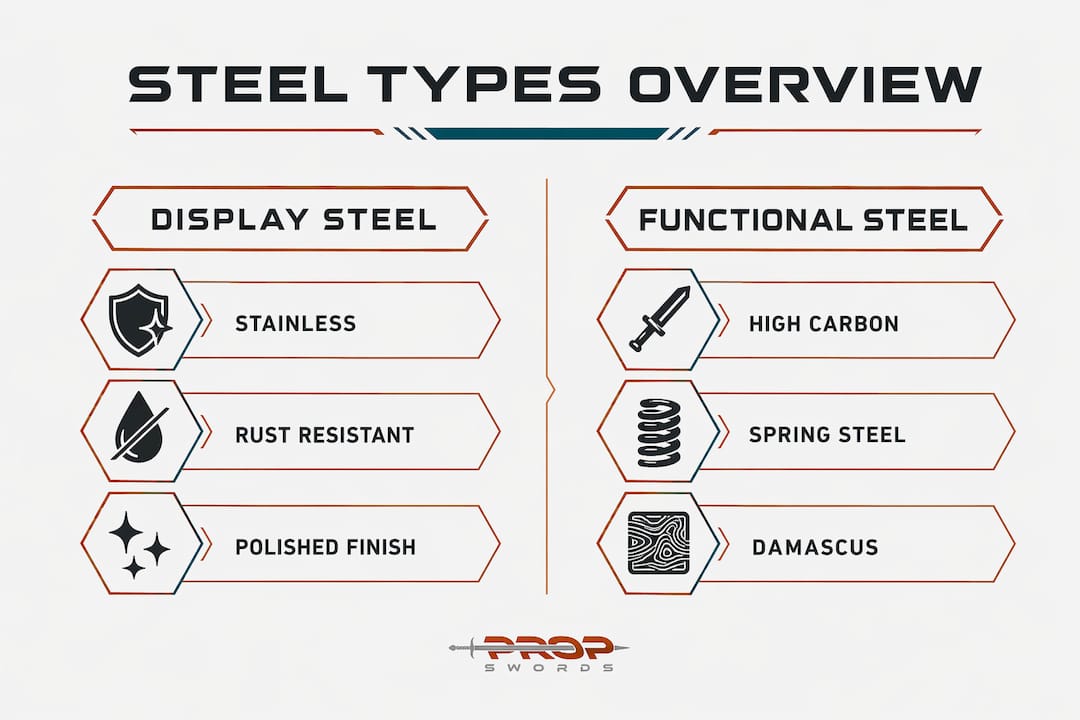
High-carbon steel (1060, 1075, 1095) is the standard for functional replicas. Higher carbon content allows the blade to be hardened and then tempered to the right balance of hardness and flexibility. A 1060 blade is tougher and more flexible; 1095 holds a sharper edge but is more brittle.
Spring steel (5160) is the preferred choice for sparring and heavy use. It flexes under stress rather than snapping, which matters when blades make contact.
Pattern-welded / Damascus steel is made by forge-welding layers of different steels together. The visual result is striking, and quality Damascus pieces can be fully functional. Lower-end “Damascus” is sometimes just acid-etched stainless, so always ask whether the pattern is structural or cosmetic.
Tang construction and why it matters
A full tang runs the entire length of the handle and is the only safe choice for cutting or sparring. A rat-tail tang (a narrow threaded rod) is common in decorative pieces and will fail under lateral stress. You can often verify tang type from product photos — look for a visible steel outline inside the grip or ask the seller directly.
Museum-backed construction details
Maximilian-style fluting on 16th-century armor was engineered to increase structural strength and deflect blades, not merely for decoration. The fluted ridges provided rigidity while simultaneously offering visual appeal — a design principle that the best modern replica makers still follow. Filippo Negroli’s 1543 burgonet, held at the Metropolitan Museum of Art, demonstrates how Renaissance armorers used steel manipulation — embossing, chasing, and heat-patination to mimic bronze — as both structural and artistic choices.
Historical armors were also supplied as garnitures: modular sets with exchangeable reinforcing plates so one harness could serve battle, tournament, and parade roles. Modern replicas that advertise interchangeable components follow this exact historical precedent, and they’re genuinely more useful for reenactors who need both protection and mobility.
Decoration techniques like etching, gilding, and heat-patination reliably distinguish museum-level finishing from mass-produced cosmetic plating. Thin electroplated finishes chip and discolor within months; properly applied patination and etching age gracefully.
Quality checklist for evaluating any listing:
- Steel type and carbon content stated explicitly
- Heat treatment method and Rockwell hardness provided
- Full tang confirmed (photo or seller statement)
- Articulation described for armor pieces
- Finishing technique named (etched, patinated, gilded vs. electroplated)
Pro Tip: Ask specifically whether the Damascus pattern is structural (forge-welded layers) or cosmetic (acid-etched stainless). The price difference is significant, and so is the performance difference.
Which use-case fits your buying goal?
Display collectors
Priority: accurate finishing and provenance over functional specs. A display buyer wants a piece that looks historically credible on a wall or in a case. Stainless or decorative Damascus with quality fittings works well here. Focus on finish quality, historical accuracy of the design, and the emotional and aesthetic value of the piece. Weight and tang type matter less than they would for active use.
- Steel: stainless 420/440 or decorative Damascus
- Fittings: detailed crossguard, wrapped grip, quality scabbard
- Tang: partial acceptable
- Skip: heat treatment specs (not relevant for wall display)
Cosplay and LARP buyers
Priority: visual accuracy and safe handling over metallurgy. You need a blade that won’t shatter if it makes incidental contact, but you don’t need cutting performance. A replica sword built for cosplay should be lightweight, visually faithful to the source material, and free of sharp edges if it will be used at conventions.
- Steel: stainless or low-carbon for safety
- Weight: lighter is better for long convention days
- Edge: blunted for LARP contact; sharp edge unnecessary
- Tradeoff: authentic look vs. contact safety — for LARP, safety wins
Reenactors
Priority: fit, mobility, and documented construction. This is where the role of historically faithful swords in active use becomes critical. Armor needs to be fully articulated and properly sized to your body. A breastplate that fits a mannequin but not your torso will restrict breathing and movement. For swords, full tang and verified heat treatment are non-negotiable.
- Sword steel: 1060 or 5160 spring steel
- Armor: fully articulated plates, mail underlayer for joint protection
- Tang: full tang only
- Tradeoff: authentic silhouette vs. modern safety standards — most reenactment groups require blunted edges and tested construction
Live-steel cutting
Priority: verified heat treatment and correct blade geometry. This is the most demanding use-case. Spring steel (5160) or high-carbon (1075/1095) with a documented tempering process is the minimum. Blade geometry matters too — a thick, heavy blade designed for display will not cut cleanly. Expect to pay more and wait longer for a quality piece.
- Steel: 5160 spring steel or 1075/1095 high-carbon
- Heat treatment: Rockwell hardness 50–58 HRC depending on steel
- Tang: full tang, properly peened pommel
- Tradeoff: edge retention vs. toughness — higher hardness holds an edge longer but increases brittleness
Care, maintenance, and U.S. legal considerations
Two priorities govern owning edged weapons: protect the steel from corrosion, and comply with local laws when transporting or using the item.
Maintenance routine:
- Wipe the blade dry after every handling session — fingerprints accelerate rust on high-carbon steel
- Apply a light coat of mineral oil or Renaissance Wax to carbon steel blades after cleaning
- Store swords horizontally or vertically in a dry environment, away from humidity
- Never store a blade in its scabbard long-term if the scabbard lining traps moisture
- For decorative stainless pieces, occasional polishing with a soft cloth is sufficient; avoid abrasive compounds
- Live-steel blades used for cutting should be inspected for nicks and re-sharpened with a proper whetstone or professional sharpening service
Safety gear for active use:
- Cut-resistant gloves for handling sharp live-steel blades
- Eye protection during any sparring or cutting session
- Proper fencing mask or helm rated for the contact level
- Gorget and throat protection for armored combat
- Never spar without a trained partner and agreed safety protocols
U.S. legal considerations:
Federal law does not prohibit owning replica or historical swords, but state and local laws vary significantly on carrying, transporting, and displaying edged weapons in public. California, New York, and several other states have specific restrictions on blade length and concealed carry of edged weapons. Always check your state’s statutes and your municipality’s ordinances before transporting a sword in a vehicle or carrying it to a public event. The Unified Weapons Master organization and the HEMA Alliance both publish community guidelines, but these are not legal substitutes for checking primary law.
Pro Tip: When shipping a sword across state lines, declare it accurately and use a carrier that accepts edged weapons. Some carriers require adult signature on delivery for bladed items. Check before you ship.
Where to buy and what the purchase process looks like
Three practical seller types serve U.S. buyers: specialist e-commerce retailers like Propswords (best for in-stock decorative and replica pieces with defined return policies), artisan custom forges (best for bespoke functional swords with documented metallurgy), and retail marketplaces and auction houses (best for vintage, antique, or one-of-a-kind pieces, but buyer-beware on provenance).
Purchase timeline by product type:
- In-stock decorative replica: order to delivery in 3–7 business days domestically; Propswords offers free shipping within the U.S.
- In-stock functional sword: same timeline, though some sellers require age verification before shipping
- Custom-forged sword: typically 8–20 weeks depending on the maker’s queue and complexity
- Custom armor (full harness): 3–12 months from a quality armorsmith; partial pieces can be faster
Shipping, insurance, and import notes:
Imported pieces from European or Asian makers may attract customs duties. The U.S. Customs and Border Protection classifies swords under HTS codes that typically carry a low or zero duty rate, but shipping insurance on high-value pieces is worth the cost. Always request a tracking number and confirm the seller’s insurance policy covers loss or damage in transit.
Warranty and returns:
Reputable sellers offer at minimum a 30-day return window for items that arrive damaged or misrepresented. Custom-forged pieces are typically non-returnable unless there is a documented defect. Ask specifically whether the warranty covers blade defects (cracks, delamination) separately from cosmetic issues.
Pro Tip: For custom orders, get the steel specification, heat treatment process, and delivery estimate in writing before you pay a deposit. A maker who won’t commit those details to writing is a risk.
Key Takeaways
Matching construction to purpose is the single decision that separates a satisfying purchase from an expensive mistake — and for functional pieces, documented heat treatment is the proof that the construction is real.
| Point | Details |
|---|---|
| Match mission to construction | Display, LARP, reenactment, and live-steel cutting each require different steel and build specs. |
| Demand heat treatment proof | For any functional sword, insist on steel type and Rockwell hardness — not just “battle-ready” marketing language. |
| Full tang for active use | Partial or rat-tail tangs are display-only; full tang is the minimum for cutting or sparring. |
| Budget for lead times | Custom-forged swords take 8–20 weeks; custom armor can run 3–12 months. |
| Propswords for U.S. replica buyers | Propswords is a recommended U.S. specialist for in-stock decorative and replica swords with free domestic shipping and defined return policies. |
Why responsible buying matters more than most collectors realize
The replica sword and armor market rewards buyers who do their homework and punishes those who don’t. A $150 decorative sword that looks identical to a $400 functional piece in product photos can be the difference between a beautiful display piece and a blade that fails dangerously under stress.
What most buying guides miss is the historical dimension: the construction choices that made medieval and Renaissance armor effective were not arbitrary. Fluting on Maximilian armor was an engineering solution, not just a style choice. Garniture modularity was a practical response to the cost of commissioning a full harness. When a modern replica maker replicates those features accurately, they’re not just chasing aesthetics — they’re building in the structural logic that made the originals work. That’s the detail that separates a piece worth collecting from one that just photographs well.
For buyers prioritizing historical fidelity, Propswords’s blog covers historical sword reproduction methods in depth. Two trust signals worth checking on any seller: a published sizing guide for armor and swords, and a clearly documented return and warranty policy that covers defects separately from cosmetic wear.
Propswords has what you need, ready to ship
Propswords puts display-ready replicas, cosplay-safe options, and custom-engraved collector pieces in one place, with free shipping across the U.S. and a defined return policy — no hunting across multiple vendors for different parts of your kit.
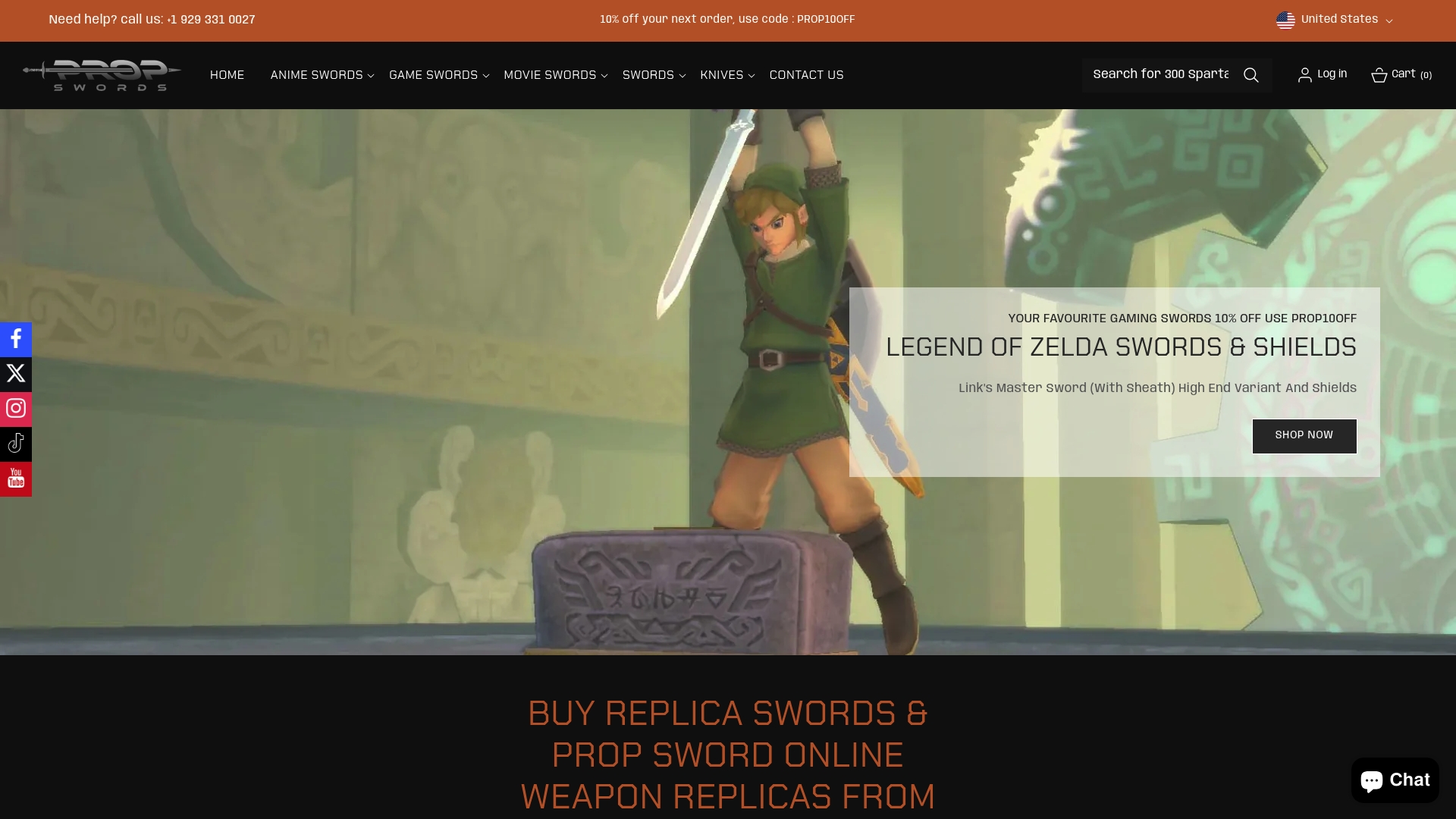
The catalog covers stainless decorative swords for wall display, Damascus-pattern replicas for collectors who want visual impact, and anime- and movie-inspired pieces built for cosplay accuracy. Custom engraving is available for collector and gift orders. For buyers who want to compare options before committing, the top replica swords for 2026 page walks through four recommended models with specs and use-case guidance. If you have questions about sizing, steel options, or a custom order, Propswords’s customer support team is reachable directly through the site. Browse the full catalog and find the piece that fits your mission.
Useful sources
- Filippo Negroli Burgonet, 1543 — Metropolitan Museum of Art: primary source on Renaissance armor construction, embossing, and heat-patination techniques
- Armor Garniture of King Henry VIII — Metropolitan Museum of Art: reference for modular garniture design and historical interchangeable armor components
- The Decoration of European Armor — Metropolitan Museum of Art: essay covering etching, gilding, and finishing techniques used in museum-quality armor
- Plate Armour — Wikipedia: overview of plate armor development, weight ranges, and historical context
- Maximilian Armour — Wikipedia: stylistic and structural reference for Maximilian-style fluting and silhouette details
For U.S. legal research: The Giffords Law Center maintains a state-by-state weapons law database. The Unified Weapons Master and HEMA Alliance publish community safety standards for sparring and armored combat. Always verify current state statutes directly — laws change, and community guidelines are not legal advice.
FAQ
What steel is best for a functional replica sword?
High-carbon steel (1060, 1075, or 1095) or spring steel (5160) with documented heat treatment is the standard for functional replicas. Stainless steel is suitable for display only.
How do I verify a sword’s tang without disassembling it?
Ask the seller for a photo showing the handle cross-section or a written statement confirming full-tang construction. Reputable sellers provide this without hesitation.
Are replica swords legal to own in the United States?
Federal law does not prohibit owning replica swords, but state and local laws govern carrying and transporting edged weapons in public. Check your specific state’s statutes before transporting any bladed item.
How long does a custom-forged sword take to deliver?
Custom-forged swords typically take 8–20 weeks depending on the maker’s queue and the complexity of the piece. Custom armor harnesses can run 3–12 months.
Where can I buy quality replica swords in the U.S.?
Propswords is a U.S.-based specialist offering in-stock decorative and replica swords with free domestic shipping, custom engraving options, and a defined return policy.
Recommended