TL;DR:
- Mastering sword terminology enables collectors and enthusiasts to identify, classify, and appreciate both historical and fantasy swords accurately.
- Understanding parts like the blade, guard, and tang helps distinguish functional designs from decorative replicas and enhances authentication.
Sword terminology refers to the specialized vocabulary used to describe sword parts, classifications, and features across cultures and history. Mastering this language is the foundation for anyone serious about swordsmanship, historical weaponry, or fantasy collecting. Two major systems anchor the field: the Oakeshott typology for medieval European swords and the rich Japanese sword vocabulary used by collectors and authenticators worldwide. Whether you study martial arts manuals, build a display collection, or chase accuracy in cosplay, understanding sword jargon separates casual interest from genuine knowledge.
What are the main parts of a sword?
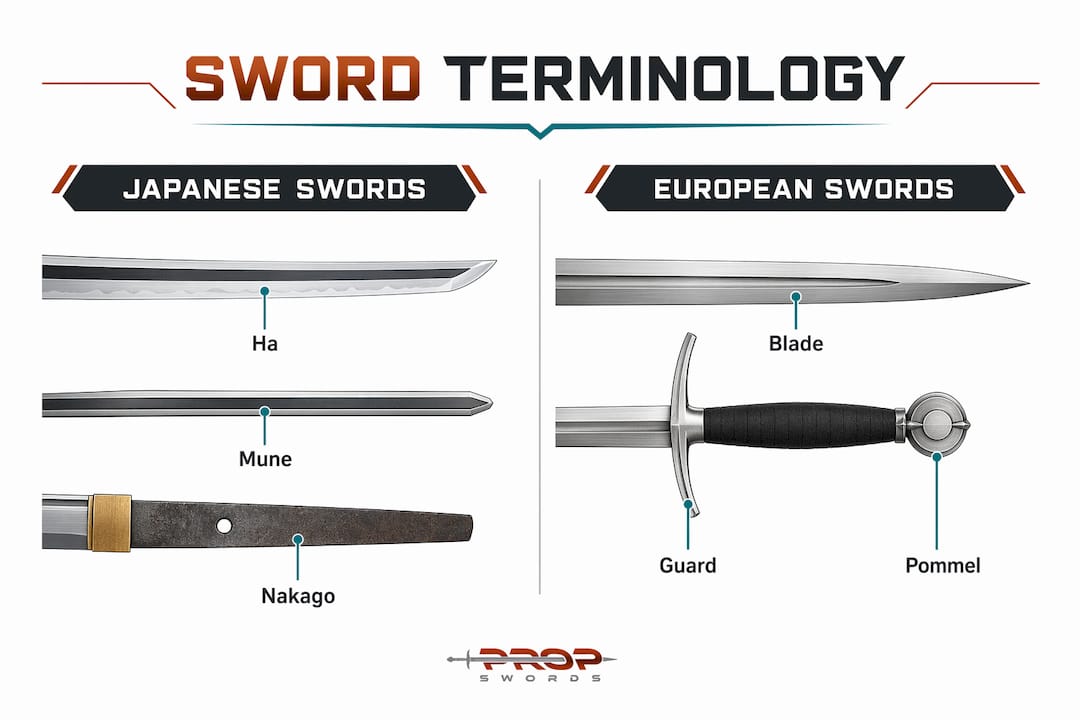
Every sword shares a core set of parts, regardless of culture or era. Knowing these parts gives you a working sword terms glossary you can apply to almost any blade you encounter.
Blade anatomy
The blade is the cutting or thrusting element of the sword. Its main features include:
- Edge: The sharpened side of the blade, designed for cutting. Double-edged swords have two edges; single-edged swords have one.
- Spine (or back): The thick, unsharpened opposite side of the blade. It adds structural strength.
- Fuller: A shallow groove running along the blade’s length. It reduces weight without sacrificing rigidity, and is often mistakenly called a “blood groove.”
- Tip or point: The terminal end of the blade, shaped for thrusting or cutting depending on the sword’s purpose.
- Ricasso: A section near the hilt where the blade is left unsharpened, allowing a finger to hook over the guard for better control.
Hilt components
The hilt is everything you hold and everything that protects your hand. Its parts include:
- Guard or crossguard: A perpendicular bar between the blade and grip that stops an opponent’s blade from sliding into your hand.
- Grip: The handle itself, typically wrapped in leather, wire, or ray skin.
- Pommel: The weighted cap at the bottom of the grip. It counterbalances the blade and can deliver a strike in close quarters.
- Tang: The extension of the blade that runs through the grip. A full tang runs the entire length of the handle and is the strongest construction.
Pro Tip: When evaluating any sword, check the tang first. A full, well-fitted tang is the single best indicator of structural quality in both historical and replica swords.
Japanese sword parts
Japanese swords use a distinct vocabulary that reflects their unique construction. The cutting edge is called the ha, while the spine is the mune. The kissaki is the tip, and its size (ko for small, chu for medium, o for large) indicates the blade’s historical period and school. The nakago is the tang. The tsuba is the guard, the tsuka is the handle, and the saya is the scabbard. The hamon is the visible temper line along the edge, one of the most studied features in Japanese sword collecting.
| Japanese Term | English Equivalent | Function |
|---|---|---|
| Ha | Cutting edge | Primary cutting surface |
| Mune | Spine | Structural backbone of the blade |
| Kissaki | Tip | Thrusting point; size indicates period |
| Nakago | Tang | Runs into the tsuka; carries authentication marks |
| Tsuba | Guard | Hand protection; often decorative |
| Tsuka | Handle/grip | Wrapped in ray skin and cord |
| Saya | Scabbard | Protective sheath for the blade |
| Hamon | Temper line | Visible result of differential hardening |
How are medieval European swords classified?
The Oakeshott typology is the standard classification system for medieval European swords. Developed by historian Ewart Oakeshott, it classifies swords from Types X through XXII based on blade shape, cross-section, fuller length, taper, and point design. There are 13 primary classifications in total. Each type reflects the combat demands and armor technology of its era.
Type X covers Viking-era swords from the 10th through 12th centuries. These blades are wide, with a long fuller and a rounded tip optimized for cutting unarmored or lightly armored opponents. Type XV, used in the 14th and 15th centuries, has a diamond cross-section and a sharp, stiff point designed to pierce plate armor at gaps and joints. The shift from Type X to Type XV is not a story of “better” swords. It is a story of tactical adaptation. Blade design responded directly to the armor technology warriors faced on the battlefield.
Pro Tip: When you visit a museum or browse a catalog, look up the Oakeshott type listed for any medieval sword. That single label tells you the weapon’s likely century, combat role, and the armor it was designed to defeat.
Collectors who skip the Oakeshott system tend to evaluate swords purely on aesthetics. That approach misses the functional logic behind every curve, taper, and cross-section. A medieval sword’s construction is an engineering decision, not a decorative one.
| Oakeshott Type | Era | Blade Feature | Combat Role |
|---|---|---|---|
| Type X | 10th–12th century | Wide blade, long fuller, rounded tip | Cutting against light armor |
| Type XIV | 13th–14th century | Shorter, wider, tapering blade | Versatile cutting and thrusting |
| Type XV | 14th–15th century | Diamond cross-section, sharp point | Piercing plate armor |
| Type XVIII | 15th century | Flattened hexagonal section, stiff | Thrusting at armor gaps |
What specialized terms define Japanese sword anatomy?
Japanese sword vocabulary goes far deeper than the basic parts listed above. The hamon is the most visually striking feature. It is created by coating the blade in clay before quenching, which causes the edge to harden differently from the spine. The hamon contains microscopic crystalline structures called nie and nioi that cannot be replicated in a fake blade. Patterns like suguha (straight) and midare (wavy) act as fingerprints identifying the smith and school.
The hada is the grain pattern of the steel, visible under magnification. It results from the folding process used to refine tamahagane steel. The boshi is the hamon as it continues into the kissaki. The mekugi-ana is the peg hole in the nakago that secures the blade inside the tsuka.
The nakago is the most reliable authentication tool for any Japanese sword. It carries yasurime (file marks), natural patina built over centuries, and the smith’s signature. A polished blade can be refinished and altered, but the nakago preserves evidence that cannot be faked after hundreds of years. NBTHK examiners (the Japanese sword authentication body) focus heavily on the nakago when issuing papers for a blade.
The koshirae refers to the full set of sword mountings: tsuka, tsuba, saya, menuki (decorative ornaments on the grip), and habaki (the blade collar that locks the sword in the saya). The tsuba is often a prized collectible in its own right, decorated with mythological scenes, natural motifs, or abstract designs that reflect the cultural moment of its creation.
Pro Tip: If you are buying a Japanese sword replica, check whether the hamon is etched or polished in. An etched hamon is a surface pattern only. A genuine differential hamon requires clay tempering and is visible as a three-dimensional transition zone, not a flat line.
How does sword terminology differ between historical and fantasy swords?
Fantasy swords borrow historical terms but apply them to designs that often break historical rules. Knowing authentic terminology helps you spot the difference immediately. A few key distinctions:
- Fuller vs. decorative groove: Historical fullers are structural. Fantasy swords sometimes add grooves purely for visual effect, with no effect on weight or balance.
- Crossguard proportions: Historical crossguards are sized for function. Fantasy designs often exaggerate them into wings or elaborate shapes that would be impractical in real combat.
- Blade width and taper: Historical blades taper deliberately for balance and cutting geometry. Fantasy blades sometimes maintain uniform width for visual impact, which shifts the balance point toward the tip.
- Pommel design: Historical pommels are weighted for counterbalance. Fantasy pommels are often oversized or purely decorative, which affects handling.
- Tip geometry: Historical tips are shaped for a specific purpose (cutting or thrusting). Fantasy tips are often stylized, with no clear functional intent.
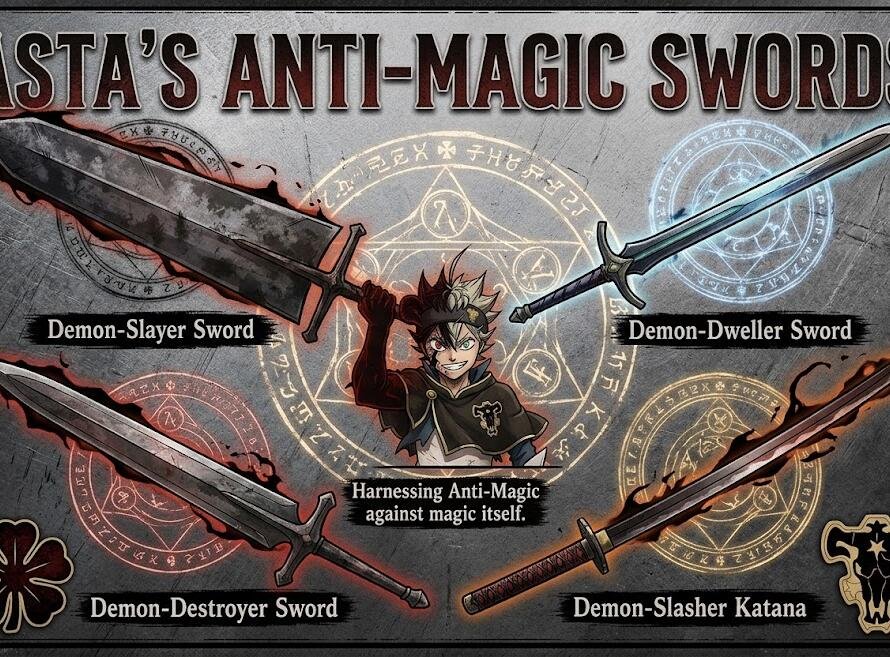
Understanding these distinctions does not mean fantasy swords are inferior. It means you can appreciate them on their own terms. A replica inspired by anime or film is a cultural artifact of its own kind. Knowing the historical vocabulary lets you read both the original design language and the creative reinterpretation. That dual literacy makes you a more informed collector and a sharper participant in any fandom conversation.
What practical benefits come from mastering sword vocabulary?
Learning sword vocabulary pays off in concrete, measurable ways across multiple areas of interest.
- Historical research: Terms like ricasso, chape, and locket appear in museum catalogs and historical texts. Knowing these terms lets you read primary sources and exhibition notes without guessing.
- Martial arts study: Historical European martial arts (HEMA) manuals use period-specific terminology. Practitioners who know the vocabulary absorb technique descriptions faster and more accurately.
- Authentication and collecting: For Japanese swords, terminology is the key to authentication. Collectors who cannot read a nakago or identify a hamon pattern cannot evaluate what they are buying.
- Communication: Shared vocabulary makes conversations between collectors, sellers, and historians precise. Vague descriptions lead to mismatched expectations and bad purchases.
- Preservation: Proper terminology supports accurate documentation of swords for insurance, estate planning, and museum records.
Pro Tip: Build your personal sword terms glossary by keeping a running document as you read. Add each new term with a one-sentence definition and a real example. After 30 terms, patterns in blade design and cultural context start to emerge on their own.
Key Takeaways
Mastering sword terminology gives collectors, enthusiasts, and martial artists the vocabulary to authenticate, classify, and deeply appreciate swords across European and Japanese traditions.
| Point | Details |
|---|---|
| Core parts apply universally | Blade, guard, grip, pommel, and tang appear in nearly every sword tradition worldwide. |
| Oakeshott typology classifies European swords | Types X through XXII reveal combat role, era, and armor context for medieval blades. |
| Nakago authenticates Japanese swords | File marks, patina, and signatures on the tang cannot be replicated after centuries. |
| Hamon is a fingerprint | Microscopic nie and nioi structures in the temper line identify the smith and school. |
| Fantasy terms need historical context | Knowing authentic vocabulary lets you read both historical design and creative reinterpretation. |
Why terminology changed how I see every sword I pick up
I spent my first two years around swords the way most beginners do: I looked at them. I noticed whether they were long or short, shiny or matte, heavy or light. I thought that was enough. It was not.
The shift happened when I started learning the Oakeshott system. Suddenly a Type XV was not just a “pointy medieval sword.” It was a direct response to plate armor, a weapon engineered to find gaps at the armpit or visor. That single realization made every sword in every museum case start telling a story I had been missing entirely.
Japanese sword vocabulary hit even harder. The first time I understood what a nakago actually preserves, I looked at every blade differently. The polished surface is almost irrelevant. The tang, dark with centuries of patina, is where the truth lives. Beginners obsess over the hamon’s visual beauty. Experienced collectors read the nakago first.
The practical lesson: do not wait until you own a sword to learn the vocabulary. Learn it before you buy. The terminology is not trivia. It is the lens that turns a decorative object into a historical document. Once you see that, you cannot unsee it.
— Muhammad
Replica swords that bring the terminology to life
Understanding sword anatomy is one thing. Holding a well-made replica that embodies those principles is another experience entirely.
Propswords carries a curated selection of replica swords for 2026 that reflect authentic construction details: proper tang geometry, historically informed guard proportions, and blade profiles drawn from real typologies. Whether you are drawn to Viking-era cutting swords, Japanese-inspired katana replicas, or fantasy designs rooted in film and anime, the collection gives you a physical reference point for everything covered in this guide. Propswords ships free within the USA, and the fantasy sword collection includes pieces that reward the terminology knowledge you have built here.
FAQ
What are the basic parts of a sword?
Every sword has a blade, edge, tip, spine, guard, grip, pommel, and tang. Japanese swords use specific terms for each: ha (edge), mune (spine), kissaki (tip), tsuba (guard), tsuka (grip), and nakago (tang).
What is the Oakeshott typology?
The Oakeshott typology classifies medieval European swords into Types X through XXII based on blade shape, cross-section, fuller, and point design. Each type reflects the combat role and armor technology of its historical period.
Why does the nakago matter for Japanese sword authentication?
The nakago carries file marks, centuries of natural patina, and the smith’s signature. These features cannot be replicated, making the tang the most reliable tool for authenticating and dating a Japanese sword.
What is a hamon and why does it matter?
The hamon is the temper line created by differential clay hardening. It contains microscopic crystalline structures called nie and nioi that identify the smith and school, and cannot be faked in a replica blade.
How do fantasy sword terms differ from historical ones?
Fantasy swords borrow historical terms like fuller, crossguard, and pommel but often apply them to exaggerated or non-functional designs. Knowing the historical definitions lets collectors distinguish authentic construction from creative reinterpretation.
Recommended