TL;DR:
- Sword collecting offers cultural immersion, allowing owners to study craftsmanship and connect with historical civilizations. Building knowledge through communities and studying craftsmanship deepens appreciation and insight, transforming it into a lifelong pursuit. Both authentic antiques and high-quality replicas provide meaningful ways to engage with swords, focusing on understanding rather than financial gain.
Sword collecting is defined as the practice of acquiring, studying, and preserving edged weapons as cultural artifacts, artistic objects, and historical records. The benefits of collecting swords extend far beyond owning sharp objects. Collectors gain direct access to centuries of human craftsmanship, cultural identity, and living history. Whether you are drawn to Japanese nihonto, Viking longswords, or high-quality replicas inspired by film and anime, this hobby rewards you with knowledge, community, and a sense of stewardship that few other pursuits can match.
1. Benefits of collecting swords: cultural and historical immersion
Swords are among the most culturally loaded objects ever made. A Japanese katana embodies the Bushido code. A Roman gladius reflects the engineering priorities of an empire built on infantry combat. A Viking sword signals the metallurgical limits and social status of early medieval Scandinavia. Owning and studying these objects puts you in direct contact with the civilizations that produced them.
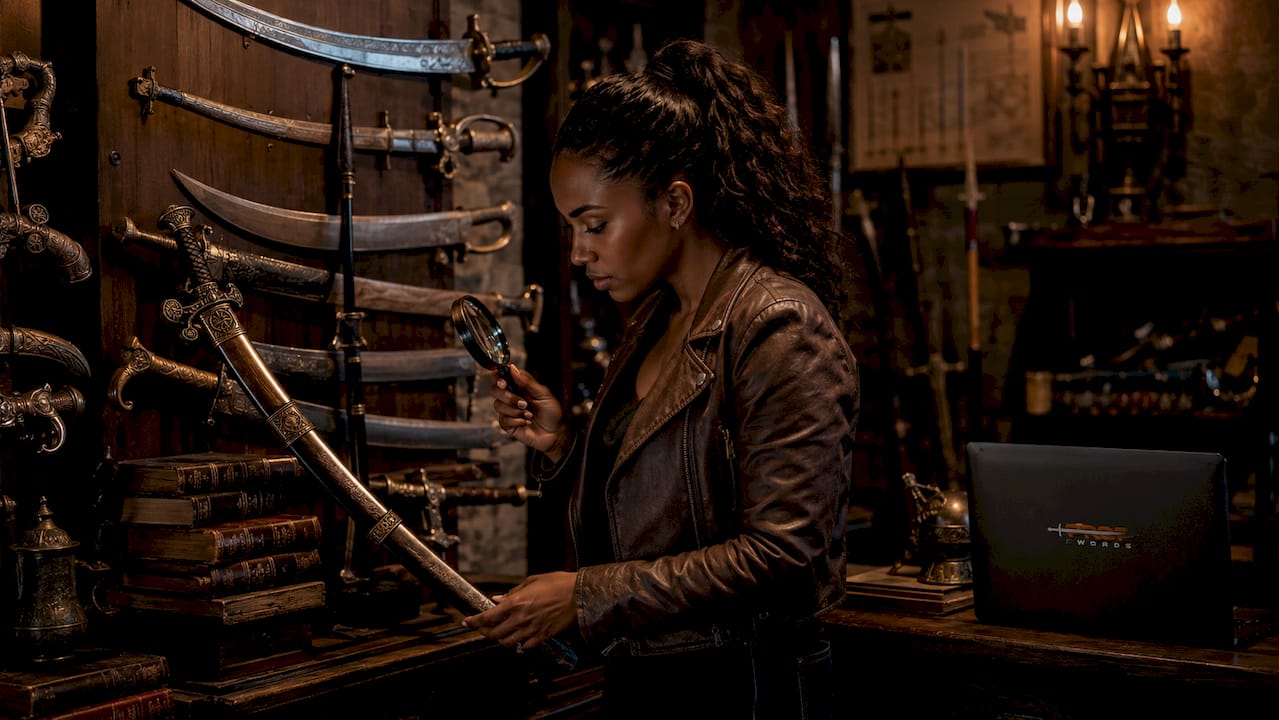
The cultural significance of swords runs deeper than most collectors initially expect. Studying provenance, period, and regional smith schools transforms casual interest into genuine historical literacy. You learn to read a blade the way a scholar reads a manuscript.
Key cultural benefits collectors report include:
- Civilizational context: Each sword type reflects the warfare, metallurgy, and social values of its origin culture.
- Provenance research: Tracing a blade’s ownership history connects you to specific historical events and figures.
- Preservation: Collectors who maintain and document swords help preserve artifacts that museums cannot always acquire.
- Cross-cultural exposure: A single collection can span Japanese, European, Middle Eastern, and South Asian traditions.
The Taisho era reshaped how Japanese swords are understood, shifting public perception from weapons to objects of art valued for grain pattern, temper line, and fittings. That shift is now the foundation of modern sword appreciation worldwide.
Pro Tip: Start your cultural research with a single tradition, such as Japanese or Viking, and build depth before expanding. Broad collections without deep knowledge produce less satisfaction than focused ones.
2. Aesthetic and craftsmanship appreciation
Sword collecting trains your eye in ways that carry over into broader appreciation of art and material culture. The hamon, the temper line visible on a Japanese blade after differential hardening, is one of the most technically demanding decorative effects in metalworking. No two hamon are identical. That uniqueness is the point.
Handling historically crafted swords provides a tactile connection to history that static museum displays cannot replicate. You feel the weight distribution, the geometry of the cross-section, and the texture of the surface finish. These details tell you exactly what the maker prioritized.
Collectors who study craftsmanship closely develop appreciation for:
- Differential hardening: The technique that creates the hamon and gives Japanese blades their legendary combination of hard edge and flexible spine.
- Grain patterns (hada): The folded steel surface texture that records the smith’s process.
- Fittings (koshirae): The tsuba, menuki, and habaki that turn a blade into a complete artistic object.
- Blade geometry: Fuller placement, cross-section shape, and taper all reflect functional and aesthetic choices.
“The greatest investment collectors make is not financial but in their own knowledge — learning smiths’ schools, blade characteristics, and authenticating techniques to avoid overpaying for forgeries.” — Tozando
Ritual maintenance deepens this appreciation further. Using uchiko powder and chōji oil to clean and protect a blade is both a preservation measure and a meditative practice. Many collectors describe the maintenance ritual as the most satisfying part of ownership.
3. Community and lifelong learning
The sword collector community is one of the most knowledge-rich hobbyist networks in the world. Collectors share expertise on smith schools, blade identification, period-accurate fittings, and authentication techniques across forums, dealer events, and international gatherings.
The All Japan Sword Traders Forum hosts more than 70 dealers and has cultivated a global collector community with decades of organized knowledge sharing. Some participants have contributed expertise for over 40 years. That depth of institutional knowledge is available to any collector willing to engage.
Here is how to build your knowledge through community:
- Join dedicated forums. Online communities focused on nihonto, European arms, or specific regional traditions offer peer review of acquisitions and authentication help.
- Attend dealer events. In-person events let you handle pieces, ask questions directly, and build relationships with reputable sellers.
- Study terminology. Learning the vocabulary of a tradition, such as Japanese blade classification terms, gives you the language to ask better questions and read expert literature.
- Commission from living smiths. Supporting traditional craftsmen through commissions helps preserve sword-making techniques that face extinction without active patronage.
- Document your collection. Writing up your own pieces forces clarity of knowledge and creates records that benefit future collectors.
Pro Tip: Certificates like NBTHK (Nihon Bijutsu Token Hozon Kyokai) add authenticity and value to Japanese swords. Always ask about documentation before purchasing any significant piece.
4. Personal enrichment beyond possession
Sword collecting shifts from acquisition to stewardship over time. The most experienced collectors describe their relationship with their pieces as one of custodianship rather than ownership. You are holding an object that existed before you and will exist after you.
The physical interaction with swords makes history legible in a way that reading about it cannot. When you hold a blade forged 400 years ago, you are engaging directly with the engineering constraints, material availability, and aesthetic values of that era. That experience sharpens historical thinking.
Personal enrichment benefits collectors consistently identify include:
- Mental engagement: Researching provenance, authenticating pieces, and learning smith schools keeps the mind active and focused.
- Meditative practice: Maintenance rituals create regular periods of focused, quiet attention that many collectors find restorative.
- Tactile history: Physical handling of authentic swords makes past civilizations concrete rather than abstract.
- Sense of legacy: Building a documented collection creates something meaningful to pass on.
Collectors who engage with history and aesthetics consistently make better decisions and report more satisfaction than those who treat swords purely as financial assets. The hobby rewards curiosity, not speculation.
5. Authentic antiques versus high-quality replicas
Sword collecting does not require a museum-grade budget. Two distinct approaches each offer genuine benefits, and many collectors pursue both.
Authentic antiques carry historical provenance, investment potential, and the irreplaceable quality of age. A blade with NBTHK certification and a documented ownership history is a primary historical source. The tradeoff is cost, legal complexity in some jurisdictions, and the responsibility of proper preservation.
High-quality replicas offer accessibility, display value, and the ability to engage with specific traditions or fictional universes without the financial and legal constraints of antiques. A well-made historical sword reproduction can accurately represent the geometry, weight, and aesthetic of a historical original. For collectors focused on anime, film, or fantasy traditions, replicas are the primary medium.
| Feature | Authentic antiques | High-quality replicas |
|---|---|---|
| Historical provenance | Yes, with documentation | No |
| Investment potential | High with certification | Low to moderate |
| Accessibility | Limited, high cost | Broad, affordable |
| Display and cosplay use | Restricted | Ideal |
| Craftsmanship study | Primary source | Accurate representation |
| Legal considerations | Varies by jurisdiction | Generally straightforward |
A well-curated collection of diverse swords tells stories from Viking to Nepalese cultures both visually and intellectually. Replicas make that breadth achievable for most collectors.
Pro Tip: When buying replicas for display, prioritize accurate geometry and finish quality over price. A replica that misrepresents the original’s proportions teaches you the wrong lessons about historical design.
Key takeaways
Sword collecting rewards collectors most when they invest in knowledge, community, and craftsmanship appreciation rather than treating pieces purely as financial assets.
| Point | Details |
|---|---|
| Cultural immersion | Studying provenance and regional traditions builds genuine historical literacy. |
| Craftsmanship study | Learning hamon, hada, and fittings transforms collecting into ongoing artistic education. |
| Community engagement | Forums and dealer events like the All Japan Sword Traders Forum provide decades of accessible expertise. |
| Stewardship mindset | Experienced collectors shift from acquisition to custodianship, finding deeper satisfaction. |
| Replicas expand access | High-quality replicas let collectors engage with any tradition or fictional universe affordably. |
Why I think most collectors start with the wrong question
Most people entering sword collecting ask: “What is this worth?” That is the least interesting question you can ask about a sword.
The right question is: “What does this tell me?” A blade’s geometry tells you what the maker thought a sword needed to do. The surface finish tells you what the culture valued aesthetically. The fittings tell you about the owner’s status and taste. None of that information lives in a price guide.
I have watched collectors spend years chasing financial appreciation and end up with expensive pieces they do not understand and cannot talk about intelligently. The collectors who get the most out of this hobby are the ones who treat every acquisition as a research project. They read. They ask questions at dealer events. They learn enough Japanese, German, or Arabic to understand the terminology of the tradition they are studying.
The meditative side of maintenance surprised me most. Sitting down with uchiko powder and chōji oil, working through the ritual slowly, you stop thinking about what the piece cost. You start thinking about the smith who made it and the hands it passed through. That shift in attention is the real value of this hobby.
My honest advice: ignore the investment angle entirely for your first five years. Focus on one tradition, build deep knowledge, and let the collection grow from genuine understanding. The financial dimension takes care of itself when you know what you are looking at.
— Muhammad
Propswords: quality replicas for every collector
Collectors at every level need access to well-made pieces that accurately represent the traditions they love. Propswords carries a broad selection of replica swords spanning anime, film, Viking, and historical categories, built for display, cosplay, and serious collection building.
Whether you are starting your first collection or adding a specific piece to an established one, the best replica swords for 2026 at Propswords are selected for accuracy, finish quality, and display value. The catalog includes pieces from Final Fantasy, Viking traditions, and historical European designs. Free shipping within the USA applies across the range. If you want to understand what makes a great replica before you buy, the benefits of replica swords guide on the Propswords blog covers exactly what to look for.
FAQ
What are the main benefits of collecting swords?
Sword collecting delivers cultural immersion, craftsmanship education, community engagement, and personal enrichment through meditative maintenance and historical connection. Collectors who study history and aesthetics consistently report greater satisfaction than those focused solely on financial returns.
Is sword collecting a good investment?
Authentic swords with proper documentation, such as NBTHK certificates, can hold or increase in value over time. Experts recommend prioritizing knowledge over speculation, since collectors who understand what they own make better purchasing decisions and avoid overpaying for forgeries.
What is the cultural significance of swords in collecting?
Swords are primary cultural artifacts that encode the warfare, metallurgy, social values, and aesthetic priorities of their origin civilizations. Collecting them creates a direct, tangible connection to historical cultures that books and museums cannot fully replicate.
Are replica swords worth collecting?
High-quality replicas offer accurate geometry, display value, and accessibility that authentic antiques cannot match at comparable price points. They are the primary medium for collectors focused on anime, film, fantasy, and historical traditions where original pieces are rare or legally restricted.
How do collectors build knowledge about swords?
Collectors build knowledge through dedicated forums, dealer events, study of smith schools and blade terminology, and hands-on handling of pieces. Engaging with organized communities like the All Japan Sword Traders Forum accelerates learning significantly.
Recommended