TL;DR:
- Regular maintenance of sword replicas involves cleaning, oiling, handling with gloves, and proper storage to prevent rust and scratches. Consistent routines, controlled environments, and cautious handling significantly extend the lifespan and appearance of both decorative and functional replicas. Proper care applies equally to all collection pieces, ensuring long-term preservation and display quality.
Sword replica maintenance is the practice of regularly cleaning, oiling, handling, and storing decorative or functional replicas to prevent rust, scratches, and material degradation. Whether you collect anime-inspired katanas, Viking longswords, or movie prop reproductions, the care principles are the same: protect the blade surface, control moisture, and minimize physical contact with bare hands. Neglect any one of those three, and a display piece worth hundreds of dollars can develop rust spots or finish damage within weeks. This guide covers the tools, routines, and storage methods that serious collectors use in 2026 to keep their collections in display-ready condition.
How to maintain sword replicas: tools and materials you need
The right materials make the difference between a safe cleaning session and an accidental scratch across a polished blade. Before you touch any replica, gather these supplies.
| Cleaning Material | Scratch Risk | Best Use Case |
|---|---|---|
| Microfiber cloth | Very low | Routine dusting and oil application |
| Cotton cloth or gloves | Low | Handling and light wiping |
| Nuguigami (Japanese wiping paper) | Very low | Traditional blade wiping, oil removal |
| Paper towel | Medium to high | Avoid on polished finishes |
| Abrasive pad or steel wool | Extreme | Never use on replicas |
For oil, the two collector-approved options are food-grade mineral oil and traditional choji oil. Choji oil is a light clove-based oil used in Japanese sword care for centuries. Mineral oil is widely available, odorless, and equally effective on stainless steel and carbon steel replicas. Both create a thin protective barrier against oxidation. WD-40 and motor oils are not substitutes. WD-40 is a water-displacing solvent, not a long-term protectant, and it can leave a residue that attracts dust and degrades handle wrappings over time.
Cotton gloves or lint-free cotton are mandatory when handling blades. Skin acids and oils from your fingertips etch into steel faster than most collectors expect, and those fingerprint marks become oxidation points within days in humid environments.
Pro Tip: Skip uchiko powder entirely for home maintenance. Abrasive powders like uchiko can micro-scratch delicate blade finishes and cloud visual clarity. Leave that step to professional polishers.
Step-by-step routine for cleaning and oiling sword replicas
A consistent cleaning routine is the single most effective sword replica care tip you can adopt. Frequency matters as much as technique. Here is the process that works for most collectors.
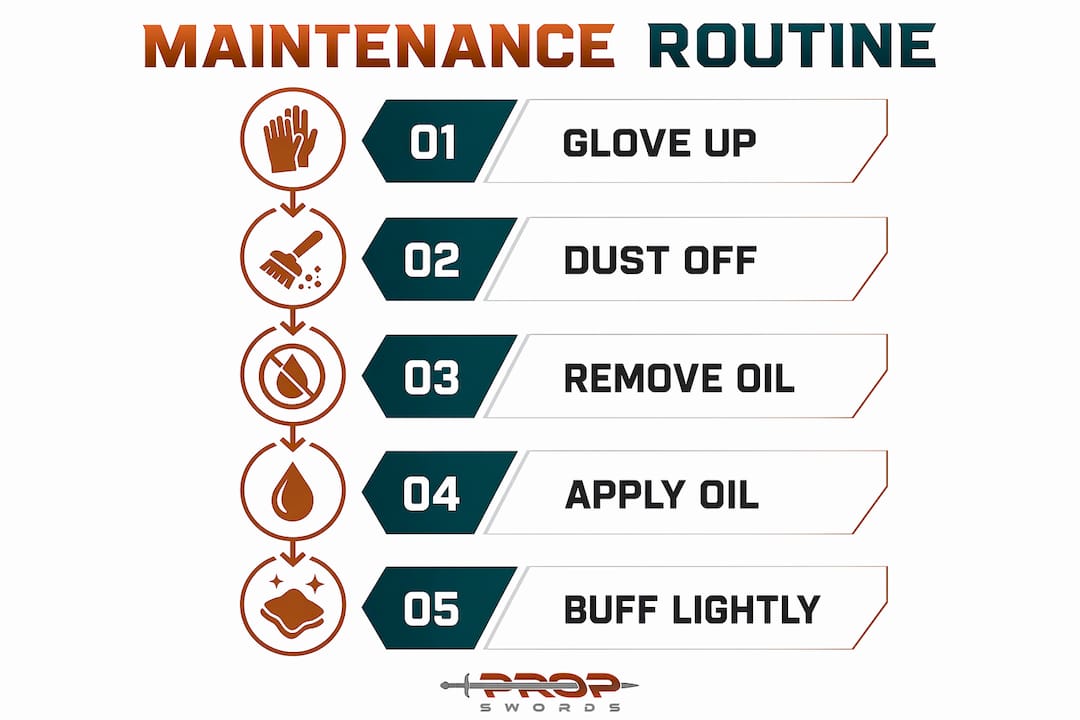
Step 1: Put on cotton gloves before you touch the blade. This protects the steel from skin oils during the entire process. If you do not have gloves, hold the blade through a folded cotton cloth.
Step 2: Remove dust and surface debris with a dry microfiber cloth. Wipe gently from the spine toward the edge, never across it. Soft lint-free microfiber or nuguigami reduces scratch risk compared to paper towels or rough fabric. Work in one direction along the blade length to avoid micro-scratches.
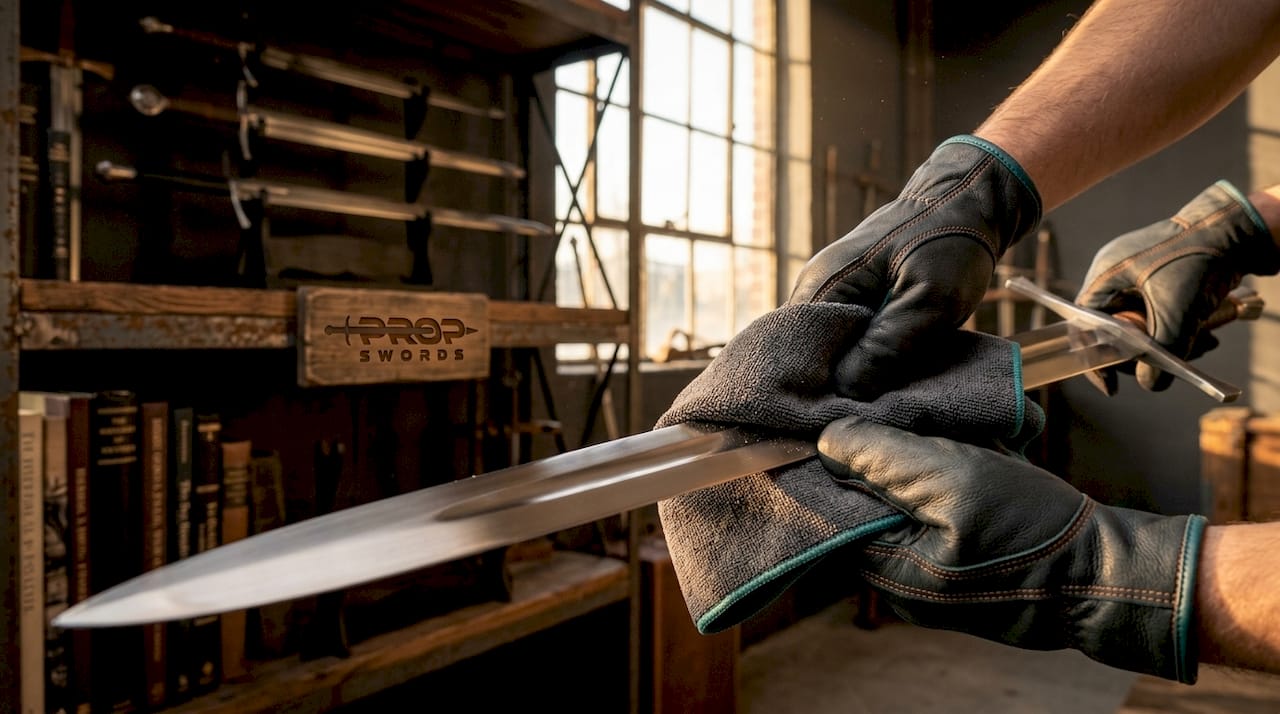
Step 3: Remove old oil with a clean section of your cloth or fresh nuguigami. Wipe the blade thoroughly to clear the previous oil coat. This step is where timing becomes critical. Once all oil is removed from the blade surface, the steel becomes highly susceptible to rust. Do not leave the blade bare for more than a few minutes.
Step 4: Apply a thin, even coat of choji oil or mineral oil. Place two or three drops on a clean cloth or oil paper, then wipe along the blade in smooth, overlapping strokes from base to tip. The coat should be barely visible. A heavy oil application does not protect better. It collects dust and can seep into handle wrappings, causing damage over time.
Step 5: Buff lightly with a dry section of cloth to remove excess oil. The blade should look lightly sheen, not wet or greasy.
For frequency, apply a thin coat of oil every two to three months under normal conditions. In humid climates or during summer months, increase that to once a month. Swords handled frequently for cosplay or photography need oiling after every session.
Pro Tip: Do not forget the handle fittings, guard (tsuba), and pommel. These metal components oxidize just as readily as the blade. A quick wipe with a lightly oiled cloth keeps them clean and prevents corrosion from spreading.
The most common mistakes collectors make are wiping too aggressively (which creates fine scratches), applying oil unevenly (which leaves dry spots), and ignoring the handle hardware entirely. Treat the full sword, not just the blade.
How to identify and prevent rust and scratches on replica blades
Rust on a sword replica starts as a faint orange or brown discoloration, often appearing first near the guard or at the tip where oil coverage is thinnest. If you catch it at this stage, you can address it without professional help. Left alone, surface rust pits the steel and permanently damages the finish.
The most common causes of rust on replica swords are:
- Bare-hand contact without gloves, which deposits skin acids directly onto the steel
- Humidity spikes from storing swords in garages, basements, or near exterior walls
- Incomplete oiling that leaves sections of the blade unprotected
- Temperature changes that cause condensation inside the scabbard or display case
That last point deserves attention. Condensation from rapid temperature changes collects moisture invisibly inside the saya or scabbard, promoting rust in areas you cannot see. If you transport a sword from a cold car to a warm room, remove it from the scabbard and wipe it down before returning it to storage.
“The critical nuance in sword care is timing: wiping off old oil exposes steel to oxidation immediately, so reapplying oil promptly is essential.”
For early rust spots, a small amount of mineral oil on a microfiber cloth, applied with gentle circular pressure, can lift light surface oxidation without scratching. For deeper rust or pitting, consult a professional restorer. Attempting to sand or grind rust off a replica finish will cause more damage than the rust itself.
Scratches are harder to reverse than rust. The best approach is prevention. Use the Propswords sword care guide to match your cleaning technique to your specific blade finish, since stainless steel, carbon steel, and chrome-plated replicas each respond differently to cleaning pressure.
Best ways to store sword replicas for long-term preservation
Storage is where most collectors lose ground. A perfectly maintained sword stored in the wrong environment will develop rust or warping within months.
The target environment for long-term sword storage is 40 to 60% relative humidity at a stable temperature. Fluctuations matter more than the absolute number. A room that swings between 50°F and 80°F daily creates more condensation risk than one that stays at a consistent 70°F.
Practical storage options for collectors include:
- Sword bags (bukuro): Breathable fabric bags that protect against dust while allowing air circulation. Better than plastic sleeves, which trap moisture.
- Paulownia wood boxes: Traditional Japanese storage boxes made from paulownia (kiri) wood, which naturally absorbs excess humidity. Ideal for high-value replicas.
- Wall-mounted display stands: Keep swords accessible and visible, but position them away from exterior walls, heating vents, and windows.
- Horizontal display racks: Distribute weight evenly along the blade, reducing stress on the tip over long periods.
Silica gel desiccant packs placed inside display cases or storage boxes maintain stable humidity. Replace them every three to six months. Spent silica gel that is no longer absorbing moisture provides no protection and gives a false sense of security.
One storage mistake that damages replicas quickly is sealing them in plastic without ventilation. Avoid storing carbon steel blades inside sealed plastic cases or leather sheaths long-term. Both trap moisture against the blade surface and accelerate corrosion.
Pro Tip: Rotate displayed swords every few months. Oil can pool at the lowest point of a blade stored at an angle, leaving the upper sections dry and exposed. Rotating also gives you a regular opportunity to inspect for early rust or finish changes.
For collectors who display multiple pieces together, the Propswords display guide covers safe rack configurations and spacing recommendations that prevent swords from contacting each other during display.
Key takeaways
Proper sword replica care requires consistent oiling, controlled storage humidity, and bare-hand avoidance to prevent rust, scratches, and long-term finish damage.
| Point | Details |
|---|---|
| Oil every 2 to 3 months | Apply choji oil or mineral oil on a schedule, more often in humid climates. |
| Always use gloves | Cotton gloves prevent skin acids from etching the steel and initiating oxidation. |
| Re-oil immediately after cleaning | Bare steel oxidizes fast; never leave a wiped blade unprotected for more than a few minutes. |
| Store at 40 to 60% humidity | Use silica gel packs and replace them every 3 to 6 months to maintain stable conditions. |
| Avoid sealed plastic and leather | Both trap moisture against the blade and accelerate corrosion in long-term storage. |
What I have learned from maintaining a diverse sword collection
The part of sword care that most guides skip is the gap between authentic Japanese maintenance methods and the actual materials used in modern replicas. Traditional nihonto care protocols were developed for hand-forged tamahagane steel. Many replicas use 440 stainless steel, chrome-plated zinc alloy, or decorative carbon steel with lacquer coatings. Those materials respond differently to the same care steps.
I have seen collectors damage chrome-plated replicas by applying choji oil too aggressively and then buffing with too much pressure, which strips the plating over time. For those pieces, a lighter touch with mineral oil and a barely-damp microfiber cloth produces better results. The oil still protects, but the reduced friction preserves the surface coating.
The other pattern I notice consistently is that collectors maintain their most prized pieces carefully and neglect the rest. That is the wrong approach. A lower-cost anime replica stored in a plastic bag in a closet will develop rust just as readily as an expensive hand-forged piece. The maintenance routine should apply to every sword in the collection, not just the display centerpieces.
My honest recommendation: build a simple maintenance kit and keep it near your collection. A small bottle of mineral oil, two microfiber cloths, a pair of cotton gloves, and a pack of silica gel. That kit costs less than $20 and handles 90% of what you need for routine care. The collectors who maintain the best-looking collections are not the ones with the most expensive products. They are the ones who clean and oil on a consistent schedule without overthinking it.
— Muhammad
Keep your collection in top condition with Propswords

Propswords carries a curated selection of replica swords built for collectors who take display quality seriously. Whether you collect anime katanas, Viking axes, or movie-accurate prop replicas, the right sword deserves the right care. The best replica swords of 2026 featured on Propswords are selected for material quality and finish durability, which makes them easier to maintain using the routines covered in this guide. Browse the full collection at Propswords, where free shipping within the USA is included on qualifying orders. For deeper maintenance guidance, the Propswords maintenance guide covers product-specific care instructions for every sword type in the catalog.
FAQ
How often should I oil my sword replica?
Apply a thin coat of choji oil or mineral oil every two to three months under normal conditions. Increase to monthly oiling in humid climates or after any handling session.
What is the best oil for sword replica maintenance?
Food-grade mineral oil and traditional choji oil are both safe and effective for most replica materials. Avoid WD-40, which is a short-term water displacer, not a protective coating.
Can I use a paper towel to clean my sword?
Paper towels carry a medium to high scratch risk on polished blade finishes. Use soft lint-free microfiber cloths or nuguigami wiping paper instead, as recommended for routine blade wiping.
How do I store swords to prevent rust?
Store swords at 40 to 60% relative humidity in a stable temperature environment. Use silica gel desiccants in display cases and avoid sealed plastic containers or leather sheaths for long-term storage.
What should I do if rust appears on my replica blade?
Apply a small amount of mineral oil to a microfiber cloth and rub the affected area gently in circular motions to lift light surface oxidation. For deeper rust or pitting, consult a professional restorer rather than attempting abrasive removal at home.
Recommended