TL;DR:
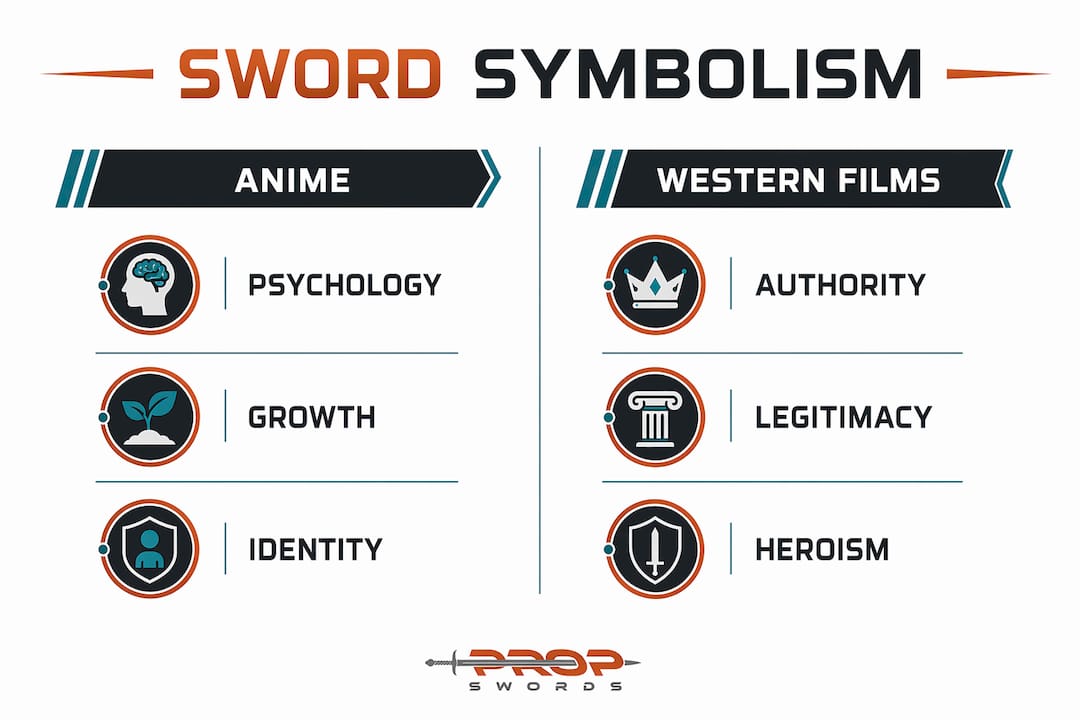
- Swords symbolize authority, identity, and moral complexity across cultures and centuries, making them powerful narrative tools.
- In anime, swords reflect characters’ inner selves through transformations and unique symbolic relationships, enriching storytelling depth.
- Western films often depict swords as symbols of legitimacy and tradition, emphasizing their cultural and mythic significance beyond mere weapons.
Swords have appeared in stories for as long as humans have told them, yet understanding why swords in pop culture resonate so powerfully requires looking past the blade itself. Scholars of narrative and cultural theory use the term weapon symbolism to describe how objects like swords carry meaning beyond their physical function, and the sword is arguably the richest example that field has. From feudal Japan to modern anime streaming queues, from Arthurian legend to the latest fantasy blockbuster, the sword keeps showing up. Not because creators lack imagination, but because the sword does something no other object quite manages: it externalizes inner life while carrying the full weight of history.
Key Takeaways
| Point | Details |
|---|---|
| Swords carry layered symbolism | Their meaning spans authority, identity, spirituality, and moral complexity across cultures and centuries. |
| Anime uses swords as character mirrors | In franchises like Bleach, a sword reflects its wielder’s inner self and evolves alongside personal growth. |
| Production realities shape sword lore | Even practical animation decisions, like sword storage in Adventure Time, generate lasting narrative symbolism. |
| Historical roots feed modern pop culture | Samurai spiritual traditions and medieval chivalric codes directly inform how swords function in films and anime today. |
| Swords drive collecting and fandom | Iconic swords become cultural artifacts that fans own, display, and use to express identity. |
Why swords in pop culture matter beyond the fight scene
The short explanation is that swords predate written language as symbols of authority. The more interesting explanation is what that history has done to our storytelling instincts.
The historical and spiritual foundations
Medieval European nobility tied sword ownership directly to legal personhood. A knight received his sword at dubbing, and surrendering it meant surrendering rank. The downward-pointing sword of Lady Justice signals enforcement power that is controlled and deliberate, not impulsive. Justice does not raise the sword in rage. The imagery was never about violence. It was always about authority operating within limits.
Japanese traditions go further. The tamahagane steel and Shinto rituals used in katana forging imbue each blade with spiritual significance, connecting the sword to the wielder’s inner world long before any manga writer picked up the idea. Swordsmiths were considered priests as much as craftsmen. The blade was not made to kill. It was made to embody the soul of its owner.
Here is what those two traditions share: the sword is a relational object. It reflects the person holding it.
- Authority and rank. Swords historically signified who had the right to govern, judge, or fight on behalf of a community.
- Honor and obligation. A warrior’s sword bound him to codes of conduct. Breaking those codes dishonored the blade as much as the person.
- Spiritual extension. In Japanese sword culture especially, the blade was considered an extension of a samurai’s spirit, not simply a tool.
- Ritual transformation. Sword ceremonies, from European knighthood to Japanese coming-of-age rituals, marked transitions in identity and social role.
Pro Tip: When analyzing sword imagery in any medium, ask what the sword is attached to socially and spiritually, not just physically. That question almost always unlocks the deeper meaning the creator intended.
“The sword does not merely cut. It decides.” This observation from Japanese sword philosophy captures exactly why the object never loses its narrative power. Decisions carry moral weight. So does every sword drawn in fiction.
Swords in anime as mirrors of the self
No medium has done more with sword symbolism in the last 30 years than anime. The reasons are structural as much as cultural.
Anime inherited the Japanese spiritual framework around swords and then pushed it further. The zanpakutō system in Bleach treats swords as literal manifestations of a Soul Reaper’s inner self. Zangetsu’s transformations are not power upgrades in the conventional shonen sense. They are Ichigo externalizing his fractured identity, from the crude cleaver of an overwhelmed teenager to the sleek paired blades of someone who has accepted all parts of himself. The sword changes because he changes.
That approach creates narrative possibilities that guns or fists simply cannot match. Consider what anime swords accomplish that other weapons cannot:
- Named identity. Zanpakutō have names and spirits. Knowing a sword’s name is an act of self-knowledge, not just power gain.
- Transformation as character arc. A sword’s evolved form signals where a character is in their psychological journey, giving viewers a visual shorthand for inner growth.
- Ethical consequence. Unlike a gun fired at range, a sword requires proximity and commitment. Every strike carries a moral choice the storyteller can interrogate.
- Worldbuilding currency. Swords can define entire social hierarchies, as Kagurabachi demonstrates by treating its seven enchanted swords as weapons akin to nuclear arms, objects so destructive they reshaped society and left generational trauma in their wake.
Then there is the stranger, more instructive example: Adventure Time’s Grass Sword. The weapon was created as a practical animation solution for how Finn could store a sword without a sheath visible on his body. A bracelet that became a blade. What started as a logistical fix evolved into one of the show’s most emotionally resonant symbols, eventually transforming into Fern, a character representing Finn’s path not taken. The sword’s storage problem became a plot engine that fans mythologized without ever knowing its origin.
Pro Tip: The Grass Sword example is worth studying for any screenwriter or game designer. Constraints force creative decisions that often carry more meaning than planned symbolism because they emerge from the story’s own internal logic.
This is the role of swords in anime at its most sophisticated. The swords function as evolving characters in their own right, each carrying a history that mirrors and shapes the people who wield them.
Swords in films and Western pop culture
Western cinema approaches sword symbolism from a different angle. Where anime often internalizes the sword as psychology, film tends to externalize it as myth.
The sword in the stone is not a weapon. It is a test of legitimacy. Excalibur does not make Arthur strong. It makes him chosen. That distinction matters enormously for understanding the importance of swords in films. Historical epics and fantasy films use the sword to answer a question the audience already feels: who deserves to lead?
| Film archetype | Sword role | What it communicates |
|---|---|---|
| The reluctant hero (The Lord of the Rings, Aragorn’s Andúril) | Reforged broken blade | Reclaimed identity and restored lineage |
| The corrupted power (Star Wars, red lightsaber) | Weapon of domination | Moral fall and severance from community |
| The mythic chosen (Excalibur) | Proof of divine sanction | Legitimacy beyond personal strength |
| The warrior code (The Last Samurai) | Devotion to dying tradition | Honor as resistance to modernization |
Notice that none of these examples use the sword primarily as a killing instrument. The cultural significance of swords in Western film lies almost entirely in what the blade represents about the person carrying it and the world they inhabit.
This is also why swords became such powerful collectibles. Owning a replica of Aragorn’s Andúril is not about wanting a weapon. It is about affiliating yourself with the values that sword represents: perseverance, redemption, and inherited duty. The reasons swords are collectible run straight back through fandom to mythology.
- Iconic swords carry narrative memory. Every time you see the object, you recall the story.
- Replica craftsmanship honors the source material’s cultural weight.
- Displaying a sword signals belonging to a community of people who share those values.
Why swords keep evolving in modern storytelling
The question of why swords are popular in contemporary media has a clear answer: they are versatile moral instruments. A gun ends a conflict. A sword negotiates one. The proximity required makes every duel a conversation about power, will, and ethics.
Modern creators are pushing sword symbolism toward more uncomfortable territory. Kagurabachi’s swords as catastrophic weapons represent a shift away from glorified heroism toward genuine ethical examination. The swords in that series are not prizes. They are burdens with body counts. That move reflects broader cultural conversations about what it means to hold power and what it costs.
Sword themes in fantasy literature and media are also shifting in how they handle access and identity. Who gets to hold the sword matters as much as what the sword does. Contemporary stories increasingly use sword ownership to interrogate class, lineage, and earned versus inherited authority.
Pro Tip: If you want to understand where a story’s moral center sits, look at who controls the most powerful sword and whether that character earned it or was simply born to it. That single detail usually reveals the author’s political and ethical worldview.
A few patterns worth watching in current storytelling:
- Swords as trauma objects. Characters haunted by what their blade has done, not just empowered by it.
- Swords that resist their wielders. Enchanted weapons with conflicting loyalties, forcing the hero to negotiate rather than dominate.
- The synthesis of samurai traditions with franchise mythology, preserving historical authenticity while creating entirely new symbolic systems.
My take on the sword’s enduring hold
I’ve spent years thinking about why certain objects become cultural anchors while others fade. Guns are more powerful, more modern, and more present in daily life than swords. Yet no one frames a hero’s moral awakening around a firearm the way storytellers frame it around a blade.
My read is that the sword uniquely holds two contradictory ideas at once: precision and commitment. You cannot use a sword from a distance. You cannot pretend the act is impersonal. That physical demand for presence and intention maps perfectly onto the questions stories care most about. Who are you? What do you stand for? What are you willing to do up close, looking the consequence in the eye?
What I find most compelling in current anime especially is the move toward swords that argue with their wielders. Zangetsu does not simply obey Ichigo. He challenges him. That dynamic models something genuinely useful beyond fan culture: the idea that the tools we choose to carry should hold us accountable as much as they serve us.
The sword is not a metaphor for strength. It is a metaphor for the obligation that comes with strength. The moment storytellers and audiences forget that distinction, the sword becomes just a prop. The best creators never forget it.
— Muhammad
Own a piece of the mythology with Propswords
Understanding sword symbolism is one thing. Holding a beautifully crafted replica that carries that history is another experience entirely.
Propswords specializes in high-quality replica swords drawn from the anime, film, and historical traditions explored throughout this article. Whether you are drawn to the spiritual weight of a katana-inspired blade, the iconic designs of beloved anime franchises, or the mythic authority of a cinematic sword, Propswords offers replicas built with the detail that collectors and cultural enthusiasts deserve. Browse the best replica swords for 2026 and find the blade that speaks to the stories you care about most. Free shipping within the USA, and every piece is crafted to display, gift, or carry to your next cosplay event.
FAQ
Why do swords appear so often in pop culture stories?
Swords function as moral and identity symbols in storytelling, not just weapons. Their requirement for proximity and commitment makes every drawn blade a statement about character, which is exactly what good narrative needs.
What is the role of swords in anime specifically?
Anime swords frequently serve as extensions of a character’s psychology. In Bleach, Zangetsu evolves with Ichigo’s identity, making the blade a visual record of inner growth and unresolved conflict.
How do historical swords in movies differ from anime portrayals?
Western cinema tends to use swords to establish mythic legitimacy and heroic lineage, while anime internalizes them as psychological mirrors. Both traditions draw on genuine historical sword culture but serve different narrative priorities.
Why are iconic swords such popular collectibles?
Collecting a replica sword means affiliating with the values and narrative that sword represents. The object carries cultural memory from its source story, which is what makes it meaningful beyond its physical form.
How is sword symbolism in media changing today?
Contemporary stories are shifting from swords as heroic trophies toward swords as ethical burdens. Kagurabachi’s treatment of its blades as society-altering destructive forces reflects a broader cultural reckoning with what power actually costs.
Recommended