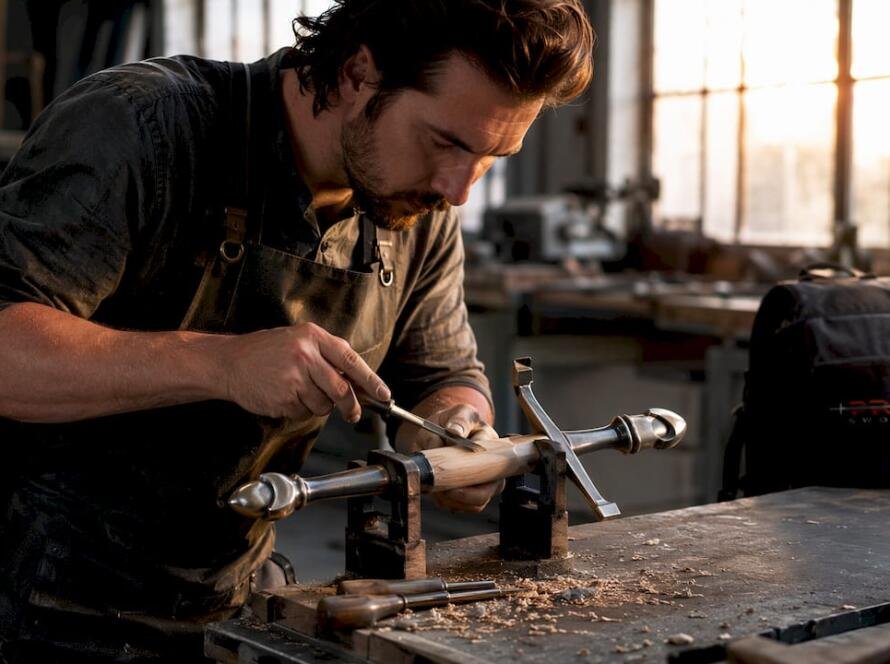
TL;DR:
- A longsword is characterized by a two-handed grip, a straight double-edged blade approximately 80 to 100 cm long, and overall length between 100 to 130 cm designed for cutting, thrusting, and grappling techniques. Its physical features and combat functions evolved over centuries, reflecting changes in armor and martial tactics, which are highlighted through typology and historical fencing systems. Understanding a longsword relies on its functional design, not just fixed measurements, emphasizing practical use in historical combat and martial traditions.
Few weapons carry as much misidentification as the longsword. Most people picture a single, definitive design, but what defines a longsword is actually a combination of physical characteristics, ergonomics, and intended combat function rather than one fixed template. The word gets used loosely across films, games, and collector catalogs, which creates real confusion for anyone trying to understand the genuine article. This guide cuts through the noise to give you a clear, historically grounded answer rooted in typology, technique, and the martial traditions that shaped the weapon.
Table of Contents
- Key takeaways
- What defines a longsword: core physical characteristics
- Longsword history and use: a 300-year arc
- Longsword combat techniques and why they matter
- Types of longswords and the Oakeshott typology
- My take on what actually defines a longsword
- Explore quality longsword replicas at Propswords
- FAQ
Key takeaways
| Point | Details |
|---|---|
| Longsword length is a range | A longsword typically measures 100 to 130 cm overall, not a single fixed length. |
| Two-handed grip is defining | The long grip, measuring 15 to 25 cm, is what separates a longsword from a one-handed arming sword. |
| Combat function shapes definition | Half-swording, thrusting, and grappling techniques are central to how longswords were designed and used. |
| Typology reveals real variety | Oakeshott classifications show longswords ranged from broad cutting blades to narrow thrust-optimized designs. |
| Terminology is genuinely fluid | Labels like bastard sword and hand-and-a-half overlap with longsword depending on grip and balance. |
What defines a longsword: core physical characteristics
A longsword is not just a long sword. The physical features work together as a system, and understanding each one is the fastest way to learn how to identify a longsword with confidence.
The cruciform hilt and two-handed grip are the starting point. The cross guard extends perpendicular to the blade, protecting the hands during close-range binding and grappling. The grip itself runs between 15 and 25 cm, long enough for two hands to seat firmly without crowding. That detail alone rules out most arming swords, which have grips designed for single-hand use.
The blade is double-edged and straight, built for both cutting and thrusting. This dual capability is not incidental. It reflects the sword’s design philosophy: a weapon you could swing into unarmored flesh and drive point-first into the gaps between armor plates. The blade typically runs 80 to 100 cm, and the full weapon lands in a weight range of 1.1 to 1.8 kg. Light enough to move fast. Heavy enough to carry real force.
Pro Tip: When comparing longswords to arming swords in person, put your second hand on the grip. If it crowds or slips off, you’re holding an arming sword. A genuine longsword grip seats both hands with room to spare.
Here is how the longsword stacks up against its closest relatives:
| Sword type | Overall length | Grip style | Primary use |
|---|---|---|---|
| Arming sword | 70 to 90 cm | One-handed | Close combat, paired with shield |
| Longsword | 100 to 130 cm | Two-handed | Open field, armored combat, duels |
| Bastard sword | 100 to 120 cm | One or two hands | Versatile, transitional designs |
| Greatsword | 140 to 180 cm | Two-handed only | Battlefield formations, pike countering |
The longsword sits squarely in the middle of this spectrum. It is large enough to deliver serious two-handed power but not so large that one-handed use becomes impossible in a pinch. That balance is precisely what separates longswords from bastard or two-handed swords in the eyes of collectors and practitioners alike.
The key longsword characteristics to look for:
- Blade length between 80 and 100 cm, double-edged and straight
- Cruciform guard extending at right angles to the blade
- Grip length of 15 to 25 cm designed for two hands
- Overall length of 100 to 130 cm
- Weight between 1.1 and 1.8 kg for balanced handling
Longsword history and use: a 300-year arc
The longsword did not appear overnight. It evolved steadily alongside changes in armor, battlefield tactics, and martial culture, reaching its peak prominence between the 14th and 16th centuries. That window aligns directly with the height of plate armor use across Europe.
Plate armor changed everything. Mail and gambeson could absorb edge strikes reasonably well, but full plate demanded a different approach. Sword designers responded by building blades capable of targeting joints, visors, and the underarm. The longsword became the primary tool of knights and men-at-arms who needed a weapon flexible enough to handle both armored and unarmored opponents.
Longswords served in war, duels, and judicial combat, making them far more than battlefield tools. A judicial combat, known as trial by combat, required a weapon capable of lethal precision under formal rules. The longsword fit that role perfectly. It gave fighters range, reach, and multiple attack options without the bulk of a greatsword.
Organized fencing schools formalized longsword use into recorded martial systems. The two most influential:
- Johannes Liechtenauer (German tradition): A 14th-century master whose cryptic verses formed the foundation of German longsword fencing. His system emphasized economy of motion, using the bind to create openings and drive opponents onto the defensive.
- Fiore dei Liberi (Italian tradition): A contemporary of Liechtenauer whose illustrated manuscript, the Flos Duellatorum, detailed longsword techniques in sequences covering everything from footwork to grappling at close range.
These fencing traditions define longswords through organized techniques rather than physical dimensions alone. That is a critical point. A sword becomes a longsword in part because of what you can do with it and what system of fighting it supports.
The weapon declined as firearms spread through European warfare in the 16th century. The rapier replaced it for civilian personal defense. But the longsword’s influence persisted through the HEMA movement and still shapes how martial artists train today.
Longsword combat techniques and why they matter
Understanding how longswords were used in combat does more than satisfy curiosity. It tells you exactly why the weapon was built the way it was. Every design feature connects to a fighting technique.
The four core actions in longsword combat:
- Cutting used the edges to attack with full body mechanics, driving hips and shoulders into the strike rather than relying on arm strength alone.
- Thrusting targeted armored weak spots at the armpits, visor, and back of the knee. Narrow blade profiles like the Oakeshott Type XV were built specifically to maximize this capability.
- Half-swording involved gripping the blade near the cross guard to deliver short, controlled thrusts in close-range armored grappling. The crossguard and blade geometry made this safe enough to execute under combat stress.
- Mordhau reversed the grip entirely, turning the crossguard into a striking implement against helmets and armor at very close range. Brutal, but historically documented.
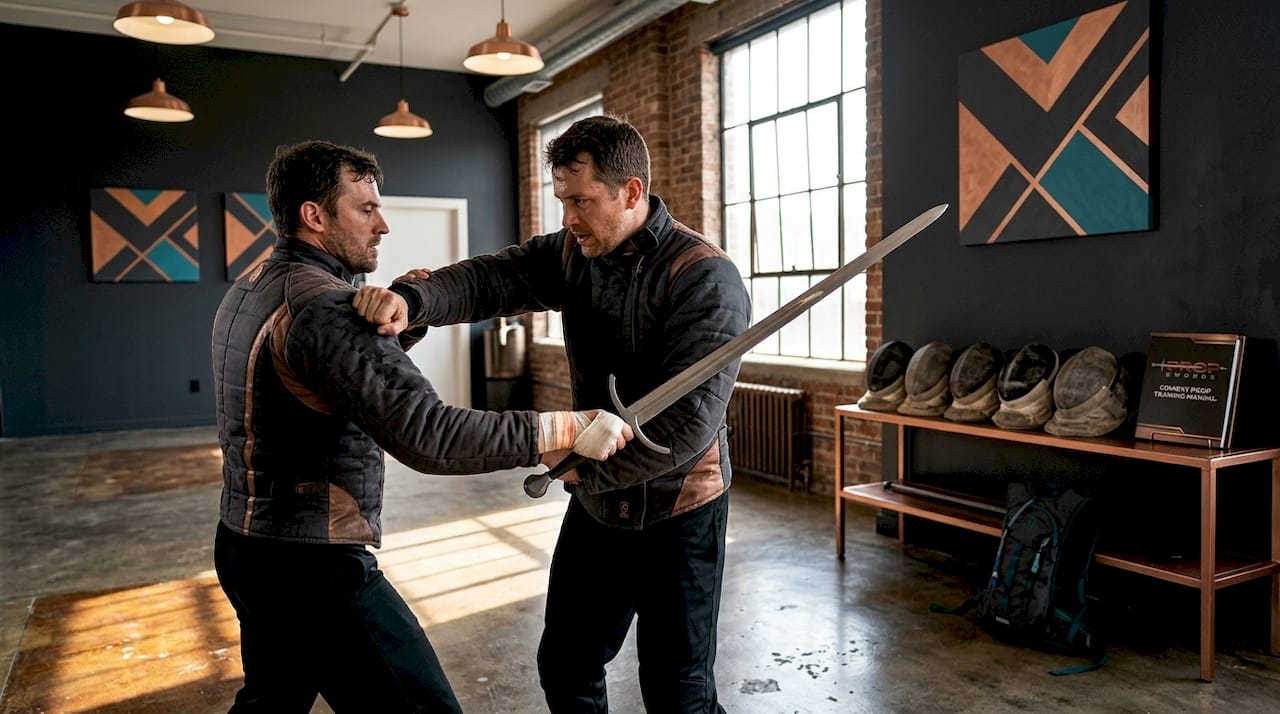
These techniques appear throughout the HEMA curriculum, which draws directly from German Liechtenauer and Italian Fiore traditions. Modern HEMA practitioners train these systems using steel trainers and structured sparring. The longsword is not treated as a relic. It is treated as a precision tool with a documented technical language.
Pro Tip: If you want to understand longsword design at a deeper level, watch HEMA longsword sparring footage before reading typology charts. Seeing mordhau and half-swording in motion explains blade geometry faster than any written description.
Longsword fencing integrated grappling, disarming, and wrestling alongside sword strikes. This is not what most people expect. The weapon was not used at distance exclusively. Masters like Liechtenauer specifically taught closing the distance to strip the sword from an opponent’s hands.
Types of longswords and the Oakeshott typology
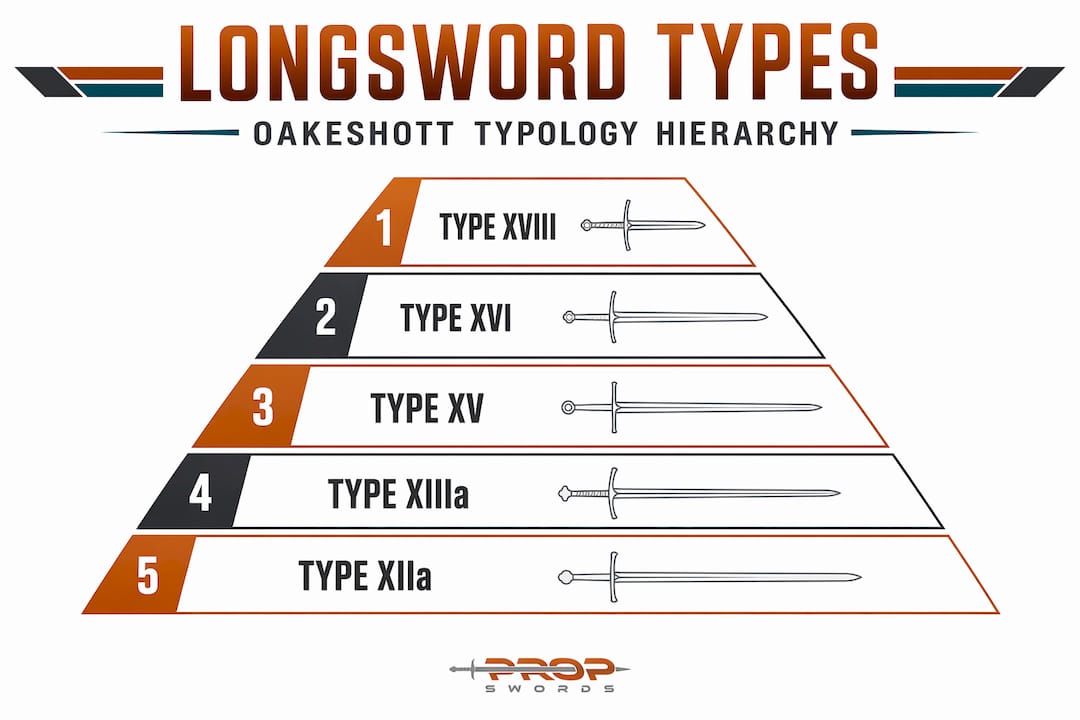
The Oakeshott typology, developed by sword scholar Ewart Oakeshott in the 20th century, remains the standard reference for categorizing medieval swords. Within the longsword family, several Oakeshott types span the 13th to 15th centuries, each suited to different combat priorities.
| Oakeshott type | Blade profile | Era | Combat focus |
|---|---|---|---|
| Type XIIa | Broad, tapering | 13th to 14th century | Cutting against mail |
| Type XIIIa | Wide, parallel edges | 13th to 14th century | Powerful cutting strokes |
| Type XVa | Narrow, stiff, diamond cross-section | 14th to 15th century | Thrusting through plate armor |
| Type XVIa | Moderately tapered, stiff | 14th to 15th century | Balanced cut and thrust |
| Type XVIIIa | Fuller with pronounced taper | 15th century | High performance in armored combat |
| Type XVIIIb | Long, slender, acute point | 15th century | Maximum thrusting reach |
The shift from Types XII and XIII to Types XV and XVIII mirrors the rise of full plate armor. As armor improved, sword designers responded with stiffer, more acutely pointed blades that could find gaps rather than trying to batter through steel. Broad cutting blades gave way to narrow, rigid thrusting designs.
For a collector learning how to identify a longsword within the typology system, blade cross-section is your best visual cue. Lenticular or fuller-groove blades are generally older and cut-oriented. Diamond or hexagonal cross-sections indicate a later, thrust-focused design. Combined with grip length measurements, these visual cues will place almost any example within the right type family. The Propswords guide to choosing a medieval sword breaks this down further for collectors making purchasing decisions.
My take on what actually defines a longsword
I’ve spent a considerable amount of time studying the HEMA community, historical manuscripts, and the collector world. What I’ve found is that the people most confused about longsword definitions are usually trying to solve the wrong problem. They’re searching for a fixed measurement table when what actually defines the weapon is a cluster of overlapping criteria.
The grip length matters. The blade geometry matters. But the real test, in my view, is functional. Pick the weapon up and ask: does this design support cutting, thrusting, half-swording, and grappling as a coherent system? If the answer is yes, you have a longsword. If the crossguard is vestigial, the grip is too short for two hands to seat firmly, or the blade is too stiff for any cutting application, you’re looking at something else regardless of what the label says.
I’ve also noticed that terminology overlaps more than most guides admit. The line between a bastard sword and a longsword is genuinely blurry in many historical examples. Rather than treating that as a flaw in the system, I think it reflects reality. Medieval weapon smiths weren’t filling out typology forms. They were responding to what fighters needed.
My honest advice to anyone getting into historical weaponry: learn one longsword fencing system before you buy anything. Even a few months of HEMA study will give you an intuitive sense of what a longsword should feel like in your hands. That intuition is worth more than any chart.
— Muhammad
Explore quality longsword replicas at Propswords
If this deep dive into longsword characteristics has you ready to add a historically inspired piece to your collection, Propswords has you covered.
Propswords specializes in high-quality replica swords built for display, cosplay, and serious collectors who care about detail. Whether you want a broad-bladed cutting type reminiscent of 13th-century designs or a slender thrust-optimized profile from the height of plate armor, the best replica swords for 2026 selection covers the range. Free shipping within the USA makes it easy to get your hands on a piece worth displaying. If you plan to use your replica beyond display purposes, the cosplay sword preparation guide walks through safe handling and presentation steps in detail. Use what you’ve learned here to choose with confidence.
FAQ
What is a longsword, exactly?
A longsword is a European sword with a double-edged straight blade, cruciform hilt, and a grip long enough for two-handed use, typically measuring 100 to 130 cm overall and weighing between 1.1 and 1.8 kg.
How do I identify a longsword vs. a broadsword?
The longsword has a grip sized for two hands and a straight, double-edged blade built for both cutting and thrusting, while the term broadsword historically refers to a wider, single-handed cutting blade. If the grip seats two hands firmly and the blade tapers to a functional point, you’re most likely looking at a longsword.
What separates a longsword from a bastard sword?
The distinction is primarily about grip length and balance. A bastard sword is often designed to be usable one or two handed depending on context, while a longsword is built primarily for consistent two-handed use with a grip of 15 to 25 cm.
What are the main types of longswords?
Using the Oakeshott typology, longswords range from broad cutting types like XIIa and XIIIa through thrust-optimized narrow blades like XVa and XVIIIb, spanning from the 13th to 15th centuries and reflecting changes in armor technology over that period.
What fighting techniques define how a longsword was used?
Longsword combat included cutting, thrusting to armored weak points, half-swording for close-range control, and mordhau strikes using the crossguard as a weapon. These techniques appear across HEMA systems rooted in the Liechtenauer and Fiore traditions.
Recommended