TL;DR:
- A quality replica sword demonstrates coherent excellence in materials, craftsmanship, and assembly, ensuring durability and authenticity. Buyers should request detailed quality control photos, verify dimensions, and assess assembly integrity before purchase. The highest standard, the 1:1 replica, matches original specifications through rigorous testing and verified documentation.
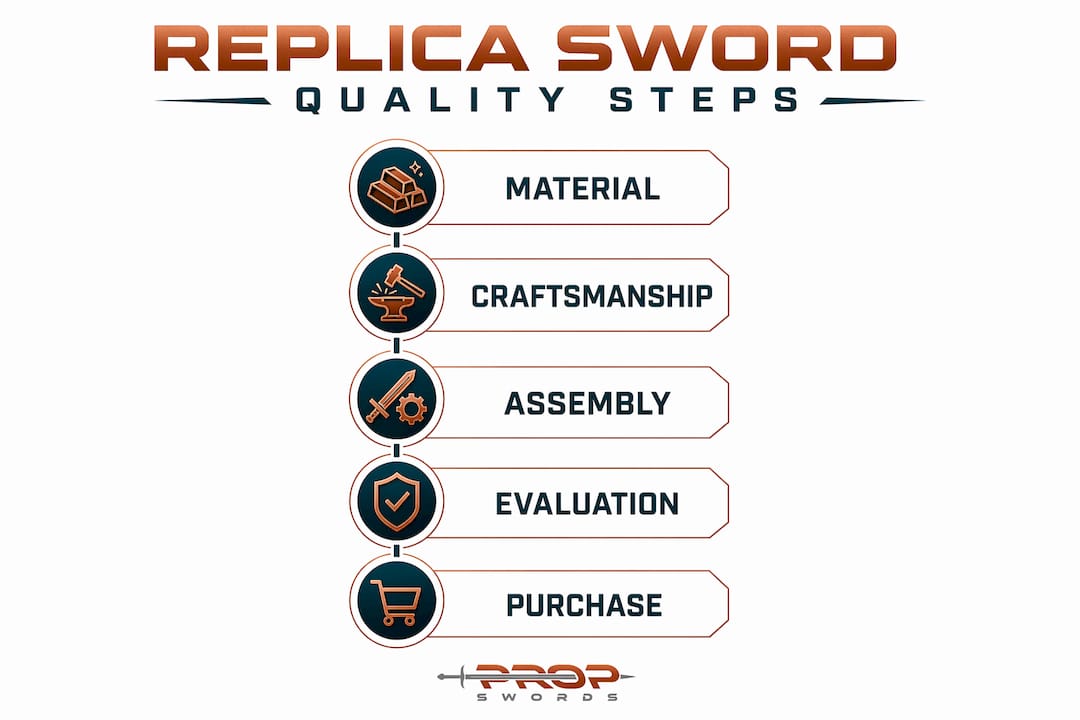
A quality replica is defined by the coherent integration of authentic materials, precise craftsmanship, and disciplined assembly that faithfully reproduces the original weapon’s look, weight, and feel. For collectors, cosplayers, and display enthusiasts, understanding what makes a quality replica separates a piece that holds its value and visual impact from one that falls apart after a season on the shelf. The industry term for the highest standard is “1:1 replica,” meaning every dimension, material, and finish matches the original specification. This guide breaks down every factor that determines replica sword quality, from blade steel to final assembly checks.
What materials define high-quality replica swords?
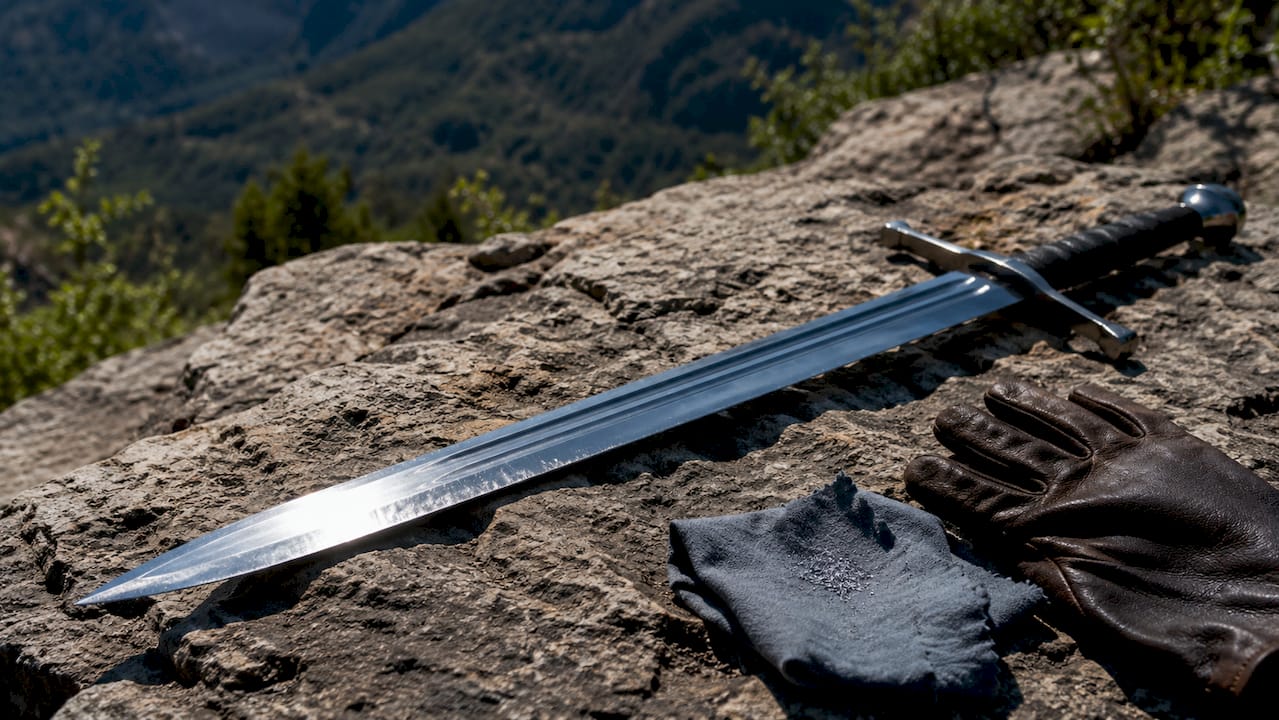
The blade is the first place to evaluate material quality in any replica sword. High-grade replicas use carbon steel or stainless steel alloys that balance visual authenticity with structural durability. Carbon steel, particularly 1045 or 1060 grade, delivers the gray sheen and weight distribution of historical originals. Stainless steel works well for display pieces where corrosion resistance matters more than flex. The materials used in replica swords directly determine how convincingly the blade mimics its source and how long it survives handling.
Handle materials carry equal weight in the overall quality equation. Authentic replicas use hardwood cores wrapped in genuine leather, ray skin (same), or tightly wound cord. The grip must feel solid under pressure, not hollow or plasticky. Metal fittings, including the guard (tsuba on Japanese swords), pommel, and collar, should be cast or machined from zinc alloy, brass, or steel. Cheap replicas substitute lightweight aluminum or plastic for these components, and the difference is immediately obvious when you hold the piece.
Hardware details are where many replicas fail. Rivets, pins, and blade retention screws must sit flush and feel immovable. High-fidelity replicas require hardware that matches original luxury standards in weight and finish. Loose or rattling fittings signal a cost-cutting decision that will worsen over time.
Key material checkpoints to evaluate before buying:
- Blade: Carbon steel or stainless steel with visible grain or polish consistent with the original
- Handle core: Solid wood, not hollow plastic
- Wrap: Genuine leather, ray skin, or tightly bound cord with no fraying at the edges
- Guard and pommel: Heavy cast metal, not lightweight aluminum or resin
- Fittings: Flush rivets and pins with no visible gaps or wobble
Pro Tip: Run your thumb along the blade spine and handle fittings. Solid materials feel dense and cool to the touch. Hollow or resin components feel light and slightly warm, even at room temperature.
What craftsmanship features indicate a quality replica?
Craftsmanship is the visible record of every decision made during production. Consistent stitch length, solid heavy hardware, and crisp engravings are the primary markers that separate premium replicas from lower-tier versions. For sword replicas, this translates directly to binding consistency on the handle, engraving depth on the guard, and edge geometry along the blade.
Symmetry is the most reliable single indicator of craftsmanship discipline. A quality blade has a center line that runs perfectly true from tip to tang. The guard sits perpendicular to the blade without any visible tilt. The pommel screws down flush with no gap between it and the handle. When any of these elements are off by even a few millimeters, the entire piece looks wrong, even to untrained eyes.
Engraving and surface detailing reveal how much time the manufacturer invested in finishing. Deep, clean engravings on guards and pommels require proper tooling and controlled pressure. Shallow or uneven engravings indicate rushed production. The same logic applies to any etching on the blade itself, such as the fuller groove running along a Viking sword or the hi on a katana. These features must be consistent in depth and width from one end to the other.
Common craftsmanship flaws that indicate low quality:
- Uneven or asymmetrical blade geometry when viewed from the tip
- Sloppy or inconsistent handle binding with visible gaps or loose ends
- Shallow engravings that look stamped rather than cut
- Visible weld lines or seams on cast metal components
- Misaligned guard that tilts rather than sitting square to the blade
Pro Tip: Photograph the blade from directly above the tip, looking straight down the spine. Any twist or asymmetry in the blade geometry becomes immediately visible from this angle, even in a product photo.
The sword craftsmanship standards that serious collectors expect are not arbitrary. They reflect the same precision standards applied to original historical weapons, where structural integrity and visual accuracy were inseparable.
How does assembly discipline impact replica sword quality?
Assembly is where good materials and skilled craftsmanship either come together or fall apart. Internal reinforcements and assembly discipline prevent structural failure in replicas that otherwise look convincing at first glance. A blade that wobbles in the handle, a guard that shifts under light pressure, or a pommel that unscrews during handling all trace back to assembly failures, not material failures.
The tang is the internal extension of the blade that runs through the handle. A full tang, meaning the steel extends the full length of the handle, is the gold standard for structural integrity. Partial tangs are acceptable for display-only pieces but will loosen over time. Proper assembly means the tang fits the handle channel precisely, with no lateral movement when the piece is gripped firmly.
Visible flaws like glue overflow reveal poor quality control during assembly. These small errors compound quickly into structural problems. A bead of dried adhesive at the guard joint means the fit was not tight enough to hold without glue, which means the tolerances were wrong from the start.
Assembly quality checks every buyer should perform:
- Grip the handle firmly and apply lateral pressure to the blade. There should be zero movement at the guard joint.
- Rotate the pommel by hand. It should be fixed and require a tool to remove, not finger pressure.
- Inspect the guard-to-blade junction under direct light. No glue residue, no gaps, no misalignment.
- Hold the sword horizontally and sight down the blade from the pommel end. The blade should track straight without any visible curve or twist.
- Check all rivets and pins by pressing them with a fingernail. They should be completely flush with no give.
How can buyers identify quality replicas before purchase?
Buying a replica sword online requires a systematic evaluation process, especially when you cannot handle the piece in person. Coherence across all components is the most reliable marker of premium replica quality. No single feature tells the whole story. The blade, handle, fittings, and finish must all read at the same quality level.
Request quality control (QC) photos before committing to a purchase. These are close-up images of the guard joint, handle binding, blade spine, and pommel. A seller who provides detailed QC photos without hesitation is demonstrating confidence in their product. A seller who deflects or offers only marketing images is a warning sign.
Comparing replica dimensions against documented originals is another reliable method. For anime or movie swords, production design documents and prop specifications are often publicly available. For historical replicas, museum catalog dimensions provide a reference. The historical replica buying guide from Propswords covers this comparison process in detail for collectors working with documented originals.
| Evaluation Method | What It Reveals |
|---|---|
| QC photo review | Assembly quality, glue lines, binding consistency |
| Dimension comparison | Accuracy to original design specifications |
| Seller reputation check | Consistency of quality control across orders |
| Handle pressure test | Tang fit and guard joint integrity |
| Surface inspection under light | Engraving depth, polish consistency, weld lines |
Seller transparency is a quality signal in itself. Established sellers with documented buyer reviews, clear return policies, and willingness to share pre-shipment photos operate at a different standard than anonymous listings with only stock photography.
What separates premium 1:1 replicas from standard ones?
The replica sword market uses a grading system that most buyers encounter without fully understanding. Premium 1:1 tier replicas use factory-spec materials and exact dimensions, costing 50–100% more than AAA-grade replicas. That price difference reflects real engineering investment, not just marketing positioning.
Standard replicas prioritize visual similarity at a distance. AAA-grade replicas improve material quality and finishing but may still use substitute alloys or simplified construction. True 1:1 replicas match the original in every measurable dimension, use equivalent or identical materials, and undergo rigorous QC checks covering every component before shipping. The difference becomes obvious when you place a 1:1 replica next to a standard version of the same sword.
| Grade | Materials | Finishing | Price Range | Best For |
|---|---|---|---|---|
| Standard | Mixed alloys, synthetic wrap | Basic polish, shallow engravings | Budget | Casual display |
| AAA | Improved steel, leather wrap | Clean finish, consistent binding | Mid-range | Active cosplay |
| 1:1 | Factory-spec steel, authentic materials | Deep engravings, full QC protocol | Premium | Serious collecting |
The 1:1 label is not self-certifying. Marketing materials frequently apply it to products that do not meet the standard. The only way to verify a 1:1 claim is through documented QC photos, dimension verification, and seller track record. Propswords provides detailed product specifications and authentication guidance to help buyers verify claims before purchase.
Key takeaways
A quality replica sword requires coherent excellence across materials, craftsmanship, and assembly, with no single component carrying the full weight of quality.
| Point | Details |
|---|---|
| Material selection drives durability | Carbon steel blades and solid wood handles outperform alloy substitutes in both feel and longevity. |
| Craftsmanship shows in symmetry | Blade geometry, guard alignment, and engraving depth are the fastest visual indicators of production quality. |
| Assembly determines structural life | Full tang construction and zero-gap fittings prevent the loosening and wobble that degrade replicas over time. |
| QC photos are non-negotiable | Request close-up pre-shipment images of the guard joint, binding, and blade spine before every purchase. |
| Grade labels require verification | The 1:1 designation costs 50–100% more than AAA grade and must be confirmed through specs and seller reputation. |
The part most buyers skip until it’s too late
After years of evaluating replica swords, the pattern I see most often is buyers spending all their attention on the blade and almost none on the handle assembly. The blade is the showpiece. The handle is the structure. A blade that looks perfect mounted on a handle with a loose tang and a guard that shifts under pressure is not a quality replica. It is a display prop waiting to fail.
The other mistake I see constantly is treating grade labels as guarantees. The terms “1:1” and “AAA” are marketing categories, not certified standards. I have handled pieces labeled 1:1 that were clearly AAA at best, and AAA pieces that outperformed their grade in every measurable way. The label tells you the seller’s claim. The QC photos, the weight in your hand, and the tightness of every joint tell you the truth.
My honest advice: before you buy any replica sword, ask for a photo of the guard joint from directly above, a photo of the pommel from the side, and a photo of the handle binding at the top and bottom. If the seller provides all three without hesitation, you are dealing with someone who knows their product. If they push back or offer only catalog images, move on. The authentication techniques that apply to rare collectibles apply here too. Verification is not distrust. It is due diligence.
The replicas that hold their value and their structure over years are always the ones where every component reads at the same quality level. Not one standout feature surrounded by compromises. Consistent excellence from tip to pommel.
— Muhammad
Explore the best replica swords at Propswords
Propswords curates replica swords built to the standards this guide describes, with detailed product specifications, material callouts, and quality photography for every piece.
The top 4 best replica swords for 2026 list covers the highest-rated options across anime, movie, Viking, and historical categories, with notes on materials, grade, and display suitability. Each listing includes the kind of component-level detail that lets you evaluate quality before you buy. Whether you are building a display collection or sourcing a cosplay piece that holds up under use, Propswords gives you the information to choose with confidence.
FAQ
What makes a quality replica sword?
A quality replica sword combines the right blade steel, authentic handle materials, precise craftsmanship, and disciplined assembly into one coherent piece. No single feature defines quality. Every component must perform at the same standard.
How do i identify quality replicas before buying online?
Request close-up QC photos of the guard joint, handle binding, and blade spine. Compare listed dimensions against documented originals and check the seller’s track record with verified buyer reviews.
What is the difference between AAA and 1:1 replica grades?
AAA replicas improve on standard quality with better materials and finishing. True 1:1 replicas use factory-spec materials and exact original dimensions, typically costing 50–100% more than AAA-grade versions.
What blade material should a quality replica sword use?
Carbon steel grades such as 1045 or 1060 are the standard for quality replica swords. They deliver authentic weight, visual appearance, and structural durability. Stainless steel is acceptable for display-only pieces where corrosion resistance is the priority.
How can i test assembly quality on a replica sword?
Grip the handle firmly and apply lateral pressure to the blade. Zero movement at the guard joint indicates solid assembly. Also check that the pommel requires a tool to remove and that all rivets sit completely flush with no give.
Recommended