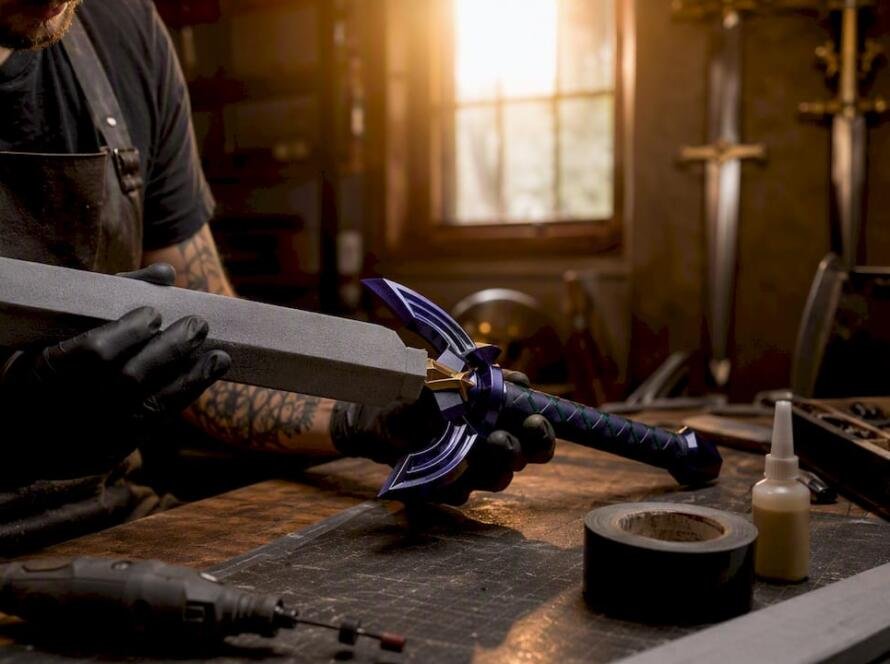
Replica and prop collectible knife types fall into five main categories: fantasy and movie/anime replicas, historical reproductions, karambit and tactical-style props, throwing-style non-sharp props, and ornamental folding or dirk-style pieces. Pick by primary use first: display pieces can prioritize realism and finish; wearable cosplay props need lightweight materials that pass convention inspection; gifts work best as ornamental folding or dirk-style blades that look impressive without raising safety concerns. Propswords carries options across all five, with scale photos and material specs on every product page. Convention policies from BayCon require inspection and lightweight, non-hazardous materials, and the Royal Armouries recommends stable, low-light display environments for long-term care.
Key Takeaways
Replica prop knives divide cleanly into five categories, and your primary use (display, cosplay, or gift) determines which material and type to buy before anything else.
| Point | Details |
|---|---|
| Five main categories | Fantasy/anime replicas, historical reproductions, karambit props, throwing-style props, and ornamental folding pieces cover the full range. |
| Use case drives the choice | Display props can prioritize realism; cosplay props must be lightweight and convention-safe; gifts work best as ornamental pieces. |
| Convention safety is non-negotiable | Check the event’s weapons policy, present for inspection, and accept peace-bonding (zip ties) before carrying any prop on the floor. |
| Care extends prop life | Avoid direct sunlight, skip leather sheath storage, and use Renaissance Wax for mixed-material pieces to prevent finish degradation. |
| Propswords for trusted replicas | Propswords lists material specs, scale photos, and peace-bonding notes on every product page for display, cosplay, and gift buyers. |
Table of Contents
- What are the main collectible prop knife types?
- How do materials affect realism, weight, and safety?
- What are the convention and cosplay safety rules you need to know?
- How do you choose the right replica knife before buying?
- How do you care for and display replica knives?
- What customizations are safe and which ones to avoid?
- Why Propswords focuses on replica prop knives
- Propswords has the replica knife your collection is missing
- Sources
- FAQ
What are the main collectible prop knife types?
Each category below serves a different collector. The “best for” label is the fastest way to match a type to your situation.
-
Fantasy and movie/anime replicas. Highly detailed painted finishes, decorative hilts, and screen-accurate proportions. Think Demon Slayer Nichirin blades or fantasy daggers from RPG settings. Best for: display and photo-focused cosplay. Finish quality varies widely; expect more detail at higher price points. Anime replica examples show how much color fidelity and hilt work differ between tiers.
-
Historical reproductions. Replicas of period daggers, dirks, Scottish sgian-dubhs, and medieval short blades. Usually display-only, with decorative rather than functional edges. Best for: historically themed collections and shelf display. Finish ranges from raw metal-look resin to decorative plated metal.
-
Karambit and tactical-style props. Curved, aggressive silhouette that reads as a weapon at a glance. Lightweight foam or rubber versions work for wearable cosplay; heavier resin or blunt-metal versions are display pieces. Best for: cosplay or display, with venue legality checked in advance.
-
Throwing-style non-sharp props. Balanced but fully blunt, designed for staged performances or decorative sets. Usually resin or dense foam. Best for: display sets and theatrical use.
-
Ornamental folding and dirk-style pieces. Compact, gift-friendly, and often the safest option to hand someone unfamiliar with prop etiquette. Best for: gifts and small display collections.
Pro Tip: When buying for cosplay, filter first by material (foam or rubber), then by scale. A prop that looks right in photos but weighs two pounds will exhaust you by hour three of a convention.
How do materials affect realism, weight, and safety?
Material choice is the single biggest decision after picking a category. It determines how the prop looks in photos, how it feels to carry, and whether it clears convention inspection.
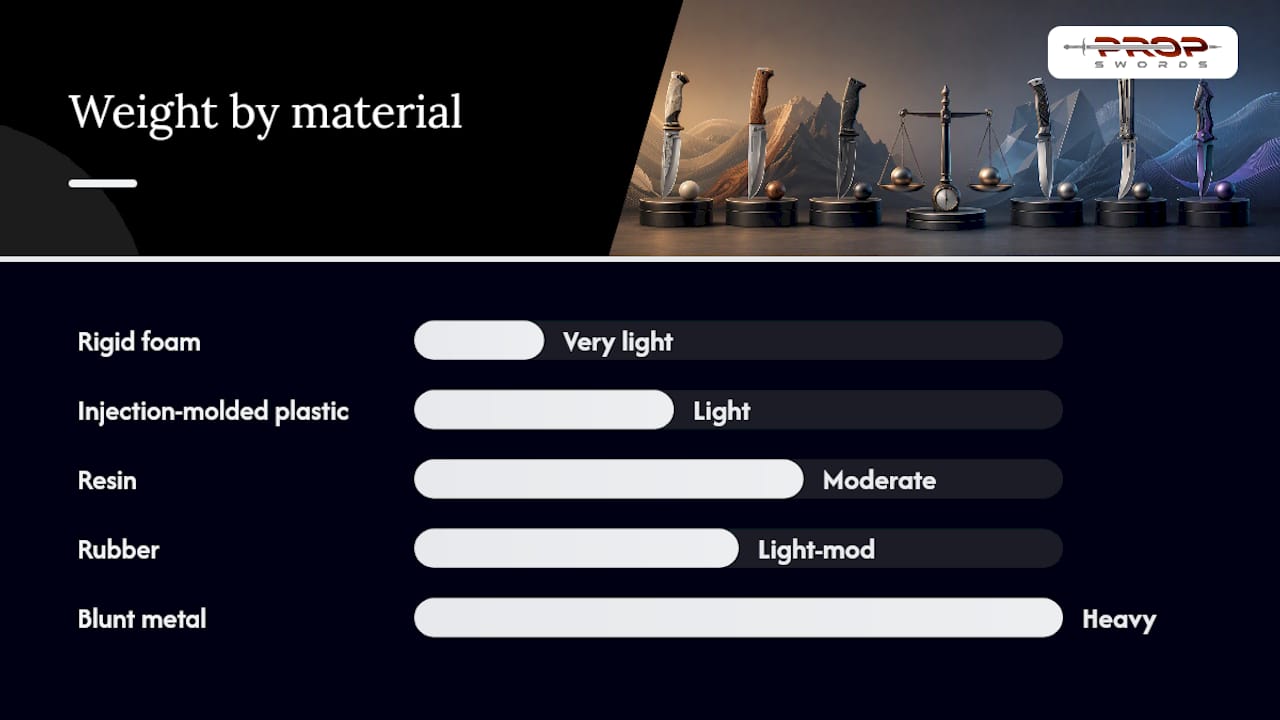
| Material | Realism | Safety | Weight | Maintenance |
|---|---|---|---|---|
| Rigid foam | Medium | High | Very light | Dust regularly; avoid heat |
| Injection-molded plastic | Medium-high | High | Light | Wipe clean; UV-resistant coatings help |
| Resin | High | Medium | Moderate | Avoid drops; touch up paint chips |
| Rubber | Low-medium | Very high | Light-moderate | Minimal; check for cracking over time |
| Blunt metal (non-sharp) | Very high | Low-medium | Heavy | Rust prevention; not ideal for wearable cosplay |
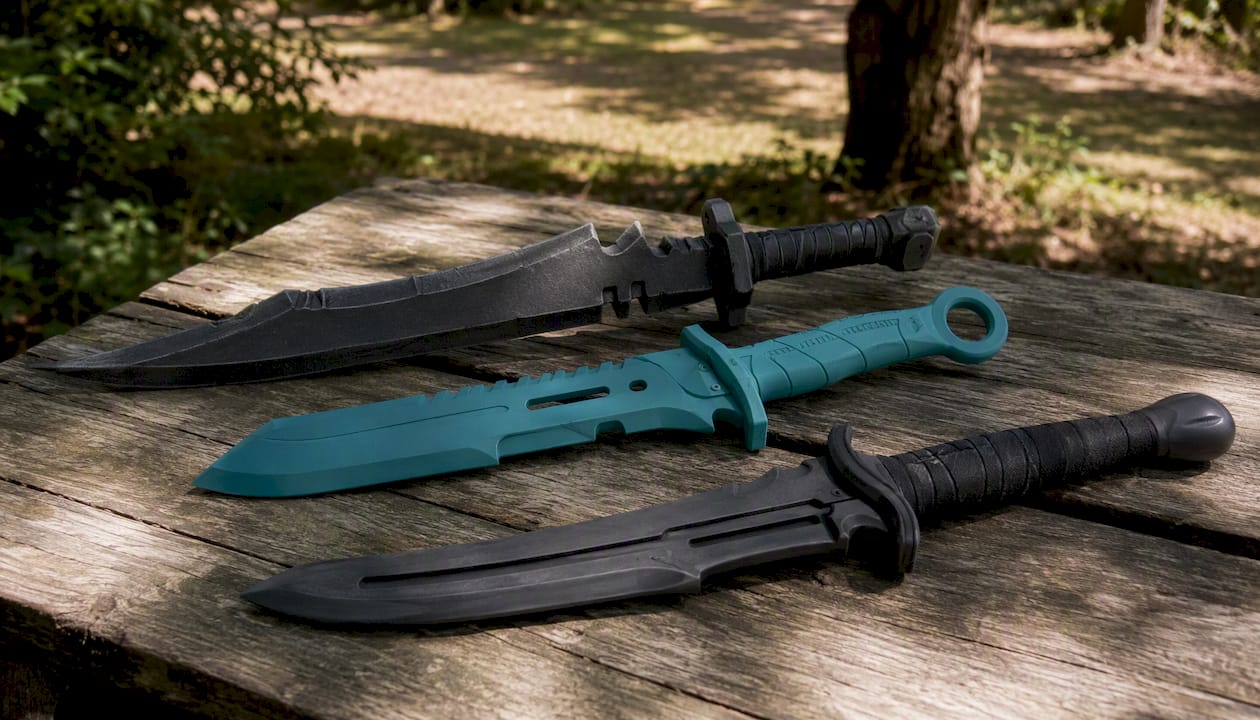
Foam and resin props often have an internal PVC or wooden core for rigidity. That core adds durability but also a few ounces, which matters when you are wearing the prop for hours. Blunt metal props look the most realistic but are the heaviest and the most likely to be flagged at conventions. New York Comic Con documents that metal-crafted items may be prohibited on the show floor regardless of whether the edge is sharp.
Pro Tip: Check the product page for a photo showing the prop next to a human hand. A scale reference photo tells you more about actual size than any listed measurement.
What are the convention and cosplay safety rules you need to know?
ISFiC’s weapons policy puts it plainly: convention security treats realistic-looking props as potential threats. A prop indistinguishable from a real weapon can get you removed from an event, even if it is made of foam.
Common rules across major conventions:
- Props must be inspected and approved onsite before you carry them on the floor.
- Lightweight, non-hazardous materials (foam, plastic, rubber) are the baseline requirement per BayCon’s cosplay weapons policy.
- No sharp edges, period. Blunt metal blades may still be prohibited.
- Indiana Comic Con explicitly bans “live steel”, meaning any bladed article, sharp or blunt, on the show floor.
- Items purchased at the show that would otherwise be banned must stay in their original packaging inside the venue; some shows will ship them to you after the event per New York Comic Con’s prop rules.
Step-by-step convention prep:
- Check the specific event’s weapons policy page before you pack anything.
- Transport the prop in a padded bag or its original packaging.
- Go to the weapons check station when you arrive; do not carry the prop openly before inspection.
- Present the prop to staff and let them apply a peace-bond (usually a zip tie) so the blade cannot be drawn.
- Keep the prop sheathed or secured for the rest of the event.
Bring your own cable ties sized for the prop and a small tag noting the blade material. Staff at ISFiC-affiliated events typically request exactly that at the point of inspection. Regarding general ownership and transport laws: replica knives may be subject to local ordinances beyond convention rules, so check your jurisdiction before carrying one in public.
How do you choose the right replica knife before buying?
Run through this checklist on any product page before you add to cart.
- Primary use. Display, wearable cosplay, or gift? That single answer eliminates most wrong choices.
- Material and core. Foam or rubber for cosplay; resin or decorative metal for display. Ask: “What is the blade core made of?”
- Weight and dimensions. Look for a scale photo next to a human hand. Ask: “Do you provide size and weight photos?”
- Blade state. Ask: “Is the blade sharpened or blunt?” Never assume blunt.
- Convention-safety notes. Ask: “Is this prop peace-bond ready?” A good seller answers this directly.
- Shipping and returns. Confirm the policy before buying, especially for international orders.
- Customer photos and reviews. Real buyer photos reveal finish quality and true scale better than studio shots.
For seller reputation, look for product pages that show multiple angles, list exact materials, and include customer-submitted images. Propswords product pages include material specs, scale photos, and explicit safety notes, providing important details for buyers. The replica sword buying guide on the Propswords blog walks through these criteria in detail.
How do you care for and display replica knives?
Good care is mostly about what you avoid rather than what you do.
- Keep replicas away from direct sunlight; UV exposure fades painted finishes and degrades foam over time. The Royal Armouries care guide recommends stable display environments and inert supports or display cases.
- Control humidity. Fluctuating moisture causes foam to warp and metal components to corrode.
- Do not store replicas long-term in leather sheaths. Leather traps moisture and accelerates deterioration of both the blade and any metal fittings.
- Dust with a soft, dry cloth. For mixed-material props (metal, wood, resin), apply Renaissance Wax sparingly as a conservation-grade protectant.
- Mount display pieces on stable wall brackets or stands that distribute weight evenly. Avoid exterior walls and heat sources.
For material-specific maintenance: steel components need occasional rust prevention; rigid foam and resin props are sensitive to temperature swings and need seasonal checks for paint wear or surface cracking.
Pro Tip: Photograph your replica from multiple angles when you first receive it, with the date visible. That record protects you for warranty claims and documents any shipping damage before you handle the piece.
What customizations are safe and which ones to avoid?
Light customization is fine. Irreversible changes are where collectors get into trouble.
Safe to do:
- Repaint with compatible acrylic paints and seal with a matte or satin varnish.
- Add non-structural decorative wraps (paracord, leather cord) to handles.
- Apply weathering effects with dry-brushed acrylics for a battle-worn look.
- Use foam padding or soft attachment clips for cosplay carry comfort.
Avoid:
- Converting a blunt prop to a sharpened blade. This makes the prop illegal at virtually every convention and potentially illegal to carry in public.
- Adding metal edges to a foam or resin prop. Even a decorative metal strip can fail a peace-bonding inspection.
- Any modification that changes the prop’s structural integrity or makes it look more like a real weapon.
Irreversible mods void most seller warranties and can reclassify a prop under local ordinances. If you plan to customize, document the original condition with dated photos first, as noted in the Royal Armouries care guidance.
Why Propswords focuses on replica prop knives
Replica and prop knives occupy a specific niche: they need to look convincing enough to satisfy a collector or complete a costume, but they also need to be safe, shippable, and convention-ready. Propswords built its catalog around exactly that balance. Every product listing includes material details, scale photography, and weight information because those three data points answer the questions collectors actually ask before buying.
For cosplayers heading to a convention, Propswords can advise on which props are most likely to clear a peace-bonding inspection and which are better suited to display only. Custom engraving and themed options are available for gift buyers who want something more personal than an off-the-shelf piece. If you have a specific event or use case in mind, reaching out to Propswords support before ordering saves the back-and-forth after the fact.
Propswords has the replica knife your collection is missing
Propswords maps directly to the three use cases this guide covers. For display, the top movie and fantasy replica swords collection covers screen-accurate pieces with the finish detail that holds up under close inspection. For wearable cosplay, the catalog includes lightweight foam and resin options with material specs and convention-safety notes on every product page. For gifts, ornamental daggers and themed pieces ship with free domestic shipping and a clear returns policy.
Product pages show scale photos next to a human hand, list blade core materials, and note whether a prop is peace-bond ready. That transparency is what separates a reliable replica seller from a generic marketplace listing. Browse the best replica swords for 2026 or contact Propswords support directly for help matching a specific prop to your event or collection.
Sources
- Cosplay Weapons Policy | BayCon 2027 / Westercon 79
- ISFiC – Props and Weapons Policy
- Weapons Policy — Indiana Comic Con
- Cosplay and prop rules — New York Comic Con
FAQ
What materials are best for cosplay prop knives?
Rigid foam, injection-molded plastic, and rubber are the safest choices for cosplay. BayCon’s weapons policy specifically lists these as the approved material categories for convention props.
What does peace-bonding mean at a convention?
Peace-bonding means a staff member applies a zip tie to your prop so the blade cannot be drawn or used. ISFiC’s policy requires it for any item with a live edge; bring your own cable ties to speed up the inspection process.
Can you bring a blunt metal replica knife to a convention?
Not always. Indiana Comic Con prohibits all “live steel”, sharp or blunt, on the show floor. Check each event’s specific policy before packing any metal prop.
Where can you buy reliable collectible prop knives?
Propswords offers replica knives and daggers across all five prop categories, with material specs, scale photos, and convention-safety notes on every listing. Browse the 2026 replica collection or contact support for event-specific guidance.
How do you store replica knives long-term?
Keep them away from direct sunlight and heat sources, avoid leather sheath storage (which traps moisture), and use inert display mounts or cases. The Royal Armouries care guide recommends stable environments and conservation-grade products like Renaissance Wax for mixed-material pieces.
Recommended