TL;DR:
- Creating a compelling anime sword showcase involves choosing appropriate display hardware, controlling environmental factors like humidity, and preparing props for cosplay transport and digital presentation. High-quality displays emphasize the sword’s narrative and aesthetic through themed lighting, curated layout, and storytelling elements, both physically and via video content. Proper maintenance, thoughtful organization, and integrating physical display with digital documentation significantly enhance collection longevity, value, and visual impact.
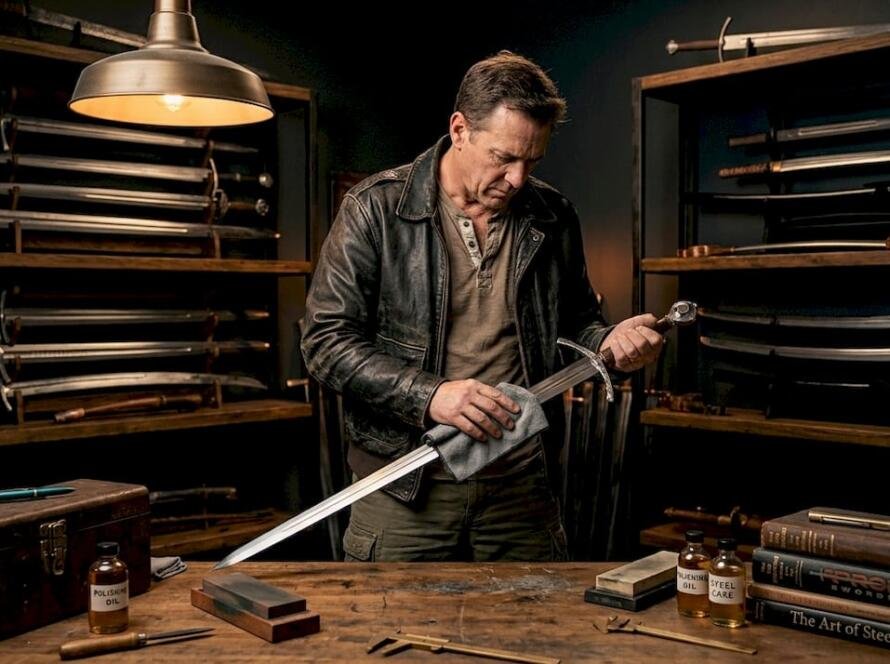
Anime sword showcasing is the process of displaying and presenting anime-inspired swords and props in a way that highlights their aesthetic while protecting their structural integrity. Whether you collect life-size replicas of Ichigo’s Zangetsu from BLEACH, Kirito’s Elucidator from Sword Art Online, or Zoro’s Wado Ichimonji from One Piece, the anime sword showcase process determines whether your collection looks like a curated exhibition or a cluttered shelf. This guide covers display hardware, environment control, cosplay transport prep, and digital video showcasing so your swords get the presentation they deserve.
Which display methods best preserve and highlight anime swords?
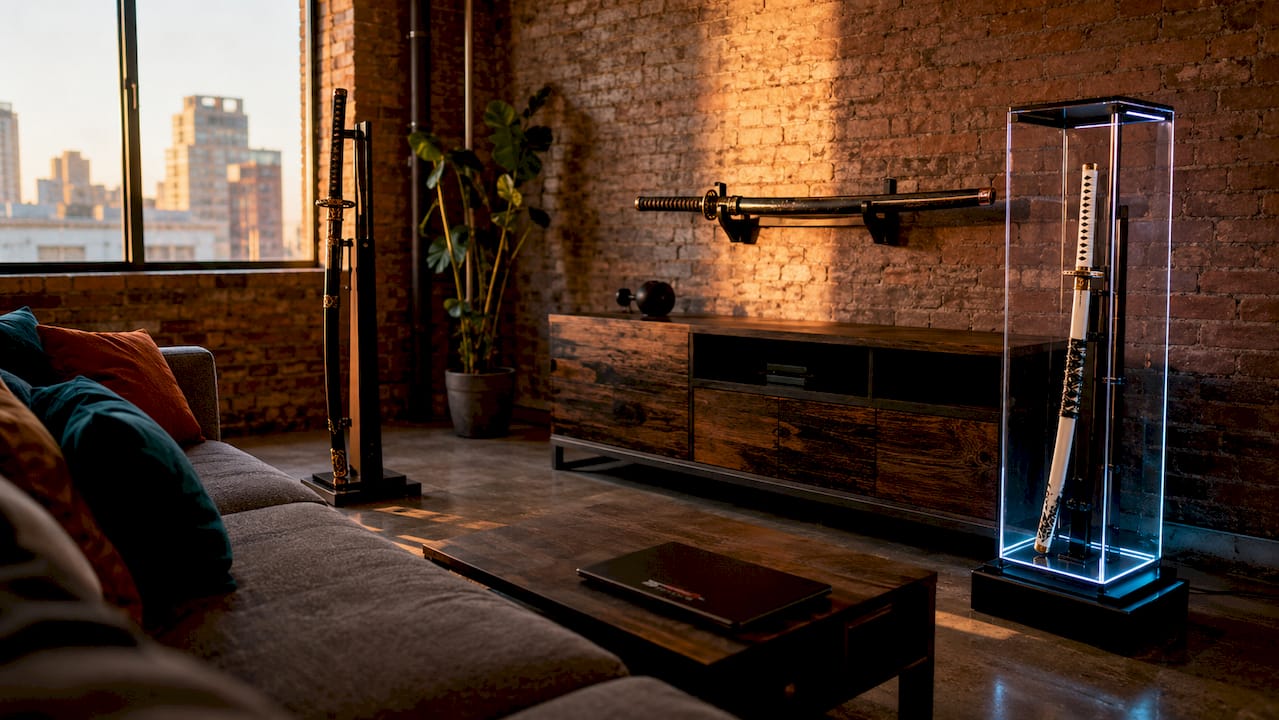
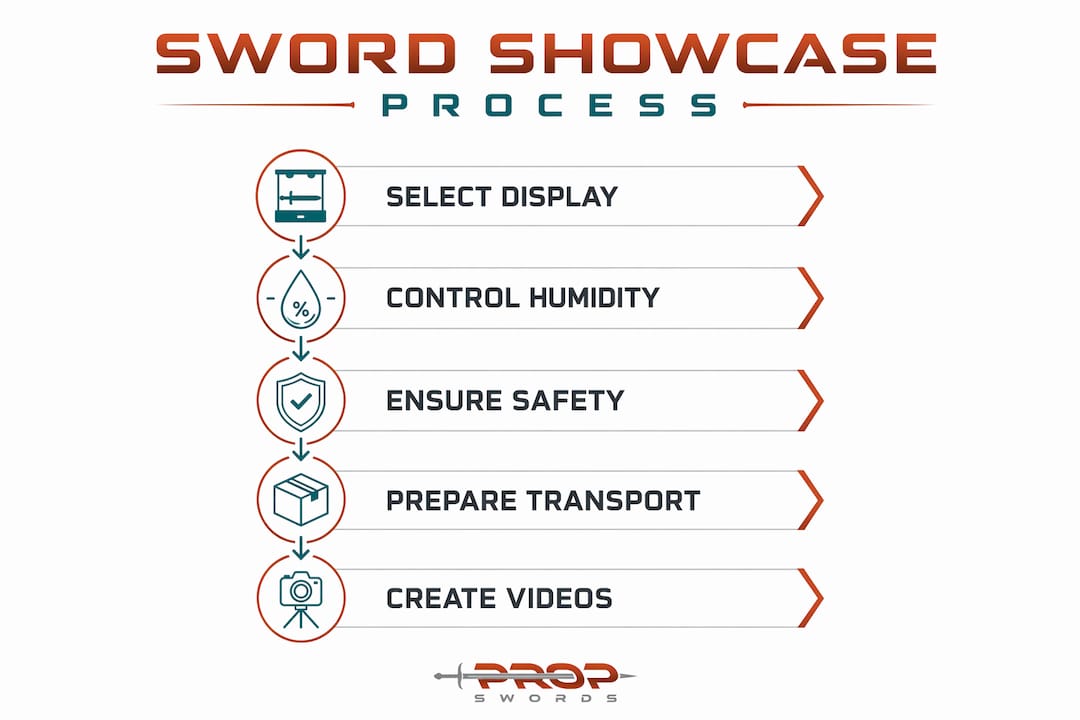
The anime sword showcase process starts with choosing the right physical display method. Three primary options exist: horizontal stands, wall mounts, and climate-controlled cases. Each serves a different purpose, and the best collectors use all three depending on the sword’s size, material, and location.
Horizontal stands and traditional orientation
Traditional horizontal stands, called katanakake in Japanese, hold swords parallel to the floor. Traditional katana display positions the blade edge facing upward, which prevents the wooden saya from warping under the blade’s weight and mirrors the historical carry orientation. This matters for anime replicas too, especially those modeled on katana-style weapons, because the same physics apply to any sword with a curved blade and wooden scabbard. A two-tier stand lets you display both the sheathed and unsheathed sword simultaneously, which works well for collector showcases where context and storytelling matter.
Wall mounts and anchoring requirements
Wall mounts create a dramatic visual impact, but they carry a real safety risk when installed incorrectly. Drywall anchors alone can fail over time, especially with heavier koshirae-style mounts that weigh 1.5 kg or more. The mount must go into a wall stud or solid backing. Use a stud finder before drilling, and verify the mount holds at least three times the sword’s weight before hanging anything. For anime swords with decorative tsuba and wrapped handles, spring-loaded friction mounts secure the blade without clamping directly onto lacquer, which prevents surface damage while keeping the sword vibration-free.
Climate control and humidity management
The environment around your display matters as much as the mount itself. Maintaining 45 to 60% relative humidity and a temperature between 15 and 25°C prevents lacquer cracking and blade rust. Humidity below 45% dries out lacquer finishes; above 60%, the wooden saya core warps and metal components begin to oxidize. Display cases without active humidity control accelerate both problems, so passive humidity packs like Boveda or an active mini dehumidifier inside a sealed case are standard practice for serious collectors.
Pro Tip: Avoid placing any sword display directly in front of a window. UV light fades wrapping cord, discolors lacquer, and degrades resin components on replica blades faster than humidity ever will.
The table below compares the three main display methods across key factors:
| Display method | Best for | Humidity control | Safety requirement |
|---|---|---|---|
| Horizontal stand (katanakake) | Single swords, desk or shelf display | Passive packs recommended | Stable, flat surface |
| Wall mount | Statement pieces, space-saving display | None built-in | Stud anchoring required |
| Climate-controlled case | Long-term preservation, full collections | Active or passive built-in | Secure case locking |
The concept of tokonoma, the traditional Japanese alcove used to display art and weapons, offers a useful design principle for home displays. A dedicated alcove or recessed shelf with controlled lighting and a neutral backdrop focuses attention on the sword and signals intentionality to anyone who sees the collection.
How to prepare anime swords and props for cosplay showcase and transport
Cosplay showcasing adds a layer of complexity that home display does not. You need your sword to look spectacular at the event, survive transport in a bag or case, and pass on-site inspection without issues. The steps below cover the full preparation workflow.
-
Design for modular breakdown. Large props like Guts’ Dragonslayer from Berserk or Cloud’s Buster Sword from Final Fantasy VII cannot travel in one piece. Magnets and PVC couplings allow props to disassemble cleanly for travel and reassemble quickly on-site. PVC couplings add durability while keeping the prop lightweight, and rare earth magnets create a secure connection that holds under movement without tools.
-
Wrap and case every component. Foam padding protects painted surfaces; bubble wrap handles irregular shapes. Hard-shell cases, like those made by Pelican or similar brands, prevent crush damage during checked luggage or car transport. Wrap each section individually before placing it in the case so components do not grind against each other.
-
Check event material rules before you build. Cosplay sword safety at conventions requires foam or PVC materials compliant with local event rules. Metal blades are banned at most major anime conventions including Anime Expo, Otakon, and Crunchyroll Expo. Knowing the rules before you build saves you from rebuilding at the last minute.
-
Prepare for peace bonding. Peace bonding is the process where event staff inspect props and apply a visible tag or zip tie to confirm the weapon is non-functional. Have your prop accessible at the entrance, not buried in your bag. Staff will check that the blade cannot be drawn or used, so modular designs that clearly separate into non-weapon components pass faster.
-
Review a dedicated preparation guide. The cosplay sword prep guide at Propswords covers material choices and modular construction in detail, which is worth reading before your first convention build.
Pro Tip: Label each disassembled component with a small piece of masking tape and a number. Reassembly under convention lighting is stressful, and numbered parts eliminate guesswork.
What is the ideal workflow for creating anime sword showcase videos?
Video is the most shareable format for anime sword showcasing, and the workflow matters more than the equipment. A phone camera with good lighting outperforms a DSLR in a cluttered room. The structure below applies whether you are using AI motion tools or filming live action.
The core principle: a typical showcase sequence includes approach, staredown, draw, clash, finishing blow, and aftermath clips, edited together for storytelling impact. Each clip should open with the weapon clearly visible in the frame. AI tools like Runway ML and Kling AI generate motion from still images, which means your starting image determines the quality of every generated clip. Use a high-contrast background, sharp lighting on the blade, and a neutral pose that shows the full sword silhouette.
Editing choices shape how dramatic the final video feels. Clip pacing and editing style directly determine viewer engagement and the perceived intensity of the showcase. Fast cuts between the draw and clash clips create tension; a slow zoom on the aftermath clip creates weight. CapCut handles basic pacing and transition effects well for beginners. DaVinci Resolve gives advanced users full color grading control, which is worth learning if you want your replica’s finish to look as vivid on screen as it does in person.
- Start with a single weapon-visible image as your AI generation anchor
- Prompt AI tools with specific action descriptions: “slow draw from scabbard, blade catching light” rather than “sword fight”
- Use sound design to reinforce visual impact: blade ring, impact thud, and ambient music layered in sequence
- Export at 1080p minimum for YouTube; 4K for Instagram Reels if your device supports it
- Add text overlays naming the sword, the anime it comes from, and the replica material for collector context
Pro Tip: Film your physical sword in natural light for the opening and closing frames of your video, even if the middle clips are AI-generated. The contrast between real and generated footage creates a striking visual effect that viewers notice.
How do public anime sword exhibitions organize and present their showcases?
Large-scale anime sword exhibitions set the standard for what a curated presentation can achieve, and their methods translate directly to home and convention displays. The BLEACH THE BLOOD WARFARE special exhibition, running May to August 2026 in Japan, demonstrates what a professional anime sword exhibition looks like at full scale. The exhibit features a life-size Zangetsu replica, artwork panels, and digital interactive content that immerses visitors in the world of the series. Admission is timed and ticketed, which controls crowd flow and gives each visitor a focused experience with each display piece.
The lessons for collectors are specific:
- Life-size replicas anchor the display. A single full-scale centerpiece draws attention and gives the entire collection a focal point. Everything else in the display reads as supporting context.
- Thematic panels add narrative depth. Artwork panels showing the sword’s origin story, its wielder, and key battle moments turn a display into an experience. Printed art panels from official sources or commissioned artwork serve the same function at home.
- Digital content extends the story. QR codes linking to clips, trailers, or lore explanations add a layer of engagement that static displays cannot provide. A small tablet or digital frame cycling through relevant scenes achieves the same effect at a convention booth.
- Lighting is curated, not ambient. Exhibition lighting isolates each piece with directed spotlights and uses colored gels to reinforce the series’ visual identity. Warm amber for historical-style swords, cool blue for sci-fi blades.
“The most effective anime sword exhibitions treat each weapon as a character, not an object. The sword tells a story, and the display is the medium.”
The takeaway for home collectors: treat your display wall or case as a curated space, not a storage solution. Every element, from the mount angle to the lighting color, should reinforce the identity of the sword and the series it represents.
Key takeaways
A successful anime sword showcase process requires combining correct display hardware, environment control, transport preparation, and intentional presentation to protect and highlight your collection.
| Point | Details |
|---|---|
| Humidity control is non-negotiable | Keep relative humidity between 45 and 60% to prevent rust and lacquer cracking. |
| Wall mounts require stud anchoring | Drywall anchors fail over time; always mount into solid backing for safety. |
| Modular design enables cosplay transport | PVC couplings and magnets allow large props to disassemble and reassemble quickly. |
| Video structure drives viewer engagement | Sequence clips from approach to aftermath with the weapon visible in every opening frame. |
| Exhibitions use centerpieces and narrative panels | A single life-size replica anchored by thematic panels creates a professional display experience. |
What I’ve learned from years of watching collectors get this wrong
Most collectors spend 90% of their budget on the sword and 10% on the display. The result is a beautiful replica sitting on a cheap stand in front of a window, fading and rusting while the owner wonders why it looks worse every year. I’ve seen it repeatedly, and the fix is always the same: treat the display environment as part of the purchase decision, not an afterthought.
Routine oiling and inspection are not optional maintenance tasks. Oil evaporates, and a blade that was protected six months ago is not protected today. Checking the habaki for oxidation and re-oiling on a scheduled basis is the difference between a collection that appreciates in visual quality and one that deteriorates. Most collectors do this once and assume they are done. They are not.
The other mistake I see constantly is treating physical display and digital showcasing as separate hobbies. They are not. A well-photographed or well-filmed sword reaches an audience of thousands. A sword on a wall reaches whoever walks into the room. Combining both, a properly displayed physical piece documented with intentional video or photography, multiplies the impact of your collection and builds a record of its condition over time.
Display is also a form of communication. The way you arrange your swords, the lighting you choose, the context you provide through panels or labels, all of it signals your level of knowledge and dedication to anyone who sees it. A collection displayed with care reads as expertise. A collection displayed carelessly reads as accumulation. The difference matters, especially if you ever want to sell, trade, or exhibit your pieces.
— Muhammad
Find the right replica swords for your showcase at Propswords
Propswords carries a curated selection of anime-inspired replica swords built for both display and cosplay. Whether you are building your first wall mount display or preparing a prop for your next convention appearance, the right replica makes every step of the showcase process easier. Browse the top replica swords for 2026 to find pieces that match your collection’s theme and quality standard. For collectors drawn to fantasy and fandom, the fantasy sword collectibles guide covers iconic blades worth adding to any serious display. Propswords ships free within the USA, so your next centerpiece piece arrives ready to mount.
FAQ
What is the anime sword showcase process?
The anime sword showcase process is the structured method of displaying, preparing, and presenting anime-inspired swords and props to highlight their aesthetic and preserve their condition. It covers display hardware selection, environment control, cosplay transport prep, and video documentation.
How do I control humidity for sword display?
Maintain relative humidity between 45 and 60% and temperature between 15 and 25°C. Use passive humidity packs like Boveda inside sealed display cases, or an active mini dehumidifier for larger enclosed spaces.
What materials are allowed for cosplay swords at conventions?
Most major anime conventions require foam or PVC materials and prohibit metal blades. Props must pass a peace bonding inspection on-site, so modular designs that clearly disassemble into non-functional components are the safest choice.
How many clips does an anime sword showcase video need?
A standard showcase video uses 4 to 6 clips covering approach, draw, clash, finishing blow, and aftermath. Each clip should open with the weapon clearly visible in the frame to maintain visual continuity and storytelling impact.
What makes a public anime sword exhibition effective?
Effective exhibitions combine a life-size centerpiece replica, thematic artwork panels, and digital interactive content to create an immersive experience. The BLEACH THE BLOOD WARFARE exhibition running in 2026 uses all three elements to present Zangetsu and related swords as narrative objects rather than static props.
Recommended