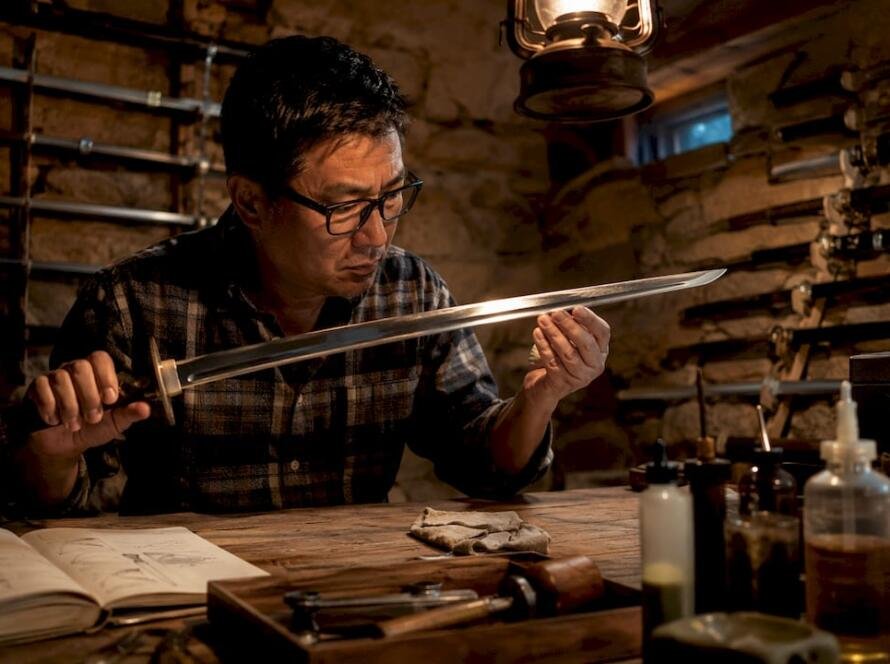
“Escrima sword” is a collector shorthand that covers three genuinely different things: blunt training sticks rooted in Filipino martial arts, concealed-blade batons with a steel core inside a polymer shaft, and full replica blades of traditional Filipino swords like the Kampilan, Ginunting, Kris/Kalis, and Espada/Bicuco. Before you buy, decide which category you actually need, then check U.S. federal, state, and local rules — because those three categories carry very different legal weights.
The single most important step: Identify your goal first — display shelf, cosplay convention, or training drill — because the right replica for one use can be illegal or unsafe for another.
Table of Contents
- What do collectors usually mean by “escrima sword”?
- Which replica type fits your goal?
- How to choose the right replica: a buying checklist
- U.S. legal and safety considerations you need to verify
- How to care for replica Filipino blades
- Key Takeaways
- Practical authenticity matters more than ornament
- Propswords carries replicas built for collectors and cosplayers
- Useful sources
- FAQ
What do collectors usually mean by “escrima sword”?
The confusion starts with the word escrima itself. Eskrima (also spelled Arnis or Kali) is the national martial art of the Philippines, and FMA training traditionally starts with sticks before moving to blades. So “escrima” became an umbrella term fans use for anything in that weapon family.
Three broad categories show up in collector searches:
- Training sticks: Rattan, hardwood, aluminum, or polymer sticks, 26–28 inches long, no blade. Rattan is preferred for partner drills because it absorbs impact; aluminum and synthetics suit outdoor demos and solo conditioning.
- Concealed-blade hybrids: A polymer or reinforced nylon baton with an internal steel blade. These look like escrima sticks but legally function as bladed weapons.
- Traditional Filipino sword replicas: Full-length blade replicas of named historical swords. These are what most collectors and cosplayers are actually after.
Named Filipino blade types at a glance
| Blade | Profile | Historical role |
|---|---|---|
| Kampilan | Single-edge, 35–39 in overall, broad tip, bifurcated pommel | Two-handed war sword; used by chieftains and warriors |
| Ginunting | Curved single-edge, roughly 20–24 in | Philippine military blade; derived from the Kris family |
| Kris / Kalis | Wavy or straight double-edge, 18–26 in blade | Status symbol and talisman; cutting sword, not a thrusting blade |
| Espada / Bicuco | Straight short sword / tip bolo | Offensive/defensive blade; also used as a daily utility tool |
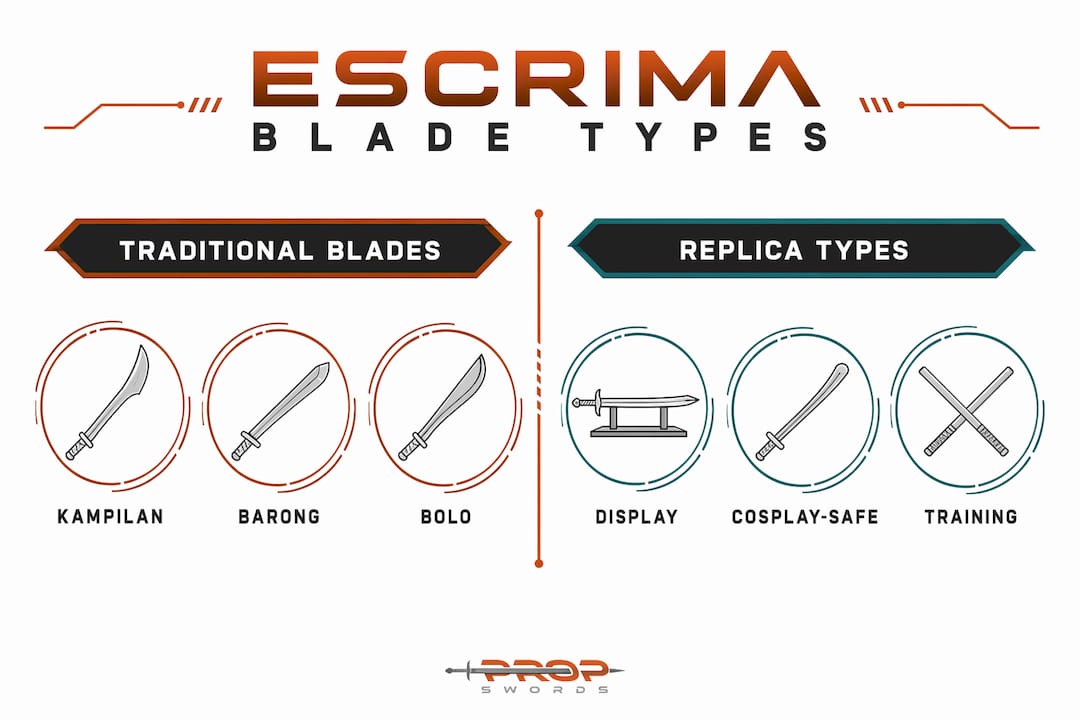
Sources: Wikipedia’s Filipino weaponry list and the FMAdigest Philippine Weaponry reference.
Pro Tip: The Kampilan is the largest of the traditional Filipino swords — at about the traditional size range reported for Kampilan swords, it reads as a statement piece on any display wall and photographs dramatically for cosplay.
Which replica type fits your goal?
Matching the replica to the use case saves money and keeps you out of trouble at conventions.
Display replicas prioritize finish and ornamentation. You want correct proportions, a tight scabbard fit, and decorative hilt work. Edge status matters less here, but unsharpened is still safer for handling during photography.
Cosplay-safe replicas need blunt or unsharpened edges, a secure scabbard that won’t slip open, and a weight that won’t fatigue you over a full convention day. Foam or unsharpened steel both work; the key is that the piece clears event prop-check.
Training-capable replicas demand durable materials, correct balance, and an unsharpened edge for drills. Rattan and hardwood sticks dominate here because they absorb contact without splintering dangerously.
Concealed-blade hybrids are the category that trips people up. A product like the Hidden Sword Battle Stick — 28 inches total with a 14.25-inch 1060 carbon steel blade inside a polymer sheath — looks like a training baton but carries the legal weight of a bladed weapon. Treat it as a blade for every transport and event-entry decision, not as a prop.
Use cases mapped to replica type:
- Shelf display → decorative steel replica with ornate hilt
- Convention cosplay → unsharpened steel or rigid foam replica
- LARP / stage combat → boffer-safe foam or unsharpened blunt
- FMA training drills → rattan or hardwood escrima sticks
- Concealed-blade hybrid → personal carry only, verify state law first
How to choose the right replica: a buying checklist
Work through these steps before committing to any listing.
- Confirm your use case — display, cosplay, or training. This single decision eliminates most wrong purchases.
- Check material and weight. Rattan is light and forgiving. Hardwood is denser and heavier. Aluminum is consistent but unforgiving on contact. Stainless steel replicas weigh more than rattan sticks but photograph better. A Kampilan replica in steel will weigh close to the historical range reported for Kampilan swords.
- Verify blade length and overall length. A display Kampilan should hit 90–100 cm overall; a Kris blade runs 18–26 inches. If a listing omits measurements, ask before buying.
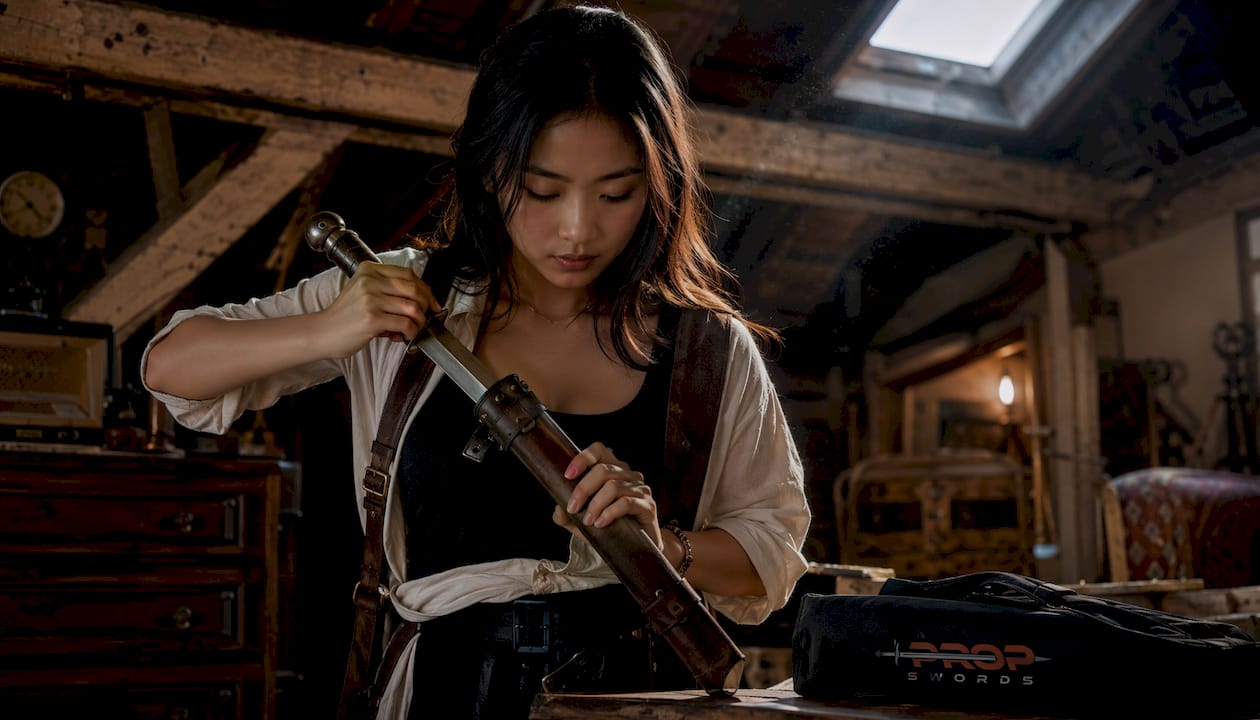
- Inspect the hilt photos closely. Secure tang construction and a comfortable pommel shape matter for both display aesthetics and safe handling during cosplay or stage combat. A loose hilt on a steel replica is a safety issue, not just an authenticity flaw.
- Distinguish utility from ornate. Historical sources note that front-line warriors used simpler, utility-dressed blades while nobility carried ornate pieces. Too much inlay on a “battle replica” is a sign it’s purely decorative.
- Ask the seller these questions before checkout:
- Is the edge sharpened or unsharpened?
- What is the tang construction (full tang, rat-tail, or pinned)?
- What steel type is used (stainless, carbon, Damascus pattern)?
- Does the scabbard lock or retain the blade securely?
- What is the return policy and shipping method for blades?
Pro Tip: Request close-up photos of the hilt, tang, and scabbard mouth. A seller who can’t provide those images likely can’t answer your questions about construction either. Check Propswords’ sword authenticity guide for a full checklist.
| Material | Weight feel | Best for | Caution |
|---|---|---|---|
| Rattan | Light | Partner drills, FMA training | Not display-grade |
| Hardwood | Medium-heavy | Conditioning, solo forms | Dense; harder contact |
| Aluminum | Medium, consistent | Outdoor demos | Unforgiving on impact |
| Stainless steel | Heavy | Display, cosplay photos | Check edge status |
| Carbon steel | Heavy | Functional replicas | Sharpened versions need legal check |
U.S. legal and safety considerations you need to verify
Sharpened blades and concealed blades can trigger state weapons statutes, so verify federal, state, and local rules before you buy or travel with any replica blade.
Air travel: The TSA prohibits swords and bladed weapons in carry-on baggage. Checked baggage is permitted under TSA rules, but the airline sets its own policies, and many carriers require blades to be declared, sheathed, and secured. Always contact your carrier directly.
Shipping: Most U.S. carriers will ship unsharpened replicas. Sharpened blades require adult-signature delivery and specific packaging. A reputable seller ships blades scabbarded with the edge taped or wrapped.
Event and venue rules: Most major conventions and LARP events ban concealed-blade props and require unsharpened or boffer-safe weapons. Check the event’s prop policy before you pack. Some events require a physical prop check at the door.
Pro Tip: Keep your purchase receipt and any seller documentation with the replica when traveling. It establishes the piece as a collector’s prop, not a carry weapon, and simplifies any inspection.
Safety checklist for travel and events:
- Confirm edge status with the seller in writing before purchase.
- Use a padded, lockable case for transport.
- Carry the original receipt and product description.
- Check TSA, carrier, and event prop rules independently — they change.
- For self-defense training context, this complete guide covers safe handling principles that apply to training replicas as well.
This article is general information, not legal advice. Verify current federal, state, and local rules with a qualified professional for your specific situation.
How to care for replica Filipino blades
Proper maintenance keeps a replica looking sharp on the shelf and safe to handle for years.
- Wipe steel blades after every handling session. Fingerprints leave acidic oils that pit bare steel over time. A soft cloth with a light mineral oil works for most unsharpened stainless or carbon steel replicas.
- Oil bare carbon steel monthly. A thin coat of camellia oil or Renaissance Wax protects against humidity-driven rust without affecting decorative finishes.
- Clean polymer and foam replicas with a damp cloth only. Check seams and joints for stress cracks after any impact.
- Store rattan sticks in a dry space. Humidity causes rattan to soften and flex permanently; avoid basements and garages with poor ventilation.
- Check scabbard materials. Wood-core scabbards lined with fabric can trap moisture against the blade. If the scabbard feels damp inside, remove the blade and let both air dry before re-sheathing.
Additional storage tips:
- Mount display pieces on padded wall brackets, not bare metal hooks that scratch the finish.
- Keep replicas out of direct sunlight; UV exposure fades decorative wrapping and lacquered hilts.
- For hand-finished or patinaed pieces, ask the seller for a specific care sheet at purchase — generic advice can strip intentional aging.
Pro Tip: For sword collecting and preservation, the single biggest mistake collectors make is storing blades in their scabbards long-term without periodic inspection. Check for moisture every few months.
Key Takeaways
Filipino blade replicas reward collectors and cosplayers who match the replica type to the intended use, verify U.S. legal status, and confirm material specs and hilt construction before buying.
| Point | Details |
|---|---|
| Match type to use | Display, cosplay-safe, and training replicas have different material and edge requirements. |
| Verify legal status | Sharpened and concealed-blade replicas carry different legal classifications; check federal, state, and local rules. |
| Confirm measurements | Named blades have documented size ranges — Kampilan runs 90–100 cm overall; Kris blades generally run 18–26 inches. |
| Inspect hilt construction | Secure tang and pommel fit affect both display quality and safe handling. |
| Propswords | Propswords offers replica swords with clear material specs, free USA shipping, and a return policy — a reliable starting point for collectors. |
Practical authenticity matters more than ornament
The conventional collector wisdom leans toward the most ornate piece available. That instinct makes sense for pure shelf display, but it misses something important for anyone who wants to handle, photograph, or cosplay with a Filipino blade replica.
Historical records are clear that utility blades carried by warriors were simple-dressed, with correct proportions and functional hilts. The heavily inlaid, gold-trimmed versions were nobility items. If you want a piece that feels grounded in actual Filipino martial culture, a well-proportioned replica with a secure hilt and correct blade geometry will serve you better than one drowning in decorative inlay.
That said, display-only collectors have every reason to choose the ornate version. The point is to make the choice deliberately, not by default. And whichever direction you go, learning the actual names — Kampilan, Ginunting, Kris/Kalis, Espada/Bicuco — and their cultural context treats these objects with the respect they deserve. They aren’t generic “fantasy swords.” They come from living martial traditions that practitioners still train with today. Buying a replica of one is a small act of engagement with that history, and it’s worth doing with some awareness of what you’re holding.
Propswords carries replicas built for collectors and cosplayers
Collectors who’ve done the research above already know what they need: clear material specs, honest edge-status disclosure, close-up hilt photos, and a seller who ships blades properly. Propswords checks those boxes with a catalog built specifically for display, cosplay, and gifting — not bulk training supply.
Every listing on Propswords includes material details (stainless steel, Damascus, or decorative options), product photography, and a free USA shipping policy. The return policy is listed at checkout, so there are no surprises after the purchase. For collectors comparing options, the top replica swords for 2026 landing page is the fastest way to see curated picks across historical and fantasy categories. If you’re still deciding between replica types, the fantasy weaponry guide on the site walks through display vs. use categories in plain terms. Browse the full collection at Propswords and confirm edge status and specs directly on each product page before checkout.
Useful sources
- Filipino martial arts — Wikipedia
- List of Filipino weaponry — Wikipedia
- Kampilan — Wikipedia
- FMAdigest: Philippine Weaponry
- Filipino war blades — Rappler
- Escrima stick materials — Karatemart
- Hidden Sword Battle Stick specs — Karatemart
- Propswords replica collection
FAQ
What is an escrima sword exactly?
“Escrima sword” is a collector term covering training sticks, concealed-blade batons, and traditional Filipino blade replicas like the Kampilan, Ginunting, Kris/Kalis, and Espada/Bicuco. The word escrima refers to Filipino martial arts, which is why fans use it as a broad label.
Are escrima swords legal to own in the United States?
Unsharpened replica blades are generally legal to own in most U.S. states, but sharpened blades and concealed-blade hybrids can trigger state weapons statutes. Always verify federal, state, and local rules for your specific location before purchasing.
Can I bring a replica escrima blade to a convention?
Most conventions require unsharpened or boffer-safe props and ban concealed-blade items. Check the event’s prop policy before you pack, since rules vary by venue and organizer.
What is the best material for a display replica?
Stainless steel gives the best finish for display and photography. For training drills, rattan is preferred because it absorbs impact safely during partner work.
Where can I buy Filipino blade replicas in the U.S.?
Propswords offers a curated selection of replica swords with free USA shipping, clear material specs, and a return policy. The top replica swords page is a good starting point for collectors and cosplayers.
Recommended