TL;DR:
- An anime sword maintenance routine involves regular cleaning, oiling with choji oil, and proper storage at 40-60% humidity to prevent rust and preserve blade quality. The habaki collar is a critical zone where hidden moisture can cause damage, so it must be checked and cleaned periodically for effective preservation. Consistent, proper care using the right tools and techniques ensures your collection remains sharp, beautiful, and long-lasting.
An anime sword maintenance checklist is defined as the structured set of cleaning, oiling, and storage steps that prevent rust, preserve blade finish, and protect wooden fittings on replica and functional nihonto-inspired swords. The core principle is simple: most rust forms from missed oiling rather than improper storage, which means consistent wiping and oiling after every handling session is your single most effective defense. Whether you own a Demon Slayer Nichirin blade, a Bleach Zanpakuto replica, or a hand-forged katana, the same fundamentals apply. Choji oil, lint-free cloths, cotton gloves, and controlled humidity are the four pillars every collector needs before anything else.
1. What essential tools do you need for anime sword maintenance?
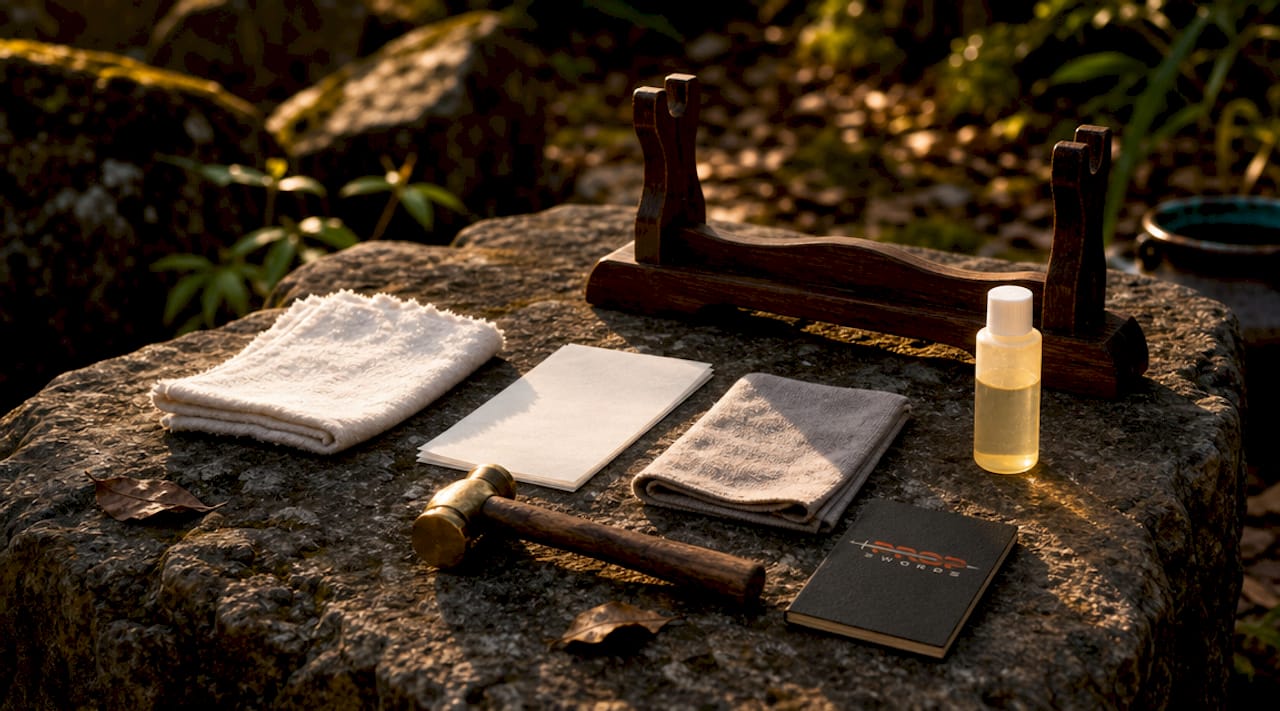
The right tools make the difference between a blade that lasts decades and one that rusts within a year. Before you run through any sword upkeep guide, gather these items first.
Core maintenance kit:
- Choji oil (a clove-and-mineral oil blend): the gold standard for rust prevention on steel. Food-grade mineral oil works as a substitute if choji oil is unavailable. Never substitute motor oil or WD-40.
- Nuguigami paper or lint-free flannel cloths: used to wipe old oil and debris from the blade without scratching the finish.
- Cotton gloves: non-negotiable for handling. Fingerprints etch steel in hours because skin acids accelerate corrosion faster than most collectors realize.
- Soft applicator cloth or oil paper: for applying a fresh, even coat of choji oil after cleaning.
- Silica gel packets: placed in storage boxes or display cases to regulate ambient moisture.
- Uchiko powder ball (optional): a traditional polishing tool, but reserve it for occasional deep cleaning only. It is a mild abrasive and can cloud blade finish if used too frequently.
Pro Tip: Starter kits from Japanese sword supply vendors like Hanwei or Paul Chen typically include choji oil, nuguigami paper, and an uchiko ball for under $20. This covers every basic need for maintaining anime swords without overspending.
You do not need an elaborate setup to protect your collection. The tools above handle 95% of routine sword care. Complexity comes later, if at all.
2. How to properly clean and oil your anime sword
Cleaning and oiling is the heart of any sword cleaning checklist. Done correctly, it takes under ten minutes and protects your blade for months.
Step-by-step cleaning and oiling process:
- Put on cotton gloves before drawing the blade. Bare skin contact is the fastest route to corrosion.
- Draw the blade slowly from the saya (scabbard), keeping the edge facing upward and away from your body.
- Wipe off old oil using nuguigami paper or a lint-free cloth. Start from the habaki (the metal collar at the base of the blade) and move toward the tip in one smooth stroke. Never drag the cloth back toward the habaki.
- Inspect the blade under good light for rust spots, scratches, or discoloration. Pay close attention to the area directly under the habaki, where moisture accumulates invisibly and causes hidden corrosion if not cleaned every 6 to 12 months.
- Apply a thin coat of choji oil to a clean cloth or oil paper. Run it along the flat of the blade from base to tip. You want a barely visible film, not a wet coat.
- Wipe the saya interior lightly with a dry cloth to remove any trapped moisture before resheathing.
- Resheath the blade slowly, edge up, guiding it with your off hand on the saya mouth.
Pro Tip: Oiling frequency should match your usage. Oil after every handling session, every 3 to 6 months for stored swords, and more often if you live in a humid climate like Florida or coastal California.
One mistake collectors make is over-oiling. A thick oil layer traps dust and grit, which then acts as an abrasive every time the blade moves inside the saya. Thin and consistent beats heavy and occasional every time.
3. What are the ideal storage conditions for anime swords?
Storage is where most anime weapon maintenance fails. Collectors spend money on quality replicas and then store them in garages, basements, or near heating vents.
Store swords at 40 to 60% relative humidity and a consistent temperature to protect both the blade and wooden fittings. Rapid temperature swings cause condensation inside the saya, which is one of the fastest ways to generate hidden rust.
Storage options by priority:
- Paulownia wood boxes (token-bako): the traditional Japanese choice. Paulownia is naturally moisture-regulating and resistant to insects. It is the best long-term option for valuable collectibles.
- Sword stands (katana-kake): ideal for display. Orient the blade edge-up in the traditional katana position to prevent oil from pooling on one side of the saya.
- Padded display cases: acceptable for replicas, provided you add silica gel packets inside the case to control humidity.
| Storage method | Best for | Humidity control |
|---|---|---|
| Paulownia wood box | High-value collectibles | Excellent (natural regulation) |
| Sword stand with case | Display pieces | Moderate (add silica gel) |
| Padded wall mount | Cosplay replicas | Low (monitor regularly) |
| Fabric sword bag | Transport only | Poor (not for long-term use) |
Rotate your display orientation every few months if the sword sits on a stand for extended periods. This prevents uneven pressure on the saya and distributes any residual oil evenly across the blade surface. For a full breakdown of display setups, the sword display checklist from Propswords covers orientation, lighting, and case selection in detail.
4. Which maintenance mistakes should anime sword collectors avoid?
Knowing what not to do protects your collection as much as knowing what to do. These are the errors that lead to expensive, sometimes irreversible damage.
Mistakes that destroy blades:
- Using WD-40 or cooking oil: WD-40 is a water displacer, not a long-term protectant. It evaporates and leaves the blade exposed. Cooking oils go rancid and attract bacteria that pit steel.
- Storing a damp sword inside the saya: moisture trapped between blade and saya creates a perfect rust environment. Always dry both surfaces before resheathing.
- Skipping the habaki check: sliding the habaki off every 6 to 12 months to clean beneath it is critical. Standard wiping misses this zone entirely, and hidden rust there spreads fast.
- Over-using uchiko powder: uchiko acts as a micro-abrasive that clouds blade clarity when used excessively at home. Reserve it for occasional deep cleaning, not routine maintenance.
- Touching the blade without gloves: even a single bare-handed grip leaves acid deposits that begin etching steel within hours.
Professional sword polishing to repair rust damage costs $800 to $3,000 in Western markets as of 2026. A $15 bottle of choji oil and a pair of cotton gloves prevent the vast majority of that expense.
When damage goes beyond surface rust, seek a certified polisher (togishi) rather than attempting DIY grinding. Abrasive home methods remove the hamon (temper line) permanently on functional blades, destroying both beauty and value.
5. How to tailor your upkeep based on sword type and usage
Not every sword in your collection needs the same care schedule. A cosplay prop handled at conventions requires different attention than a hand-forged tamahagane blade displayed in a climate-controlled room.
Display-only replicas made from stainless steel or zinc alloy are less reactive than high-carbon steel. They still benefit from regular wiping and light oiling, but the urgency is lower. Oil every 3 to 6 months and inspect for dust buildup rather than rust.
Functional or high-carbon steel blades demand the full protocol after every handling session. These blades react to humidity and skin contact within hours, not days. If you handle them at cosplay events or photoshoots, clean and oil them the same evening.
| Sword type | Oiling frequency | Key risk |
|---|---|---|
| Stainless steel replica | Every 3 to 6 months | Surface tarnish, dust |
| High-carbon steel blade | After every handling | Rust, pitting |
| Zinc alloy display piece | Every 6 months | Oxidation, finish dulling |
| Functional battle-ready | After every use | Edge damage, rapid rust |
Budget-friendly maintenance for replica collectors is straightforward. A basic kit from Propswords or a Japanese sword supply store costs under $25 and covers a full year of routine care. You do not need professional-grade polishing compounds for display replicas. Before buying any new piece, the anime sword buying checklist from Propswords helps you identify the steel type upfront so you know exactly what maintenance commitment you are taking on.
Pro Tip: Collectors in high-humidity climates like the Gulf Coast or Pacific Northwest should oil functional blades monthly during summer. A small digital hygrometer placed near your display costs under $10 and tells you exactly when conditions demand extra attention.
When a blade shows deep pitting, uneven discoloration across the hamon, or structural damage to the tsuka (handle), that is the point to consult a professional. Routine care prevents you from ever reaching that threshold.
Key takeaways
Consistent oiling after every handling session, combined with 40 to 60% humidity storage, prevents the rust damage that costs collectors up to $3,000 to professionally restore.
| Point | Details |
|---|---|
| Oil after every handling | Choji oil applied after each session is the single most effective rust prevention step. |
| Check under the habaki | Slide the habaki off every 6 to 12 months to clean hidden moisture that standard wiping misses. |
| Match care to sword type | High-carbon steel needs monthly attention in humid climates; stainless replicas need care every 3 to 6 months. |
| Avoid wrong oils | Never use WD-40 or cooking oil. Choji oil or food-grade mineral oil are the only safe choices. |
| Control storage humidity | Keep storage at 40 to 60% relative humidity using silica gel or paulownia wood boxes. |
Why I think most collectors underestimate the habaki
Most sword care content focuses on the visible blade surface and stops there. After years of working with anime replica collections, I have found that the habaki collar is where most preventable damage actually starts. Collectors wipe the blade, apply oil, resheath the sword, and feel satisfied. But moisture sits invisibly beneath that collar for months, and by the time you notice discoloration, the rust has already spread under the surface.
The other thing I keep seeing is collectors treating all oils as interchangeable. Someone grabs WD-40 from the garage because it is convenient. Six months later, the blade looks worse than before they started. Traditional nihonto care techniques exist for a reason. They were developed over centuries specifically for steel blades in variable climates, and they translate directly to modern anime sword collections.
My honest recommendation is to build a ten-minute monthly ritual. Draw the blade, wipe it, check the habaki zone, apply fresh oil, inspect the saya, resheath. That routine, done consistently, makes professional restoration a non-issue for the life of your collection. The emotional payoff of a blade that looks as sharp and clean as the day you bought it is real. It turns a passive display into something you are genuinely proud of.
— Muhammad
Build your collection the right way with Propswords

Propswords carries a curated selection of anime-inspired replica swords built for both display quality and long-term collectibility. From Demon Slayer Nichirin blades to One Piece Wado Ichimonji replicas, every piece is chosen with the collector in mind. Browse the best replica swords of 2026 to find your next addition, or explore the full replica sword care guide to pair your new piece with the right maintenance routine from day one. Free shipping within the USA makes it easy to start or expand your collection without compromise.
FAQ
How often should I oil my anime sword?
Oil your sword after every handling session for high-carbon steel blades, and every 3 to 6 months for stored stainless steel replicas. Collectors in humid climates should increase frequency during summer months.
What oil is best for anime sword maintenance?
Choji oil is the standard choice for rust prevention on steel blades. Food-grade mineral oil is an acceptable substitute. Never use WD-40, cooking oil, or motor oil on any sword blade.
Can I store my anime sword in its scabbard long-term?
Yes, but only if both the blade and saya interior are completely dry and lightly oiled before resheathing. Storing a damp sword inside the saya traps moisture and accelerates rust faster than open-air storage.
What does the habaki collar do and why does it matter for maintenance?
The habaki is the metal collar that fits over the base of the blade and secures the sword inside the saya. Moisture accumulates beneath it invisibly, so sliding it off every 6 to 12 months to clean that zone prevents hidden corrosion that standard wiping never reaches.
When should I seek professional sword polishing?
Seek a certified polisher when you see deep pitting, rust that does not respond to oiling and wiping, or damage to the hamon temper line. Professional restoration in Western markets costs $800 to $3,000, which is why routine care is always the better investment.
Recommended