


TL;DR:
- Replicas are valued by collectors for their emotional, historical, and aesthetic significance, not just affordability.
- High-quality replicas serve practical purposes like study, display, and filling collection gaps, often holding real market value.
Most people assume replicas are second-rate substitutes, objects you buy when you can’t afford the real thing. Collectors know better. Understanding why collectors value replicas means recognizing that the “real thing” isn’t always what creates meaning. Replicas carry emotional weight, historical function, and aesthetic appeal that originals sometimes cannot deliver. Whether you’re building a sword collection inspired by Viking history, assembling anime memorabilia, or acquiring championship belts from iconic sporting moments, replicas occupy a distinct and legitimate space. This article breaks down the real reasons collectors reach for reproductions, and why that choice reflects depth, not compromise.
Table of Contents
- Key takeaways
- Why collectors value replicas: the emotional case
- Historical and cultural roots of replicas in collector culture
- Aesthetic and craftsmanship: when replicas earn collector respect
- Practical and economic reasons for owning replicas
- Navigating authenticity, trust, and storytelling
- My take on replicas and why the collector world should stop apologizing for them
- Explore replica swords worth collecting at Propswords
- FAQ
Key takeaways
| Point | Details |
|---|---|
| Emotional connection drives value | Replicas enable symbolic ownership, connecting collectors to stories and eras they couldn’t otherwise access. |
| Craftsmanship separates good from great | High-quality replicas are judged on material accuracy, weight, and finishing, not just appearance. |
| Replicas serve as study tools | Collectors use reproductions to understand engineering and design without risking fragile originals. |
| Provenance builds trust | Certificates, maker marks, and clear disclosure separate legitimate replicas from problematic fakes. |
| Market value is real | Limited edition replicas command serious secondary market prices, proving collectors treat them as genuine investments. |
Why collectors value replicas: the emotional case
Ask most casual observers why someone would buy a replica, and they’ll say it’s about money. They’re not entirely wrong, but they’re missing the larger picture. The value of replica collectibles runs much deeper than affordability.
Replicas enable symbolic ownership, helping buyers connect emotionally to artists, historical periods, or fictional worlds they cannot otherwise access. A collector who owns a replica of Gandalf’s sword Glamdring isn’t buying a substitute. They’re acquiring a tangible symbol of a story that shaped their imagination. That’s not lesser value. That’s a different kind of value entirely.
“The appeal of replicas is driven by democratization of desire, allowing personal narratives, status, and taste without original item costs.”
This democratization matters more than people acknowledge. Most originals are locked in private collections, museums, or auction houses with seven-figure price tags. Replicas make the object’s meaning accessible without making the meaning feel cheap. Collectors recognize this distinction intuitively. They’re not confused about what they own. They’re choosing what it represents.
Collectors’ reasons for replicas also include what you might call “bridge pieces.” A bridge piece is a replica that holds the place of an original while a collector builds toward it, or sometimes permanently, when the original’s rarity makes ownership practically impossible. Emotionally, these pieces carry nearly the same charge as originals because personal narratives and status attach to the object regardless of its production origin.
A few emotional drivers worth naming:
- The desire to own a physical object connected to a meaningful story, character, or era
- The satisfaction of completing a thematic collection without arbitrary exclusions based on cost
- The comfort of handling and displaying items that originals would make too fragile or risky to enjoy
Historical and cultural roots of replicas in collector culture
Replicas aren’t a modern invention born from manufacturing shortcuts. Their importance in collector culture has centuries of precedent, and that history legitimizes them in ways people rarely discuss.
Museums have used replicas for decades as educational and preservation tools. When a fragile artifact cannot be handled or displayed without risk, a high-quality reproduction steps in. The original is protected; the story keeps circulating. Replicas extend the cultural story and keep artworks and artifacts legible across changing contexts and audiences. That’s not diminishment. That’s stewardship.
Consider how provenance functions in this context. A replica commissioned by a museum, authorized by an estate, or produced under institutional endorsement carries a chain of custody that shapes its meaning. The historical significance of replicas increases substantially when that lineage is clear and documented. Compare that to an unauthorized copy with no provenance, and you’re looking at two entirely different objects, even if they appear identical.
Here’s how collectors typically rank replica significance:
- Institutionally endorsed reproductions produced with estate or museum authorization
- Limited edition replicas with documented production numbers and certificates
- Licensed replicas tied to intellectual property agreements with studios or creators
- Craftsman replicas made to documented historical specifications by known artisans
- Generic reproductions without provenance, documentation, or clear origin
The conceptual argument for replicas gets even more interesting when you consider figures like Marcel Duchamp, whose readymades forced the art world to question what originality actually means. Reproduction as a concept carries philosophical weight. Collectors value replicas within systems of evidence, provenance, and community recognition rather than just age or rarity.
| Factor | Original | High-quality replica |
|---|---|---|
| Historical connection | Direct | Symbolic or institutional |
| Accessibility | Rare and expensive | Widely available |
| Display safety | High risk | Practical for everyday display |
| Educational utility | Limited by fragility | High, designed for engagement |
| Secondary market value | Highly variable | Tied to edition and provenance |
Aesthetic and craftsmanship: when replicas earn collector respect
Not all replicas deserve equal respect, and serious collectors know this. The difference between a replica that earns a place in a curated collection and one that doesn’t comes down to craftsmanship precision.
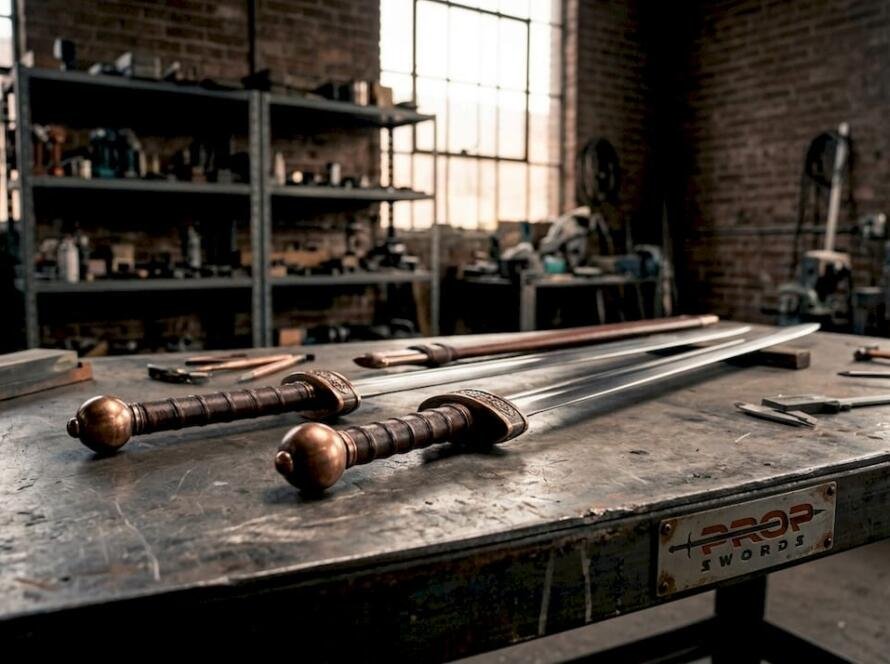
High-quality mechanical replicas are judged by movement accuracy, bracelet weight, and clasp tension, not visual similarity alone. Apply that standard to swords, and the equivalent metrics are blade geometry, steel composition, handle balance, and edge geometry. A sword that looks right in a photograph but feels wrong in the hand fails the test collectors actually apply.
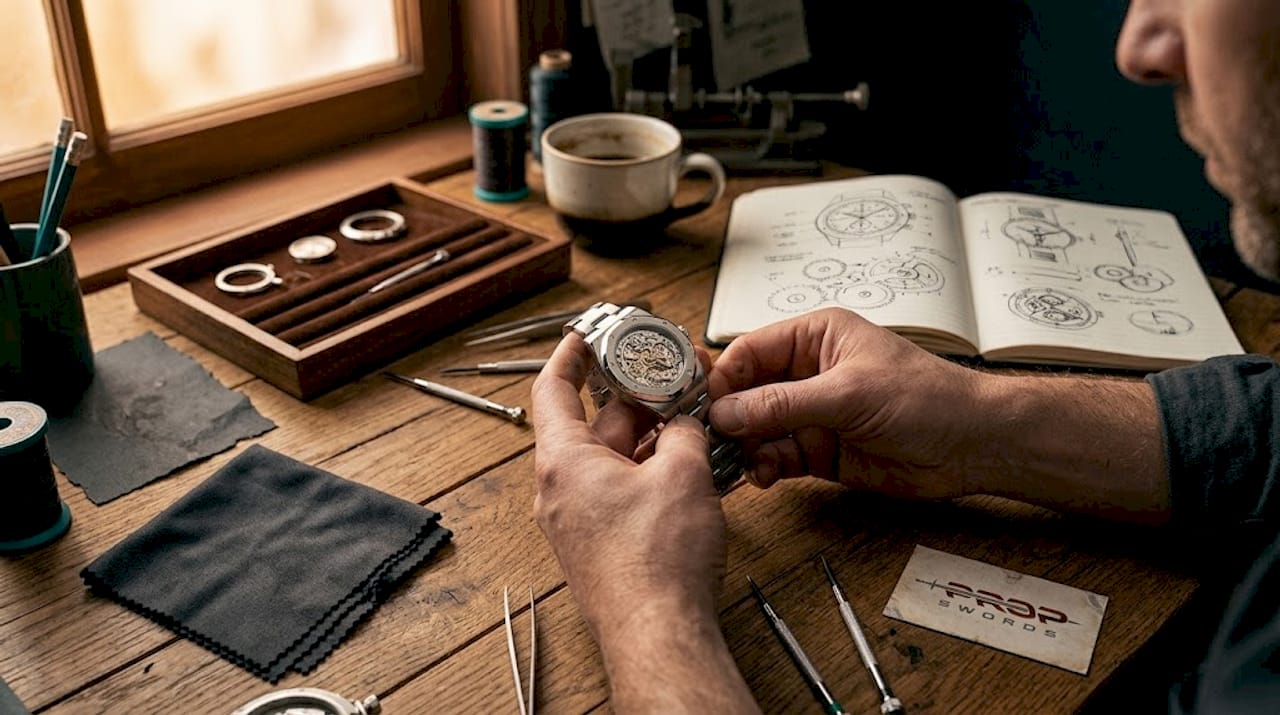
Pro Tip: When evaluating a replica sword, hold it at the balance point and note whether the weight distribution matches historical records for that sword type. A blade that’s too light or too grip-heavy signals compromised material choices, regardless of how it photographs.
Finishing details separate adequate from excellent. Natural patina on genuine antiques develops unevenly over time, responding to handling, storage, and humidity. Artificial aging creates telltale uniformity that experienced collectors spot immediately. Top-tier replica makers understand this and either avoid artificial aging entirely or apply it with enough variation to match how genuine wear actually looks.
| Craftsmanship detail | What to look for | Why it matters |
|---|---|---|
| Blade steel | High-carbon or stainless rating | Determines durability and authentic weight |
| Handle wrap | Genuine material vs. synthetic | Affects grip feel and visual authenticity |
| Edge geometry | Consistent grind lines | Reflects precision manufacturing standards |
| Surface finish | Controlled patina or polished consistency | Reveals quality control in production |
| Fittings | Snug, matched, no play | Indicates assembly standard and longevity |
Modern buyers scrutinize movement configuration and finishing with the same rigor as originals. The collectors who build the most respected collections are the ones who apply those same standards to every category they collect, swords included.
Practical and economic reasons for owning replicas
The practical case for replicas gets underestimated because it sounds less romantic than the emotional or historical arguments. But it’s genuinely persuasive, and smart collectors leverage it constantly.
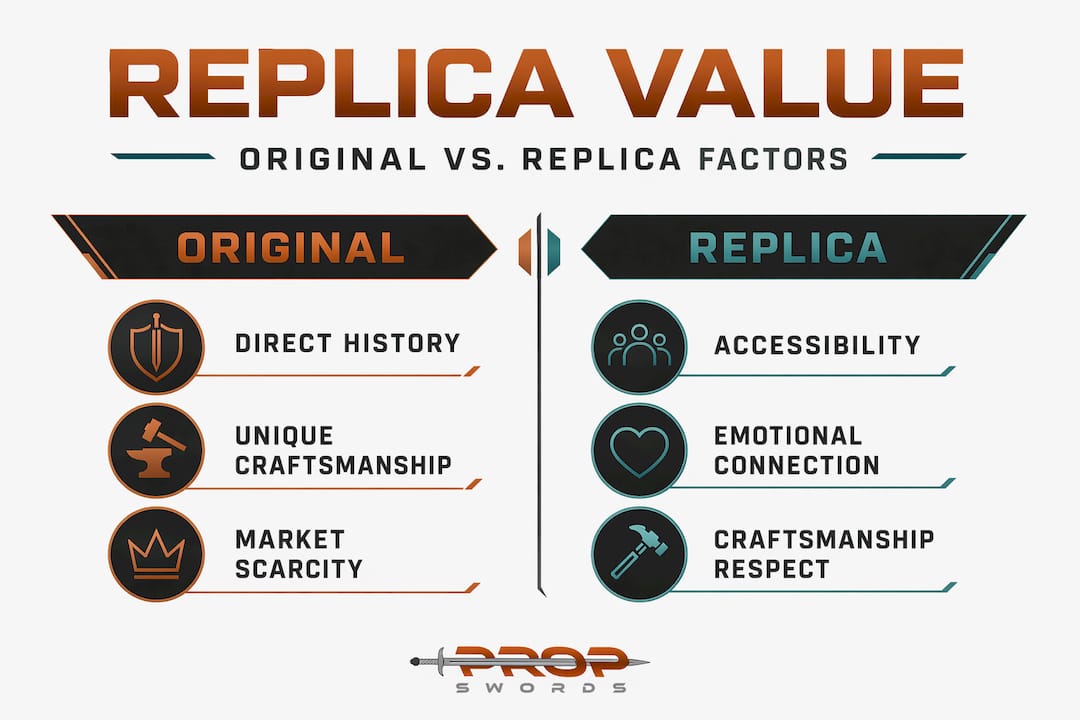
Cost is the obvious starting point. Standard championship belt replicas trade between $400 and $700 on secondary markets, with limited editions commanding $650 to $1,200. Those numbers reflect real collector demand, not just bargain hunting. Now compare that against the original artifact costs in most categories, and replicas stop looking like compromises. They start looking like strategic acquisitions.
The secondary benefits are just as compelling:
- Study utility. Replicas serve as study tools for understanding the engineering and materials of originals without risking valuable artifacts. A collector studying Viking sword construction can examine a well-made replica’s fuller geometry and crossguard dimensions without touching museum-grade originals.
- Display confidence. Originals often require controlled environments, humidity regulation, and limited handling. A quality replica can be mounted, lit, and handled without anxiety, which matters when you’ve built a display meant to be appreciated.
- Collection completion. Some originals simply don’t exist in a form accessible to private collectors. Replicas fill those gaps without compromising the thematic integrity of a collection.
- Secondary market participation. Limited edition replicas from recognized makers hold and sometimes appreciate in value. That’s not a side effect. It’s a feature that serious collectors factor into buying decisions.
You can explore how valuing collectibles for resale follows similar logic across collector categories, from instruments to weapons to ceramics.
Navigating authenticity, trust, and storytelling
Replicas are legitimate. Misrepresented copies are not. Collectors who understand why replicas hold value also understand that this legitimacy depends entirely on transparency.
Pro Tip: Before buying any replica, ask the seller for the maker’s mark, production documentation, and any certificates of authenticity. A seller who cannot provide at least one of these should be treated with caution regardless of how the piece looks.
The difference between a valuable replica and a problematic fake is disclosure. A replica sold as a replica, with documentation confirming its reproduction status, is a legitimate collector item. The same object sold as an original is fraud. Experienced collectors build their discernment around this distinction.
Key practices for navigating this space:
- Look for maker marks, edition numbers, or production certificates that establish the replica’s legitimate origin
- Verify that the seller clearly distinguishes between replicas and originals in all documentation and listings
- Consult community resources, collector forums, or appraisers who specialize in your category before significant purchases
- Learn the authentication signals specific to your collection focus, since identifying replicas from real antiques requires category-specific knowledge
Narrative also plays a role here. The story attached to a replica, who made it, why, and under what authorization, shapes its perceived value in collector communities. A replica sword produced by a known Japanese sword craftsman working to historical Edo-period specifications carries a different story than a mass-produced piece with no documented origin. Both might look similar to a casual observer. To a collector, they occupy completely different spaces.
My take on replicas and why the collector world should stop apologizing for them
I’ve spent years around serious collectors, and the one pattern I keep seeing is this: the people most dismissive of replicas are usually the least knowledgeable about collecting. Real collectors don’t sneer at well-made reproductions. They study them.
What genuinely bothers me is the assumption that desiring a replica signals a failure of taste or ambition. In my experience, the opposite is true. Collectors who embrace quality replicas often understand their category more deeply than those who fixate on originals as the only valid objects. They’ve done the research on materials, construction, and historical context. They know what they’re holding and why it matters.
The psychological depth of replica collecting has been documented, but the collecting community doesn’t talk about it enough. There’s real meaning in choosing an object that connects you to a story, a craft tradition, or a historical moment. That meaning doesn’t evaporate because the object was made in 2024 instead of 1324.
What I’d tell any newer collector is this: don’t build your collection around other people’s hierarchies. Build it around what holds genuine significance for you, and learn enough about your category to make those choices with knowledge rather than just instinct. A well-documented, beautifully crafted replica sword for collectors can be more meaningful than an undocumented original with a murky history.
The collecting community gets stronger when people stop treating replicas as a guilty secret and start treating them as what they are: legitimate objects with their own stories, their own craft, and their own place in a serious collection.
— Muhammad
Explore replica swords worth collecting at Propswords
If you’ve been building your understanding of why collectors value replicas, the next step is finding pieces that actually meet the standards discussed here. Propswords specializes in replica swords that collectors and enthusiasts take seriously, from Viking battle swords built to historical weight and geometry specifications, to anime and movie-inspired pieces with licensed detail and display-ready finishing.
The selection at Propswords covers the full range of collector interests, including pieces that work equally well for display, cosplay, and thematic collections. You can start with the best replica swords for 2026 to see what’s currently drawing collector attention. For collectors new to displaying or handling replica swords safely, the safe replica sword guide walks through everything you need to know before mounting or using your pieces.
FAQ
Why do collectors value replicas over originals in some cases?
Replicas offer practical display advantages, study utility, and accessibility that originals often cannot. When originals are too fragile, too rare, or too expensive, a quality replica fills the same narrative and aesthetic role without the associated risks.
How do collectors determine if a replica is worth buying?
Serious collectors evaluate replicas on material accuracy, maker documentation, production provenance, and craftsmanship details like weight, finishing, and construction. A replica with clear certification and known origin is worth significantly more than an undocumented piece.
What is the difference between a replica and a fake?
A replica is openly sold and documented as a reproduction. A fake is a reproduction misrepresented as an original. The distinction is entirely about transparency and disclosure, not the physical object itself.
Do replica collectibles hold their value on the secondary market?
Yes, in many categories. Limited edition replicas with documented production numbers and strong provenance regularly hold and appreciate in value. Secondary market replica prices for quality pieces like championship belts range from $400 to over $1,200 depending on edition and condition.
How does craftsmanship affect the value of replica collectibles?
Craftsmanship is the single biggest driver of a replica’s long-term collector value. Pieces judged on material fidelity, weight accuracy, and finishing quality consistently outperform visually similar but technically inferior reproductions in both collector satisfaction and resale potential.
Recommended

1 Comment
lei
brandi love vr