TL;DR:
- Serious sword collectors prioritize provenance, preservation, and authenticity to maintain the long-term value and historical integrity of their pieces. They engage in thorough evaluation, proper storage, and expert appraisal, especially for Japanese swords, to safeguard their investment and cultural significance. The hobby continues to thrive through a deep appreciation of craftsmanship, history, and community engagement, emphasizing stewardship over mere possession.
Most people assume sword collectors are simply drawn to beautiful objects for display purposes. That assumption misses almost everything important about the hobby. Serious collectors know that a sword’s enduring worth comes from its documented history, its physical integrity, and the responsibility of keeping it safe for future generations. Whether you are hunting a hand-forged katana, a Viking-era replica, or an anime-inspired piece from your favorite series, understanding provenance, authentication, and preservation transforms collecting from a pastime into genuine stewardship.
Table of Contents
- Understanding the real value: provenance and preservation
- How collectors evaluate and preserve swords
- Authentication and specialized appraisal: Japanese sword collecting
- Evolving motivations and debates: Why sword collecting persists
- What most articles miss: The lived experience of stewardship
- Explore collectible and replica swords
- Frequently asked questions
Key Takeaways
| Point | Details |
|---|---|
| Stewardship is central | Sword collecting matters most when approached as a responsibility to preserve history and craftsmanship. |
| Authenticity drives value | Documented provenance and expert appraisals dramatically increase a sword’s significance and market worth. |
| Preservation protects investment | Careful maintenance routines and professional inspections help ensure long-term value and condition. |
| Risks require vigilance | Collectors must guard against forgeries, embellished stories, and incorrect attributions through independent verification. |
| Motivations evolve | Sword collecting persists thanks to nostalgia, craftsmanship appreciation, and fandom tapestry, even as markets shift. |
Understanding the real value: provenance and preservation
A sword hanging on a wall looks impressive. But without a story you can verify, it is just metal. Provenance, the documented record of a sword’s ownership and usage history, is what separates a meaningful artifact from a decorative object. A blade carried by a named soldier in a specific conflict, or forged by a recognized smith in a particular school, carries layers of meaning that push its value far beyond its materials alone.
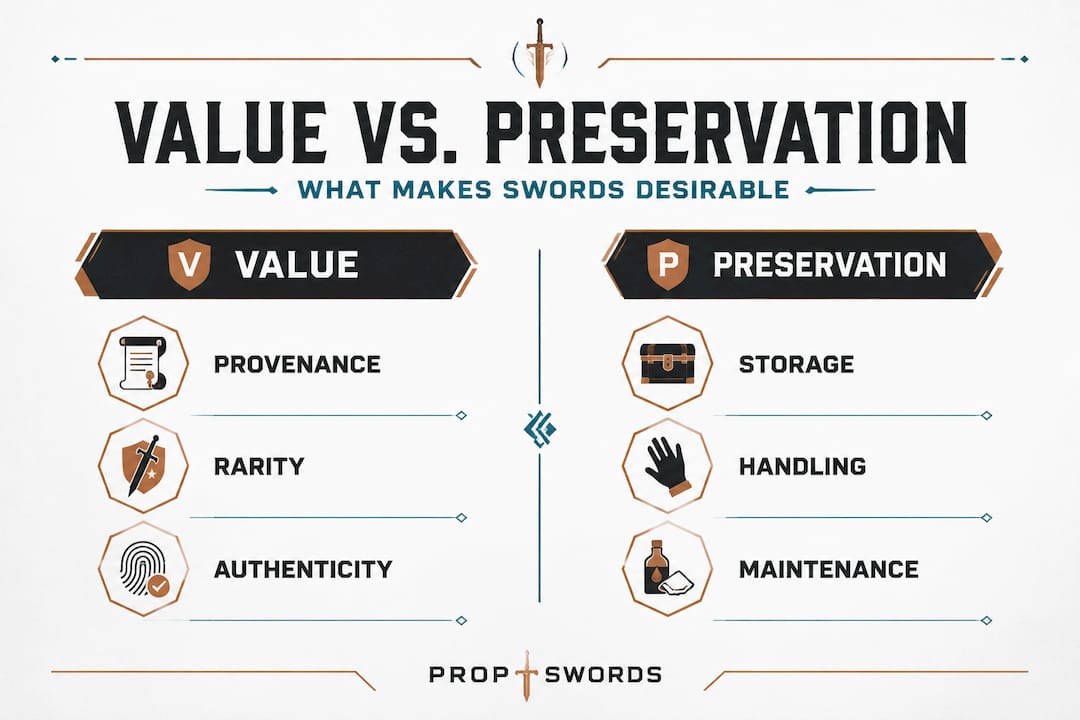
Preservation works alongside provenance. Provenance and preservation drive desirability, while forgeries and embellished stories create real risks that require independent verification. A sword with original fittings, minimal corrosion, and no structural repairs retains more authenticity and commands more interest from serious buyers and institutions alike. When either element is compromised, the sword’s story becomes uncertain, and its value suffers accordingly.
One of the quieter risks in collecting is the forgery problem. Unscrupulous sellers sometimes construct dramatic stories around ordinary blades, attaching invented military histories or fabricating ownership chains. This is not a rare edge case. It happens regularly in both auction houses and private sales. Protecting yourself means learning to read proven authenticity methods before committing to any significant purchase.
Here is what responsible collecting actually looks like in practice:
- Document every purchase. Keep receipts, correspondence, and any prior certificates with each sword.
- Research independently. Do not rely solely on the seller’s account of a sword’s history.
- Understand materials first. Knowing what you are looking at, from blade steel to handle wrapping, builds a baseline for spotting inconsistencies. A solid sword materials guide gives you that foundation.
- Verify replica claims separately. If you collect replicas, confirm that the piece accurately represents what it claims to be, using sources like an authentic replica swords identification guide.
“A sword’s provenance is its passport. Without it, you are holding history without a name.” This principle guides serious collectors in every transaction and every display decision.
Stewardship is not just a philosophical stance. It is a set of practical habits that protect both your investment and the cultural record those objects represent.
How collectors evaluate and preserve swords
Understanding the value of provenance is the starting point. Protecting that value over time requires a structured, repeatable approach to evaluation and care. Serious collectors use structured visual and physical criteria to evaluate specific features, then apply preservation protocols that minimize damage over decades.
Evaluation steps for a newly acquired sword:
- Examine the blade geometry. Look at the cross-section, edge profile, and tip. Inconsistencies can reveal repairs or re-grinds that altered the original form.
- Inspect the hamon (the temper line visible on Japanese blades). The hamon is created during the differential hardening process and is nearly impossible to convincingly fake on a hand-forged blade. Its character and consistency reveal the smith’s skill and technique.
- Check the tang and mei. The tang is the portion of the blade that extends into the handle. On Japanese swords, the mei is the smith’s signature inscribed on the tang. Authentic mei have specific stroke styles that experts can cross-reference against historical records.
- Assess the fittings. The tsuba (guard), menuki (handle ornaments), and saya (scabbard) should be period-consistent and show appropriate aging without signs of deliberate artificial weathering.
- Test for structural integrity. Gentle flex tests (only on appropriate swords), light, and magnification reveal hairline cracks, weld seams, or hidden repairs.
For quality sword identification, applying these steps consistently matters more than any single inspection detail.
Once a sword passes evaluation, ongoing preservation becomes the priority. Here is a practical comparison of the most common preservation approaches:
| Preservation method | Best for | Frequency | Key benefit |
|---|---|---|---|
| White cotton gloves | All swords | Every handling | Prevents acid transfer from skin |
| Mineral oil application | Carbon steel blades | Every 3 to 6 months | Prevents rust and corrosion |
| Climate-controlled storage | High-value pieces | Continuous | Stabilizes humidity and temperature |
| Annual professional inspection | Antique and investment pieces | Once per year | Catches issues before they worsen |
| Rotation in display cases | Display collections | Every 6 months | Prevents uneven light and humidity exposure |
Pro Tip: Store swords horizontally when possible, edge-up for Japanese swords in their scabbards. Vertical storage can cause scabbard lacquer to pool unevenly and may stress the handle over time.
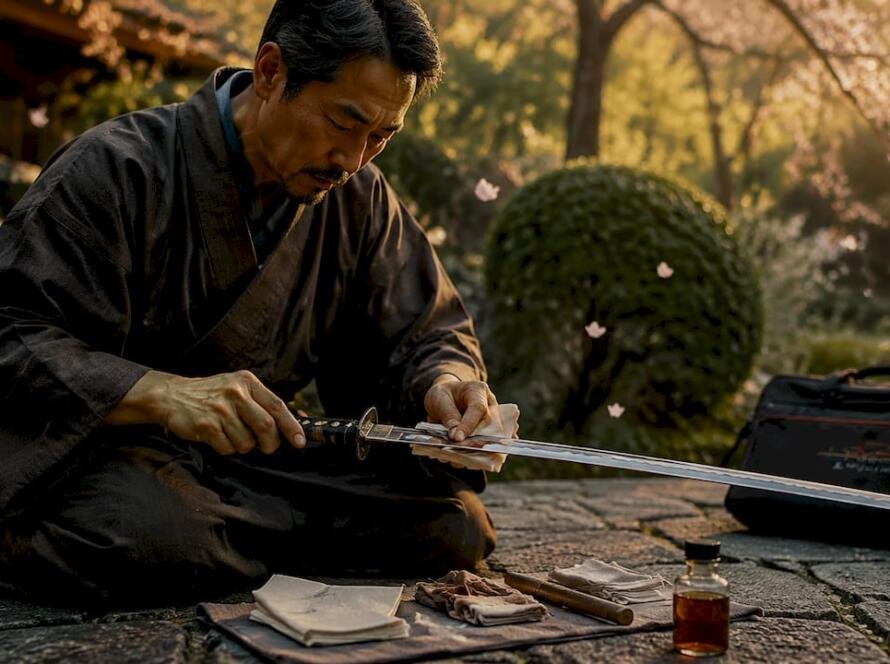
Good replica sword maintenance follows many of the same principles as antique care. Even a modern replica deserves consistent cleaning, proper storage, and periodic inspection. Neglect accelerates finish wear, promotes oxidation, and loosens fittings. A complete sword care guide walks through these routines in detail. Following expert maintenance tips helps collectors at every level maintain their pieces far longer.
Authentication and specialized appraisal: Japanese sword collecting
Japanese sword collecting operates at a level of rigor that few other weapon categories match. The terminology, the authentication process, and the certification system all reflect centuries of craft tradition and formal study. For collectors drawn to katana, wakizashi, or tanto, understanding this system is not optional. It is central to the hobby.
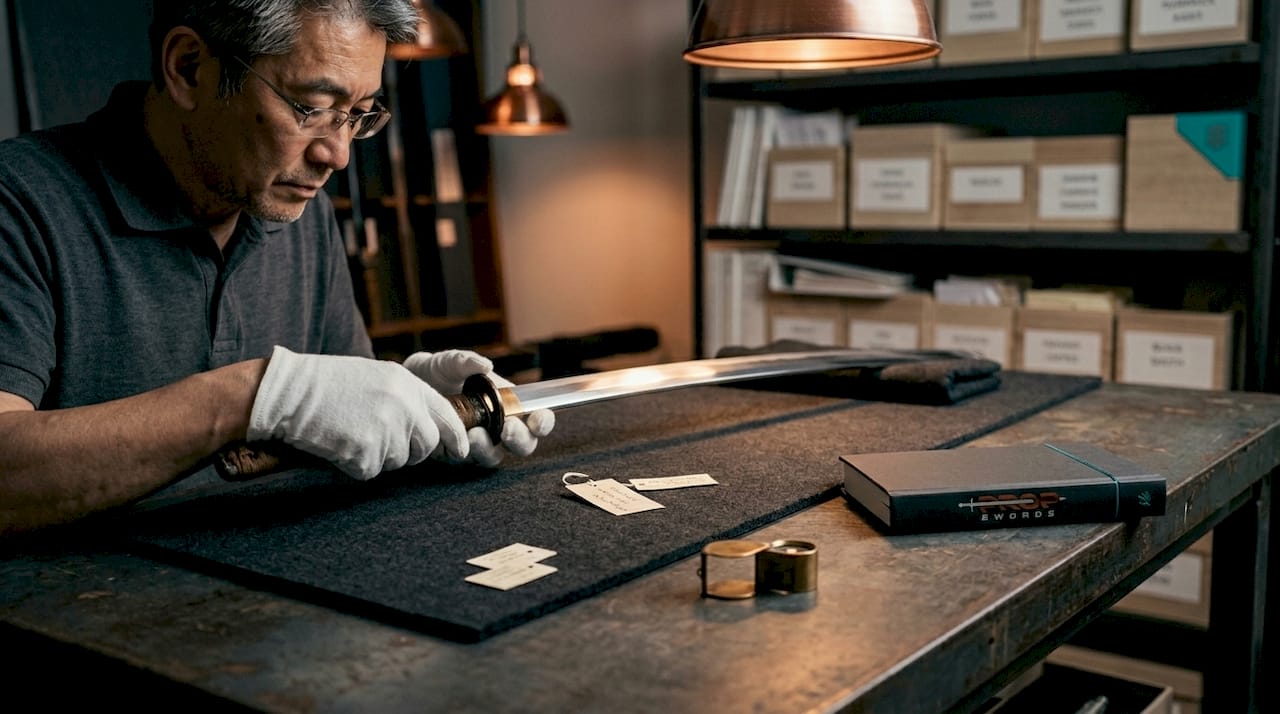
Kantei is the practice of identifying a Japanese sword’s maker, school, period, and quality through careful physical examination. An experienced appraiser examines the blade’s shape, steel grain (called the jihada), hamon characteristics, and the nature of the boshi (the temper line at the tip). This is expert appraisal methodology that requires years of hands-on study to develop.
Shinsa is the formal examination process conducted by recognized organizations. Two of the most respected are the NBTHK (Nihon Bijutsu Token Hozon Kyokai, or the Society for the Preservation of Japanese Art Swords) and the NTHK (Nihon Token Hozon Kai). NBTHK and NTHK run shinsa events and issue Kanteisho appraisal certificates documenting authenticity, the smith’s school, the historical period, and the quality level assigned by the judging panel.
Here is how NBTHK and NTHK certificates compare at a glance:
| Feature | NBTHK | NTHK |
|---|---|---|
| Founded | 1948 | 1979 |
| Certificate levels | Hozon, Tokubetsu Hozon, Juyo, Tokubetsu Juyo | Kanteisho, Yushu Saku |
| Recognition | Internationally recognized standard | Strong collector acceptance |
| Examination location | Japan (periodic overseas events) | Japan and select international events |
| Best suited for | Museum-quality and investment pieces | Active collector market |
Pro Tip: Never buy an uncertified Japanese sword at a premium price without arranging an independent kantei first. Certificates are not infallible, but they significantly reduce your exposure to forgeries and misattributed pieces.
The forgery problem in Japanese swords is particularly acute because the financial stakes are high. A blade attributed to a famous swordsmith from the Kamakura period (roughly 1185 to 1333) can be worth tens or even hundreds of thousands of dollars. That premium attracts sophisticated forgers. Authenticating replica swords follows different protocols than antique authentication, but both share the same core discipline: examine the physical evidence before trusting the story.
Knowing how to apply historical swords criteria helps you approach any authentication conversation with confidence. And learning proper safe handling tips ensures that the appraisal process itself does not damage what you are trying to protect.
Evolving motivations and debates: Why sword collecting persists
The technical and procedural side of collecting only tells part of the story. The human side, why people collect swords in the first place, and why the hobby continues to grow despite significant barriers, reveals something deeper about how people relate to history and culture.
Collectors themselves debate the hobby’s trajectory in forums and discussion communities, with some arguing that aging collector demographics and tightening import restrictions threaten the hobby’s future. Others point to a wave of new collectors drawn in by anime, fantasy films, and video games, who bring fresh energy and entirely different motivations.
The motivations behind collecting are genuinely varied:
- Historical connection. Many collectors want a physical link to specific periods or cultures, whether feudal Japan, Viking-age Scandinavia, or medieval Europe.
- Craftsmanship appreciation. The technical mastery required to forge, temper, and finish a high-quality blade represents an art form that collectors want to preserve and champion.
- Fandom and symbolism. A growing segment of collectors focuses on replicas tied to beloved characters and stories. A sword from a favorite anime series or fantasy film carries emotional resonance that purely historical pieces cannot replicate.
- Investment potential. Certified antique swords from respected schools have demonstrated long-term value appreciation, making them attractive to collectors who also think about financial returns.
- Community belonging. Sword collecting connects people across geography and background. Shows, online groups, and appraisal events create relationships built around shared expertise.
This last point, community, helps explain collector sword value beyond pure monetary terms. The knowledge shared within collector networks accelerates individual learning and makes the whole community better at spotting fakes, caring for pieces, and evaluating new acquisitions.
The rise of fantasy and anime replica swords has genuinely expanded the collecting world. Swords tied to popular series introduce thousands of people to the broader craft tradition behind blade-making, and many of those newcomers eventually develop interest in historical pieces as well. Understanding swords in history gives modern collectors the context to appreciate both ancient artifacts and contemporary replicas on their own terms.
Displaying swords at home also reflects this blend of motivations. A well-arranged display communicates personal identity, aesthetic sensibility, and cultural connection simultaneously. Whether the pieces are antique or replica, the act of curation and display is itself a form of storytelling.
What most articles miss: The lived experience of stewardship
Most writing about sword collecting focuses on what things are worth and how to avoid getting cheated. Both topics matter. But they leave out the thing that keeps experienced collectors engaged for decades: the weight of responsibility.
When you own a sword with genuine history, you are not simply a buyer. You are a temporary guardian. The blade existed before you, and if you care for it properly, it will exist long after you. That shift in perspective changes everything about how you interact with your collection. You stop asking “what is this worth?” and start asking “what does this represent, and what does it need from me?”
This is especially true for collectors drawn to historical sword craftsmanship. A hand-forged blade from any tradition represents thousands of hours of accumulated knowledge, passed from master to apprentice across generations. When that blade survives, that knowledge survives with it. When it is neglected, poorly stored, or lost to corrosion, something irreplaceable disappears.
The emotional and educational return on this kind of stewardship far outpaces any monetary calculation. Collectors who approach their pieces with genuine curiosity, learning about the cultures and crafts behind each blade, develop a kind of historical literacy that enriches their entire understanding of human creativity. That is not something you can price on a certificate.
For cosplayers and anime fans building replica collections, the same principle applies at a different scale. A carefully chosen replica, displayed with intent and treated with care, becomes a statement about what you value and what stories you want to live alongside. The stewardship is cultural rather than historical, but it is no less real.
Explore collectible and replica swords
Collectors who take provenance, preservation, and authenticity seriously deserve a resource that matches that commitment.
At Propswords, we curate selections that speak to collectors and enthusiasts at every stage of the journey. Whether you are looking for your first piece or adding to an established collection, our range of best replica swords reflects the quality and detail that serious collectors expect. For fans of fantasy universes and pop culture stories, our fantasy sword collectibles collection offers iconic pieces with genuine display presence. And if you want to share the passion with someone who appreciates craftsmanship and story, our guide on gift fantasy sword value helps you choose something that actually means something. Free shipping within the USA makes getting started even easier.
Frequently asked questions
Why is provenance important in sword collecting?
Provenance traces a sword’s ownership and usage history, directly shaping both its value and its authenticity. Without documented provenance, value and authenticity become impossible to confirm, even on physically impressive blades.
What are the main risks collectors face with forgeries?
Collectors risk paying premium prices for ordinary blades dressed up with fabricated histories. Independent verification is essential because embellished stories are difficult to detect without expert examination.
How is a Japanese sword authenticated?
Appraisal experts match the sword’s physical features, including hamon, jihada, and boshi, to historical records through kantei, and NBTHK and NTHK issue certificates following formal shinsa examination to confirm authenticity, school, and period.
What preservation steps do serious collectors use?
Collectors use glove handling, regular mineral oil application on carbon steel blades, climate-controlled storage, and annual professional inspections to keep swords in stable, long-term condition.
Why do people still collect swords despite debates?
History, craftsmanship, and fandom symbolism give sword collecting meaning that goes beyond trends or investment returns, and collector debates about the hobby’s trajectory actually reflect a healthy, evolving community rather than a declining one.
Recommended