TL;DR:
- Choosing the right martial arts sword involves understanding blade geometry, tactical role, and handling features to match your purpose. Asian swords like the dao, katana, and jian each have distinct designs rooted in cultural and functional traditions, while European swords like the longsword, rapier, and gladius reflect historical combat needs. Exploring beyond classics and embracing fantasy or hybrid blades enriches practice, collection, and cultural appreciation for all martial arts enthusiasts.
Choosing the right martial arts sword sounds straightforward until you realize just how many distinct traditions, blade geometries, and tactical purposes exist across cultures and centuries. A collector eyeing a sleek katana replica and a practitioner selecting a longsword for HEMA sparring are solving very different problems, even though both are picking “a sword.” The real challenge is knowing what separates one sword family from another and why those differences matter for training, display, cosplay, or collecting. This guide breaks down the most important sword types by blade shape, function, and cultural origin so you can make a genuinely informed choice.
Table of Contents
- How to evaluate martial arts sword types
- Iconic Asian martial arts swords
- Famous European sword types in martial arts
- Specialty and hybrid swords: shashkas, fantasy, and collectibles
- Side-by-side comparison of martial arts sword types
- Why collectors and martial artists should look beyond the classics
- Explore authentic and replica martial arts swords
- Frequently asked questions
Key Takeaways
| Point | Details |
|---|---|
| Blade shape and use | Martial arts swords vary by blade geometry, purpose, and handling features. |
| Cultural variety | Both Asian and European traditions offer unique sword types with deep martial and collectible appeal. |
| Hybrid and fantasy options | Modern collectors and martial artists increasingly value fantasy and hybrid swords alongside traditional blades. |
| Selection strategy | Choosing the right sword means balancing historical accuracy, intended use, and personal taste. |
| Care and collection | Proper sword care ensures your collection remains in top shape for practice, display, or cosplay. |
How to evaluate martial arts sword types
Before you fall in love with a specific blade, it helps to understand the framework collectors and martial artists use to classify swords. Three core factors drive most meaningful distinctions.
Blade geometry is the starting point. A curved vs. straight blade) changes everything about how a sword cuts, how it’s carried, and what fighting style it supports. Curved blades pull through the cut, making them ideal for slashing on horseback or in fast, fluid exchanges. Straight blades concentrate force into a point and work better for thrusting or for precise controlled cuts. Single-edged blades concentrate the sharpened steel on one side and are usually thicker-spined for durability. Double-edged blades cut in both directions and demand a different kind of hand discipline from the user.
Tactical role is the second factor. Different sword families were born from specific combat needs:
- Slashing and chopping swords prioritize a curved edge and weight distribution toward the tip
- Thrusting swords are slender, stiff, and point-heavy
- Versatile swords split the difference, offering decent cuts and workable thrusts
- Precision swords favor balance and control over raw power
Handling features round out the picture. How a sword is carried on the belt, what kind of guard it has, and whether the guard is used actively in binding or deflection all shape both the fighting art and the collector experience. A guardless sword like the shashka signals a completely different school of thought than a swept-hilt rapier built for complex hand protection.
Pro Tip: When browsing replicas or studying sword history and practice, map every sword you encounter to these three criteria first. It immediately clarifies why certain blades look the way they do.
With this criteria in mind, let’s dive into major martial arts sword types and their defining features.
Iconic Asian martial arts swords
Asian martial traditions produced some of the most recognizable and sought-after sword designs in history. Three families dominate the conversation.
The dao is the foundational Chinese sword for most practical combat throughout Chinese history. According to Chinese sword taxonomy), dao are single-edged slashing swords that are usually moderately curved. They can appear straight or curved depending on the period, but the single-edged geometry built for cutting and slashing is consistent. The dao includes several subtypes: the liuyedao (willow-leaf dao) popular in the Ming dynasty, the niuweidao (oxtail dao) with its flaring tip, and the piandao with a more pronounced curve. Each prioritizes a powerful draw cut and efficient power from the shoulder.
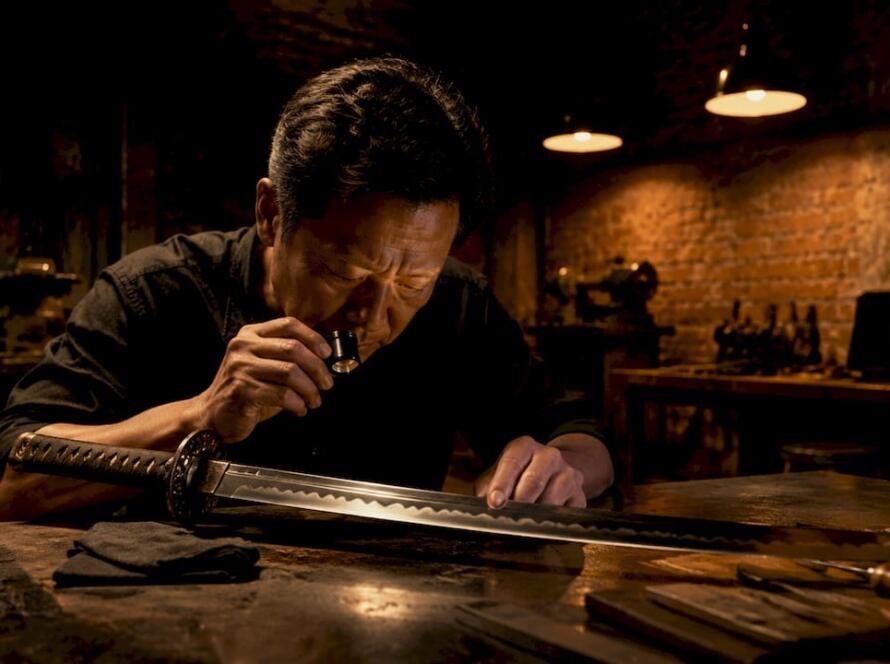
The katana is arguably the most famous sword in global pop culture today. Japanese, single-edged, and curved, the katana was central to samurai culture and has since become the defining image of Japanese martial arts. It features a differential hardening process called hamon that creates a visible temper line along the edge. Katanas are the backbone of iaido and kenjutsu practice and have shaped countless anime characters, from Roronoa Zoro in One Piece to Mugen in Samurai Champloo. For sword accessories for cosplay, a katana-style blade usually pairs with a sageo cord, tsuba guard, and matching saya (scabbard) for authenticity.
The jian stands apart as China’s “gentleman’s sword.” Straight, double-edged, and optimized for control and precision, the jian requires more technical skill than the dao. Its flexibility and point sensitivity make it ideal for the flowing footwork of wushu and taiji sword forms. In Chinese martial arts philosophy, the dao is considered the “general of all weapons” for its power, while the jian is called the “king of all weapons” for its elegance.
| Sword | Origin | Edge | Curvature | Primary tactic |
|---|---|---|---|---|
| Dao | China | Single | Moderate | Slashing, chopping |
| Katana | Japan | Single | Curved | Draw cut, precision |
| Jian | China | Double | Straight | Thrusting, control |
| Ninjato | Japan | Single | Straight | Stealth, utility |
| Wakizashi | Japan | Single | Curved | Close quarters |
Pro Tip: If you’re drawn to anime sword aesthetics, the katana and ninjato are your strongest starting points. Both have enormous pop culture footprints and an equally rich historical foundation worth studying.
Famous European sword types in martial arts
Next, we’ll examine the rich variety of European swords that shaped martial arts and history.
European swords evolved dramatically across more than two thousand years of changing warfare, armor technology, and social culture. Understanding the major families helps you appreciate both the historical context and the modern revival happening through HEMA.
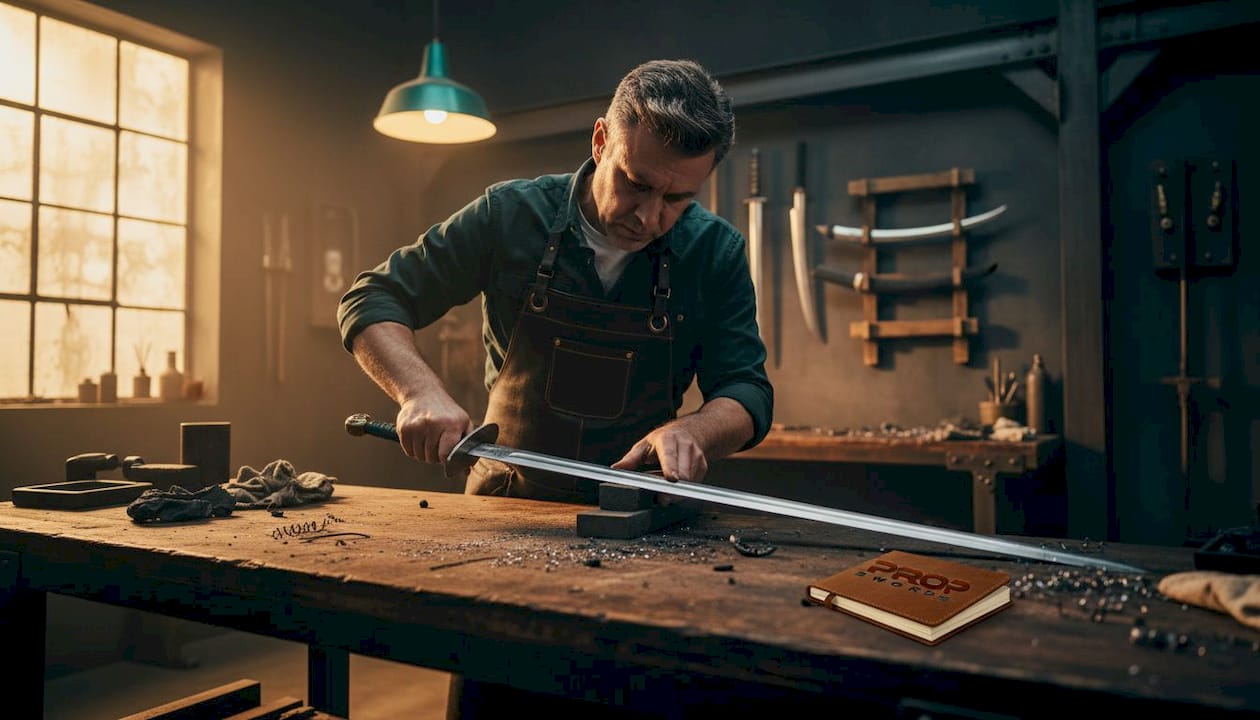
The gladius and spatha were the workhorses of Roman military expansion. Short, stabbing swords designed for tight infantry formations, the gladius excelled in close press fighting where a long blade would be a liability. The spatha was its longer successor, favored by cavalry and eventually becoming the template for early medieval swords. For collectors, a well-made Roman gladius replica makes a striking display piece that also communicates a clear historical story.
The longsword and estoc represent the high medieval tradition. According to European sword families, longswords and estocs were developed specifically to address late medieval plate armor, requiring different techniques than earlier swords. The longsword is double-edged with a cruciform hilt, long enough to use with both hands. HEMA longsword technique is built around historical systems, particularly the Liechtenauer tradition, which organizes cuts, guards, and initiative sequences into a coherent fighting language. The estoc, by contrast, is a rigid thrusting weapon designed to find gaps in armor, essentially a steel spike with a handle.
“The longsword was the Swiss army knife of medieval warfare, capable of cutting, thrusting, half-swording through armor gaps, and even grappling when conditions required it.”
The rapier and smallsword defined Renaissance urban culture. Slender, point-heavy, and built for civilian dueling rather than battlefield use, rapiers reward technical precision over brute strength. The smallsword, even lighter and more refined, became the gentleman’s dueling weapon of the 17th and 18th centuries. Both are studied in classical fencing schools today.
The sabre bridged the gunpowder age and cavalry warfare, featuring a curved single-edged blade that made it effective at delivering fast slashing cuts from horseback. Sabres remained standard military issue well into the early 20th century and continue to appear in Olympic fencing as a modernized form.
Key features to know for European swords when caring for replica swords:
- Fuller (the groove running along the blade) reduces weight without sacrificing strength
- Ricasso (the unsharpened portion near the hilt) allows half-swording grips
- Cross guard vs. swept hilt vs. cup hilt signals both era and fighting style
- Pommel weight balances the blade and can be used as a striking tool
Specialty and hybrid swords: shashkas, fantasy, and collectibles
Some sword types don’t fit neatly into the classic categories. In this section, we explore those hybrids and collector favorites.
The shashka is one of the most fascinating and overlooked sword types in the world. As described by specialist sources, the shashka is a guardless or minimally guarded sabre-like sword from the Caucasus and Cossack traditions, optimized for fluid horseback slashing with a distinctive grip-and-sheath profile. Unlike most swords, it rides edge-up in the scabbard, worn on the back of the hip rather than the front. The absence of a guard is intentional: it forces the user to rely on blade control and evasion rather than blocking. Cossack horsemen developed it into a complete martial system focused on speed and flow. Today it represents a real point of difference for collectors interested in swords for reenactment who want to move beyond the standard catalog.
Fantasy and anime swords are the category that has genuinely transformed the collector market over the past two decades. These blades draw from real historical templates but push the design further, adding oversized proportions, dual-colored blades, unusual materials, or extreme curvature. Swords like Cloud Strife’s Buster Sword from Final Fantasy VII or the Zanpakuto blades from Bleach have no historical parallel, but they carry enormous emotional and cultural weight for fans.
The appeal is real and growing. The history and martial function of even fantasy weapons connects back to real traditions when examined closely. Cloud’s Buster Sword echoes the German two-handed Zweihander in scale. Ichigo’s Zangetsu in Bleach shares visual DNA with the zanbato, a massive Japanese cavalry cutter.
Key reasons collectors love hybrid and fantasy swords:
- They connect personal fandoms to real martial history
- Unique aesthetics make them standout display pieces
- High-quality replicas capture extraordinary detail
- They’re ideal for cosplay competitions and conventions
Collector insight: The fantasy sword market has grown significantly since 2020, with anime-inspired replicas now representing a major share of collector purchases globally. Demand for detailed screen-accurate replicas continues to outpace traditional historical reproductions in several categories.
Side-by-side comparison of martial arts sword types
To bring it all together, here’s a clear comparison and quick-pick guide for each sword type.
| Sword | Blade shape | Edge(s) | Primary tactic | Best use case | Origin |
|---|---|---|---|---|---|
| Dao | Curved | Single | Slashing | Martial arts, display | China |
| Katana | Curved | Single | Draw cut | Cosplay, iai, display | Japan |
| Jian | Straight | Double | Precision thrust | Wushu, display | China |
| Longsword | Straight | Double | Cuts and thrusts | HEMA practice, display | Europe |
| Rapier | Straight | Single/Double | Thrusting | Fencing, display | Europe |
| Gladius | Short, straight | Double | Close stabbing | Collection, reenactment | Rome |
| Sabre | Curved | Single | Slashing | Cavalry reenactment | Europe/Asia |
| Shashka | Curved | Single | Fluid horseback slash | Reenactment, specialty collect | Caucasus |
| Fantasy blades | Varies | Varies | Display/cosplay | Cosplay, collection | Anime/film |
Based on research across sword families), here are top recommendations for specific goals:
- For HEMA practitioners: Start with a longsword. It offers the richest surviving historical technique base and the most active modern community.
- For martial artists in Asian traditions: The katana or dao depending on your school. Both have living martial arts built around them.
- For cosplay: The katana is the most versatile starting point, but anime-specific replicas score highest at conventions.
- For display collectors: Roman gladius, jian, or fantasy blades all make striking wall pieces with strong conversation-starting backstories.
- For history enthusiasts: The shashka or estoc rewards serious collectors who want something genuinely unusual and historically layered.
- For beginners: A medium-length curved single-edged sword (dao or katana style) is easiest to understand and handle, and has the most robust replica market.
Why collectors and martial artists should look beyond the classics
Here’s a view we hold strongly: the obsession with “authentic” or “classic” sword types sometimes actively limits both practice and collecting enjoyment. It’s a subtle trap.
Most introductory conversations about martial arts swords begin and end with three or four names: katana, longsword, rapier, maybe dao. These are excellent swords. But fixating on them means missing an enormous range of equally fascinating weapons with equally deep traditions behind them. The shashka, for example, represents an entire school of mounted warrior philosophy that most Western collectors have never encountered. The estoc challenges assumptions about what a sword even is. The jian requires a level of technical precision that makes the katana feel like a relatively blunt instrument by comparison.
We’d also argue that fantasy and anime swords deserve far more respect than the traditional collector community tends to give them. A beautifully crafted replica of a well-designed fictional blade reflects real metallurgical skill and artistry. It often introduces younger collectors to the historical weapons that inspired it. That’s genuinely valuable cultural transmission.
The best approach is to treat sword collecting and practice as a living curiosity rather than a checklist. Add advanced sword care tips to your knowledge base not because you “should” but because caring for a blade deepens your relationship with it. Study the history behind a sword you already love, then follow the thread to something unexpected. A katana fan who follows Japanese martial history long enough usually finds their way to Chinese and Korean sword traditions, which eventually leads to Central Asian steppe weapons and then to European cavalry sabres. It’s all connected.
Innovation in modern swordsmithing also produces blades that combine historical techniques with contemporary materials and design thinking. These aren’t lesser swords. Many of them represent genuine craft achievements worth owning and studying alongside any historical piece.
Explore authentic and replica martial arts swords
If you’re inspired to find your next sword, whether historical, martial arts-focused, or fantasy-inspired, the place to start is a collection built specifically for enthusiasts like you.
At Propswords, you’ll find an expertly curated range of best replica swords spanning katanas, longswords, gladii, fantasy blades, and more. Whether you’re prepping for your next cosplay event using our cosplay sword preparation guide or hunting for a statement display piece, the selection covers every sword family covered in this article. Free shipping within the USA makes it easy to explore without hesitation. Browse the full sword collection and find the blade that speaks to your specific interest, from battle-tested historical designs to screen-accurate anime replicas crafted with real attention to detail.
Frequently asked questions
What is the main difference between a dao and a katana?
Dao are single-edged Chinese swords) built primarily for slashing with moderate curvature, while katanas are Japanese curved swords with a distinct profile, differential hardening, and a cultural tradition rooted in samurai practice.
Are European swords like the longsword used in martial arts today?
Yes, the longsword is actively studied and sparred with in HEMA communities worldwide, using historical technique systems like the Liechtenauer tradition as a structured foundation for modern practice.
What makes the shashka different from other cavalry swords?
The shashka’s defining feature is its absent or minimal guard, which forces practitioners to prioritize blade speed and evasion over blocking, and it rides edge-up in the scabbard for a faster draw.
Can replica swords be used for martial arts training?
Some high-quality replicas are built with training use in mind, but you should always verify materials, edge treatment, and structural integrity before using any replica sword for contact practice.
What is the best martial arts sword type for cosplay?
Katanas remain the top choice due to their iconic status in anime and film, but detailed fantasy replicas and historically styled longswords also perform exceptionally well at cosplay events due to their visual impact.
Recommended