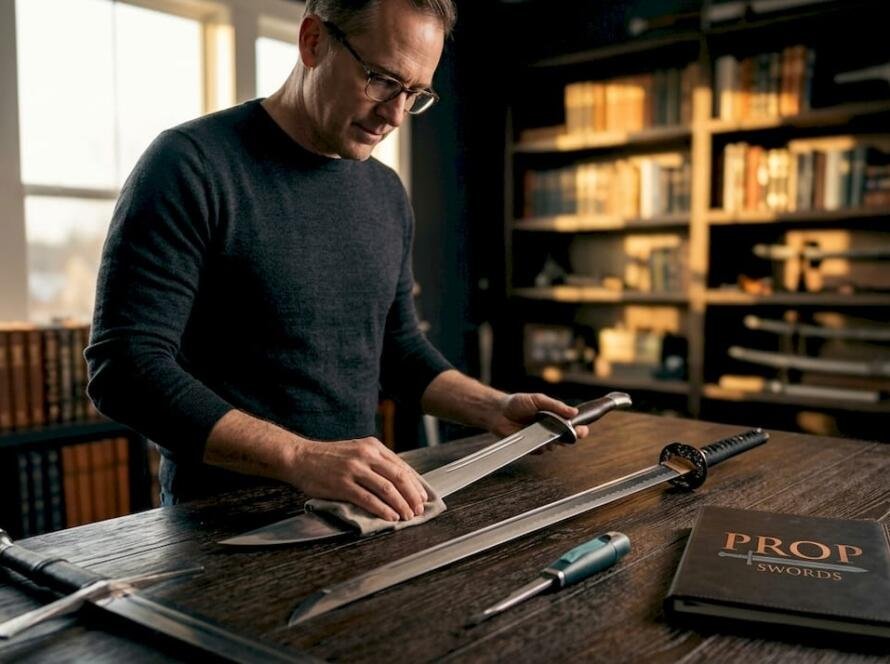
You can legally ship a sword in the United States and internationally, but the rules vary by carrier, destination, and blade type. Before you box anything up, confirm two things: whether your chosen carrier accepts swords on the specific service you plan to use, and whether the destination country allows the import. Those two checks prevent the vast majority of seized packages and returned shipments.
Before you ship, verify all six of these:
- Carrier acceptance: Does your carrier allow swords on air or ground service specifically?
- Blade state: Is the sword mounted in full koshirae, or can you ship the blade separately?
- Legal check: Are swords legal to possess and import at both origin and destination?
- Packaging method: Do you have a rigid tube or wooden box long enough for the blade?
- Insurance and signature: Have you declared the full value and selected signature-required delivery?
- Customs description: Is your commercial invoice accurate and specific (not just “sword”)?
Pro Tip: A professional sword polisher recommends never shipping a fully mounted sword when you can avoid it. Ship the blade secured to a wooden board or in a shira-saya instead. It reduces damage risk, lowers theft appeal, and often cuts dimensional weight.
Key Takeaways
Shipping a sword legally and safely comes down to three things: confirming carrier and customs rules before you pack, securing the blade so it cannot shift or puncture the package, and declaring the item accurately on every customs form.
| Point | Details |
|---|---|
| Confirm carrier rules first | USPS, UPS, and FedEx all accept swords, but service-level and blade-type restrictions vary. |
| Board-mount or shira-saya the blade | Strapping the blade to a wooden board prevents movement and puncture during transit. |
| Declare accurately for customs | Use a specific description (e.g., “non-sharp decorative sword, reproduction”) to reduce hold times. |
| Buy declared-value coverage | Standard carrier liability caps at $100; purchase coverage for any collectible worth more. |
| Ground beats air for long blades | Dimensional-weight pricing and air restrictions make ground the better option for blades over 36 inches. |
Table of Contents
- How to ship a sword: what each major carrier allows
- How to pack a sword safely for shipping
- Customs and export paperwork for international shipments
- State, local, and federal laws to check before you ship
- Cost drivers, insurance, and transit options
- Advanced packing advice for collectible and mounted swords
- Pre-shipping checklist you can print and follow
- Sources
- FAQ
How to ship a sword: what each major carrier allows
The three main U.S. carriers treat swords differently, and the service level matters as much as the carrier itself.
USPS Publication 52 is the canonical reference for what is and is not mailable. It covers prohibited items, HAZMAT rules, and special handling requirements. Swords are not categorically prohibited by USPS, but certain blade types and packaging failures can trigger rejection at the counter. If you are presenting a package at the Post Office for special handling or registered mail, have the publication’s relevant sections ready.
FedEx and UPS both accept swords under their general sharp-objects policies, but neither carrier is obligated to accept a package that is improperly packaged or that contains a blade type restricted by local law at the destination. Both carriers offer declared value coverage and direct-signature delivery options, which matter for high-value collectibles. UPS and FedEx also conduct random inspections, so accurate labeling is not optional.
Pro Tip: For blades longer than 36 inches, ground service is almost always the better call. Air restrictions on sharp objects are tighter, and dimensional-weight pricing on a long, narrow tube can make air freight surprisingly expensive.
How to pack a sword safely for shipping
Packing a sword well is not complicated, but it requires the right materials and a specific sequence. A blade that shifts inside a box can puncture the outer carton, injure a handler, and void your insurance claim.
Materials you need:
- Rigid wooden board (longer than the blade)
- Heavy 12-gauge wire or nylon strapping tape
- Shira-saya or scabbard (if available)
- Bubble wrap (minimum two layers)
- Closed-cell foam sheets
- Cardboard tube or wooden crate (sized to blade length)
- Packing paper or foam peanuts for void fill
- Tamper-evident outer carton
- Fragile and “This Side Up” labels
Step-by-step packing procedure:
- Photograph everything. Document the blade, fittings, and any existing wear before packing. These photos are your insurance claim if damage occurs.
- Remove non-essential mounts if possible. Tsuba, menuki, and lacquered saya are fragile and add theft appeal. Ship them separately or store them if the recipient does not need them.
- Board-mount or shira-saya the blade. For an unmounted blade, strap it to a wooden board that exceeds the blade length. Run heavy wire through the tang hole, tie it firmly, then strap the blade at two additional points so it cannot shift if the package is dropped on its end.
- Wrap and immobilize. Two full layers of bubble wrap around the board-mounted blade, secured with tape. No loose ends.
- Place in inner tube or wooden box. A PVC or heavy cardboard tube works for most katana-length blades. A wooden crate is better for two-handed swords or antiques.
- Outer carton with crush protection. At least two inches of foam or packing paper on all six sides. The inner package should not move when you shake the outer box.
- Label clearly. “Fragile,” “This Side Up,” and your return address on the outside. Do not write “sword” or “blade” on the exterior label.
For a display replica, a heavy cardboard tube with foam end caps is usually sufficient. For a high-value antique, a custom wooden crate with foam-lined interior is worth the extra cost.
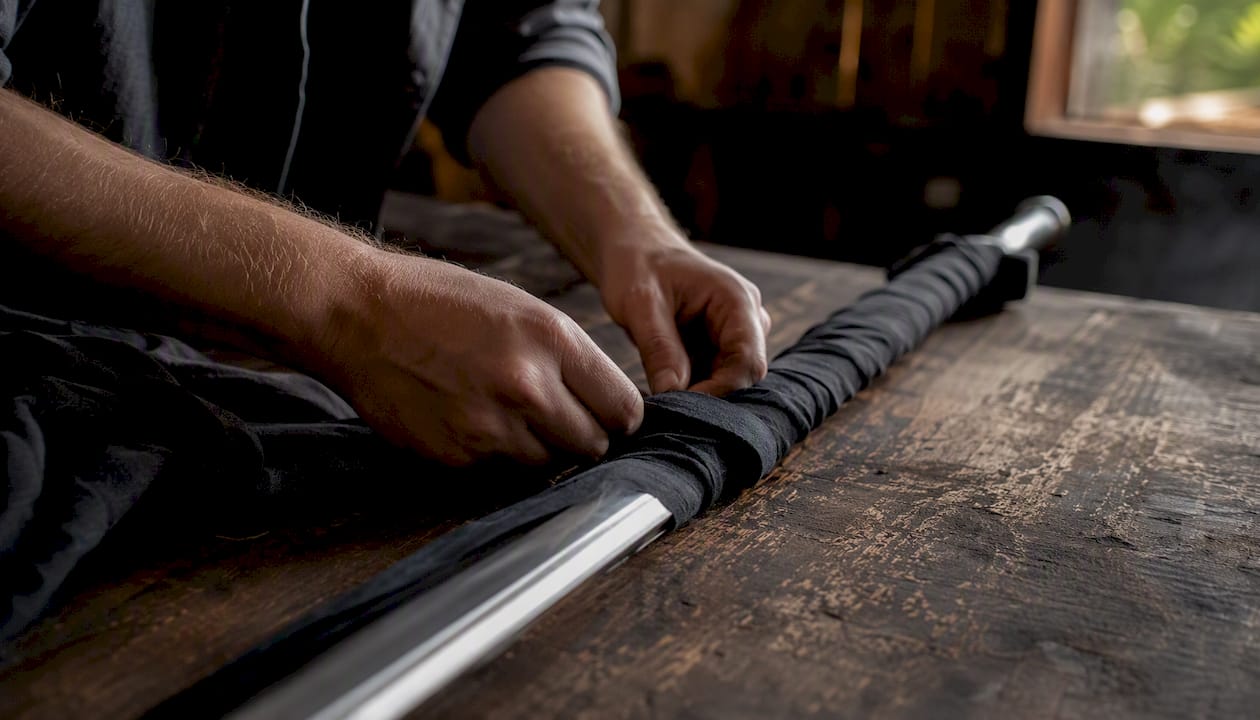
Pro Tip: Sword polishers specifically warn against letting a bare blade contact any packaging material directly. Even bubble wrap can trap moisture against a polished surface. Wrap the blade in acid-free tissue or a clean cotton cloth before the bubble wrap goes on.
Customs and export paperwork for international shipments
International sword shipping requires accurate paperwork more than anything else. A package held at customs is almost always held because of a vague or incorrect declaration, not because swords are banned.
Required documents for most international shipments:
- Commercial invoice with item description, declared value, and country of origin
- HS tariff code (typically 9307.00 for swords and sabers)
- Proof of purpose: photos, a receipt, or a letter stating decorative or reproduction use
- Export permit (required for authentic Japanese swords and some antiques)
Four-step international clearance process:
- Describe the item accurately. “Non-sharp decorative sword, stainless steel, reproduction” clears faster than “sword” alone. When truthful, labeling a non-sharp decorative or religious sword as such on the commercial invoice can materially shorten customs hold times in destinations like Canada, the UK, Australia, and New Zealand.
- Declare the correct value. Undervaluing a collectible to reduce duty is customs fraud. Declare the actual purchase price or appraised value.
- Check destination-country import rules. U.S. Customs and Border Protection does not categorically ban swords as imports, but the destination country’s rules are what matter when you are exporting. Some countries restrict blade length; others require import permits for edged weapons.
- Prepare for inspection. Include a printed copy of the invoice inside the package. Inspectors who can verify the contents without opening the outer carton tend to clear packages faster.
For authentic Japanese swords, the origin-country rules are strict. AOI Japan’s shipping notice details the export permit process required by Japan’s Agency for Cultural Affairs. Without that permit, an authentic nihonto will not clear Japanese customs for export, regardless of what the destination country allows.
Pro Tip: Select a carrier service that includes customs brokerage assistance (UPS Worldwide Expedited and FedEx International Priority both offer this). A broker can resolve documentation holds in hours rather than days.
State, local, and federal laws to check before you ship
Federal law is your baseline, but state and local laws can be stricter, and they apply to the recipient’s address, not just yours.
At the federal level, U.S. Customs and Border Protection does not prohibit swords as a category. However, specific blade designs fall under separate federal statutes. Switchblades and ballistic knives are restricted under the Federal Switchblade Act. Certain disguised blades (sword canes, for example) may trigger concealed-weapon statutes depending on how they are classified in the destination state.
Legal checklist before every shipment:
- Origin laws: Is it legal to possess and sell this blade type in your state?
- Destination laws: Does the recipient’s state or city restrict blade length, blade type, or edged-weapon possession?
- Transit restrictions: Some carriers route packages through states with stricter laws; this rarely affects ground shipments but is worth noting for air.
- Recipient authorization: Is the recipient an adult? Some states treat edged weapons like firearms for age-restriction purposes.
- Antique or cultural property permits: Authentic antiques may require documentation beyond a standard commercial invoice.
Warning: Shipping a prohibited blade to a restricted jurisdiction can result in package seizure, civil fines, or criminal charges against the sender. “I didn’t know” is not a legal defense. Verify destination laws with the state’s official statutes or call the non-emergency police line in the recipient’s city before you ship.
California, New York, and Massachusetts have some of the strictest edged-weapon laws in the country. If you are shipping to any of those states, check current statutes directly. Laws change, and a forum post from two years ago is not a reliable legal source.
Cost drivers, insurance, and transit options
Sword shipping costs more than most people expect, and dimensional-weight pricing is usually why.
The main cost drivers:
- Packaged weight: A katana blade weighs roughly 2–3 pounds; a longsword runs 3–5 pounds. Packaging adds 1–5 pounds, putting most packed sword shipments in the 3–12 pound range.
- Dimensional weight: A long, narrow tube or box is billed at its dimensional weight, not its actual weight, when the dimensional figure is higher. This is the single biggest surprise cost for first-time sword shippers.
- Distance and service speed: Ground is cheaper than air. Cross-country ground adds 3–5 days but can cut cost significantly on a long package.
- Declared value and insurance: Standard carrier liability is low (UPS and FedEx cap basic liability at $100 without purchased coverage). For a collectible worth $300 or more, buy declared-value coverage or a third-party policy.
- Special handling fees: Oversize packages and packages requiring special handling incur surcharges on all three major carriers.
For a katana-length replica (roughly 40 inches packed), expect ground shipping costs to run higher than a standard parcel of similar weight purely because of dimensional pricing. A two-handed sword packed in a wooden crate will cost more again, both in materials and in carrier fees.
For high-value items, signature-required and direct-delivery options are worth the small upcharge. A $500 replica left on a doorstep is a claim waiting to happen. After the sword arrives, a replica sword unboxing guide can help recipients inspect and document the condition immediately on receipt.
Statistic: Packed sword weights typically fall in the 3–12 pound range, but dimensional-weight pricing on a 48-inch tube can push the billable weight well above the actual weight, sometimes doubling the shipping cost compared to a compact parcel of the same mass.
Advanced packing advice for collectible and mounted swords
High-value blades and authentic antiques need more than bubble wrap and a cardboard tube. The fittings are often the most fragile and most expensive part of a mounted sword.
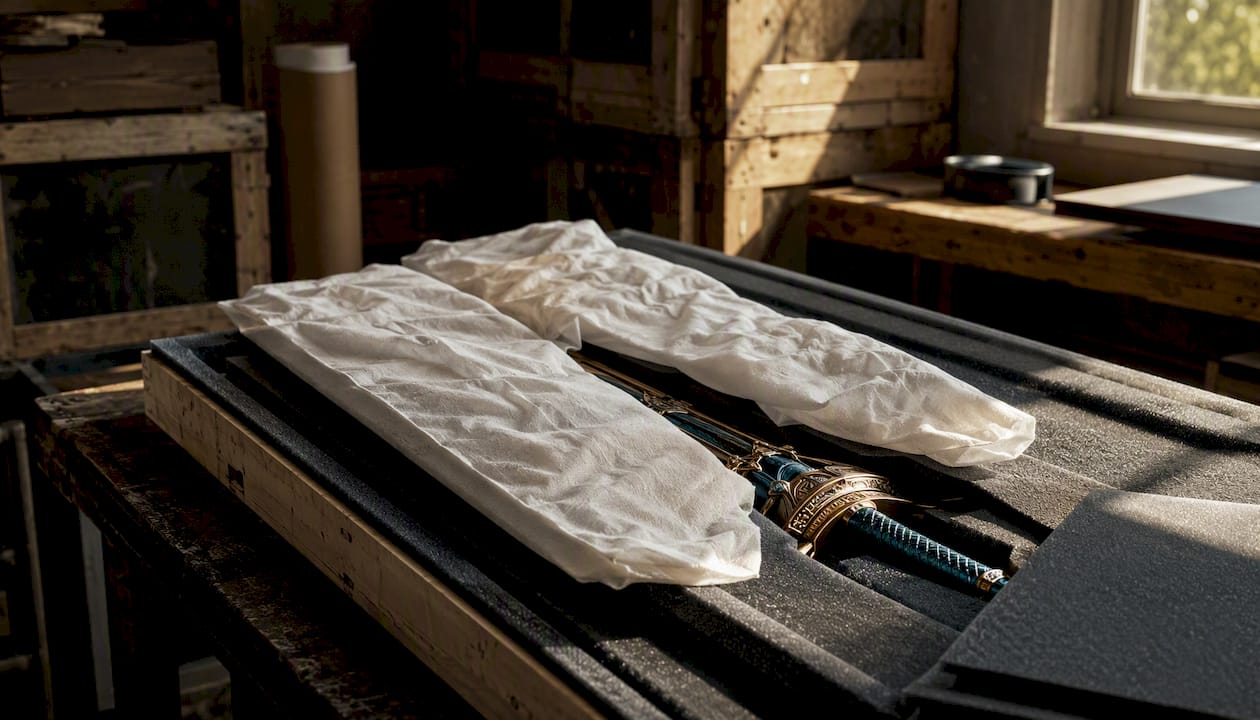
Lacquered saya crack under pressure. Menuki and other small fittings can shear off if the package is dropped. Tsuba made from soft metals dent easily. A conservator’s first recommendation is always to remove the koshirae entirely and ship the blade and fittings separately, each in its own padded container.
Packing considerations for collectibles:
- Photograph every fitting individually before disassembly, with a ruler in frame for scale.
- Wrap each fitting in acid-free tissue, then bubble wrap, then place in a rigid small box with foam lining.
- Store the saya in its own padded sleeve; do not pack it against the blade.
- For antiques, get a written appraisal before shipping. Carriers and insurers both require documented value for claims above standard liability limits.
- Use a professional pack-and-ship service or art handler for any piece valued above $1,000 or for cross-border antique shipments that require cultural property documentation.
For businesses shipping replica swords regularly, consistent packaging dimensions reduce dimensional-weight surprises. Standardize your tube or box dimensions to the longest SKU in your catalog, and pre-calculate the dimensional weight for each carrier before setting shipping rates. Clear, accurate customs descriptions on every commercial invoice also reduce the frequency of holds.
Pro Tip: For a mounted sword you cannot disassemble, wrap the entire assembly in soft cotton cloth first, then bubble wrap, and pack it so the blade tip and pommel are each cushioned by at least three inches of foam. The tip is the most vulnerable point in a drop.
Pre-shipping checklist you can print and follow
Run through this list before every shipment. Check each item off in order.
- [ ] Confirmed carrier accepts swords on the chosen service (ground vs. air)
- [ ] Photographed the sword, fittings, and any existing wear
- [ ] Removed unnecessary mounts or packed fittings separately
- [ ] Board-mounted or shira-saya’d the blade; no bare blade contact with packaging
- [ ] Two layers of bubble wrap around the blade assembly
- [ ] Inner tube or wooden box sized to the blade length
- [ ] Outer carton with minimum two inches of void fill on all sides
- [ ] Tamper-evident tape on all seams
- [ ] Purchased declared-value coverage or third-party insurance
- [ ] Selected signature-required delivery
- [ ] Completed commercial invoice with accurate description, value, and country of origin
- [ ] Included export permit or cultural property documentation (if required)
- [ ] Tracking number saved; delivery confirmation set up
- [ ] Kept copies of all photos and invoices for potential claims
Keep a small packing kit ready: acid-free tissue, bubble wrap, strapping tape, foam sheets, and a supply of appropriately sized tubes or boxes. Scrambling for materials at the last minute leads to shortcuts that void insurance claims.
Why Propswords wrote this guide
At Propswords, we field shipping questions from collectors and cosplayers every week. Whether someone is returning a replica, sending a gift overseas, or receiving their first anime sword, the same gaps keep coming up: which carrier to use, how to pack without damaging the blade, and what to write on the customs form.
This guide pulls together the carrier policies, conservator advice, and customs guidance we have seen matter most in practice. Propswords ships replica swords across the United States with free domestic shipping, and our shipping and returns policy covers what to expect when you order from us directly. For anyone shipping independently, the steps above reflect the same standards we apply to every outbound package.
Thinking about buying a replica that is easier to ship and display? Propswords carries a curated selection of anime, movie, and historical replicas built for collectors who want quality without the complications of shipping an antique. Browse the top replica swords for 2026 and find one worth adding to your collection.
Sources
Before you ship, check these official and authoritative pages directly:
- Shipping Restrictions & HAZMAT – What Can You Send in the Mail? | USPS
- How to Protect a Japanese Sword Blade in Shipping
- How Much Does A Sword Weigh? 1–5 Lbs By Type (2026 Guide) | ParcelPath
- Notice Regarding International Shipping of Japanese Swords
- How to Import a Katana into the USA: Japanese Sword Import Regulations Explained
FAQ
Can FedEx ship a sword?
Yes. FedEx accepts swords for both domestic and international shipments under its general sharp-objects policy, provided the item is legal at the destination and properly packaged. Declared-value coverage and signature-required delivery are strongly recommended for any collectible.
Can I send a sword via USPS?
USPS does not categorically prohibit swords, but USPS Publication 52 governs what is mailable. Certain blade types and improper packaging can result in rejection at the counter. Present the package in person at a Post Office if you need special handling or registered mail for a high-value item.
Can UPS ship a sword?
Yes. UPS accepts swords on both ground and air services, subject to destination-country laws and proper packaging. UPS caps basic liability at $100, so purchase declared-value coverage for any sword worth more than that.
Can you import swords into the US?
U.S. Customs and Border Protection does not ban swords as a category of import. However, duties may apply, and specific blade types (switchblades, ballistic knives) are restricted under federal law. Authentic Japanese swords require an export permit from Japan’s Agency for Cultural Affairs before they can legally leave Japan, regardless of U.S. import rules.
Recommended