TL;DR:
- Viking swords served as symbols of wealth, rank, and spiritual connection in Norse society. They were rare, highly valuable, and often used as family heirlooms and markers of identity. Modern replicas reflect their craftsmanship and deep cultural significance in Viking history.
The Viking sword is defined as one of the most culturally loaded weapons in human history, carrying far more meaning than its battlefield function suggests. Understanding what is viking sword significance means grasping that these blades were social currency, spiritual objects, and family heirlooms all at once. The Viking sword was rare enough that most Norse warriors never owned one. Its presence on a man’s hip announced his rank, his lineage, and his place in the cosmos. That combination of craft, myth, and social power is why these swords still captivate historians, collectors, and Norse culture enthusiasts today.
What is Viking sword significance in history and culture?
The Viking sword is not a single weapon type but a cultural category built on layers of meaning. Its significance spans metallurgy, social hierarchy, mythology, and ritual. Each layer reinforces the others, making the sword the most symbolically dense object in Norse material culture.
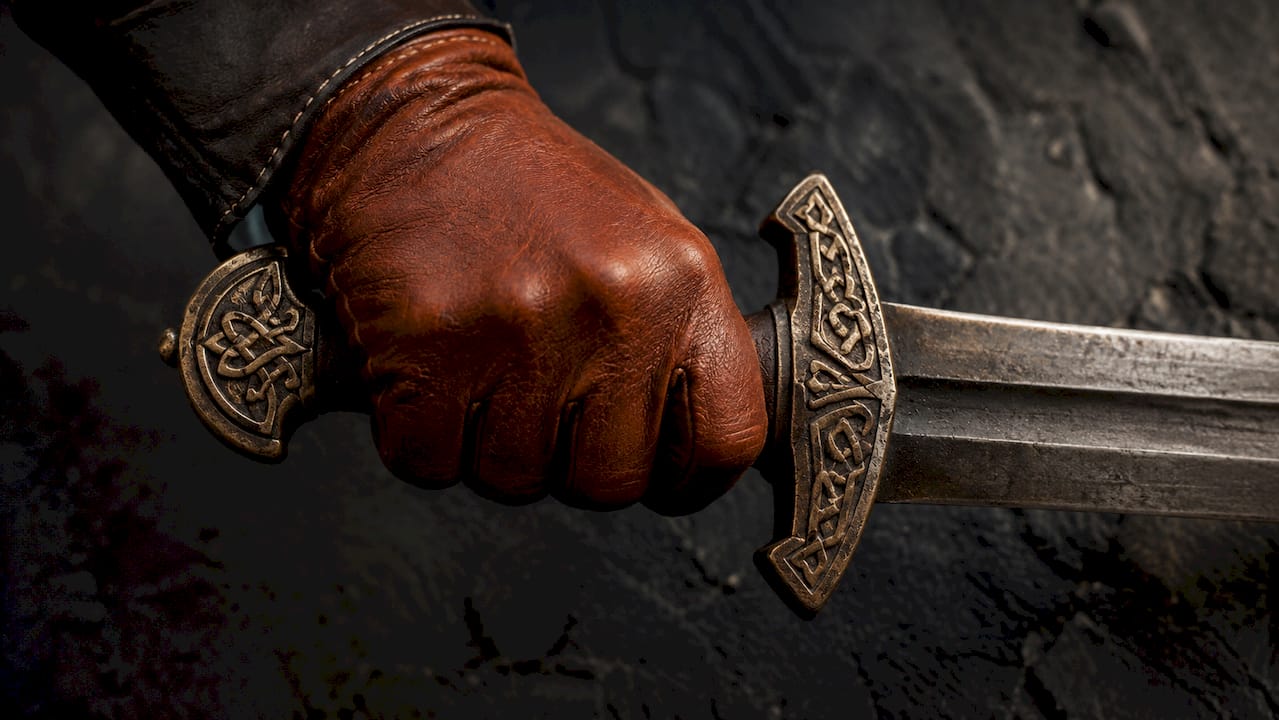
The term “Viking sword” is itself a slight misnomer. The blade originated in the Carolingian Empire, produced by Frankish craftsmen between the 8th and 11th centuries. Frankish rulers actually banned the export of these weapons to northern pagans, which made them rare and intensely prized when they did reach Scandinavia. A Norse warrior who carried one was advertising access to forbidden, foreign technology.
That rarity translated directly into prestige. A sword was not standard battlefield equipment for the average Viking. Most fighters carried axes, spears, or seaxes. The sword belonged to a different class of warrior entirely, one with the wealth, connections, and status to acquire it.
How were Viking swords made, and why were they so rare?
Viking sword craftsmanship sits at the intersection of art and engineering. The forging process was so specialized that a single blade could take up to a month to complete. That investment of time and skill made each sword a significant economic object before it ever drew blood.
Pattern welding and the Ulfberht breakthrough
Early Viking Age blades used pattern welding, a technique that twisted and folded iron rods together to distribute carbon unevenly through the metal. The result was a blade with a visible grain pattern and reasonable flexibility. It was impressive work, but it had limits. The steel remained inconsistent, with pockets of brittleness that could fail under hard use.
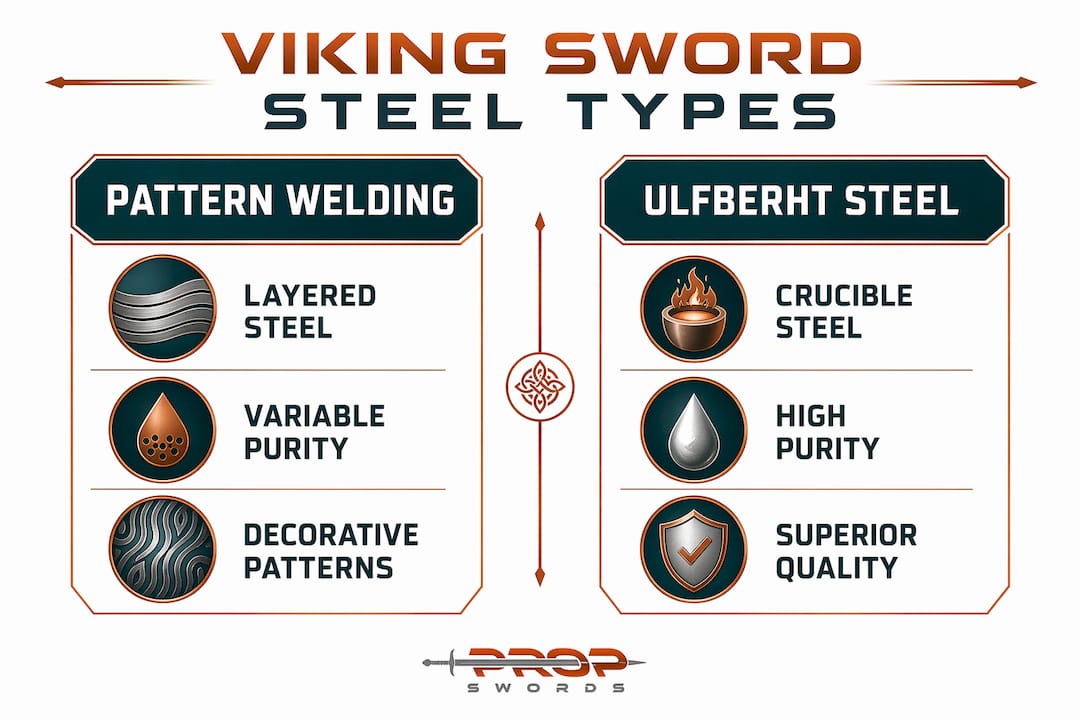
The Ulfberht swords changed everything. These blades used crucible steel, a technology that produced a far purer, more uniform metal. Only about 170 authentic Ulfberht blades have been discovered globally. That number tells you everything about their exclusivity. Owning one was the Viking Age equivalent of owning a precision instrument no one else on the battlefield could match.
Pro Tip: When examining a replica or museum piece, look at the blade’s surface. A genuine pattern-welded blade shows a flowing, wood-grain texture. Ulfberht-style crucible steel blades appear smoother and more uniform. That visual difference reflects centuries of metallurgical progress.
Here is a quick comparison of the two main blade technologies:
| Feature | Pattern-welded blade | Crucible steel (Ulfberht) |
|---|---|---|
| Steel purity | Variable, layered | High, uniform |
| Flexibility | Good | Superior |
| Rarity | Common among quality swords | Extremely rare (~170 known) |
| Era of dominance | Early Viking Age | Late Viking Age |
| Symbolic status | High | Elite |
The sword’s design evolved alongside metallurgy. Blades grew thinner and more tapered as steel quality improved, shifting the weapon from a pure cutting tool toward one capable of thrusting as well.
What did Viking swords symbolize in Norse society?
The cultural significance of Viking swords in Norse society was inseparable from wealth and rank. A high-quality sword could be worth the equivalent of 16 milk-cows. That figure puts the sword’s value in concrete terms. It was not a tool a farmer saved up for. It was generational wealth made metal.
Swords as markers of status and identity
Ownership was restricted in practice to high-status freemen, jarls, and proven warriors. The sword marked its owner as someone with obligations and rights that ordinary men did not share. Carrying one was a social statement as much as a military one.
The hilt was where personal identity showed most clearly. Blades were often imported or traded, but the pommel and cross-guard were customized locally. The Petersen Typology catalogs 26 distinct hilt types across the Viking world, each reflecting regional style, available materials, and the owner’s taste. Hilts were decorated with silver inlay, geometric patterns, and animal motifs. They told a viewer where a man came from and what he valued.
Key social roles the sword played in Norse life:
- Wealth marker. A sword represented a substantial portion of a household’s total assets.
- Status signal. Only men of rank carried swords openly in public settings.
- Family heirloom. Swords passed from father to son, carrying the family’s reputation with them.
- Legal instrument. Inheriting a sword meant inheriting the blood feud obligations tied to it.
- Regional identity. Hilt styles identified a warrior’s homeland as clearly as a dialect.
Passing down a sword was a serious familial duty carrying honor and potential blood feud obligations. The sword did not just change hands. It transferred a web of social relationships, enemies, and alliances along with it.
Pro Tip: If you collect Viking-inspired swords, pay close attention to hilt design. The pommel shape and cross-guard style are the fastest way to identify a sword’s regional origin and approximate date within the Petersen Typology system.
How did mythology and ritual shape the meaning of Viking swords?
Norse mythology treated swords as living entities, not inert objects. Named swords in the sagas were believed to hold spiritual connections to their owners, influencing destiny and heroic identity. Gram, the sword of the hero Sigurd, and Leg-biter, carried by Magnus Barelegs, were characters in their own right. They had personalities, histories, and fates.
This belief shaped how swords were treated throughout a warrior’s life and death. The sword was not just a tool. It was a vessel for the warrior’s identity and a participant in his fate.
“The sword was not merely a weapon in Norse culture. It was a living extension of the warrior’s soul, carrying his deeds, his honor, and his destiny into every battle and beyond.”
Ritual burial practices and the “killing” of swords
When a warrior died, his sword faced its own death ritual. The practice of bending or breaking swords before burial was widespread across the Norse world. Archaeologists have recovered hundreds of deliberately bent blades from burial mounds and bog deposits.
The ritual served two purposes:
- Spiritual release. Bending the blade was believed to free the sword’s spirit so it could accompany its owner into the afterlife.
- Practical deterrence. A bent sword was useless to a grave robber. Destroying the weapon’s function protected the burial from looting.
The logic was elegant. A sword that could not be stolen and could not be reused was a sword that belonged fully to the dead. That combination of spiritual belief and practical thinking reflects the Norse warrior’s worldview: the sacred and the pragmatic were never far apart.
Norse cosmology placed the sword within a larger framework of fate and heroic destiny. Warriors who died with their swords were believed to carry those weapons into Valhalla. The sword was the ticket, the credential, and the companion for the journey.
What is the legacy of Viking swords in modern culture?
The influence of Viking swords on medieval European sword design was direct and lasting. The Crusader knightly sword derived from Carolingian forms, carrying the same single-handed grip, double-edged blade, and cross-guard configuration that Norse warriors had prized. The Viking sword did not disappear. It evolved into the weapon that defined European knighthood for three centuries.
Modern interest in Viking swords spans several communities:
- Historical reenactment groups use reproduction blades to study and demonstrate Norse combat techniques.
- Historical European Martial Arts (HEMA) practitioners train with period-accurate replicas to reconstruct Viking fighting methods.
- Museum collections across Scandinavia, Britain, and Germany preserve original blades, with institutions like the National Museum of Denmark holding significant examples.
- Collectors and enthusiasts seek authentic examples that reflect genuine Viking craftsmanship and design.
One detail that surprises many enthusiasts: Viking swords were designed for one-handed use. The blade and hilt proportions made a two-handed grip impractical. Warriors typically held the sword in one hand and used the other hand to cup the sword wrist for added power. That technique required a shield in most combat situations, which explains why the round shield was as central to Viking warfare as the sword itself.
The historical sword reproduction field has grown significantly as collectors demand greater accuracy. Modern craftsmen now replicate not just blade geometry but hilt decoration, grip materials, and scabbard construction to match specific Petersen types.
Key Takeaways
The Viking sword’s significance lies in its role as a simultaneous weapon, status symbol, spiritual object, and family heirloom within Norse society.
| Point | Details |
|---|---|
| Carolingian origins | The “Viking sword” was actually a Frankish weapon, making its presence in Norse hands a mark of rare access. |
| Extreme rarity and value | A quality sword was worth up to 16 milk-cows, restricting ownership to high-status warriors and jarls. |
| Ulfberht as technological peak | Only about 170 Ulfberht crucible steel blades exist, representing the pinnacle of Viking Age metallurgy. |
| Hilt as personal identity | The Petersen Typology’s 26 hilt types show how deeply swords reflected regional and personal identity. |
| Ritual and spiritual meaning | Swords were “killed” before burial to release their spirit and protect the grave from robbers. |
Why Viking swords still speak to us
I have spent years studying historical weapons, and the Viking sword consistently stands apart from other medieval arms. Most weapons are tools with context. The Viking sword is a text. Every element of it, from the crucible steel blade to the silver-inlaid pommel, tells you something specific about the man who carried it and the world he lived in.
What strikes me most is how the Norse managed to hold two ideas in tension without contradiction. The sword was a practical killing instrument, designed with real biomechanical intelligence for one-handed combat. At the same time, it was a spiritual entity with a name, a personality, and an afterlife. Modern thinking tends to separate the functional from the symbolic. The Norse did not make that separation, and their swords are richer objects for it.
The romanticism around Viking swords is real, and I understand the appeal. But the most compelling version of the story is the accurate one. A warrior who carried an Ulfberht blade was not just a fearsome fighter. He was a man with access to technology his enemies could not match, a family legacy he was obligated to protect, and a spiritual companion he expected to carry into death. That is a more interesting story than any myth.
The modern collector who understands this history holds something genuinely meaningful. The sword is not just decoration. It is a window into a worldview where craft, honor, and fate were inseparable.
— Muhammad
Viking sword replicas worth owning in 2026
The history and craftsmanship behind authentic Viking swords make quality replicas genuinely compelling objects for collectors and Norse culture enthusiasts.
Propswords carries a curated selection of replica swords for 2026 that honor the design traditions covered in this article, from pattern-welded blade textures to Petersen-inspired hilt styles. Each piece is built for display quality and historical resonance, not just visual appeal. Whether you are adding to a serious collection or looking for a gift that carries real cultural weight, Propswords offers options that reflect the craft and symbolism that made Viking swords legendary. Free shipping within the USA is included on qualifying orders.
FAQ
What is the cultural significance of Viking swords?
The Viking sword was a symbol of wealth, status, and identity in Norse society, worth up to 16 milk-cows and restricted to high-ranking warriors. It also carried spiritual meaning, with named swords believed to influence their owner’s destiny.
Were Viking swords actually made by Vikings?
Most Viking Age swords were produced in the Frankish Empire and traded or raided into Scandinavia. Frankish rulers banned their export, which made these Carolingian-origin blades rare and highly prized in Norse culture.
What does it mean when a sword was “killed” before burial?
Bending or breaking a sword before burial was a Norse ritual that released the sword’s spirit to accompany its owner into the afterlife. It also made the blade useless to grave robbers, combining spiritual belief with practical protection.
What is the Petersen Typology?
The Petersen Typology is a classification system identifying 26 distinct Viking sword hilt types based on pommel and cross-guard design. It helps archaeologists date and locate swords by region and period within the Viking Age.
How were Viking swords used in combat?
Viking swords were designed for one-handed use, with the warrior’s other hand cupping the sword wrist to add power. This technique required a shield in most combat situations, making the sword and round shield a paired fighting system.
Recommended