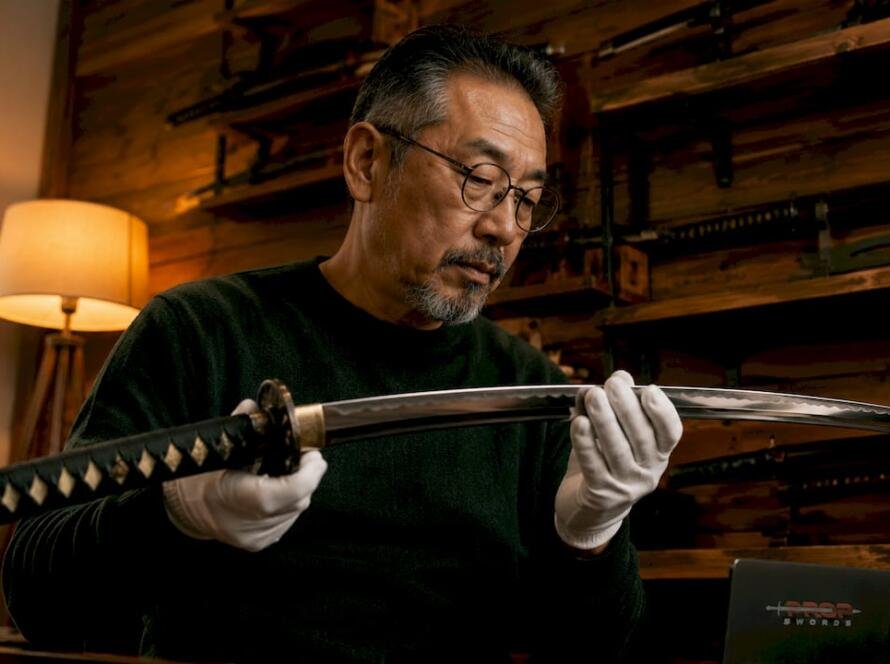
Pick a display-grade stainless or hand-etched carbon replica for the shelf, a full-tang 1060 or 1095 carbon steel sword for serious cosplay or handling, and a foam or wood prop for anything crowded like a convention floor. That’s the whole decision tree. Everything else is verification.
Before you spend a dollar, run this three-item check on the product page:
- Confirm construction basics: material, tang type (full-tang vs. rat-tail), and stated balance point.
- Request real photos or video: close-ups of the tang, cross-section shots, or a quick balance test on camera.
- Watch for one red flag: any listing that calls itself “battle-ready” but won’t show you the tang or give you a steel grade.
Measure your display space or check your convention’s prop policy first, set a budget tier before you start browsing, and decide upfront whether you’re buying to look at it or to carry it.
Table of Contents
- What Is a Zanpakuto Replica, and What Types Exist?
- How Do You Choose the Right Zanpakuto Replica?
- What Materials and Construction Details Matter Most?
- How Do You Match a Replica to a Specific Character?
- Where Should You Buy, and What Should a Trusted Seller Offer?
- How Do You Care for and Safely Transport a Replica?
- What the Data Actually Tells Serious Buyers
- Get a Screen-Accurate Zanpakuto Replica Without the Guesswork
- Sources
- FAQ
What Is a Zanpakuto Replica, and What Types Exist?
A Zanpakuto replica is a physical recreation of one of the soul-cutting swords from Bleach, built for collectors and cosplayers who want to own or wield a piece of the show. Not every “replica” is built the same way, and the differences matter more than most first-time buyers expect.
There are three practical categories:
- Event-safe props: foam, urethane, or lightweight wood, made for convention floors where real steel isn’t allowed and safety rules apply. Expect roughly $20 to $60 for basic versions, more for detailed character sculpts.
- Decorative metal or display swords: stainless steel, often with a hollow or thin-tang build, designed to look sharp on a wall mount rather than survive handling. These typically run $60 to $150.
- Functional replicas: full-tang construction in carbon steels like 1060, 1095, or T10, built to hold an edge and take real handling. Quality pieces in this tier often land between $150 and $400, sometimes higher for hand-forged or Damascus finishes.
The category you need depends entirely on what you’re doing with the sword. A wall piece doesn’t need a full tang. A cosplay prop that gets handled at panels and photo ops does. Be wary of any seller who markets a sword as “battle-ready” without listing steel type, tang construction, or heat-treatment details. Community discussions on Bleach replica swords note that plenty of listings marketed as metal are actually hollow or wooden cores painted to look like steel, and most conventions restrict real blades regardless of sharpness.
How Do You Choose the Right Zanpakuto Replica?
The one rule that cuts through the noise: decide your use case first, then verify construction second. A collector chasing screen accuracy for a display case has different priorities than a cosplayer who needs something light enough to carry through an eight-hour con day.
Once you know your use case, work through this checklist before checkout:
- Material and steel grade. Look for an explicit callout like 1060, 1095, or T10 carbon steel rather than a vague “high-quality steel” claim.
- Full-tang confirmation. Full-tang construction means the steel runs the entire length of the handle, secured by bamboo mekugi pins, rather than a narrow rat-tail rod glued into the grip.
- Balance point. Ask where the balance sits when the blade rests on a finger. The comfortable range for handling is about 10 to 14 centimeters from the guard.
- Weight range. A realistic full-size replica generally has a weight consistent with solid materials; significantly lighter swords may indicate hollow or decorative construction.
- Heat-treatment and hamon evidence. Genuine differential tempering shows a visible temper line, not just a painted-on wave pattern.
- Fittings and finish photos. Look at tsuba, mekugi pins, and saya fit in real photos, not renders.
Red flags worth walking away from: vague material descriptions, zero close-up photography, a full-size sword under 950 grams, glued tangs, or a seller who won’t show you the cross-section when asked directly.
If a listing is missing specs, ask the seller these six questions: What steel grade is the blade? Is it full-tang or rat-tail? What’s the total weight and balance point? Is there a certificate of authenticity? Can you provide a flex or balance test video? What’s the return policy if it doesn’t match the description?
What Materials and Construction Details Matter Most?
Steel choice tells you almost everything about how a blade will look, feel, and age. Stainless steel resists rust well and stays shiny with minimal upkeep, which makes it a solid pick for display swords that rarely leave the mount. Carbon steels like 1060, 1095, and T10 trade that low-maintenance convenience for better edge retention and a more authentic hamon line, but they need regular oiling to avoid corrosion.
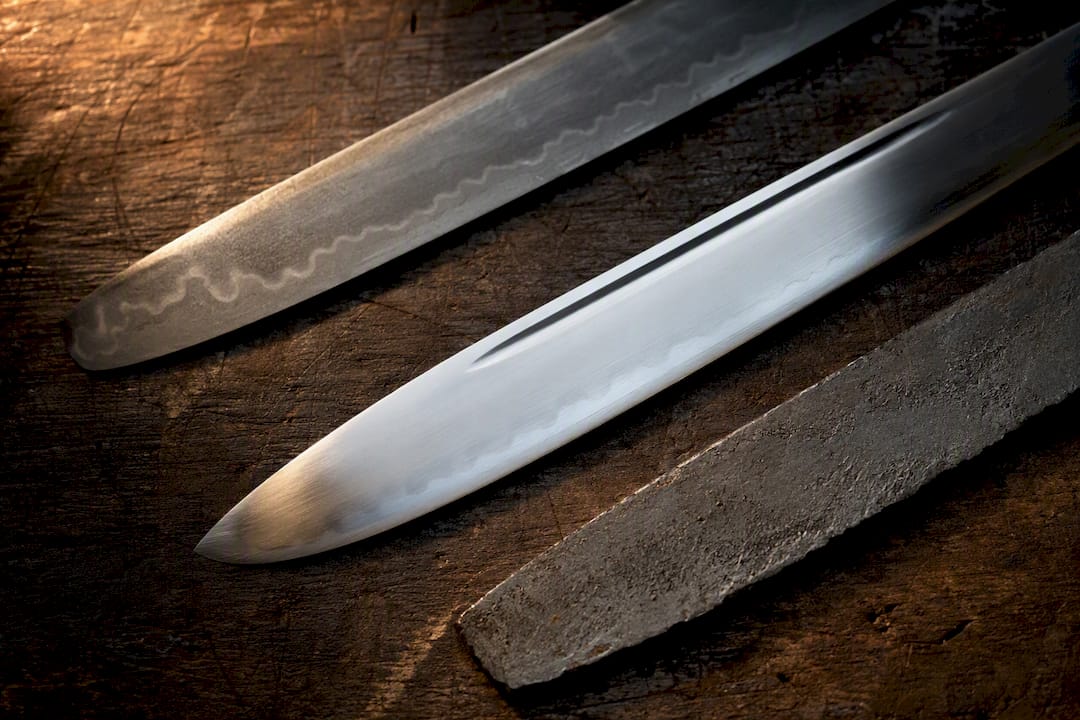
Tang construction separates toys from tools. A full-tang blade runs solid steel through the entire handle, anchored by mekugi pins you can often see and count. A rat-tail tang is a thin rod, sometimes just glued into a hollow grip, and it’s the most common reason cheap replicas snap under real handling.
Handle and sheath materials shape the finished look:
- Tsuka wrap: silk or cotton ito over samegawa (ray skin) reads as authentic; synthetic wraps feel and look different up close.
- Saya: lacquered hardwood saya photograph better and hold up longer than painted plastic scabbards.
- Finish: hand-etched hamon and Damascus patterning are largely visual upgrades. They look striking, but Damascus in particular demands more frequent oiling to prevent surface rust.
Maintenance by material, quickly: oil carbon steel blades every few weeks depending on humidity, keep lacquered saya away from direct sun and damp storage, and spot-clean wrapped handles rather than soaking them.
How Do You Match a Replica to a Specific Character?
Screen accuracy comes down to silhouette first, details second. Each major Zanpakuto has a distinct shape language that a good replica should reflect at a glance.
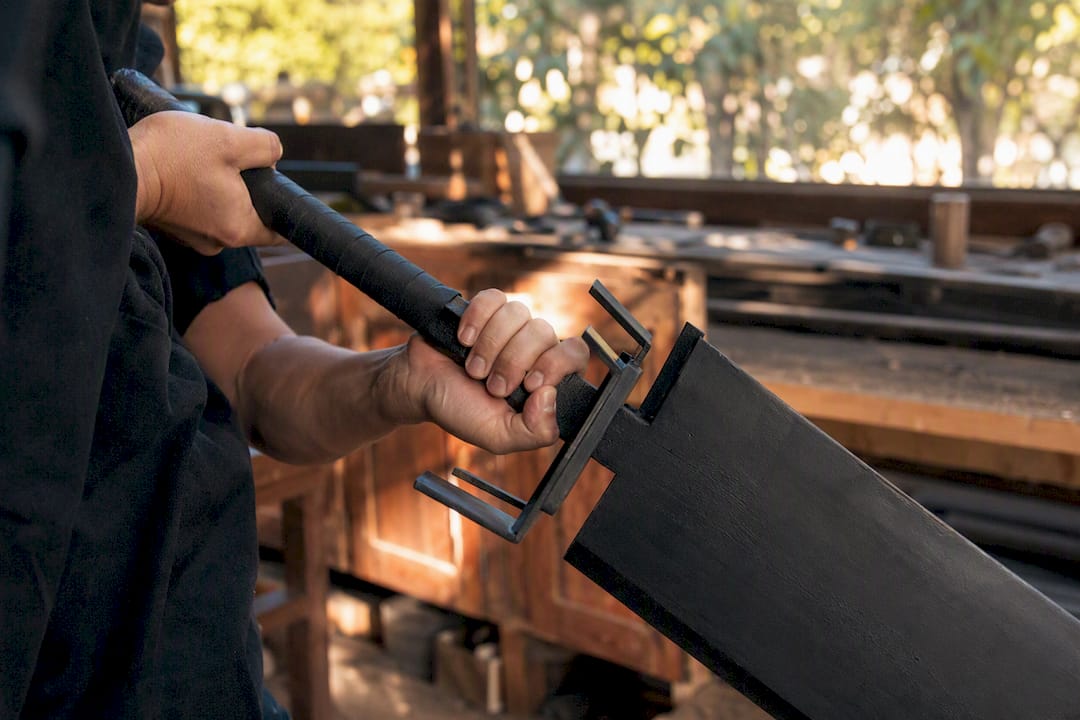
Zangetsu and Tensa Zangetsu lean oversized, often cleaver-like, with dark matte finishes and minimal ornamentation. A well-made Tensa Zangetsu replica tends to run longer and heavier than a standard katana, so factor that extra length into cosplay transport.
Kyōka Suigetsu goes the opposite direction: sleek, minimal, a straight blade with almost no embellishment. Look for a clean guard and a slim profile rather than anything ornate.
Hyōrinmaru carries ice-blue accents and a crystalline or scalloped guard shape, details that separate a genuine character replica from a generic katana with blue thread wrapped on.
Zabimaru and Renji’s blade feature segmented, curved elements that are harder to fake convincingly. Check the guard photos closely before buying.
When comparing listings, check silhouette against reference art, guard detail, sageo color, and handle wrap pattern. If a character’s blade runs oversized in canon, decide upfront whether you want a scaled prop or true-to-canon proportions. True-to-canon often means more weight and length to manage.
Where Should You Buy, and What Should a Trusted Seller Offer?
A trustworthy seller shows you everything before you pay: full specs, close-up photos with actual measurements, and ideally a short video demonstrating balance or flex. Return policies matter just as much as the product description, and USA shipping terms should be stated plainly, not buried in a policy page. Verified buyer photos and reviews are the fastest way to confirm a listing matches reality.
Propswords structures its replica sword listings around exactly this kind of transparency: documented materials, clear shipping and return terms, dedicated customer support, and product notes that spell out steel type and construction rather than leaving buyers to guess. It’s a solid starting point if you want screen accuracy backed by verifiable specs, though it’s worth applying the same checklist to any seller you’re considering.
Pro Tip: Before checkout, ask for a tang cross-section photo and, if the listing supports it, a short balance or flex-test video. Documentation like certificates and test footage cuts your risk far more than promotional photos alone.
Expect entry-level display pieces around $60 to $100, mid-tier full-tang carbon steel swords from $150 to $250, and premium hand-forged or Damascus character replicas pushing $300 and up.
How Do You Care for and Safely Transport a Replica?
Care routines depend entirely on material. Oil carbon steel blades on a regular schedule to prevent rust, especially in humid climates. Keep lacquered saya out of direct sunlight and damp storage areas, since moisture warps wood and dulls finish. Wipe wrapped handles with a dry cloth rather than soaking them.
For travel and conventions, keep the blade sheathed at all times, use a blade guard or peace-tie if the venue requires it, and check the specific event’s prop weapons policy before you pack. Some conventions ban metal entirely regardless of sharpness. For shipping, pack the sword in a rigid case or crate with padding at both the tip and guard.
Treat any full-metal replica as a weapon in public spaces, not a costume accessory. For crowded events, a foam or wood prop avoids the legal gray area entirely.
Zanpakuto replicas succeed or fail on three verifiable details: full-tang construction, an honest steel grade, and a balance point you can confirm before buying.
| Point | Details |
|---|---|
| Match sword to use case | Choose display-grade stainless steel for shelves, full-tang carbon steel for handling, foam or wood for crowded events. |
| Verify the tang | Full-tang construction with visible mekugi pins signals a durable build; rat-tail tangs are the top failure point. |
| Check balance and weight | Look for a balance point 10 to 14 centimeters from the guard and a realistic full-size weight. |
| Demand documentation | Ask for tang photos, certificates, or flex-test video before paying, especially when specs are vague. |
| Buy from transparent sellers | Propswords lists materials, shipping, and return terms clearly, giving buyers a documented path to screen-accurate replicas. |
What the Data Actually Tells Serious Buyers
Most buying guides treat “full-tang” and “steel grade” as boxes to check and move past. They shouldn’t be. The balance point measurement gets buried in a lot of advice, and it’s arguably the single most useful number a buyer can act on, because it’s the one spec that predicts how a sword feels in the hand rather than how it looks in a listing photo.
Where conventional advice falls short is treating all replicas as points on one quality scale. A $40 foam Zangetsu isn’t a worse version of a $300 carbon steel one. It’s solving a different problem. The buyer mistake I see most often is chasing screen accuracy on a prop that will spend eight hours getting handled at a con, when a lighter, tougher build would have served better.
If you take one thing from this guide, prioritize the balance point and tang check over aesthetics. A sword that looks perfect in photos but feels hollow in hand will disappoint you every time you pick it up. Specs you can verify beat marketing copy you can’t.
Get a Screen-Accurate Zanpakuto Replica Without the Guesswork
Propswords exists for exactly the buyer this guide describes: someone who wants a character-accurate sword backed by real specs, not just glossy product photos. Instead of hunting across marketplace listings hoping the tang photo shows up in the reviews, you get material details, shipping and return terms, and support contact laid out on the product page itself.
If you’re deciding between a Tensa Zangetsu for display or a full-tang carbon steel piece for convention handling, start with the current best replica swords lineup to compare quality tiers side by side. Check the listed steel grade, confirm tang construction from the product description, and reach out to support before checkout if a spec is missing. That’s the whole process, and it takes less time than scrolling through five different marketplace listings hoping one of them tells you the truth.
Sources
Cross-check any seller’s photos against these technical references before committing to a purchase.
FAQ
Are Zanpakuto replicas sharp?
Most decorative and display-grade replicas ship unsharpened for safety, while functional carbon steel pieces can be sharpened but typically arrive with a dulled edge until the buyer chooses otherwise.
Can I bring a metal Zanpakuto replica to a convention?
Most conventions restrict or ban metal blades regardless of sharpness, so check the event’s specific prop weapons policy first and default to a foam or wood prop for crowded spaces.
How do I know if a replica is full-tang?
Ask the seller for a cross-section or disassembly photo showing the tang running the full length of the handle, secured by visible mekugi pins, rather than relying on the product description alone.
What’s a realistic price for a good-quality replica?
Entry-level display swords often run $60 to $150, while full-tang carbon steel functional replicas typically cost $150 to $400 depending on steel grade and finish, and sellers like Propswords list these tiers clearly on each product page.
How can I avoid buying a fake or mislabeled replica?
Request close-up tang photos, a stated steel grade, and ideally a balance or flex-test video before paying, since buyer reports show some listings marketed as metal are actually painted wood or hollow cores.
Recommended