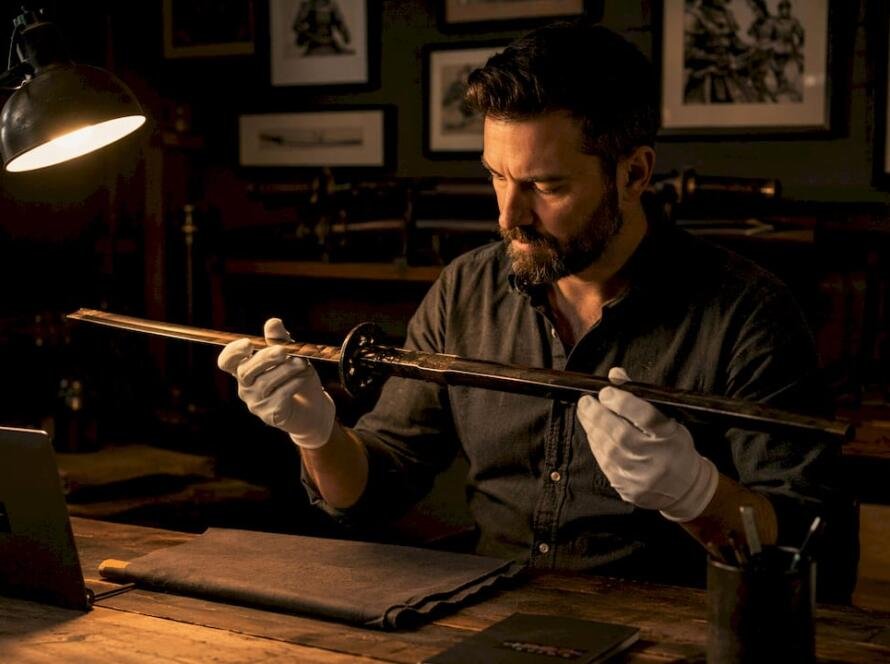
Never convert a replica sword into a functional, razor-sharp blade. That’s the short answer. If you’re asking whether you can sharpen a replica sword, the real question is: can you do cosmetic edge finishing that makes it look clean and polished without turning it into a weapon? Yes, and that’s exactly what this guide covers.
Cosmetic edge finishing means removing burrs, rounding any rough spots, polishing the surface, and sealing the metal. It does not mean grinding a new bevel or thinning the blade to hold an edge. Keep that line clear, and you stay safe, legal at events, and within most manufacturer warranties.
Allowed cosmetic tasks:
- De-burr rough spots with a hand file
- Roll or round the edge lightly with fine-grit sandpaper or emery cloth
- Polish with a paste like Autosol or Flitz
- Seal with Renaissance Wax, choji oil, or mineral oil
Do not:
- Use a power grinding wheel (overheats the metal, changes temper)
- Thin the blade to create a functional cutting edge
- Alter the tang, pommel, or fittings
- Leave any sharp edge on a blade you plan to carry to a convention
Pro Tip: Before touching the blade, photograph it from every angle. If anything goes wrong, you have a baseline record for warranty claims or professional repair.
Key Takeaways
Cosmetic edge finishing keeps a replica blade clean and display-ready without crossing into functional sharpening territory — that distinction is what keeps you safe, compliant, and covered under warranty.
| Point | Details |
|---|---|
| Never create a functional edge | Cosmetic finishing only: de-burr, round, polish, and seal. Never grind or thin the blade. |
| Check venue rules first | Most U.S. conventions ban metal blades; verify the prop policy before every event. |
| Choose the right material | Foam, EVA, and PLA pass most prop checks; metal blades face high scrutiny and are often banned. |
| Follow the safe finishing sequence | Clean, de-burr with a hand file, sand lightly, polish with Autosol or Flitz, seal with Renaissance Wax or mineral oil. |
| Propswords for event-safe options | Propswords offers stainless display swords and prop-friendly replicas with free U.S. shipping. |
Table of Contents
- What U.S. convention and transport rules say about replica blades
- Should you cosmetically finish your replica, or leave it stock?
- How to do safe cosmetic edge finishing, step by step
- Which materials are safest for cosplay and display?
- Transport, storage, and prop-check checklist
- Long-term care for display blades by material
- When to stop and get professional help
- An editorial perspective on replica care and what most guides miss
- Propswords has event-safe replicas ready for collectors and cosplayers
- Sources
- FAQ
What U.S. convention and transport rules say about replica blades
Most major U.S. conventions ban metal blades outright and require mandatory security inspections at entry. Failing to comply typically means ejection without a refund, and in some cases, law-enforcement involvement if a blade is deemed threatening.
Metal swords and active martial arts weapons are banned from many convention grounds entirely; if security flags your item, you’ll be directed to store it at a prop check desk, in your vehicle, or at your hotel until you leave. That applies even to display-only stainless pieces that have never been sharpened.
Before any event, check the specific convention’s prop policy page. Also verify TSA rules if you’re flying, and look up your destination state’s laws on carrying replica or decorative blades in public. Rules vary significantly by state and venue type.
Should you cosmetically finish your replica, or leave it stock?
The answer depends on three things: material, intended use, and what’s at stake structurally.
Material matters most. Stainless-steel display blades can tolerate light cosmetic work. Carbon steel and Damascus blades need more careful handling since they’re more reactive and easier to damage with the wrong abrasive. Foam, PLA, and plastic replicas don’t need edge finishing at all since they have no metal edge to de-burr.
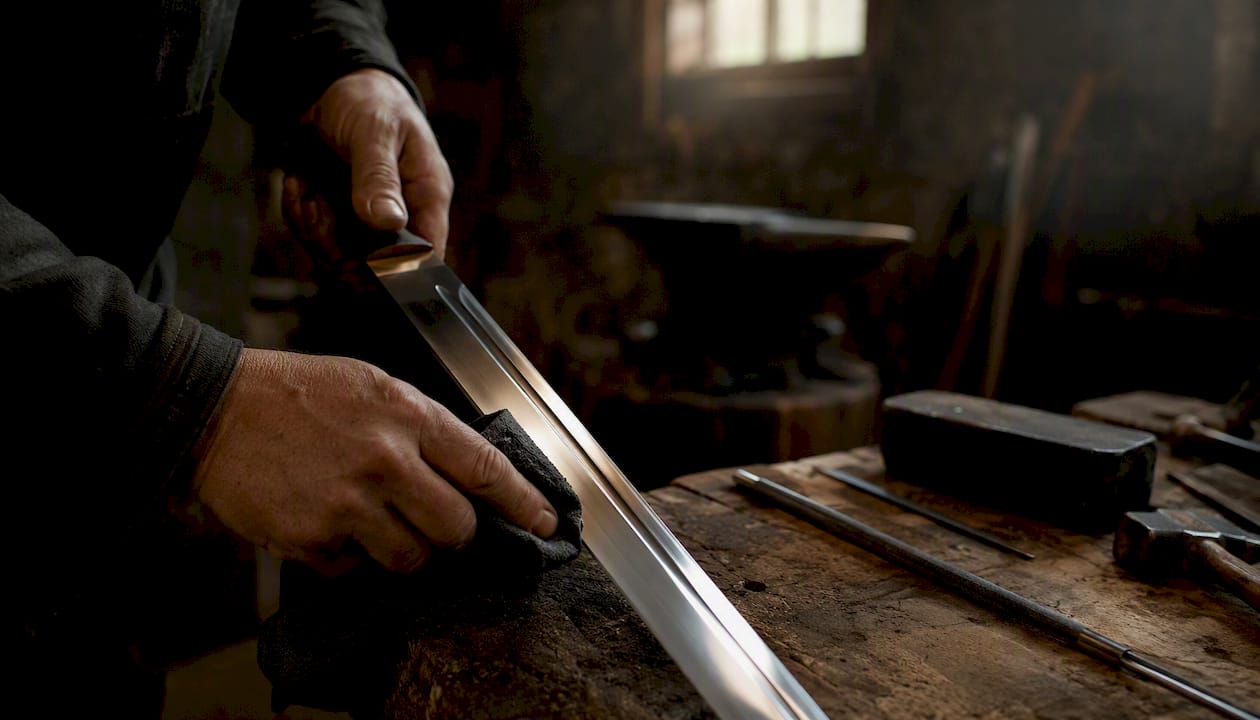
Intended use shapes the risk. A blade sitting on a wall mount needs nothing beyond periodic cleaning and sealing. A blade you’re bringing to a cosplay event needs to stay blunt and pass a prop check. Costume swords made from approved materials must not have sharp edges, and wooden swords may need to be tied to your costume so they can’t be drawn. Cosmetic finishing is fine; anything that makes the edge more functional is not.
Warranty and structural risk are real. Filing or sanding a blade can void the manufacturer’s warranty. More critically, working near the tang or fittings risks loosening them and creates a genuine safety hazard. If the tang feels loose or the pommel wobbles before you start, stop and contact the manufacturer.
Pro Tip: Contact the manufacturer before doing any cosmetic work. Ask specifically whether light filing or polishing voids the warranty. Most will tell you in writing, which protects you.
How to do safe cosmetic edge finishing, step by step
This process keeps the blade blunt and event-safe. Work slowly, use hand tools only, and stop the moment you feel resistance that suggests you’re removing significant material.
What you need:
- Leather or cut-resistant gloves and safety glasses
- A fine-cut hand file (bastard or smooth cut)
- 400–600 grit sandpaper or emery cloth
- Polishing paste: Autosol, Flitz, or Metal Glo
- Renaissance Wax, choji oil, or plain mineral oil
- Lint-free cloths
Steps:
- Clean the blade with a dry lint-free cloth. Remove any surface grime or old oil.
- Inspect under good light for burrs, rough patches, or surface rust. Mark problem areas with a felt-tip pen on the flat of the blade (not the edge).
- De-burr with a hand file held flat against the edge. Use light, even strokes. You’re smoothing, not removing material.
- Follow with 400-grit sandpaper along the edge to round any remaining roughness. Move to 600-grit for a finer finish. Never sand across the edge; always work lengthwise.
- Apply a small amount of Autosol, Flitz, or Metal Glo to a cloth and polish the blade surface in straight strokes. These pastes remove tarnish and light surface marks without altering the blade geometry.
- Wipe the blade clean and apply a thin coat of Renaissance Wax or choji/mineral oil. Renaissance Wax is preferred for display pieces since it leaves a dry, non-greasy film. Mineral oil or choji works well for carbon and Damascus blades that need more active rust protection.
Pro Tip: Test any polishing paste on a hidden area near the ricasso before working the full blade. Some pastes react differently with stainless versus carbon steel.
Which materials are safest for cosplay and display?
| Material | Weight | Venue acceptance | Shatter risk | Edge finishing needed |
|---|---|---|---|---|
| EVA foam | Very light | High | None | No |
| PLA / 3D-printed | Light | High | Low | No |
| Lightweight wood | Moderate | Moderate (tied/zip-tied) | Low | No |
| Stainless steel | Heavy | Low (often banned) | None | Yes, cosmetic only |
| Carbon / Damascus | Heavy | Very low (usually banned) | None | Yes, cosmetic only |
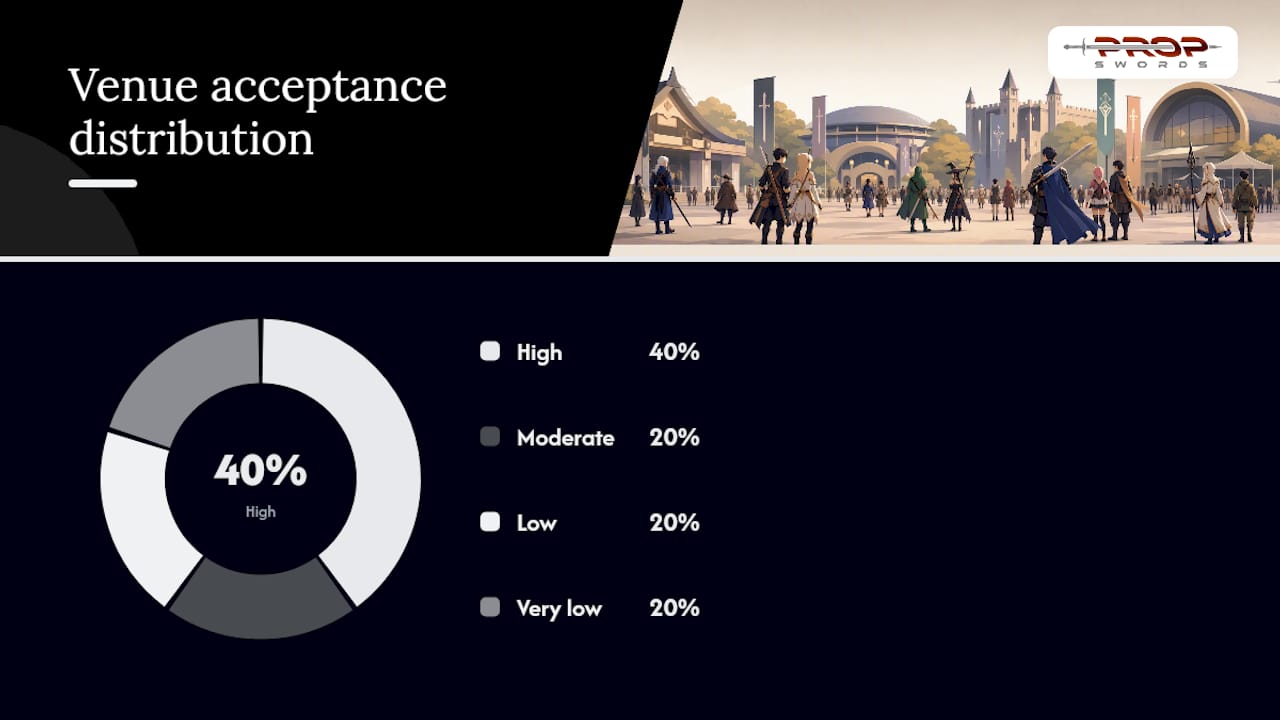
Convention policies typically permit lightweight materials like foam, PLA, and lightweight wood, with typical maximum prop sizes set to conventional measurements for staffs or spears. Oversized items must disassemble without tools. Metal props face the highest scrutiny and are often turned away at the door.
For crowded events, EVA foam and high-quality thermoplastics are the practical choice. They’re light, won’t shatter if dropped, and pass most prop checks without issue. If you want the look of a metal blade for display at home, stainless steel is fine. Just don’t plan to carry it into a convention hall. You can find guidance on choosing replica swords by material and use on the Propswords blog.
Transport, storage, and prop-check checklist
- Check the event’s prop policy page before you pack anything
- Keep replicas in original packaging when traveling to a venue
- Present vendor-purchased replicas to security in original packaging for approval before removing them
- Photograph your prop before leaving home (condition record)
- Bring zip ties in case security requires them for wooden or tied props
- Store metal blades in your hotel room or vehicle, not on your person, if they’re not approved for the event floor
- For air travel, check TSA rules and airline policies before packing any replica blade in carry-on or checked luggage
- Label your prop bag with your name and contact information
Pro Tip: Call the convention’s prop check desk directly if the online policy is unclear. A five-minute call saves you from a confiscated prop at the door.
Long-term care for display blades by material
Stainless steel is corrosion-resistant but not corrosion-proof. Wipe it down periodically and apply a light coat of mineral oil or wax every few months. Renaissance Wax or a quality car wax works well for display pieces. Avoid humid storage like garages or attics.
Carbon and Damascus steel need more attention. Never handle the blade with bare hands since skin oils accelerate rust. Wipe after every contact and apply choji or plain mineral oil every two to three months. Watch for any discoloration or dark spotting and treat it early with a light application of Autosol or Flitz before it becomes pitting.
Handles and hilts need their own care. Leather-wrapped grips benefit from a leather conditioner applied sparingly. Avoid detergents or water on leather. Wood handles should be kept away from direct sunlight and extreme humidity swings.
Storage: Use a display stand with non-reactive mounts. Keep blades horizontal or at a slight angle, never tip-down. A humidity-controlled room is ideal; a silica gel pack in a display case helps in damp climates.
When to stop and get professional help
Some problems are beyond safe home maintenance. Stop work and contact the manufacturer or a professional restorer if you see:
- Deep pitting or rust that goes below the surface layer
- A wobbling or loose tang
- A pommel, guard, or fitting that moves or rattles
- Cracks in the blade, hilt, or handle material
- Any sign the blade has been bent or stressed
Temporary fixes like tightening a pommel nut or re-wrapping a grip are fine as short-term measures, but they don’t address underlying structural failure. Document the damage with photos, preserve all original parts, and reach out to the manufacturer before attempting anything further.
An editorial perspective on replica care and what most guides miss
Most online discussions about how to sharpen a replica sword treat the question as a technical one. What grit sandpaper? Which polishing paste? Those details matter, but they’re secondary to a point most guides skip entirely: the reason you’re finishing a replica blade is almost never about sharpness. It’s about appearance and preservation.
Convention security isn’t designed to catch skilled bladesmiths. It’s designed to stop accidental injuries in crowds. A burr on a stainless display blade is a maintenance issue. A blade that’s been thinned and ground to hold an edge is a different object entirely, and no amount of careful polishing makes it appropriate for a cosplay event. The distinction between cosmetic finishing and functional sharpening isn’t just a legal technicality. It’s the difference between a prop and a weapon.
Collectors who understand this tend to get more out of their replicas, not less. A well-maintained, properly sealed display blade holds its finish for years. A blade that’s been over-worked trying to achieve a “real” edge usually ends up with a compromised temper, a voided warranty, and a prop that fails its first security check.
Propswords has event-safe replicas ready for collectors and cosplayers
Collectors and cosplayers who want a display-quality or event-appropriate replica without the maintenance headache have a direct option. Propswords offers stainless-steel display swords sealed for preservation, alongside lighter prop-friendly options suited to convention use, all with free shipping within the U.S.

The top replica swords for 2026 include options across anime, movie, Viking, and historical themes, with construction details listed so you know exactly what material and finish you’re getting before you order. If you have a specific event coming up and need to confirm whether a model meets your venue’s prop policy, Propswords’ customer support can help you match the right piece to your needs. Browse the collection and reach out with your event details.
Sources
- Cosplay & Prop Rules
- Weapons Policy – FanX Salt Lake Comic Convention
- Props Policy | FAN EXPO San Francisco
This article is general information, not a substitute for advice from a qualified lawyer. Consult a qualified legal professional about your own circumstances before acting on anything here.
FAQ
Can you sharpen a replica sword for cosplay events?
You can do light cosmetic edge finishing to remove burrs and improve appearance, but you must not create a sharp or functional edge. Most U.S. conventions explicitly ban props with sharp edges and may confiscate non-compliant items.
What products are best for cleaning and sealing a display blade?
Renaissance Wax, Autosol, Flitz, Metal Glo, and choji or plain mineral oil are the most widely recommended options for stainless and carbon display blades, covering polishing and long-term rust protection.
Are metal replica swords allowed at U.S. conventions?
Metal swords are banned at most major U.S. conventions. Foam, EVA, PLA, and lightweight wood props are generally accepted, subject to size limits (typically 150 cm) and security inspection at entry.
What should I do if my replica has a loose tang or deep rust?
Stop all home maintenance and contact the manufacturer or a professional restorer. Document the damage with photographs and preserve all original parts before any repair attempt.
Where can I find event-safe replica swords in the U.S.?
Propswords carries a range of display and cosplay-appropriate replicas with free U.S. shipping. The 2026 replica sword collection includes material and construction details to help you match the right piece to your event’s prop policy.
Recommended