TL;DR:
- Sword etiquette encompasses respectful behaviors and safety protocols for handling swords, rooted in Japanese samurai tradition. It involves rules like proper drawing, passing with the edge facing oneself, and avoiding excessive blade exposure to preserve honor and prevent accidents. Learning from qualified instructors fosters discipline and cultural understanding essential for safe and respectful sword practice.
Sword etiquette is the prescribed set of respectful behaviors and protocols governing the handling, presentation, and interaction with swords across cultures, with its deepest roots in Japanese samurai tradition. Known formally in martial arts circles as reigi, it covers everything from how you draw a blade to how you pass one to another person. These rules exist for two reasons: safety and honor. Ignoring them is not just a social mistake. In traditional dojo settings, it signals a fundamental lack of discipline and respect for the weapon, the art, and the people around you.
What is sword etiquette and why does it matter?
Sword etiquette is defined as the structured code of conduct that governs every interaction with a sword, from the moment you pick it up to the moment you set it down. The term reigi appears throughout Iaido training, where etiquette, precision, breathing, and posture are treated as inseparable parts of the martial art’s philosophy. That integration is not accidental. It reflects the belief that how you handle a sword reveals your character.
The practical stakes are real. A sword is a weapon capable of serious injury. Proper sword manners reduce the risk of accidents during training, demonstrations, and even casual handling at events or in collector settings. Bowing before drawing, maintaining correct posture, and controlling your blade at all times are not ceremonial gestures. They are physical habits that keep everyone in the room safer.
Culturally, the sword carries weight that most modern objects do not. In Japanese tradition, the sword is called the “samurai’s soul,” making unsolicited touching a grave insult that breaches honor and respect. That framing shapes every rule in the system. You are not just handling a tool. You are interacting with something that represents a person’s identity, lineage, and values.
What are the key rules and practices in sword etiquette?
The foundational sword handling rules apply whether you are in a dojo, at a collector’s display, or handling a replica at a convention. Each rule has a specific purpose, and understanding that purpose makes the rule easier to follow.
The koiguchi san sun rule
The koiguchi san sun rule mandates that the blade should not extend more than approximately 9 centimeters outside the scabbard without a clear purpose. That distance signals discipline and readiness without aggression. Exposing more blade than necessary communicates hostility or carelessness, both of which violate the spirit of proper sword manners.
Drawing and sheathing
The draw (nukitsuke) and sheath (noto) are two of the most technically demanding movements in sword etiquette techniques. Both require controlled motion, correct grip, and full awareness of your surroundings. Rushing either movement is a sign of poor training. In Iaido, practitioners spend years refining these two actions alone.
Passing and receiving a sword
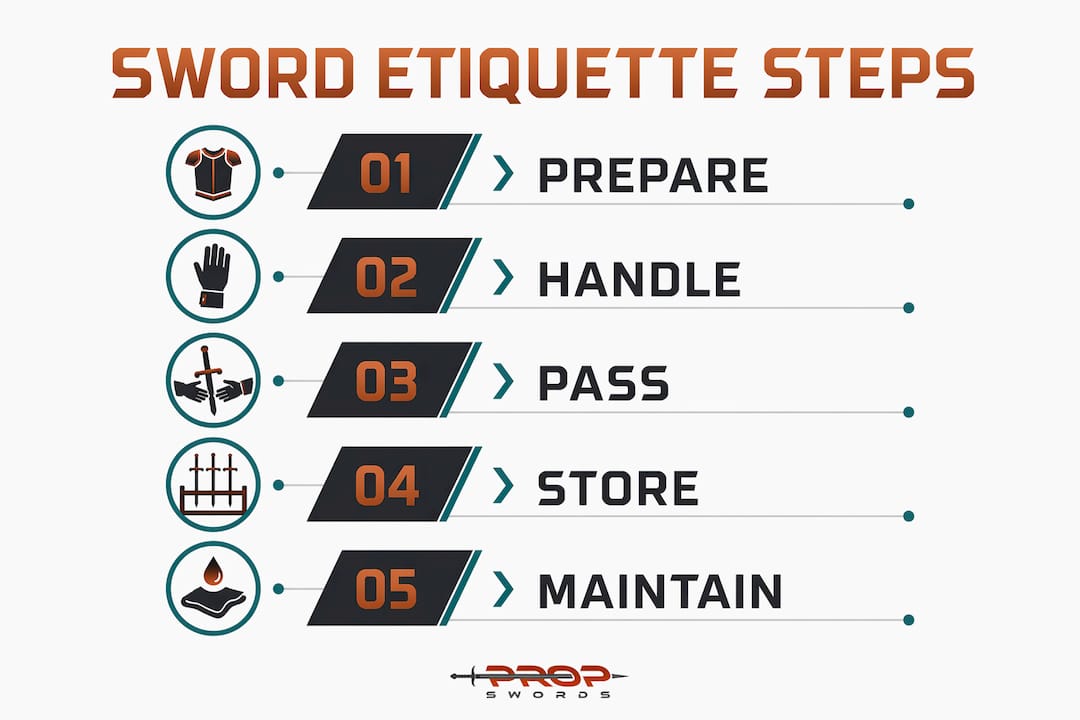
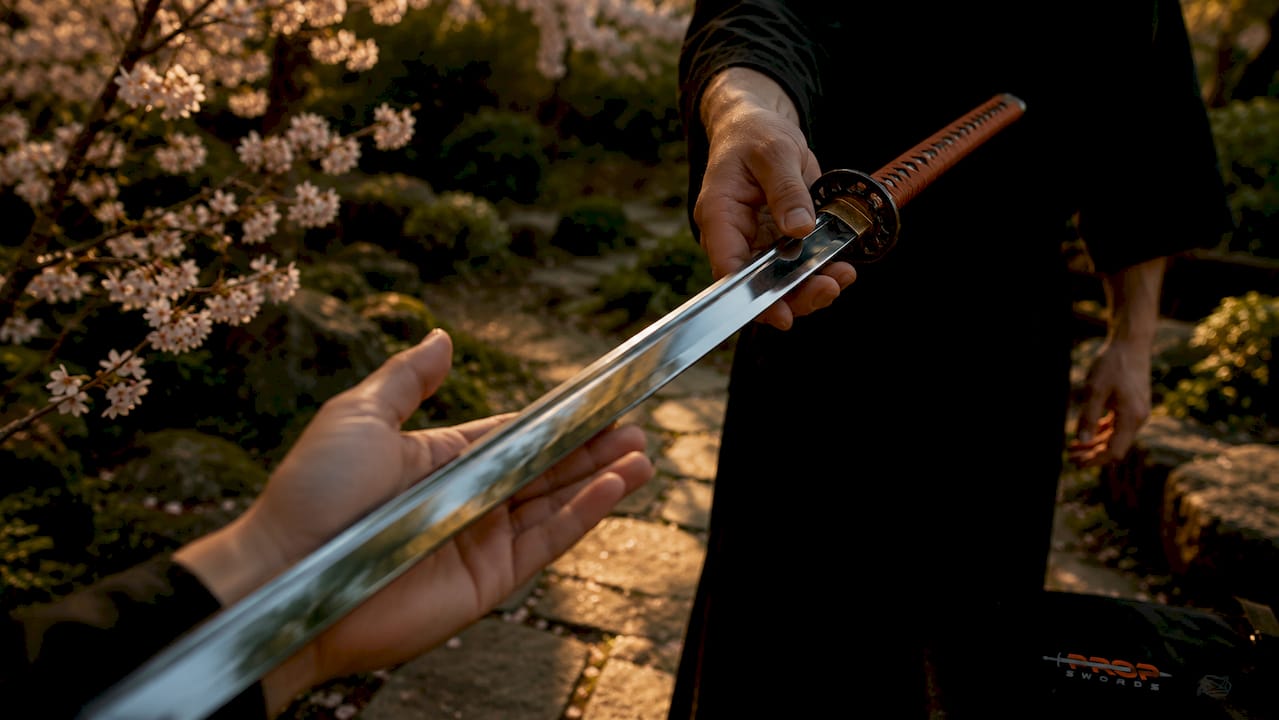
When handing over a sword, offering the handle first with the cutting edge facing yourself is a gesture of trust and respect. Positioning the edge toward the recipient signals hostility. This rule applies universally, from a sensei passing a training sword to a student, to a collector showing a piece to a guest. The orientation of the blade communicates intent before a single word is spoken.
Blade contact and maintenance
Touching the blade surface with bare fingers causes immediate spotting and long-term oxidation on high-carbon steel. Always use a soft cloth or fukusa to handle the blade. This rule protects both the sword and the handler. Maintaining a samurai sword also involves regular cleaning with choji-abura (clove oil), soft paper, and careful disassembly to preserve craftsmanship and cultural heritage.
Key sword handling rules at a glance:
- Never draw without a clear purpose or instruction from your instructor.
- Hold the sword with both hands when presenting or receiving it.
- Never allow the blade to touch the ground or another person’s hands without permission.
- Keep the cutting edge oriented away from others during display or transport.
- Bow before and after handling a sword in a formal setting.
Pro Tip: Before handling any sword, even a replica, pause and treat it as if it were live steel. That mental habit builds the discipline that separates a careful practitioner from a careless one.
How does sword etiquette reflect cultural values and symbolism?
Sword etiquette is not a set of arbitrary rules. Each practice maps directly onto a value system, most clearly expressed in Bushido, the samurai code that emphasizes loyalty, integrity, and respect. Understanding that connection transforms etiquette from a checklist into a living philosophy.
The sword’s position, blade orientation, and movement act as a silent language conveying trust, hostility, or neutrality that all experienced practitioners immediately understand. A blade angled downward in a relaxed grip signals peace. A blade raised to the Window Guard position signals readiness or challenge. These signals function across cultures, though the specific postures differ between Japanese and Western traditions.
“Sword etiquette is more than manners. It is a living philosophy focused on discipline and respect that binds modern practitioners with centuries of tradition. Every bow, every controlled draw, every careful pass of the blade is a direct link to the warriors who developed these practices under conditions where a mistake meant death.”
Touching another person’s sword without permission is one of the most serious breaches of proper sword manners in Japanese culture. The sword is considered an extension of the owner’s self. Handling it without consent is the equivalent of a physical violation of that person’s identity. This belief persists in modern martial arts communities, where asking before touching any sword is a baseline expectation.
The cultural continuity here is striking. Practitioners of Iaido, Kendo, and Kenjutsu today follow etiquette protocols that trace directly back to feudal Japan. The bow before practice, the careful placement of the sword on a rack, the two-handed presentation: all of these reflect Bushido virtues that have survived centuries of social change. Etiquette is how tradition travels through time.
What are the differences between Japanese and Western sword traditions?
Japanese and Western sword traditions share a core principle: the blade communicates intent. The specific customs, however, differ in meaningful ways that any serious practitioner should understand.
| Aspect | Japanese tradition | Western tradition |
|---|---|---|
| Carrying position | Katana worn on the left hip, edge up | Sword typically worn on the left, edge down or forward |
| Walking side | Historically walked on the left to avoid conflict | No standardized walking-side rule |
| Blade exposure signal | Partial draw signals readiness; full draw signals combat | Raising the blade signals challenge or defense |
| Ceremonial display | Sword placed on a rack (katana-kake) with edge facing a specific direction | Mounted on walls or displayed in scabbards, often edge up |
| Dojo etiquette | Formal bowing, seated inspection (kantei), strict handling protocols | Less formalized; varies by school and tradition |
The left-side carry in Japanese tradition is not arbitrary. Swordsmen walked on the left historically to prevent their scabbards from bumping into others and to keep the draw hand free without crowding a companion. That practical origin became a social convention, and eventually a mark of a trained swordsman.
Western traditions developed their own blade-reading conventions. The Window Guard, for example, functions as a nonverbal communicative posture in both Japanese and Western sword traditions, revealing intent and readiness to any trained observer. The specific angles differ, but the underlying logic is identical: your blade position tells a story before you speak.
How can beginners practice proper sword etiquette safely?
Sword etiquette for beginners starts with one non-negotiable rule: learn from a qualified instructor in person. Learning precise movements from videos alone is insufficient. Expert in-person instruction is the only way to master the nuanced body mechanics and cultural context that etiquette requires. Videos can supplement learning, but they cannot replace the feedback of a trained eye.
A structured beginner approach looks like this:
- Find a qualified instructor. Look for a certified dojo teaching Iaido, Kenjutsu, or a Western martial arts school with a structured curriculum.
- Learn the bow first. Bowing before and after practice is the entry point to all other etiquette. Get this right before you touch a sword.
- Practice drawing and sheathing with a wooden sword (bokken). Build muscle memory safely before handling live steel or sharp replicas.
- Master the two-handed grip. Proper sword handling requires both hands when presenting or receiving a sword. Single-handed passing is considered disrespectful in most traditions.
- Never touch the blade with bare hands. Use a cloth every time, without exception.
- Ask before touching any sword that is not yours. This applies in dojos, at conventions, and in collector settings.
For display and storage, the same respect applies. A sword placed carelessly on a shelf communicates the same disregard as a careless draw. Learning how to display swords safely is part of the broader etiquette system, not a separate concern.
Pro Tip: When you first receive a sword to inspect, hold it with both hands, keep the edge facing away from others, and take a moment to acknowledge the object before examining it. That pause is not theatrical. It trains the attentiveness that etiquette demands.
Key Takeaways
Sword etiquette is a discipline of respect, safety, and cultural continuity that every practitioner must learn before handling any blade, whether live steel or a quality replica.
| Point | Details |
|---|---|
| Core definition | Sword etiquette is the structured code of respectful conduct governing every interaction with a blade. |
| Blade exposure limit | The koiguchi san sun rule limits blade exposure to approximately 9 centimeters outside the scabbard without purpose. |
| Passing protocol | Always offer the handle first with the cutting edge facing yourself to signal trust and respect. |
| Blade care | Never touch the blade with bare hands. Use a soft cloth to prevent oxidation and damage. |
| Beginner priority | In-person instruction from a qualified instructor is the only reliable way to learn correct etiquette. |
What I’ve learned from years of watching etiquette get skipped
The most common mistake I see among new sword enthusiasts is treating etiquette as optional ceremony. They learn the draw, they learn the stance, and they skip the bow. That sequence reveals a misunderstanding of what etiquette actually is. The bow is not decoration. It is the mental reset that shifts you from casual handling to disciplined practice. Without it, every movement that follows carries a slightly higher risk of carelessness.
I have watched practitioners with technically excellent form create genuinely uncomfortable situations because they passed a sword edge-first, or picked up someone else’s blade without asking. The technical skill was real. The cultural literacy was absent. Those two things are not the same, and experienced practitioners notice the gap immediately.
What changed my own practice was understanding that etiquette is a form of communication. Every rule in the system sends a message to the people around you. When you follow proper sword manners, you tell everyone in the room that you understand the weight of what you are holding. That understanding builds trust, and trust is what makes group training and sword appreciation genuinely safe and meaningful.
If you are building a collection or starting training, I would also encourage you to read about buying collectible swords with the same respect you bring to handling them. The etiquette starts before the sword arrives in your hands.
— Muhammad
Quality replicas worth handling with respect
Practicing proper sword etiquette requires a sword worth practicing with. A well-crafted replica gives you the weight, balance, and feel needed to build real muscle memory for drawing, sheathing, and presenting correctly.
Propswords carries a curated selection of replica swords for 2026 built for collectors, cosplayers, and martial arts enthusiasts who want authentic detail without the cost of live steel. Each piece is designed with the balance and finish that makes proper handling practice feel genuine. Free shipping within the USA applies to all orders, and the full catalog covers everything from anime-inspired blades to historically grounded designs. If you are serious about etiquette, start with a sword that takes the practice seriously too.
FAQ
What is sword etiquette in simple terms?
Sword etiquette is the set of respectful rules governing how you handle, pass, display, and interact with a sword. It combines safety practices with cultural traditions rooted in Japanese samurai and Western martial arts.
Why should you never touch a sword blade with bare hands?
Skin oils cause immediate spotting and long-term oxidation on high-carbon steel blades. Always use a soft cloth or fukusa to handle the blade surface.
How do you correctly pass a sword to someone?
Offer the handle first with the cutting edge facing yourself. This signals trust and respect. Pointing the edge toward the recipient is considered a hostile gesture in both Japanese and Western traditions.
Is sword etiquette only relevant in Japanese martial arts?
No. Western sword traditions also use blade positioning and handling protocols to communicate intent and respect. The specific customs differ, but the underlying principles of safety and honor apply across all serious sword traditions.
Can beginners learn sword etiquette from online videos?
Videos can introduce concepts, but in-person instruction from a qualified instructor is the only reliable way to learn correct etiquette. Precise body mechanics and cultural context require direct feedback that video cannot provide.
Recommended