TL;DR:
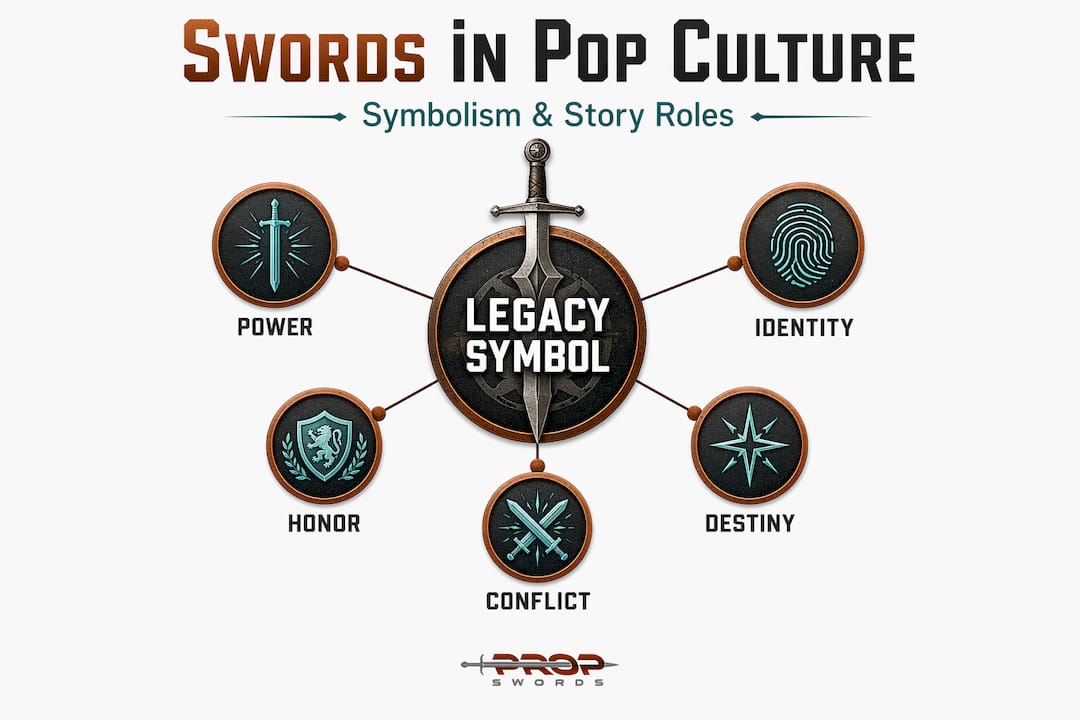
- Swords symbolize power, morality, and cultural identity, serving as storytelling shorthand across media. They embody deep historical, mythological, and philosophical meanings, which pop culture continues to extend creatively. Collectors and fans preserve and reinvent sword symbolism, maintaining their enduring cultural significance through both media and personal connection.
Pick up almost any fantasy novel, load a medieval RPG, or rewatch a classic samurai film, and you will notice one thing immediately. The sword is never just a weapon. The role of swords in pop culture runs far deeper than combat choreography or prop design. Swords carry entire philosophies, signal a character’s moral code, and compress centuries of human mythology into a single visual symbol. Whether you are watching Arthur pull Excalibur from stone or a shonen anime hero unlocking a new blade form, what you are seeing is storytelling shorthand that took thousands of years to develop.
Table of Contents
- Key takeaways
- The role of swords in pop culture starts with history
- Iconic swords and what they actually mean
- Swords in modern fandom and collector culture
- How swords drive storytelling and character development
- My take on why swords will never lose their cultural grip
- Find your sword at Propswords
- FAQ
Key takeaways
| Point | Details |
|---|---|
| Swords symbolize more than combat | They communicate power, identity, honor, and moral standing across cultures and genres. |
| Pop culture invents new sword lore | Many iconic fictional swords have no historical counterpart, showing how media actively creates mythology. |
| Fandom keeps sword symbolism alive | Replica collecting and cosplay extend the cultural life of swords well beyond their screen appearances. |
| Swords are storytelling tools | Writers and directors use swords as visual shortcuts to reveal character arcs and thematic conflict. |
| Collecting connects fans to meaning | Owning a replica is not just a hobby. It is a personal statement about the stories that matter to you. |
The role of swords in pop culture starts with history
Before Hollywood touched a single sword, ancient cultures had already turned the blade into a symbol that carried enormous weight. Sword symbolism broadly represents power, justice, protection, and truth stretching across cultures and religions, from the Norse traditions that gave us Odin’s lore to the Arthurian mythology that shaped Western storytelling for over a thousand years.
The reason swords became the symbol of authority rather than axes or spears comes down to craft and cost. In medieval Europe, a sword required immense skill to forge and was prohibitively expensive for common soldiers. Owning one marked you as someone of status. That economic reality locked itself into the cultural imagination, and stories began to treat swords as objects that belonged to worthy people, not just wealthy ones.
Here is where it gets more interesting. Different traditions encoded completely different values into their blades:
- European tradition: The sword represented divine sanction and rightful rule. Think of the bishop blessing a knight’s sword before battle, or the court scene where a monarch knights someone by touching their shoulders with a blade. The gesture transforms a person.
- Japanese tradition: The katana was the physical manifestation of a samurai’s soul. The Bushido code treated the sword not as a tool of aggression but as an extension of the warrior’s inner discipline. To dishonor the sword was to dishonor the self.
- Islamic tradition: Swords appeared in religious art and poetry as symbols of divine truth cutting through falsehood. The Zulfikar, a legendary forked blade, remains one of the most recognizable sword images in Islamic iconography.
- Celtic tradition: Swords often carried names, personal histories, and supernatural origins. The idea that a blade could be enchanted or tied to a specific bloodline runs through Welsh and Irish mythology centuries before King Arthur ever appeared on a page.
These traditions did not stay locked in the past. They fed directly into the stories we now call pop culture. Every time a fictional hero inherits a legendary sword, earns one through a trial, or has one broken as punishment, the narrative is drawing on one of these deep cultural wells.
Pro Tip: When you see a sword passed from mentor to student in an anime or fantasy film, pay attention to how the scene is staged. If it is treated with ceremony, the story is invoking the Japanese tradition. If the sword is pulled from a sacred site, you are likely looking at Celtic or Arthurian DNA.
The Lady of the Lake’s gifting of Excalibur represents a transaction between the human and otherworldly realms, symbolizing conditional authority. The sword is lent, not given permanently, which is a crucial mythological detail. That conditionality, the idea that power can be revoked, is what makes Excalibur one of the most narratively sophisticated weapons in literary history, not its magic.
Iconic swords and what they actually mean
Knowing the historical roots makes the specific swords we encounter in modern pop culture far more readable. They are not random design choices. Each one is making a precise symbolic argument.
| Sword | Source | Core symbolism | Narrative function |
|---|---|---|---|
| Excalibur | Arthurian mythology / film | Rightful kingship, divine legitimacy | Marks Arthur as the chosen ruler; its loss signals failure |
| Hofund | Marvel’s Thor films | Cosmic guardianship, restraint | Controls the Bifrost; power expressed through duty, not force |
| Lucifer’s sword | TV / religious mythology | Lost authority, rebellion | Represents what was given up, not what was gained |
| Akame-Reiran | Anime / cultural lore | Moral discipline, purposeful justice | Every strike carries ethical weight, not just physical force |
Excalibur’s endurance as a symbol stems from its association with magic, morality, and the burden of power. Most people remember the stone-in-the-stone moment. But what makes Excalibur mythologically durable is that it proves worth rather than creates it. Arthur does not become worthy by pulling the sword. The sword reveals worth that was already there. That distinction is why the image has survived over a millennium and still lands emotionally in modern films and novels.
Hofund works differently. Hofund governs the Bifrost, acting as a key and symbol of restraint and responsibility rather than aggression. Heimdall’s sword is fascinating precisely because its power is administrative. It opens gates and keeps watch. This is a sword that says more about its owner’s patience than his ferocity.
“Swords serve as narrative and visual shorthand for complex ideas, blending history, myth, and moral lessons effectively with minimal exposition.” — Hofund: Sword Meaning and Power Analysis
Lucifer’s sword works from the opposite direction. Modern depictions assign it dramatic powers and names, but these are narrative inventions rather than canonical theological facts. That is actually the point. Pop culture created Lucifer’s sword because the story needed a physical object to represent something abstract: the cost of rebellion, the weight of what was surrendered. The sword exists to make an invisible loss visible.
Akame-Reiran’s synthesis of technique and moral code is a unique example of how swords symbolize ethical clarity in cultural storytelling. It represents a philosophy where combat is never casual. Every strike is deliberate and ethically considered. This is a sword that would feel at home in a Buddhist temple and a battlefield simultaneously.
Swords in modern fandom and collector culture
The symbolism does not stop at the screen. Fan culture embraces replica swords as meaningful collectibles that keep sword symbolism alive and enable personal connection to stories. When a fan displays a replica of Hofund or a katana styled after their favorite anime character, they are not just decorating a room. They are declaring allegiance to a set of values.
Here is how to think about the modern sword collecting scene in terms of what motivates different types of collectors:
- Identity collectors acquire swords tied to characters or stories they personally identify with. The sword is a mirror of their own values or aspirations. A fan who connects with a stoic, disciplined character will reach for a clean, minimalist katana replica. A fan drawn to the noble outcast might lean toward a blade with a tragic history.
- Aesthetic collectors prioritize craftsmanship, material quality, and visual design. For them, the cultural symbolism matters but the execution matters just as much. A poorly made replica of a beloved sword is an insult to the source material.
- Gift-givers represent a growing segment of the market. Replica swords make powerful gifts precisely because they carry meaning. You are not giving someone a decorative object. You are telling them you understood what they love deeply enough to find a physical version of it.
- Cosplay-focused collectors need replicas that balance authenticity with practicality for conventions and photoshoots. Accuracy to the source design matters enormously in this category.
The crossover between historical swords in media and fantasy sword design is one of the most interesting dynamics in the collector market right now. A Viking-inspired sword carries real historical weight alongside its fantasy associations. That double legitimacy, rooted in both documented history and beloved fiction, makes these pieces particularly resonant for serious collectors.
Pro Tip: If you are buying a replica sword as a gift, pay attention to the recipient’s favorite character arc rather than their favorite character. A person who loves transformation stories will connect more deeply with a sword that has a narrative of forging or rebirth than one that is simply powerful.
How swords drive storytelling and character development
Pull back from individual examples, and a clear pattern emerges. Swords in fiction function as dramatic compression tools. They communicate enormous amounts of information about a character and a story’s themes without requiring pages of explanation.
Swords in fiction often transcend physicality to symbolize a hero’s courage, destiny, and the struggle between good and evil. Consider how sword fighting in games like Dark Souls or Ghost of Tsushima uses the weapon to externalize internal states. The stances your character adopts, the weight of each swing, and the sound design around blade contact all communicate psychological and moral information. You are not just pressing buttons. You are enacting a philosophy.
In anime, the sword’s role in character development is often explicit. A character who cannot draw their sword cleanly is still emotionally blocked. A character who breaks their sword has reached a moral crisis. When a character finally sheathes their blade instead of striking, that restraint is the narrative climax. The sword becomes a readable EKG of the character’s inner life.
Here is what separates sword-as-symbol from sword-as-prop across genres:
- In fantasy films, the sword typically marks the transition from ordinary to chosen. Its appearance changes the story’s rules.
- In anime, the sword often mirrors the character’s current psychological state. Design, condition, and fighting style shift as the character changes.
- In games, sword fighting mechanics translate abstract values (discipline, aggression, patience) into physical gameplay patterns the player actually enacts.
- In historical media, swords ground stories in tactile reality while still carrying the weight of justice and authority from the traditions described above.
The enduring power of swords in pop culture lies in their ability to symbolize internal character struggles and external conflicts simultaneously. No other weapon manages this as cleanly. A gun is power at a distance. A sword demands presence, commitment, and skill. That physical intimacy is what makes it the preferred dramatic weapon even in settings where firearms exist.
My take on why swords will never lose their cultural grip
I have spent years tracking how symbols move through pop culture and fandom, and swords are genuinely unusual. Most symbols peak with a cultural moment and fade. The sword keeps accumulating meaning instead of losing it.
What I find most compelling is how pop culture does not just use ancient sword mythology. It actively extends it. When showrunners design Lucifer’s sword or comic writers build Hofund’s lore, they are not borrowing from history. They are adding new chapters to an ongoing symbolic tradition that stretches back thousands of years. The pop culture invention of sword lore reveals how flexible and generative these symbols are.
I also think the fandom community plays a role that does not get enough credit. Collectors, cosplayers, and enthusiasts who research why swords are collectible are not just hobbyists. They are custodians of a living symbolic tradition. When someone spends time understanding why a specific blade design carries specific meanings, they are doing genuine cultural work.
My honest opinion: the reason swords persist is that they are one of the few objects in human history that carries equal weight as a tool, an art object, a status symbol, and a moral statement. Almost nothing else does all four simultaneously. That is not a coincidence. That is why they keep showing up everywhere we tell stories about who we are and what we value.
— Muhammad
Find your sword at Propswords
If reading this made you want to hold the real weight of these symbols in your hands, Propswords was built for exactly that. The platform carries replica swords inspired by the same anime, fantasy films, and historical traditions discussed throughout this article, from Viking-style blades to anime-accurate katana designs. Every piece is chosen with the collector and fan in mind, not just the casual browser.
Start with the top replica swords of 2026 if you want a curated entry point. These selections reflect what serious collectors and pop culture fans are actually reaching for right now. If you are buying as a gift or want to understand what makes one replica more culturally meaningful than another, the fantasy swords collectibles guide gives you the full picture. Propswords ships free within the USA, so the only decision left is which story you want to take home.
FAQ
What is the role of swords in pop culture?
Swords function as visual symbols of power, identity, morality, and fate across films, anime, and games. They communicate complex character and thematic information instantly, without requiring exposition.
Why are swords so common in fantasy storytelling?
Swords carry deep historical and mythological weight across multiple cultures, making them instantly legible symbols of heroism and authority. Writers and directors use them because they do narrative heavy lifting that other weapons cannot match.
What makes iconic swords like Excalibur symbolically powerful?
Excalibur symbolizes rightful kingship and divine legitimacy, not just physical strength. Its power comes from what it reveals about its wielder, not what it grants them.
How does sword fighting in games differ from swords in movies?
Sword fighting in games translates symbolic values like discipline and restraint into physical mechanics the player enacts directly, creating a participatory experience that films can only observe from the outside.
Why do fans collect replica swords?
Replica swords let collectors hold a physical version of the values and stories they connect with most. The sword becomes a personal statement about identity and the narratives that have shaped how they see the world.
Recommended