Recent Post

6 Essential Types of Cosplay Swords for Accurate Costumes

Why Display Swords: Enhancing Collections and Space

Fantasy Swords vs Historical Swords: What Collectors Need to Know

Movie Sword Replicas Explained: Quality, Types, and Safety

Evolution of Medieval Swords: Craft, Combat, and Legacy

Types of Historical Swords: Why Forms Matter
Leave a comment

Role of Swords in Costume Design: Impact and Authenticity
Crafting the perfect look for cosplay or display goes far beyond choosing a flashy costume. The right sword can transform a character from a simple figure to a compelling story, weaving together identity and narrative with every detail. Whether channeling a Japanese anime hero or a legendary European knight, understanding the meaning of swords in costumes helps collectors and designers choose pieces that speak to both authenticity and artistry.
Table of Contents
- Definition And Meaning Of Swords In Costumes
- Major Types Of Replica Swords Used
- Materials, Craftsmanship, And Design Accuracy
- Swords As Character And Story Elements
- Safety, Legal Rules, And Event Regulations
- Choosing And Maintaining Costume Swords
Key Takeaways
| Point | Details |
|---|---|
| Symbolic Significance of Swords | Swords are crucial narrative devices in costume design, conveying character identity and emotional depth without dialogue. |
| Replica Sword Categories | Understanding different types of replica swords helps in selecting the right one based on historical context and narrative needs. |
| Materials and Craftsmanship | High-quality replica swords require attention to materials and craftsmanship to maintain authenticity and visual integrity. |
| Regulations and Safety | Familiarizing yourself with safety and legal regulations regarding sword replicas is essential for responsible ownership and event participation. |
Definition and Meaning of Swords in Costumes
Swords transcend their practical origins as weapons, embodying profound symbolic representations within costume design. Far more than mere props, they serve as powerful narrative devices that communicate character identity, cultural heritage, and historical context. In theatrical and cinematic productions, swords become extensions of personality, revealing intricate details about a character’s background, social status, and psychological landscape.
Historically, swords have carried deep personal significance. Anglo-Saxon and Viking literature reveals swords as material agents expressing individual actions and identity. They were not simply tools of combat, but intimate companions that reflected an individual’s essence, often placed near bodies in funerary contexts to symbolize personal connection.
In costume design, swords communicate multiple layers of meaning through various characteristics:
- Blade Shape: Indicates cultural origin and fighting style
- Ornamentation: Reveals social status and personal wealth
- Wear and Patina: Suggests character history and experience
- Proportions: Reflects physical capability and training
Costume designers strategically select swords to provide nonverbal storytelling, allowing audiences to understand characters without dialogue. A well-chosen sword can instantaneously communicate a warrior’s background, emotional state, and cultural context.
Pro tip: When selecting a sword for costume design, consider its narrative potential beyond aesthetic appearance, examining how its specific characteristics can silently communicate complex character information.
Major Types of Replica Swords Used
Replica swords represent an intricate world of craftsmanship, cultural representation, and design precision. Costume designers and collectors rely on multiple categories of replica swords to authentically represent different historical periods, cultural contexts, and narrative styles. Top replica sword collections showcase the diversity and complexity of these remarkable artifacts.
The primary categories of replica swords include:
- Anime and Manga Swords: Highly stylized blades from Japanese animation and comics
- Historical European Swords: Authentic reproductions of medieval and Renaissance weaponry
- Fantasy Movie Replicas: Swords inspired by popular cinematic franchises
- Asian Martial Arts Swords: Traditional blades from Chinese, Japanese, and Korean traditions
- Viking and Norse Swords: Robust, historically accurate Norse and Germanic blade designs
Each sword type carries unique design characteristics that reflect its cultural and narrative origins. Anime swords often feature exaggerated proportions and ornate decorations, while historical European swords prioritize authentic metallurgy and structural accuracy. Fantasy movie replicas blend imaginative design with recognizable cinematic aesthetics, making them popular among collectors and cosplay enthusiasts.
Here’s a comparison of major replica sword categories and their distinctive attributes:
| Sword Category | Typical Features | Cultural Significance |
|---|---|---|
| Anime/Manga Swords | Exaggerated, colorful designs | Symbolic powers, hero identity |
| Historical European Swords | Authentic, functional blades | Medieval history, chivalry |
| Fantasy Movie Replicas | Unique shapes, branded motifs | Iconic films, pop culture status |
| Asian Martial Arts Swords | Curved or straight, ornate | Tradition, discipline, artistry |
| Viking/Norse Swords | Sturdy, rune decorations | Heritage, warrior legacy |
Costume designers carefully select replica swords based on multiple criteria, including historical accuracy, visual impact, and narrative coherence. The choice of sword can dramatically transform a character’s perceived background, emotional depth, and cultural identity.
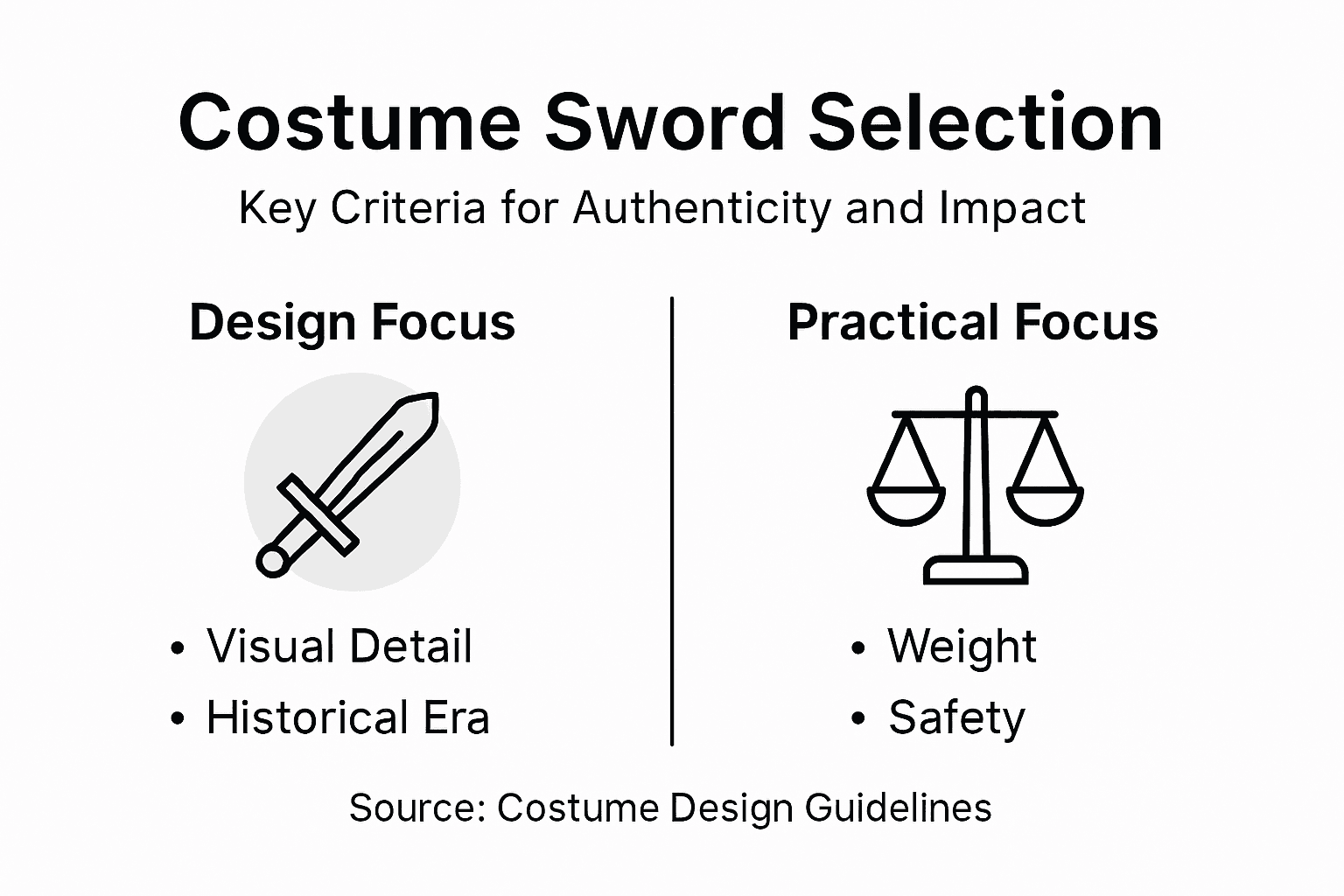
Pro tip: When selecting a replica sword, examine its design details, materials, and historical context to ensure maximum authenticity and narrative resonance.
Materials, Craftsmanship, and Design Accuracy
The creation of replica swords demands extraordinary precision, combining historical research, metallurgical expertise, and artistic interpretation. Medieval sword blade metallography reveals the complex craftsmanship behind authentic sword production, demonstrating the intricate techniques required to produce high-quality replicas.
Key considerations in replica sword materials and design include:
- Steel Composition: Matching historical metallurgical standards
- Forging Techniques: Reproducing traditional manufacturing methods
- Heat Treatment: Ensuring structural integrity and performance
- Surface Finishing: Capturing historical aesthetic details
- Weight Distribution: Maintaining authentic balance and handling
Advanced replica sword craftsmanship involves sophisticated processes that go beyond simple visual reproduction. Metalworkers use specialized techniques like hammer welding different steel grades to create blades with balanced hardness and toughness. Quenching treatments are strategically applied to enhance cutting edges, mimicking historical manufacturing approaches.
Design accuracy requires deep understanding of cultural and historical contexts. Costume designers and collectors seek replicas that not only look authentic but also capture the subtle nuances of historical weaponry. This demands extensive research, precise engineering, and a commitment to maintaining the integrity of traditional sword-making techniques.
Pro tip: Evaluate replica sword quality by examining its metallurgical composition, heat treatment marks, and structural symmetry to ensure true historical authenticity.
Swords as Character and Story Elements
Swords transcend their physical form, emerging as powerful narrative instruments that communicate complex character dynamics and psychological landscapes. Costume design as a storytelling tool reveals how these artifacts become extensions of character identity, communicating profound insights beyond mere visual representation.
Key narrative functions of swords in character development include:
- Identity Signaling: Representing personal history and cultural background
- Psychological Projection: Illustrating internal character struggles
- Power Dynamics: Communicating social status and hierarchical relationships
- Emotional Transformation: Symbolizing character growth and personal journey
- Thematic Resonance: Embodying broader narrative metaphors
In cinematic and theatrical contexts, swords operate as nuanced visual language. A warrior’s sword might reveal vulnerability through subtle wear, while an ornate blade could communicate inherited nobility or complex familial legacies. These artifacts become silent narrators, offering audiences unspoken glimpses into characters’ inner worlds.
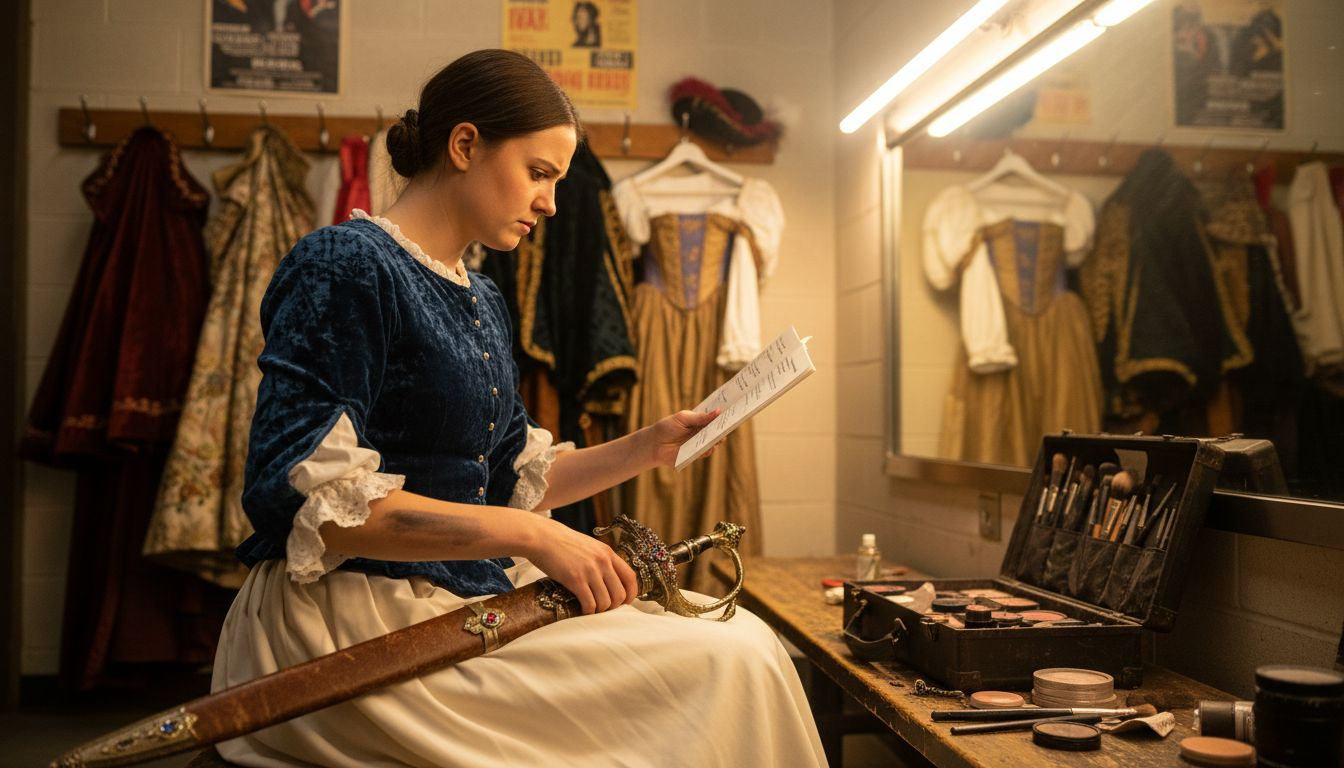
Designers strategically deploy swords to enhance narrative complexity. The sword’s design, condition, and manner of carrying communicate volumes about character motivations, cultural contexts, and potential story arcs. A meticulously chosen sword can instantaneously convey years of backstory without a single line of dialogue.
Pro tip: Analyze a character’s sword as a psychological map, examining its details as clues to understanding deeper narrative meanings and personal histories.
Safety, Legal Rules, and Event Regulations
Navigating the complex landscape of sword replica regulations requires understanding multiple legal and safety considerations. Comic Con weapon regulations highlight the intricate rules governing prop weapon transportation, display, and usage at public events.
Key safety and legal considerations for sword replica owners include:
- Transportation Restrictions: Always keep swords sealed and packaged
- Event-Specific Regulations: Understand venue-specific weapon policies
- Public Carrying Laws: Recognize legal limitations on displaying replicas
- Age Restrictions: Comply with minimum age requirements for ownership
- Material Compliance: Ensure replicas meet safety and design standards
Legal frameworks surrounding sword replicas vary significantly across different jurisdictions. In many regions, owning replica swords is legal for adults, but public display and transportation are strictly controlled. Event organizers typically enforce rigorous guidelines to distinguish between performance props and potentially dangerous weapons.
Responsible sword replica ownership demands proactive understanding of local regulations. Cosplayers and collectors must research specific rules for each event, transportation scenario, and public space to avoid potential legal complications. This includes understanding packaging requirements, transportation guidelines, and explicit event-specific weapon policies.
Pro tip: Always contact event organizers directly to confirm exact weapon prop regulations before attending, and maintain original packaging for sword replicas during transportation.
Choosing and Maintaining Costume Swords
Selecting the ideal costume sword requires careful consideration of multiple factors beyond aesthetic appeal. Costume sword care and maintenance involves understanding nuanced selection criteria and implementing strategic preservation techniques that extend the artifact’s longevity and visual integrity.
Key considerations when choosing costume swords include:
- Performance Requirements: Assessing intended use (display, performance, cosplay)
- Material Composition: Evaluating durability and authenticity
- Weight Distribution: Ensuring comfortable handling and visual balance
- Aesthetic Accuracy: Matching historical or character-specific design details
- Budget Constraints: Balancing quality with financial considerations
Professional costume designers approach sword selection as a sophisticated art form. Beyond visual representation, they consider how each sword communicates character narrative, cultural context, and performative requirements. The sword’s construction, finish, and subtle design elements can dramatically impact its storytelling potential.
Maintenance is equally critical in preserving costume sword quality. Proper care involves routine cleaning to remove moisture and fingerprints, strategic oiling to prevent rust, and careful storage in controlled environments. Collectors and performers must develop systematic inspection protocols to identify and address potential damage or wear before it compromises the sword’s structural or aesthetic integrity.
To help preserve costume swords, consider these practical maintenance strategies at a glance:
| Care Aspect | Best Practice | Impact on Longevity |
|---|---|---|
| Cleaning | Wipe gently after each use | Prevents rust, fingerprints |
| Oiling | Apply light oil periodically | Stops corrosion, preserves finish |
| Storage | Store in dry, dark location | Avoids humidity, sun damage |
| Inspection | Check for looseness or chips | Catches issues early |
Pro tip: Invest in specialized sword maintenance tools and create a dedicated storage environment that protects your replica from humidity, direct sunlight, and potential physical damage.
Elevate Your Costume Design With Authentic Replica Swords
Creating a character that captivates takes more than just the right attitude. As the article highlights, the sword you choose is a powerful storytelling tool that reveals cultural heritage, psychological depth, and historical authenticity. This means your costume sword must do more than look good. It must communicate personality with blade shape, ornamentation, and even its wear and patina.
Discover a wide selection of meticulously crafted replica swords at Propswords designed to meet these exact narrative and aesthetic needs. Whether you need anime-inspired blades, historically accurate vikings swords, or fantasy movie replicas, our collection offers high-quality options perfect for cosplay, display, or collection. Shop now to gain instant access to swords that bring your character’s story to life. Don’t miss out on free shipping in the USA and special discounts that make authenticity affordable. Start browsing our unique lineup at Propswords and transform your costume with a sword that truly speaks.
Frequently Asked Questions
What is the significance of swords in costume design?
Swords in costume design serve as powerful narrative devices that reveal character identity, cultural heritage, and historical context, enhancing storytelling beyond dialogue.
How do different sword types impact costume authenticity?
Different sword types, such as historical European swords and fantasy movie replicas, carry unique design characteristics that reflect their cultural origins, impacting the overall authenticity of a costume.
What factors should I consider when choosing a costume sword?
When choosing a costume sword, consider performance requirements, material composition, weight distribution, aesthetic accuracy, and your budget to ensure the sword aligns with character representation and narrative needs.
How can I maintain the quality of a costume sword?
To maintain the quality of a costume sword, regularly clean it to remove moisture, apply light oil to prevent rust, store it in a dry location, and conduct routine inspections to identify any damage early.